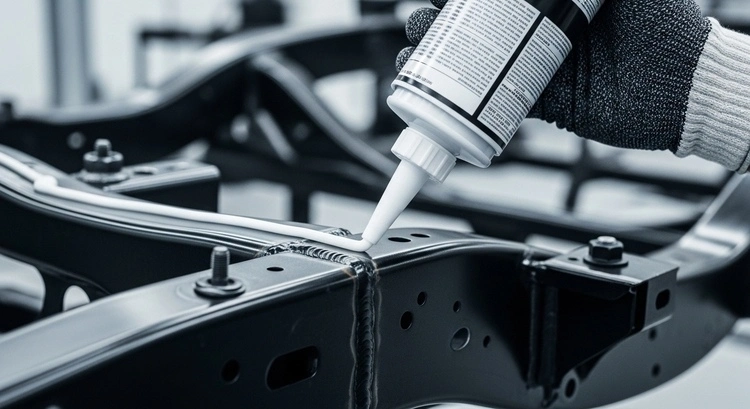
Automotive Adhesives Explained: When to Use Epoxy, Silicone, or Cyanoacrylate on Your Car
Not every small car repair needs a new part, a weld, or a fastener. Sometimes the right adhesive can handle the job cleanly. The key is choosing the right one. Epoxy, silicone, and cyanoacrylate all bond materials, but they behave very differently once cured. Here’s how to tell which one makes sense for common automotive fixes.
Start With the Job, Not the Glue
Before reaching for any automotive adhesive, look at what the repair needs to survive. A trim clip, rubber seal, cracked plastic tab, and metal bracket all face different stresses.
Ask three questions first: What materials are being joined? Will the part flex or stay rigid? Will it see heat, water, oil, vibration, or road grime?
Surface preparation also matters more than many DIYers expect. Even strong adhesives can fail on dusty, greasy, or glossy surfaces. 3M notes that epoxy adhesives usually need clean, abraded surfaces to achieve maximum bond strength in bonding applications 3M adhesive selection guide.
When Epoxy Makes the Most Sense
Epoxy is the best choice when you need a strong, rigid bond. It’s commonly used for metal, fiberglass, hard plastics, and some structural or semi-structural repairs where the part should not move much after curing.
On a car, epoxy can work well for repairing a broken plastic mounting tab, bonding a small metal bracket, filling a crack in a rigid non-flexing component, or reinforcing a damaged trim backing. Two-part epoxy usually gives you more working time than instant glue, which helps when pieces must be aligned carefully.
The trade-off is patience. Epoxy needs proper mixing, clamping, and curing time. If the ratio is off or the part moves while curing, the bond may be weak. For repairs where strength matters more than speed, epoxy bonding is usually the category worth considering first.
Avoid using epoxy where the joint needs to stretch. A flexible weatherstrip, vibrating rubber part, or soft interior piece may pull away because cured epoxy is often too rigid for those conditions.
When Silicone Is Better Than a Hard Bond
Silicone is less about rigid strength and more about sealing, flexibility, and moisture resistance. It’s useful when a part expands, contracts, or moves slightly while still needing a watertight or weather-resistant seal.
Common automotive uses include sealing around lights, grommets, weatherstripping, small exterior gaps, and some interior trim areas where flexibility matters. Silicone can also handle temperature changes better than many quick-setting glues, making it useful near areas that warm up during normal driving.
The mistake is using silicone as a universal adhesive. It doesn’t usually provide the same holding strength as epoxy, and it can leave a residue that makes future painting or bonding difficult. Use it when the job is mainly sealing, cushioning, or weatherproofing, not when the part needs a high-strength structural hold.
When Cyanoacrylate Is Useful
Cyanoacrylate, often called CA glue or super glue, is best for small, clean, close-fitting parts. It cures quickly and works well when the broken surfaces fit together tightly.
On a car, it can be handy for small interior plastic tabs, minor emblem repairs, small switch bezels, or a tiny crack in a non-load-bearing plastic piece. It’s not ideal for gaps, oily surfaces, soft rubber, or parts exposed to repeated flexing.
CA glue is also brittle compared with silicone and many flexible automotive adhesives. That means vibration can eventually break the bond if the repair area moves. Use it for precision, not for strength over a large area.
A Simple Way to Choose
Think of the three adhesives by their best role:
- Use epoxy when the repair needs strength and rigidity.
- Use silicone when the repair needs flexibility and sealing.
- Use cyanoacrylate when the repair is small, tight-fitting, and needs a fast bond.
No adhesive will make up for poor prep. Clean the surface, remove loose material, lightly scuff glossy areas when appropriate, and follow the curing time on the product label. For parts tied to safety, heat, fuel systems, brakes, airbags, or structural body repairs, don’t guess. Use the manufacturer-approved repair method or speak with a qualified technician.
Conclusion
The right automotive adhesive depends on the material, movement, and environment. Epoxy is for stronger rigid bonds, silicone is for flexible sealing, and cyanoacrylate is for quick small repairs. Match the adhesive to the job, and the repair is far more likely to last.