How Simulator Racing Is Creating the Next Generation of Motorsport Talent
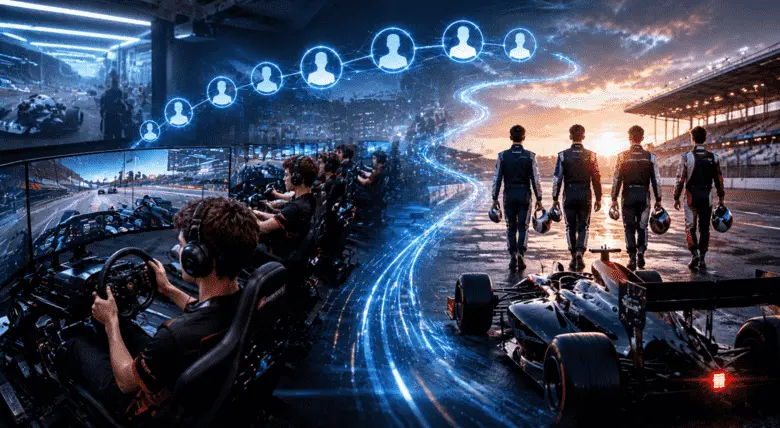
For years, simulator racing was viewed largely as entertainment — a way for enthusiasts to experience motorsport from home rather than a serious route into professional competition. That perception has changed dramatically. Today, esports racing has become an increasingly legitimate part of the motorsport ecosystem, influencing how teams identify talent, train drivers, and engage younger audiences.
Advances in simulation technology, online competition platforms, and data analysis have helped narrow the gap between virtual and real-world racing. As a result, simulator racing no longer exists on the fringes of motorsport culture. In many cases, it is becoming a recognised development pathway for future professional drivers.
The crossover between sim racing and traditional motorsport continues to grow, reshaping how talent is discovered in a sport historically defined by financial barriers and limited accessibility.
The Technology Behind Modern Sim Racing
The realism of modern racing simulators is a major reason for their growing credibility within professional motorsport.
High-end simulation platforms now replicate vehicle dynamics, tyre behaviour, suspension movement, weather conditions, and circuit surfaces with extraordinary detail. Combined with advanced force-feedback steering systems and realistic pedal setups, the experience can closely mirror aspects of real-world racing.
Professional teams increasingly use simulators not only for esports competitions but also for driver preparation and vehicle development. Formula 1, endurance racing, and touring car teams all rely heavily on simulation environments to test setups and familiarise drivers with circuits before race weekends.
For young drivers, this technology creates opportunities that previously did not exist. Access to competitive motorsport once depended heavily on karting budgets, travel costs, and sponsorship backing from an early age. Sim racing lowers many of those barriers by allowing talented drivers to compete from home using comparatively accessible equipment.
While virtual racing cannot fully replicate the physical demands of real-world competition, it develops several core skills that translate directly into motorsport: racecraft, consistency, braking precision, strategy, and spatial awareness.
Esports Competitions Are Becoming Recruitment Platforms
One of the most significant developments in recent years is the increasing willingness of professional teams to scout drivers through esports competitions.
Major sim racing championships now attract manufacturer involvement, sponsorship investment, and large online audiences. Racing organisations increasingly monitor high-level virtual competitions to identify drivers with exceptional pace, discipline, and tactical awareness.
Several drivers have already transitioned from simulator racing into professional motorsport environments. Some have secured opportunities in GT racing, touring cars, endurance competition, and junior single-seater categories after gaining recognition through esports events.
These examples have changed perceptions across the industry. Simulator racing is no longer viewed solely as gaming; it is increasingly recognised as a legitimate proving ground for competitive talent.
Importantly, esports pathways also broaden the diversity of motorsport participation. Drivers who may never have had access to traditional junior racing systems can now demonstrate their abilities on a global stage.
Data and Analytics Are Driving Driver Development
The relationship between sim racing and motorsport has strengthened further because both environments are now heavily data-driven.
Modern simulators generate detailed telemetry that allows drivers and engineers to analyse performance with remarkable precision. Steering inputs, throttle traces, braking points, tyre management, and racing lines can all be reviewed in detail.
This analytical environment closely resembles professional motorsport operations, where performance margins are extremely small. Young sim racers, therefore, become familiar not only with driving technique but also with interpreting performance data and working collaboratively with engineers.
In many ways, simulator racing acts as an introduction to the increasingly technical nature of modern motorsport.
The wider automotive world has also embraced digital-first enthusiast culture. Across online communities, personalisation and identity remain central themes for enthusiasts, with companies like Plates Express reflecting broader interest in vehicle presentation and individuality across both physical and digital automotive spaces.
Motorsport Culture Is Becoming More Accessible
Traditional motorsport has long faced criticism for its financial exclusivity. Competitive karting and junior racing programmes can require enormous investment before drivers even reach professional categories.
Simulator racing does not eliminate those inequalities entirely, but it significantly lowers the cost of entry. Talented drivers can now gain visibility through online leagues and international competitions without the same level of financial backing previously required.
This accessibility has helped motorsport reach younger and more digitally engaged audiences. Many fans who discover racing through esports later become interested in traditional motorsport categories as well.
The relationship works in both directions. Professional drivers increasingly participate in sim racing events during off-seasons and training periods, helping blur the distinction between virtual and physical competition.
This crossover has strengthened motorsport communities online, where fans now engage with racing through streaming platforms, online leagues, content creation, and interactive broadcasts.
Simulation Is Changing How Drivers Train
Even established professional drivers now spend significant amounts of time in simulators as part of regular preparation.
Modern racing calendars are physically demanding, and simulator sessions allow drivers to practise circuits, experiment with setups, and rehearse race scenarios efficiently. Teams can also test development changes virtually before committing resources to physical track testing.
The value of simulation became particularly visible during periods when track access was limited, reinforcing how important virtual environments have become within professional racing structures.
For younger drivers progressing through junior categories, simulator experience is increasingly expected rather than optional. Drivers entering modern motorsport are often already comfortable with telemetry review, virtual track preparation, and digital race analysis before they arrive in professional environments.
The Future of Motorsport Talent Pathways
Simulator racing is unlikely to replace traditional driver development entirely. Physical fitness, real-world vehicle control, sponsorship relationships, and race management under genuine pressure remain essential parts of professional motorsport.
However, sim racing is clearly becoming a more influential gateway into the sport.
As simulation technology continues improving, the connection between esports and professional racing will likely become even stronger. Teams are already recognising that competitive talent can emerge from digital environments as well as karting circuits.
At the same time, younger audiences increasingly consume motorsport through online platforms where gaming, streaming, and real-world racing intersect naturally.
The future of motorsport development may therefore look very different from the traditional pathways of the past. Talent identification is becoming more global, more data-driven, and more digitally connected.
For many aspiring drivers, the first meaningful step toward a professional racing career may no longer begin at a karting track — but in a simulator rig connected to the wider world of online competition.