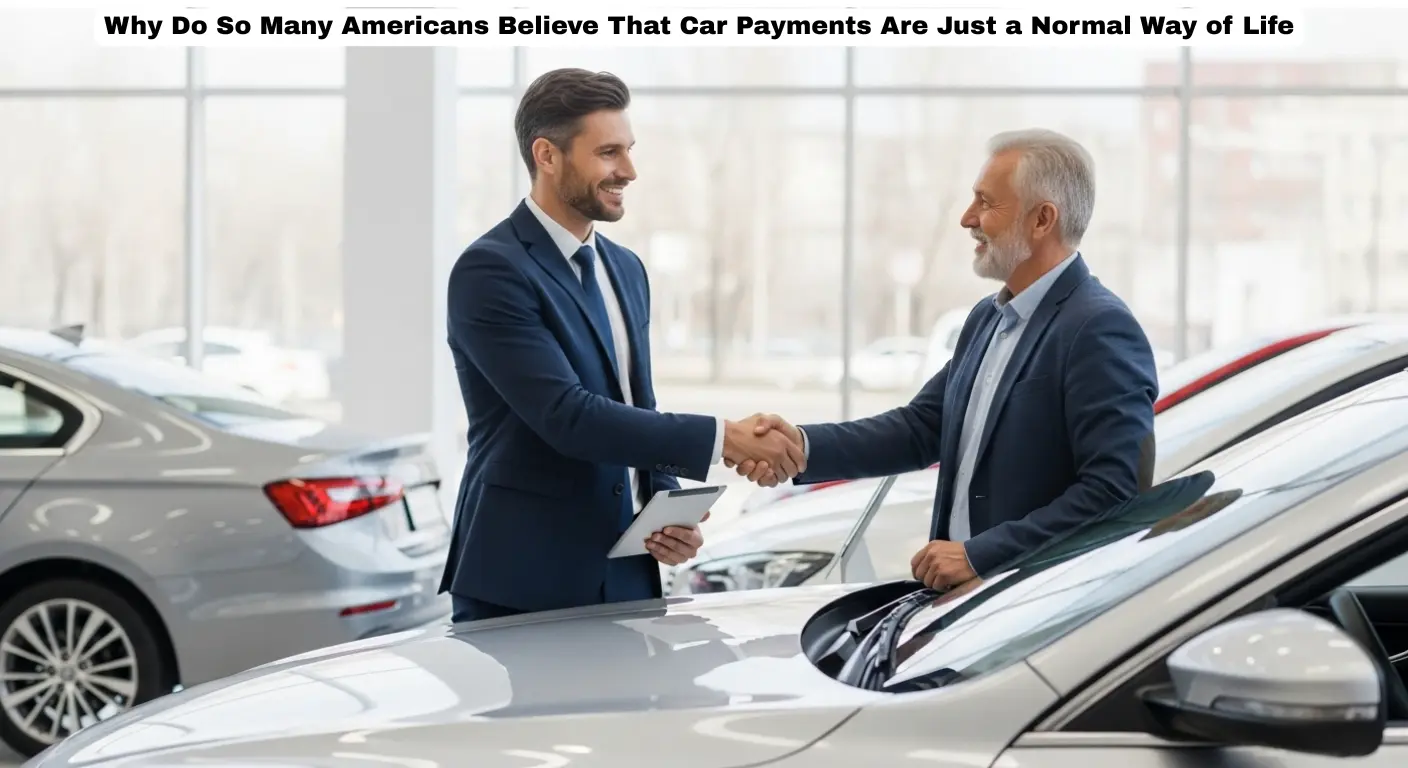
Why Do So Many Americans Believe That Car Payments Are Just a Normal Way of Life?
In the United States, a lot of individuals are trapped in a cycle of car payments of cars. It has become so widespread that the majority of Americans believe that it is an ordinary aspect of life. It could be due to the fact that owning a car is considered to be a symbol of success, or because car dealerships and lenders have made financing so easy, but there is no other choice but to make a payment every month. And yet is this the only method of purchasing a car?
Later on, we will explore more closely in the succeeding sections the reasons behind the popularity of car payments and why it is inevitable for a significant number of people. We will discuss the pressure of culture, the importance of advertising, and how easy access to financing has formed this habit. Above all, we will also talk about some clever options that would allow you to leave the loop of payments to the car, and save you money in the long term. Whether we help you realize the real price of car loans to consider alternatives such as used cars and bigger down payments, we will steer you in a more liberating direction in owning cars.
Car Payments: American Way of Culture and Values.
Ownership of a car in America is not associated only with transportation. It is a symbol of liberty, self-sufficiency, and self-support. To people, possession of a car is equal to attaining a particular lifestyle. This cultural affiliation contributes greatly to the reason why individuals are convinced to fund their cars instead of saving to purchase a vehicle in one installment.
Cars have been sold to people as a sign of success, and the concept of having a new car is deeply integrated into the American Dream. Such a desire frequently results in the normalization of car payments, whereby the emphasis will be on the price of the car or, rather, on how affordable the monthly payments will be.
The Marketing of the Car Payments to a normalized state.
To popularize the concept of monthly payments, car manufacturers and dealerships have long been running advertisements. Through their low monthly charges, car companies create an illusion that everybody can afford the car of their dreams. This promotional approach reduces the real price of the car, turning the emphasis on the total price to the affordable monthly payment.
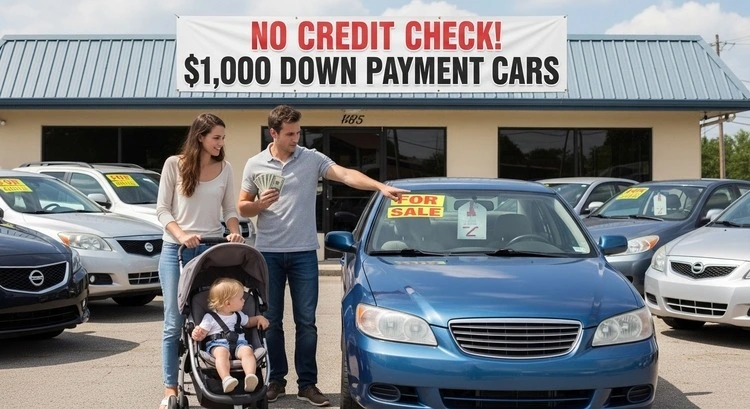
In most scenarios, advertisements market cars with some inviting package, like “$299 per month” or no money down, which makes cars look affordable at face of it. This will aid in strengthening the notion that car payments are only an extension of the usual purchasing process.
Economic Reasons: Why Payments on cars appear to be affordable.
The ease of access to car loans is one of the main factors that make it seem that taking out a car loan is as easy as breathing. Due to the emergence of subprime lending, more individuals can afford cars, even those with poor credit scores. The availability of loans at such a convenient cost has made monthly payments a convenient way for many car buyers.
Much lower interest rates and extended loan repayment schemes (72 months or more) have also helped to normalize car payments. The longer the loan term, the lower the monthly payment will be, and consequently, this prompts individuals to afford nicer cars than they could have afforded without the extension of the loan term.
The Appeal of Monthly Payments: The Big Numbers Deceased.
When individuals consider buying a car, they consider the monthly payment expenses and not the final price of the vehicle. The financial commitment would not be so pagan when it is broken down into small monthly payments. The psychological ease that comes with having a fixed, predictable monthly expense is enormous in the extent to which car payments are so commonly accepted.
The way resembles that of consumers making other purchases, such as mortgages or student loans. The costs are shared over a period of time; thus, the source of paying large sums of money at the start is not to be conducted, and the financial consequences in the long term may not be taken into account.
Increased Car Loan Conditions: The Unspun Cost of Long-payments.
Although longer loan terms lead to lower monthly payments, they lead to paying more money for the car over time. Most car customers choose to take loans in 60, 72, and even 84-month-long long-term agreements, which will cost them a lot more in total.
The long-term loans also result in such cases, whereby, the owners of the cars owe more than the cars are worth until the loan is paid before the loan is paid off. Loan referred to as being upside down on a loan taken to finance a car, which is actually a normal effect of long-term financing.
Leasing vs. Buying: The never-ending Car Payments Cycle.

Leasing is also now becoming a trend among people who want to drive a car without the need to have ownership of a car in the long term. Although leasing has fewer monthly payments, it does not give the buyer any ownership of the car. After the lease period expires, the buyer has to give back the car or finance a new car, and the process of making monthly payments is repeated.
Leasing can be very easy to do, but it usually results in the fact that people always pay and pay without having a single car in their possession.
The Long-term Effect of Payments of Car Payments on Financial Health.
Although car payments can be considered normal, they can have a big influence on individual finances. Individuals usually fail to consider the Cost of financing a car in the long term, resulting in a financial burden and lost savings. When you are in an auto payment on a car, it becomes difficult to repay other financial obligations, such as saving up for retirement or buying a house.
In other instances, car payments may be a financial burden, particularly when some unforeseen costs occur. Ownership is also expensive, considering that a loan comes with insurance, maintenance, fuel, and taxes, which may accumulate over time.
Getting out of the auto-car-pay-cycle.
Although paying car is an ordinary aspect of the life of many Americans, it is not the only option. One can avoid the financial commitment of car payments on a monthly basis by opting to purchase a used car, pay a higher down payment, or even look at public transportation.
People can save up to purchase a car or buy a less expensive car to prevent the situation of never-ending payments. One should change the mindset of what seems to be normal to what is economically viable and viable in the long run.
Conclusion
A combination of social norms, the availability of easy financing, and the overall perception of the necessity to have a car as a source of independence and success makes car payments a firm part of the American culture. Although leasing a car may enable easier access to owning one, it brings in long-term financial responsibility, which most Americans cannot get out of easily. Knowing what cultural, economical, and psychological forces are involved, people will be able to make more reasonable choices regarding the choice of cars and investigate other options, such as saving a larger down payment or used cars. The only way to leave the loop of car payments is to change the mindset, but it can result in increased financial freedom and savings in the long run.
Frequently Asked Questions
The U.S. is made up of long distances, the absence of public transport in most places, and a cultural focus on personal freedom and mobility, which makes it car-dependent. It is believed that cars are crucial in everyday life, particularly in suburban and rural life.
The new car sold to the average American costs approximately 40,000 dollars, and monthly installments are approximately 600 dollars with new cars and 400 dollars with used cars, depending on the terms of the loan and credit.
Cash purchase will avoid interest; however, a loan will allow the flexibility of finances. Loans are good when the interest rates are minimal and you are able to pay the monthly payments without exhausting your savings.
Car payments commit monthly earnings, cause a long-term debt, and may result in being upside down on the loan, and the price of the car is less than the loan amount.
Americans finance cars due to the fact that it makes expensive cars affordable in terms of easily repaying them in monthly payments, and there are many dealers who also have low-interest rates and long loan terms.
In the U.S., about 85 percent of new cars are financed, and approximately 55 percent of used car buyers also finance their cars.
A car payment is a car note, based on the financial terms of a promissory note, which is a written pledge to pay a loan.
The U.S. has easy access to loans and an acceptance of purchasing on a large scale, such as homes, cars, and education, thus making them affordable, but this results in increasing individual debt.