Truck Accident Compensation: Understanding Your Rights and Claim Process
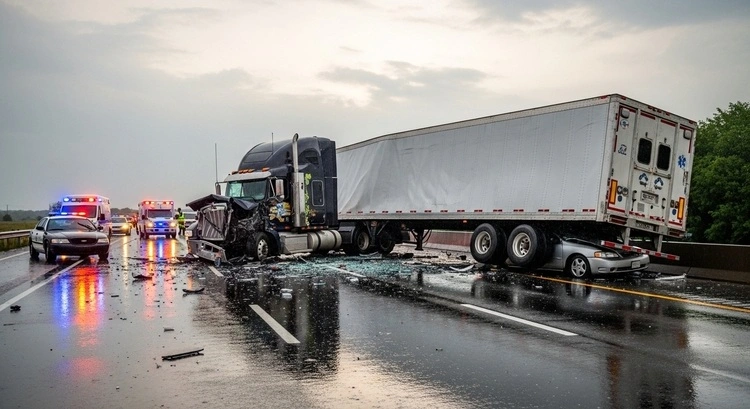
When a commercial truck collides with a passenger vehicle, the aftermath extends far beyond twisted metal and shattered glass. The Federal Motor Carrier Safety Administration reports that large truck accidents result in over 160,000 injuries annually, with average settlement amounts ranging from $40,000 to well over $1 million—yet most accident victims have no idea how compensation actually works or what they’re entitled to receive.
The trucking industry operates under complex federal regulations that create unique legal dynamics affecting compensation claims. Unlike typical car accidents, truck accidents involve multiple potential defendants—the driver, trucking company, vehicle manufacturer, and cargo loaders—each with separate insurance policies and liability exposure. Consulting a truck collision injury attorney in Beverly Hills can help you navigate these complexities, ensuring your rights are protected and that you pursue the full compensation you deserve.
Here’s what you need to know about navigating truck accident compensation claims, from the initial filing process through settlement negotiations and beyond.
What Is Truck Accident Compensation and Who Is Eligible?
Truck accident compensation represents financial recovery for damages sustained when a commercial vehicle causes harm to people or property. This legal framework operates on the principle that victims shouldn’t bear the financial burden of someone else’s negligence—whether that’s a drowsy driver, an improperly maintained vehicle, or a company that pressured drivers to violate safety regulations.
Eligibility extends beyond just the drivers involved. Passengers in any vehicle, pedestrians, cyclists, and even bystanders injured by debris can file compensation claims. The key requirement is demonstrating that the truck driver, trucking company, or another party acted negligently and that this negligence directly caused your injuries or damages.
What makes truck accident compensation unique is the involvement of commercial entities with substantial insurance coverage. While passenger vehicles typically carry $25,000 to $100,000 in liability coverage, commercial trucks are federally required to maintain between $750,000 and $5 million in insurance, depending on the cargo they transport. This higher coverage creates opportunities for more substantial compensation but also brings more aggressive defense strategies from insurance companies protecting larger financial exposure.
The compensation framework also accounts for the severe nature of truck accidents. According to the Insurance Institute for Highway Safety, occupants of passenger vehicles are four times more likely to die in crashes with large trucks than in crashes between passenger vehicles. This statistical reality influences how courts and insurers approach settlement values, recognizing that truck accidents often result in catastrophic injuries requiring extensive medical care and long-term rehabilitation.
How Are Truck Accident Compensation Claims Processed?
The claims process starts immediately after a collision. Unlike standard auto accidents, commercial crashes trigger specific federal investigations. Commercial drivers maintain logbooks, and electronic logging devices (ELDs) record crucial data like speed, braking, and driving hours. This vital evidence must be requested quickly before companies purge their systems—often within 30 days for electronic data, while other records are kept for one to three years. The process is complex, involving multiple insurers (the driver’s, the trucking company’s, and the cargo owner’s) and investigative teams working to minimize their liability.
Key Legal Considerations in Truck Accident Claims
Federal and state laws heavily impact your claim. The Federal Motor Carrier Safety Regulations govern everything from driver qualifications to maintenance; violating these can establish negligence without needing additional evidence. Furthermore, state laws dictate compensation limits using either pure or modified comparative negligence rules. Regulatory violations—such as allowing an unqualified driver behind the wheel—can also support strong claims for enhanced or punitive damages.
The Importance of Documentation and Evidence
Immediate action is required to preserve evidence before engine control modules overwrite pre-impact speed and braking metrics. Physical evidence, such as skid marks and collision dynamics, requires expert analysis, and roughly 60% of cases hinge on evidence gathered within the first 72 hours. Establishing a clear medical timeline from the emergency room onward is equally vital. Because truck accidents often cause delayed-onset injuries, immediate and ongoing medical documentation prevents insurance companies from challenging your claim.
What Factors Affect Truck Accident Compensation Amounts?
Injury severity primarily drives compensation, with catastrophic injuries yielding multi-million-dollar settlements due to lifetime medical needs. A driver’s actions—like hours-of-service violations or substance use—and a company’s policies, such as incentivizing unsafe driving speeds, significantly increase settlement values. While commercial insurance limits are substantial, multiple claims from one accident can exhaust these funds, making it crucial to identify every potential source of coverage.
Comparative Liability and Fault Determination
Comparative negligence laws proportionally reduce compensation based on your percentage of fault. Truck accidents uniquely involve multiple defendants—drivers, companies, manufacturers, and cargo loaders—which complicates fault allocation. Expert analysis of technical factors like jackknifing, cargo shifts, or rollover dynamics is required to accurately determine liability against specialized insurance adjusters.
Differences Between Settlements and Judgments
While settlements resolve about 95% of claims, knowing when to pursue a trial is critical. Settlements offer speed and certainty but may undervalue long-term damages if accepted too early. Trial verdicts often yield significantly higher payouts when juries penalize corporate negligence, though they carry appeal risks. Waiting until a victim reaches maximum medical improvement before settling generally results in compensation that is 40–60% higher.
Types and Categories of Truck Accident Compensation
Compensation covers several key categories:
- Medical Expenses: Funds immediate treatment and lifetime specialized care.
- Pain and Suffering: Addresses physical and emotional distress, often calculated at 3 to 5 times medical costs.
- Lost Income: Covers immediate wage loss and diminished future earning capacity.
- Property Damage: Replaces vehicles and personal belongings.
- Punitive Damages: Punishes egregious misconduct, like systematic safety violations.
Research and Expert Opinions on Truck Accident Compensation
Compensation varies wildly by region. A 2024 study noted settlement variations of up to 300% for similar injuries based on state laws, jury attitudes, and legal representation. Experts emphasize that understanding commercial regulations is required to properly value claims. Technological advances, like ELDs, also provide more precise data to establish negligence, driving higher average settlements.
Current Debates and Future Trends in Compensation Laws
The trucking industry faces calls for reform, including proposed increases to minimum commercial insurance from $750,000 to $4.9 million, which could drastically increase available compensation. Additionally, autonomous trucks are shifting liability frameworks; as self-driving features become standard, technology failures increasingly move responsibility from the driver to the manufacturer.
Ethical Considerations in Compensation Assessment
Balancing victim needs with industry sustainability creates an ongoing debate. While catastrophic injuries demand massive compensation, exorbitant awards can bankrupt smaller trucking companies and increase consumer costs. However, research indicates that well-publicized, large settlements strongly correlate with improved safety metrics across the industry.
Common Misconceptions About Truck Accident Compensation
Victims face several costly misconceptions. Believing insurers will offer fair settlements unprompted ignores the fact that legally represented claimants average payouts 3.5 times higher. The idea that quick settlements are beneficial overlooks progressive injuries; early acceptance waives your right to future funds. Finally, assuming you can only sue the driver ignores liability from trucking companies, manufacturers, and loaders.
Notable Case Studies of Truck Accident Compensation Outcomes
Recent cases highlight how a thorough investigation maximizes outcomes. In Pennsylvania, a drowsy-driving crash yielded a $47 million verdict after ELDs proved systematic hours-of-service violations. A Texas case resulted in an $89 million settlement when a poorly secured steel coil caused a jackknife. In California, a motorcyclist won $55 million from a manufacturer over defective brakes. Ultimately, securing fair compensation requires expert analysis, deep regulatory knowledge, and skilled legal advocacy to navigate multiple defendants.