When a Car Accident Claim May Need to Go to Court
Most car accident claims begin with an insurance claim, not a lawsuit. After a crash, the injured person usually reports the accident, gathers records, receives medical care, and waits for the insurance company to review fault and damages.
However, not every claim can be resolved through negotiation. If the insurer refuses to make a fair offer, disputes responsibility, or undervalues the injuries, a St. Louis auto accident lawyer may recommend taking the case to court.
Not Every Car Accident Claim Requires a Lawsuit
Many car accident claims settle before a lawsuit is ever filed. If the fault is clear, injuries are well documented, and the insurance coverage is available, both sides may be able to reach an agreement through direct negotiation.
A settlement can save time, reduce stress, and avoid the uncertainty of a trial. Still, settlement only works when the offer fairly reflects the injured person’s medical bills, lost income, pain, future care needs, and other accident-related losses.
When the Insurance Company Denies Fault
A claim may need to go to court when the insurance company refuses to accept that its driver caused the crash. This can happen even when the injured person believes the facts are obvious.
The insurer may argue that another driver was responsible, that road conditions caused the collision, or that the injured person contributed to the crash. When liability is disputed, filing a lawsuit may be necessary to obtain evidence, question witnesses, and present the case formally.
When the Settlement Offer Is Too Low
Low settlement offers are one of the most common reasons a car accident claim moves toward litigation. An insurance company may offer enough to cover some immediate bills but ignore future treatment, lost earning capacity, or the long-term effects of pain and disability.
Accepting a low offer can be risky because most settlements are final. Once the claim is resolved, the injured person usually cannot ask for more compensation later, even if symptoms worsen or additional treatment becomes necessary.
When Injuries Are Serious or Long-Term
Cases involving serious injuries often require more careful evaluation. Broken bones, spinal injuries, traumatic brain injuries, nerve damage, surgeries, permanent restrictions, or chronic pain may affect a person’s life for months, years, or permanently.
Insurance companies may resist paying the full value of these claims because the damages are higher. If the insurer disputes the seriousness of the injuries or refuses to account for future losses, court may become the best option.
When Medical Causation Is Disputed
Sometimes the insurance company does not deny that a crash occurred, but argues that the crash did not cause the injuries being claimed. This is common when the injured person had prior medical issues or did not immediately experience severe symptoms.
In court, medical records, treating doctors, and expert testimony may help connect the injuries to the collision. This can be especially important when the insurer claims the victim’s pain came from aging, a prior accident, or a pre-existing condition.
When Comparative Fault Is an Issue
Missouri follows a pure comparative fault system, meaning an injured person’s compensation may be reduced by their percentage of fault. For example, if a person is found 20 percent at fault, their recovery may be reduced by 20 percent.
Insurance companies may use comparative fault arguments to lower the value of a claim. If the insurer unfairly blames the injured person, a lawsuit may be needed to challenge that fault allocation with stronger evidence.
When Important Evidence Is Being Withheld
Some evidence is difficult to obtain without filing a lawsuit. This may include company driving records, phone records, surveillance footage, vehicle data, maintenance records, internal safety policies, or documents controlled by the defendant.
Once a lawsuit is filed, the discovery process allows both sides to request documents, ask written questions, and take depositions under oath. These tools can uncover information that may not be available during informal insurance negotiations.
When Multiple Parties Are Involved
Multi-vehicle crashes can quickly become complicated. Each driver may blame someone else, and several insurance companies may disagree about who caused the accident or how responsibility should be divided.
Court may be necessary when multiple parties refuse to accept fault or when one insurance company tries to shift responsibility to another. A lawsuit can bring all responsible parties into one process and allow the evidence to be examined more clearly.
When the Deadline to File Is Approaching
Missouri generally gives injury victims five years to file a personal injury lawsuit, including many car accident claims, under Missouri Revised Statutes Section 516.120. Missing the deadline can prevent an injured person from pursuing compensation in court.
Even if settlement talks are ongoing, the filing deadline still matters. If the insurance company delays negotiations or refuses to resolve the claim before the deadline, filing a lawsuit may be necessary to protect the injured person’s rights.
What Happens After a Lawsuit Is Filed?
Filing a lawsuit does not mean the case will automatically go to trial. Many cases settle after filing because discovery reveals stronger evidence, clarifies disputed facts, or creates more pressure on the insurance company.
After filing, the case may move through pleadings, discovery, depositions, expert review, mediation, and pretrial motions. Each stage gives both sides more information and may create new opportunities for settlement before trial.
When Trial Becomes Necessary
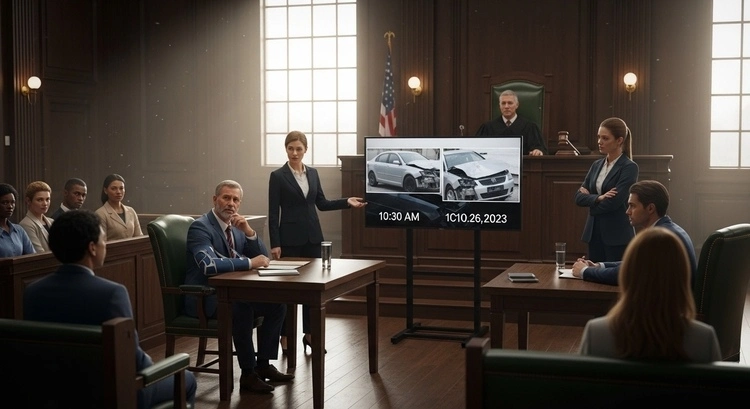
Trial may be necessary when the parties remain too far apart on fault, damages, or both. At trial, both sides present evidence, question witnesses, and make arguments before a judge or jury.
Trial carries risk because the outcome is not guaranteed. However, when the insurance company refuses to make a reasonable offer, trial may be the only way to pursue the full value of the claim.
Going to Court Can Be a Strategic Step
A car accident claim may need to go to court when negotiation is no longer productive. This may happen because the insurer denies fault, undervalues injuries, disputes medical causation, blames the victim, withholds evidence, or delays until the filing deadline approaches.
Going to court does not always mean a long trial. In many cases, filing a lawsuit is the step that forces the insurance company to take the claim more seriously and creates a stronger path toward fair compensation.