Do You Really Need a Second Car? Smarter Options for Short Local Trips
Many people start thinking about buying a second car not because they drive long distances every day, but because everyday life includes so many short trips: commuting to work, grocery runs, the gym, school drop-offs, coffee shops, errands, nearby stores, or quick trips around the neighborhood.
A second car can be convenient. It can reduce scheduling conflicts between family members and make daily routines more flexible. But the cost of a second car is rarely just the purchase price. Insurance, gas, parking, maintenance, tires, registration fees, depreciation, and loan payments can make that convenience more expensive than expected.
So before deciding that a second car is the answer, it is worth asking a more practical question: do all of those short trips really need a car?
For many local routes, a lighter transportation option may be enough. Walking, biking, public transit, carpooling, or even an electric bike for everyday short-distance travel can all work as practical alternatives to using a car every time.
1. Why Many People Consider a Second Car
The idea of a second car usually comes from real-life needs, not just impulse buying. A household may have one car occupied by the main commuter while someone else needs to leave. A workplace may be close to home, but the schedule may not be fixed. School, shopping, fitness, social plans, and work can easily overlap.
In those situations, a second car can seem like the most direct solution. It means less waiting, less coordination, and fewer moments where every trip has to be planned around someone else’s schedule.
Common reasons people consider a second car include:
- Daily commuting
- Grocery or local store runs
- Short school or activity drop-offs
- Trips to the gym or coffee shop
- Neighborhood errands
- Weekend local trips
- Scheduling conflicts between household members
These needs are completely normal. The real question is whether they all require a full-size vehicle. If most of the routes are only a few miles long, a second car may not be the only option.
2. The Real Cost of a Second Car Is More Than the Price
When people calculate the cost of a second car, they often start with the purchase price or monthly payment. But the true cost of car ownership goes much further.
Even a used car comes with ongoing expenses. Insurance can add a fixed monthly cost. Registration, inspections, and taxes come back regularly. Gas costs rise with use. Parking may be an added expense, especially in cities, apartments, or dense neighborhoods.
Depreciation also continues. Even if the car is used mainly for short errands, its value still drops over time. Tires, batteries, brakes, oil changes, routine maintenance, and unexpected repairs do not disappear just because the car is driven less often.
Common second-car costs include:
- Purchase price or monthly loan payment
- Auto insurance
- Registration and taxes
- Gas
- Parking
- Routine maintenance
- Tire and brake wear
- Repairs
- Depreciation
If the second car is used for long commutes or essential daily transportation, those costs may make sense. But if it is mainly being used for short trips within one to five miles, it is worth asking whether the investment is too high for the job.
3. Which Short Trips May Not Need a Car?
Cars are best for long distances, highways, multiple passengers, large cargo, and difficult weather. But in everyday life, many places people drive to are not very far away.
Think about the trip from home to a coffee shop, from the office to the gym, from an apartment to the grocery store, from a neighborhood to a nearby restaurant, or from home to a transit stop. A car can handle all of those trips, but it may also bring parking, traffic, short-trip fuel use, and constant stop-and-go driving.
Short trips that may not always need a car include:
- Local movement within one to five miles
- Nearby grocery or pharmacy trips
- Gym visits
- Coffee shops or coworking spaces
- Local parks
- Transit stations
- Short commutes
- Light neighborhood errands
These routes usually have a few things in common: the distance is manageable, the timing is fairly predictable, the cargo needs are limited, and the roads are familiar. For this type of travel, a car can sometimes feel like more vehicle than the trip requires.
That does not mean cars are not important. It simply means a car does not need to handle every single transportation need. If some short trips can be shifted away from car use, overall driving pressure and transportation costs can drop.
4. Why an Electric Commuter Bike Works as a Daily Transportation Supplement
Compared with a regular bicycle, an e-bike can be a better fit for repeated daily routes. A standard bike is healthy and efficient, but hills, headwinds, hot weather, backpacks, and tight schedules can make daily riding harder to maintain. The challenge with commuting is not riding once. It is doing the same route consistently.
That is where an electric commuter bike becomes useful. It is not meant to replace every car trip. It is meant to make short commuting and local movement easier to stick with.
For commuters, an e-bike has several practical advantages:
- It covers more distance than walking.
- It requires less effort than a regular bike.
- It is easier to park than a car.
- It is more flexible than short rideshare trips.
- It usually costs less to use than a second car.
- It works well for repeated local routes.
If your commute is fairly consistent, such as home to the office, home to a transit station, a neighborhood to a shopping area, or home to the gym, a stable and comfortable e-bike can become a very practical supplement.
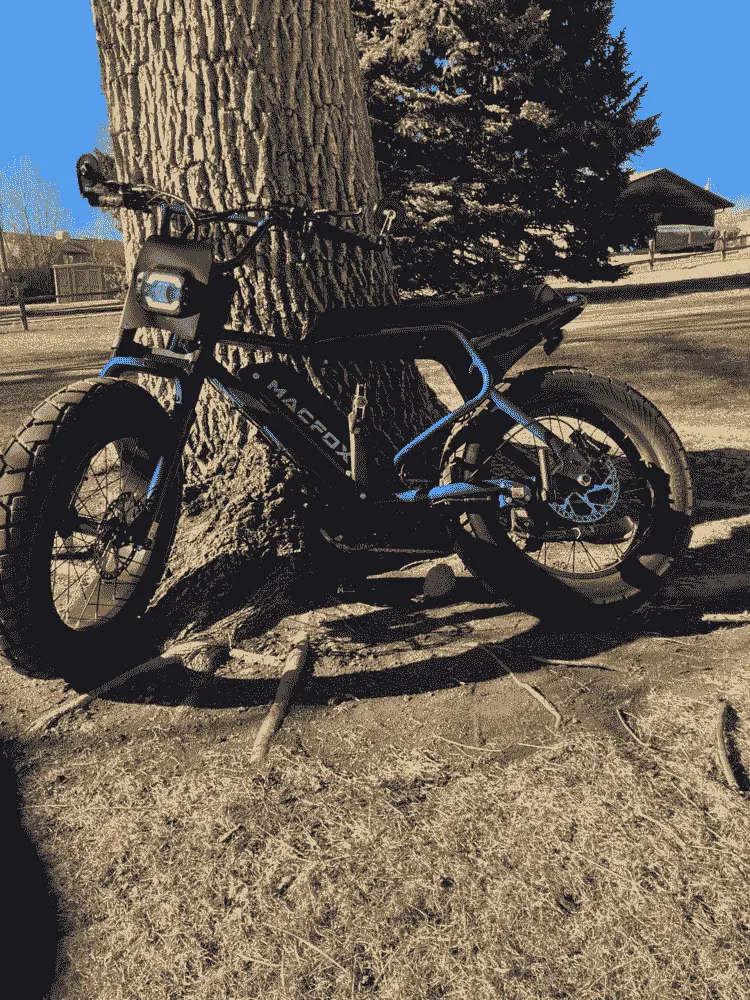
Models that emphasize stability and comfort, such as the X7, are especially relevant for riders who want short local trips to feel easier. Fat tires, a comfortable riding posture, and better suitability for city streets can make everyday routes feel less dependent on a car.
Of course, the point is not to replace long-distance driving or solve every weather and traffic problem. A better way to think about it is this: an e-bike fits the routes that are too far to walk, too close to justify driving, and a little too tiring for a regular bicycle.
5. An E-Bike Cannot Replace Every Car Scenario
To be realistic, it is important to admit that an e-bike has limits. It can reduce some short car trips, but it cannot fully replace a car.
In rain, snow, extreme heat, long-distance highway travel, multi-passenger trips, large shopping runs, complicated traffic areas, or unsafe late-night routes, a car is still the better choice. For many people, an e-bike works best as a supplement to car ownership rather than a complete replacement for a primary vehicle.
Situations where an e-bike may not replace a car include:
- Highway or long-distance commuting
- Severe weather
- Carrying multiple passengers
- Large grocery or hardware store trips
- Routes with heavy traffic or dangerous intersections
- Areas where local rules do not allow e-bike use
- Places without safe parking
That is why the decision should not be reduced to “car versus e-bike.” The better question is: which trips truly require a car, and which trips can be handled by a lighter transportation option?
Once the roles are clear, transportation becomes more flexible. The car can handle long-distance, heavy-load, and complex trips, while an e-bike can handle shorter, lighter, repeatable local movement.
6. How to Decide Whether You Need a Second Car or a Lighter Transportation Option
Whether you need a second car depends on your actual routine, not just the idea of convenience. Before making the decision, list out a typical week of trips and separate the ones that truly require a car from the ones that are mostly habit.
Start with a few practical questions:
- Are most short trips within a few miles?
- Do multiple people need to travel together every day?
- Do you often carry large items?
- Is parking difficult or expensive?
- What would the total monthly cost of a second car be?
- Is your area bike-friendly?
- Are there safe neighborhood roads, low-speed streets, or bike lanes?
- Does the weather allow lighter transportation for much of the year?
- Do you already have a primary car at home?
If most trips are long-distance, multi-passenger, or involve complex routes, a second car may still make sense. But if most needs are short commutes, neighborhood errands, gym visits, coffee runs, and nearby stores, an e-bike may be a more affordable and practical supplement.
For many drivers, the answer is not simply “buy a car” or “do not buy a car.” It is about assigning the right transportation method to the right trip. Keep the car for the trips that truly need a car. Use a lighter option for short local routes. That combination can reduce both cost and daily transportation stress.
Final Thoughts
A second car can be convenient, but it also brings ongoing costs. Insurance, gas, repairs, parking, depreciation, and loan payments all add up over time. If the car would mostly be used for trips within a few miles, it makes sense to consider lighter alternatives before buying.
An e-bike will not replace every car scenario, but it can be a strong supplement for short commutes and local errands. For fixed routes, light transportation needs, parking challenges, or high ownership costs, it offers a more flexible and lower-pressure option.
Smart transportation is not always about owning more vehicles. It is about using each option where it makes the most sense. Cars are ideal for long distances and heavy loads. E-bikes are useful for short trips and daily local movement. For many people, that mix can be more practical than simply adding another car.