Car That Looks Like a Tank: The Ultimate Guide to Armored Aesthetics and Power
We live in an era where blending in is no longer the goal for many drivers. While the automotive industry spent decades perfecting aerodynamics and fuel efficiency, a bold counter-culture emerged. This new wave of enthusiasts desires something different. They want vehicles that project invincibility, dominance, and raw power. They want a car that looks like a tank.
These machines are not just about getting from point A to point B. They are about arriving with a presence that demands respect. For the average commuter, practical and efficient vehicles like Toyota compact cars are the logical choice for navigating tight city streets and saving on gas. However, for those who value security and an imposing aesthetic above all else, the trade-off in size and efficiency is a small price to pay for driving a fortress on wheels.
Defining the Beast: What Makes a Car Look Like a Tank?
You know one when you see it. A tank-inspired car does not follow the gentle curves of modern crossovers. It rejects softness. To truly belong in this category, a vehicle must check specific boxes that bridge the gap between military utility and civilian luxury.
Aggressive Design and Boxy Dimensions
The silhouette is the first giveaway. These vehicles favor sharp lines, right angles, and a wide, industrial stance over aerodynamic slopes. The design language is often described as “brutalist.” You will notice massive wheel arches, a high beltline that reduces window size (mimicking armored slits), and a front grille that looks ready to inhale the road. This boxy profile serves a purpose; it maximizes interior volume while creating an exterior that looks unshakeable.
Military-Grade Features and Armor
True tank-like cars often borrow technology directly from the battlefield. It is not just about looking tough; it is about being tough. Many manufacturers equip these rides with matte paint jobs in olive drab, desert tan, or stealth black to reduce glare and enhance that tactical vibe.
Beyond the paint, you often find functional ruggedness. This includes exposed rivets, steel bumpers capable of winching heavy loads, and in extreme cases, actual ballistic protection. While not every “tank” car is bulletproof, the aesthetic suggests that it could take a hit and keep moving.
Off-Road Capabilities and Heavy-Duty Suspension
A tank cannot be stopped by mud, sand, or snow, and neither should these cars. The visual “tank” appeal is heavily tied to ground clearance and footwear. These vehicles sit high above the traffic, riding on oversized all-terrain or mud-terrain tires. The suspension systems are reinforced to handle abuse, often featuring dual shocks or portal axles that allow them to climb over obstacles that would destroy a standard SUV.
Top 7 Cars That Look Like a Tank and Dominate the Road
If you are ready to trade capability for dominance, the market offers incredible options. From combustion-engine monsters to electric super-trucks, here are the vehicles that blur the line between civilian transport and armored warfare.
Rezvani Tank: The Icon of Tactical Luxury
The Rezvani Tank is perhaps the purest example of this segment. It does not just borrow the name; it earns it. Based on the Jeep Wrangler chassis but unrecognizable in its final form, the Rezvani features a futuristic body designed to deflect attention and threats alike.
What truly sets it apart is the optional “Military Edition.” This trim creates a literal safety cocoon for the driver. It offers B7-level ballistic armor (capable of stopping high-caliber rounds), thermal night vision systems for navigating in total darkness, and even electromagnetic pulse (EMP) protection. It is the ultimate survival tool wrapped in high-end leather, powered by a massive V8 engine that ensures you have the torque to escape any situation.
Tesla Cybertruck: The Futuristic Steel Fortress
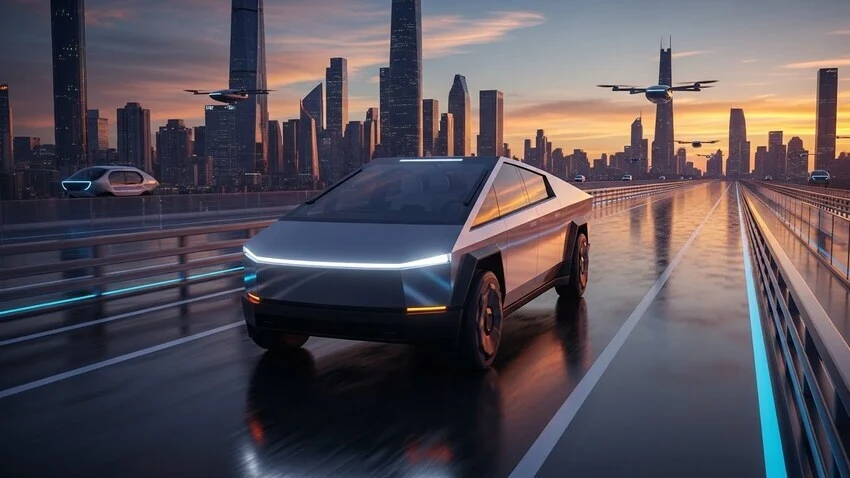
When Tesla unveiled the Cybertruck, it shocked the world by ignoring 100 years of automotive design tradition. Its exoskeleton is crafted from ultra-hard 30X cold-rolled stainless steel. This is the same material used in SpaceX rockets, chosen specifically for its ability to resist dents, damage, and long-term corrosion.
The design is purely angular, resembling a stealth fighter jet or a sci-fi armored personnel carrier more than a pickup truck. Tesla also utilizes “Armor Glass,” which can withstand significant impact without shattering. While it runs on electric power rather than diesel, its tri-motor setup provides instant torque and towing capacity that rivals heavy-duty industrial trucks, proving that a tank doesn’t need to be loud to be powerful.
Mercedes-Benz G63 AMG 6×6: The Six-Wheeled Monster

If four wheels are good, six are definitely better. The Mercedes-Benz G63 AMG 6×6 is what happens when German engineering ignores the word “restraint.” Originally developed for the Austrian army, this vehicle features a twin-turbo V8 engine and, most notably, six driven wheels.
It stands over seven feet tall and uses portal axles, a technology that lifts the wheel centers higher than the axle itself, providing massive ground clearance. This truck does not just look like a tank; it drives over terrain that would stop a standard tank in its tracks. With an onboard tire inflation system, you can adjust tire pressure from the comfort of the heated leather cockpit, adapting to sand or pavement in seconds.
Karlmann King: The World’s Most Expensive SUV
The Karlmann King takes the concept of “stealth” and turns it into a rolling sculpture. Designed by a team of over 1,800 people, this vehicle is built on a Ford F-550 heavy-duty chassis but wears a body that looks like a stealth fighter jet made of carbon fiber and steel.
It is angular, dark, and incredibly expensive, with a price tag often exceeding two million dollars. While it looks aggressive, the interior is akin to a private jet, featuring retractable TVs, refrigerators, and coffee machines. It proves that looking ready for battle does not mean sacrificing comfort.
Dartz Prombron: Opulence Meets Ballistic Protection
For those who find standard luxury too boring, the Dartz Prombron offers a bizarre mix of danger and decadence. This Latvian-made SUV gained fame in the movie The Dictator and is known for its “Black Shark” and “Monaco” editions.
Dartz offers levels of customization that are almost unheard of, including bodies made from Kevlar and titanium. It is designed to withstand heavy gunfire while the occupants relax in an interior often trimmed with exotic, and sometimes controversial, materials. It is the ultimate statement piece for the super-rich who require maximum security.
GMC Hummer EV: The Electric Supertruck
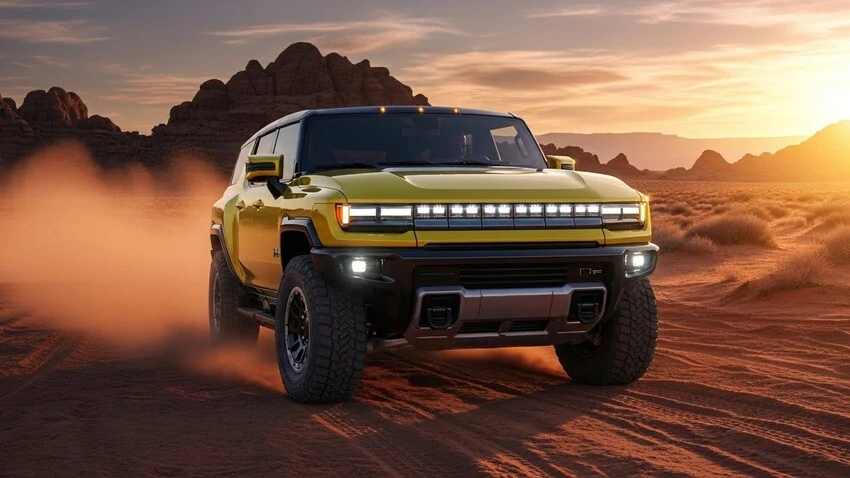
General Motors revived the legendary Hummer nameplate with a twist: no gas required. The GMC Hummer EV is a massive “supertruck” that weighs over 9,000 pounds. Despite its size, it can sprint from 0 to 60 mph in roughly three seconds, thanks to the instant torque of its electric motors.
It features “CrabWalk,” a mode that allows all four wheels to steer diagonally, letting the truck slide sideways out of tight spots—a maneuver a traditional tank could only dream of.
Hummer H1: The Civilian Legend
No list is complete without the original. The Hummer H1 is the civilian version of the military Humvee. It is incredibly wide, impractical for drive-thrus, and loud. Yet, it remains the gold standard for tank-like cars. Its central tire inflation system and ability to ford deep water make it a collector’s dream today.
Practicality vs. Power: Are Tank-Like Cars Street Legal?
Driving a fortress sounds fun until you have to park it. Most of these vehicles are street-legal in the United States, provided they meet basic safety standards like having headlights, turn signals, and seatbelts. However, there are gray areas.
Navigating Legal Restrictions on Armor and Size
While owning a large truck is legal, adding military-grade armor can complicate things. Some states restrict the use of bulletproof glass or heavily reinforced bumpers on public roads. Additionally, vehicles like the 6×6 or the Hummer H1 are so wide that they barely fit in standard lanes. You also need to consider weight limits; some of these trucks are heavy enough to require a commercial driver’s license (CDL) or are banned from certain historic bridges.
Daily Driving Challenges in Urban Environments
Living with a tank in the city is a challenge. Maneuverability is poor, and blind spots are massive. You will likely need to rely heavily on camera systems to see small cars or pedestrians around you. Parking garages are often off-limits due to height restrictions, meaning your “urban tank” is often stuck searching for open-air lots.
The Pros and Cons of Owning a Military-Inspired Vehicle
Advantages: Unmatched Safety and Road Presence
The primary benefit is obvious: safety. In a collision, mass wins. Occupants in these vehicles are surrounded by more steel and structure than almost anything else on the road. This sense of invulnerability attracts a diverse group of buyers. While we often associate these massive machines with military buffs, they appeal to a wide audience. You might be surprised to find that for some, these safe, high-riding fortresses are actually considered dream cars for girls who value the feeling of absolute security and a high vantage point on the road.
Disadvantages: Fuel Economy and Maintenance Costs
The drawbacks are just as massive as the vehicles themselves. If you are looking for efficiency, these are not the cars for you. The sheer weight and boxy aerodynamics result in abysmal fuel economy, often in the single digits for miles per gallon. Even the electric versions consume electrons at a staggering rate compared to standard EVs.
Maintenance is another hurdle. Replacement parts for vehicles like the Hummer H1 or a 6×6 Mercedes are not available at your local auto shop. They often require specialized mechanics and custom orders, meaning your tank could be out of commission for weeks waiting for a specific suspension component.
Essential Maintenance Tips for Your Tank-Like Vehicle
Owning a beast requires a different maintenance schedule than a standard sedan.
Managing Tire Wear on Heavy Vehicles
The heavier the vehicle, the faster the tires wear out. “Tank” cars put immense pressure on rubber, especially during cornering. You must rotate tires frequently—every 3,000 to 5,000 miles—to ensure even wear. Neglecting this can lead to dangerous blowouts, which are terrifying in a 9,000-pound truck.
Suspension and Drivetrain Care
The suspension components (shocks, struts, and bushings) take a beating simply holding up the vehicle’s armored weight. Listen for creaks or groans when going over bumps; these are early warning signs that your bushings are crushed. Similarly, the transmission fluid needs to be checked more often, as the drivetrain works overtime to move that mass.
Preserving Armored and Matte Finishes
If your vehicle has a matte “stealth” paint job, do not take it through an automatic car wash. The brushes will ruin the finish, making it shiny in patches. These require hand washing with specific matte-safe products. If you have actual armor or Kevlar panels, inspect them annually for delamination or moisture damage, which can compromise their structural integrity.
Practical Alternatives: Rugged SUVs for Everyday Use
If you love the look but cannot justify the cost or size of a Rezvani or Hummer, the mainstream market offers excellent compromises.
The Ford Bronco, Land Rover Defender, and Toyota Land Cruiser all offer boxy, rugged aesthetics and genuine off-road capability without the headaches of owning a military-grade vehicle. They fit in parking spots, can be serviced at standard dealerships, and still command respect on the road.
The Future of Tank-Inspired Automotive Design
The trend is not slowing down; it is evolving.
Electric Power Meets Rugged Durability
The future of tank-like cars is silent. Electric powertrains are perfect for heavy vehicles because they provide maximum torque at zero RPM. We will see more vehicles like the Cybertruck and Hummer EV that use battery weight to lower the center of gravity, making these tall trucks more stable than their gas-powered predecessors.
Advanced Smart Features and Autonomous Tech
Future iterations will focus on situational awareness. Expect to see 360-degree camera systems with “transparent chassis” technology (allowing you to see the ground beneath the hood) become standard. This tech solves the visibility issues inherent in tank designs, making them safer for urban use.
FAQs
No, the luxury car brand Jaguar does not make tanks. The confusion often comes from the “Jaguar 1” and “Jaguar 2,” which were German tank destroyers used during the Cold War. They are military fighting vehicles and have no relation to the British automotive manufacturer.
A tank car usually refers to a railway car designed to transport liquids or gases. A tanker car (or truck) is a road vehicle for the same purpose. Neither should be confused with a “tank-like car,” which refers to the rugged, armored SUVs we have discussed in this guide.
A tank car usually refers to a railway car designed to transport liquids or gases. A tanker car (or truck) is a road vehicle for the same purpose. Neither should be confused with a “tank-like car,” which refers to the rugged, armored SUVs we have discussed in this guide.
No. Most are purely aesthetic “tanks.” While vehicles like the Rezvani Tank Military Edition come with B7 ballistic glass and armor, a standard Hummer H2 or Jeep Gladiator is not bulletproof unless you pay for expensive aftermarket upgrades.
The buyer demographic is diverse. It includes serious off-roaders who need extreme capability, high-profile individuals (celebrities, politicians) who need security, and collectors who simply appreciate the engineering.
Conclusion
Driving a car that looks like a tank is a declaration of independence from the mundane. Whether you choose the electric might of a Hummer EV, the ballistic security of a Dartz, or the raw utility of a repurposed military truck, you are choosing a vehicle that refuses to be ignored.
While they come with distinct challenges—parking, fuel, and maintenance—the feeling of security and power they provide is unmatched. In a world of soft curves and quiet commutes, the tank-like car stands as a rugged monument to automotive freedom.