How Much Is a Lease on a $45,000 Car? A Complete Guide
Leasing a $45,000 car in 2025 feels tempting: you get a new, well-equipped vehicle and a lower monthly payment than a full auto loan. But when the quote appears, and you see terms like residual value, money factor, and due at signing, that simple idea suddenly looks complicated.
In this guide, we look at what kind of cars cost around $45,000, what a normal monthly payment range looks like, and how leasing fits beside buying, so you can read any lease offer with clear eyes.
What to Expect When Leasing a $45,000 Car in 2025
A $45,000 budget usually puts you into a mid-size SUV, a luxury sedan, or a popular electric car. Think of models like the Tesla Model 3, BMW 3 Series, Audi Q3, or Toyota Highlander. Many drivers in this bracket want more comfort, safety tech, and performance than an economy car, but still need to keep payments under control.
Most leases in 2025 run for around 36 months, include 10,000–15,000 miles per year, and ask for some money at signing.
Why $45,000 Cars Are Popular Lease Choices
This price range is a sweet spot between basic and high-end. Cabins feel more premium, safety features are often standard, and the driving experience is calmer and quieter than entry-level cars. A lease lets you enjoy that level of vehicle without taking on a big, long-term loan on the full $45,000.
Leasing also suits drivers who like to change cars every few years, especially as electric powertrains and driver-assist features improve quickly.
Typical Monthly Payment Range in 2025 ($450–$700)
For most shoppers, the monthly lease payment on a $45,000 car will land somewhere between about $450 and $700. The lower end usually reflects strong residual values, good credit, and a subsidized offer from the manufacturer. The higher end often appears when interest is higher, the residual is weaker, or the mileage limit is generous.
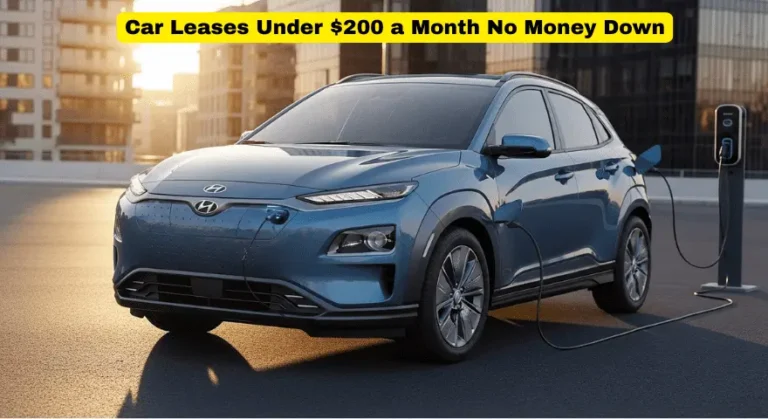
If your budget is much tighter and you mainly care about keeping payments low, you might focus on smaller, cheaper vehicles and even some car leases under $200 a month with no money down, which sit in a different price segment from these $45,000 models.
How Car Leasing Works Compared to Buying
The core difference between leasing and buying is what you are paying for. With a loan, you pay for the entire car, plus interest, and you own it at the end. When you decide to buy a car, consider bad credit car loans from Azora that offer reliable, fast loan options. With a lease, you pay only for the portion of the car’s value you use during the term, plus a finance charge and some fees.
When you buy, the car becomes an asset you can keep, sell, or trade whenever you like. When you lease, you agree to return it at the end of the term, unless you choose to buy it for the preset buyout price.
What a Car Lease Actually Is (Depreciation, Not Ownership)
When you lease, you are not paying for the whole $45,000 car. You are paying for the part of its value you “use up” while you drive it. That portion is called depreciation. The leasing company estimates what the car will be worth at the end of the term, and you cover the difference between today’s price and that future value, plus a finance charge and fees.
You return the car at the end, unless you decide to buy it for the agreed buyout price.
Key Lease Terms You’ll See (Capitalized Cost, Residual, Money Factor)
Three phrases appear on every lease offer and control most of your payment: capitalized cost, residual value, and money factor. Once you understand these, the numbers start to feel much less mysterious and you can compare offers with confidence.
Capitalized Cost
The capitalized cost is the price the lease is based on. It usually starts with the MSRP but should be reduced by dealer discounts, rebates, and any amount you pay upfront. The lower this number, the less depreciation you pay over the term.
Residual Value
The residual value is the estimated value of the car at the end of the lease. A higher residual means the car holds its value better, so you pay for a smaller slice of depreciation. Brands with strong resale value often have more attractive lease payments for this reason.
Money Factor
The money factor is the lease version of an interest rate. To translate it into a familiar APR, you multiply it by 2,400. A lower money factor means you pay less in finance charges over the life of the lease, which is why good credit matters so much.
Main Factors That Decide Your $45,000 Car Lease Payment
Several moving parts work together to create your final monthly payment. Knowing what they are helps you see where you can negotiate and where you simply have to choose a different vehicle or term.
MSRP, Negotiated Price, and Capitalized Cost
Your lease payment starts with the sticker price, but that number is not fixed. You should negotiate the selling price of a $45,000 car the same way you would if you were buying it. Every dollar you knock off the capitalized cost reduces the depreciation portion of your payment.
Residual Value and How It Shapes Depreciation
If a $45,000 car is expected to be worth, say, $26,000 at the end of three years, you are paying for the $19,000 difference. If another model at the same price is expected to be worth $30,000, you only pay for $15,000 of depreciation. That gap alone can shift your monthly payment by $80–$100.
Money Factor, APR, and the Role of Your Credit Score
Lenders reward higher credit scores with lower money factors. A small change in the money factor can add or remove dozens of dollars per month, especially on a $45,000 car. Before you shop, check your credit and correct any errors so you qualify for the best rate the brand offers.
Lease Term Length (24 vs 36 vs 48 Months)
Shorter leases, like 24 months, usually mean higher monthly payments but let you switch cars more often. A 36-month term is the most common balance between cost and flexibility. Stretching to 48 months can lower the payment, but you may be driving the car past the main warranty window, which can raise maintenance costs.
Down Payment, Due at Signing, and Common Lease Fees
Your due-at-signing amount often includes the first month’s payment, an acquisition fee, registration, and any extra money you choose to put down. A bigger down payment lowers your monthly bill, but it also increases your risk if the car is totaled early in the term. Most car lease agreements come with a stipulation that you must pay a penalty if you break the terms, so it pays to understand the structure clearly before signing, as explained in guides like this breakdown of lease penalties and conditions.
Mileage Limits, Wear-and-Tear, and Extra Charges
Every lease on a $45,000 car comes with a mileage limit, usually 10,000–15,000 miles per year. If you go over that, you pay a per-mile fee, often in the range of $0.15–$0.30. For someone who commutes far or drives a lot on weekends, that can add up quickly at the end of the term.
Normal wear-and-tear is expected, but deep scratches, curb-rashed wheels, or torn upholstery can trigger extra charges. If you park carefully, keep the interior clean, and fix minor damage early, you reduce the risk of a surprise bill when you return the car.
Taxes, Registration, and Local Costs
Your payment is also shaped by local taxes and registration fees. Some states tax the full price of the car, while others tax only the monthly payment. Two people leasing the same $45,000 vehicle can see very different final numbers simply because they live in different areas.
Calculating a Lease on a $45,000 Car
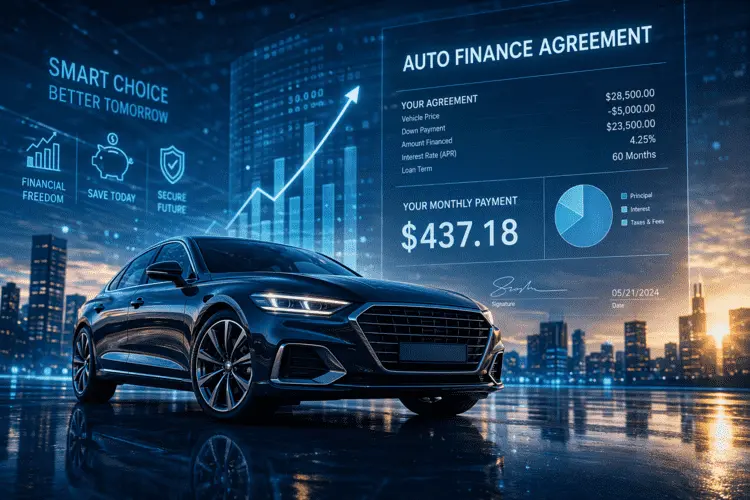
Let’s keep the math simple so you can see how the pieces fit together. Imagine a car with an MSRP of $45,000, negotiated down to $42,000 as the capitalized cost. The residual value after three years is set at 55%, or $24,750.
The depreciation you pay is $42,000 minus $24,750, which equals $17,250. Spread over 36 months, that’s about $479 per month. If the money factor works out to roughly 4–5% APR, you might add another $100–$130 in finance charges. After taxes and small fees, a realistic monthly payment lands somewhere in the $550–$650 range with a modest amount due at signing.
How a Larger Down Payment Changes the Monthly Cost
If you choose to put several thousand dollars down, you reduce the amount of depreciation collected in the monthly payment. That might bring your bill down by $70–$100 per month. The trade-off is that you tie up more cash in a car you will not own unless you buy it at the end.
Leasing vs Buying a $45,000 Car – Which Fits You Better?
Leasing a $45,000 car suits drivers who like new technology, prefer predictable costs, and stay within moderate mileage limits. You enjoy lower payments, fresh safety features, and the option to upgrade every three years without worrying about resale value.
Buying is usually better if you plan to keep the car for seven to ten years, drive a lot, or dislike contracts with mileage caps. Once the loan is paid off, you have a valuable asset and years of payment-free driving.
Final Thoughts
For most shoppers in 2025, a fair lease payment on a $45,000 car will fall between about $450 and $700 per month, depending on the model, residual value, money factor, term length, and cash at signing. If you understand how each factor works, you can read any lease quote calmly, spot inflated numbers, and choose the offer that truly fits your budget and driving habits.