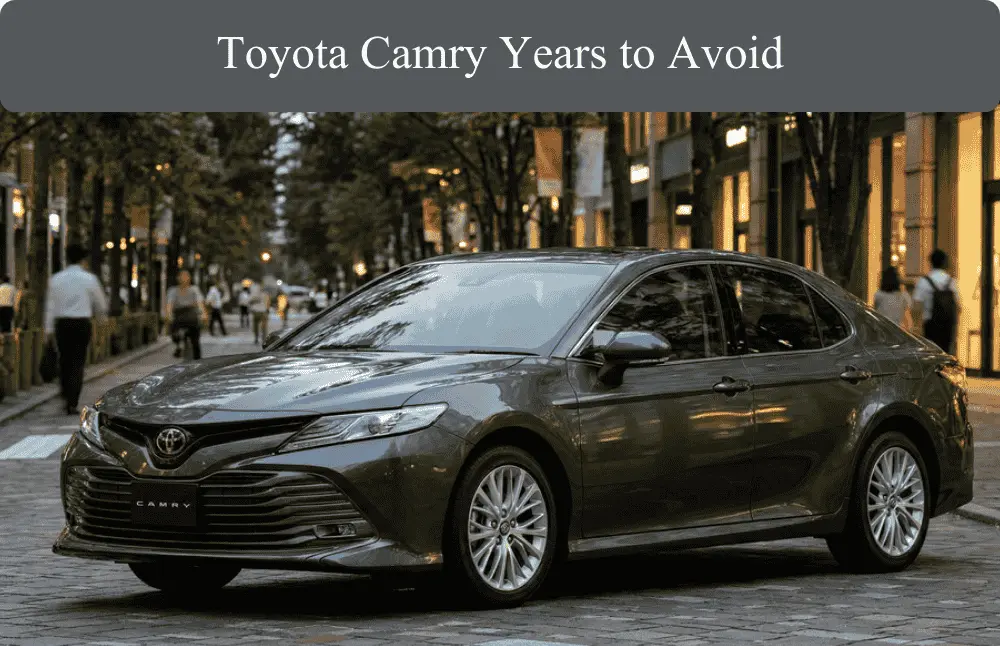
Toyota Camry Years to Avoid: A Complete Guide
The Toyota Camry has earned a strong reputation in the U.S. for being easy to own. It’s comfortable, practical, and usually cheaper to keep on the road than many competing sedans. But “usually” doesn’t mean “always.” A handful of Camry model years show the same patterns again and again—oil burning, rough shifting, brake and ABS headaches, and interior issues that feel way too early for a car with a Camry badge.
If you’re shopping used, learning the Toyota Camry years to avoid can save you from buying a car that looks clean today but starts draining your wallet later. This guide focuses on the years that frustrated owners the most, why those years stand out, and what to watch for before you buy.
Why Some Toyota Camry Model Years Become “Problematic”
Not every issue comes from neglect. Some years simply left the factory with weak spots that show up more often than they should.
Defective Parts or Materials
Certain years develop the same failures across different owners—things like oil consumption that keeps getting worse, or interior parts that don’t hold up in heat. When the same part fails repeatedly, the “reliable Camry” experience starts to feel like guesswork.
Recall Patterns and What They Signal
Recalls don’t automatically make a car “bad.” In fact, recalls can be a good sign when they get fixed quickly. The real concern is when a model year has a history of safety-related issues or repeat fixes that owners keep dealing with even after repairs.
Poor Consumer Feedback and Frequent Repairs
The worst years aren’t just “one-off problems.” They’re the years where drivers report the same frustrating symptoms: hesitation when accelerating, warning lights that come and go, or oil levels dropping between changes. Those patterns are what turn a used car into a stressful one.
How We Rated the Best and Worst Toyota Camry Years
No single source tells the full story, so the goal is to look for overlap—where complaints, repair patterns, and real ownership experience point in the same direction.
Complaint and Recall Data
In the U.S., complaints and recall records are a useful reality check. They won’t predict every car, but they can highlight model years where safety or reliability concerns show up more than expected.
Review Platforms and Owner Forums
Expert reviews help with the big picture, but owner feedback is often where the day-to-day pain shows up—oil burning, shifting behavior, brake feel, and electrical glitches. When you see the same problems repeated across different places, it’s worth paying attention.
What Counts as a “Money Pit Year”
A money pit year is usually a year with at least one expensive, repeat-prone problem—like oil burning that leads to engine wear, or transmission behavior that can’t be ignored. Even if the car still runs, you end up budgeting around its problems.
If you’re cross-shopping and wondering whether you even need a midsize sedan, it also helps to compare what Toyota offers on the smaller end—this quick guide to Toyota compact cars can be a helpful reference while you’re narrowing your choices.
Most Common Toyota Camry Problems (What Keeps Repeating)
Before breaking down specific years, it helps to know the big “problem buckets” that show up most often in the Camry years people regret.
Engine Issues
The most expensive stories usually involve oil-related problems. Some engines burn oil faster than owners expect, and that can lead to knocking, rough running, or long-term wear if it isn’t caught early. Sludge issues also get mentioned in older discussions, especially when maintenance history is unclear.
Transmission Troubles
A Camry should feel smooth. In problematic years, drivers report hesitation, rough shifts, and delayed engagement that makes the car feel unpredictable in traffic. Even if it doesn’t fail immediately, it can make daily driving annoying.
Brake System Problems
Premature brake wear is one thing. Brake feel that changes suddenly is another. Some years get linked to brake system quirks, including ABS-related issues that trigger warning lights or affect confidence behind the wheel.
Interior Quality and Heat Issues
Some Camry years get criticized for interior durability—rattles, weak trim, and dashboards that don’t age gracefully. In hot climates, interior material quality matters more than people think.
Safety and Tech Issues
Safety systems and electronics should be boring. When airbags, sensors, or basic electronics become unpredictable, the car stops feeling like a dependable commuter and starts feeling like a project.

Toyota Camry Years to Avoid (Shortlist + Why)
A Camry can be a great used buy, but the wrong year can feel like you’re always “one repair away” from regret. These are the Camry model years that show up most often in avoid lists and owner complaints, along with the reasons they frustrate people.
1998–2000: Early “Worst Years” That Can Feel Worn Out
These older Camrys can still run for a long time, but age is the enemy here. When you’re shopping a 1998–2000 model today, you’re not just judging Toyota engineering—you’re judging decades of maintenance decisions. Wear in steering and suspension parts, aging rubber seals, and tired electrical components can add up. You might get a cheap purchase price, but you can also inherit a list of small issues that keep coming back.
If you’re buying this era, the best sign isn’t low price—it’s proof of consistent maintenance and a clean, honest inspection.
2001–2002: Sludge and Early Failure Risk
This range often gets mentioned due to engine concerns tied to sludge-like buildup when maintenance wasn’t perfect. The biggest problem is that you can’t “see” sludge by walking around the car. A Camry might idle smoothly and still have a history of poor oil-change habits that caused internal buildup over time.
A seller who has records and shows regular oil changes is a much safer bet than a seller who says, “It’s a Toyota, it’ll run forever.”
2007 Camry: Oil Consumption and Drivability Complaints
The 2007 Camry is one of the most talked-about “avoid years” because it blends expensive potential issues with frustrating daily behavior. Owners often mention oil consumption problems in four-cylinder models, plus the kind of transmission hesitation that makes the car feel slow to respond. Some drivers also complain about interior quality problems, including dashboard issues that age poorly.
A key point with 2007 is that it can feel fine on a short drive. The real risk shows up over months—when you’re topping off oil more often than you should or noticing shifting behavior that never feels fully smooth.
2009 Camry: Oil Burning and Knock Worries
The 2009 model year continues the oil-burning conversation. Low oil between changes isn’t just inconvenient—it can lead to engine wear, knocking noises, and long-term damage if it’s ignored. Some owners report that the car becomes a “monitor the dipstick” vehicle, which defeats the whole purpose of buying a Camry for stress-free ownership.
When a seller can’t explain oil usage or can’t show consistent oil-change history, it’s usually safer to move on.
2010 Camry: Check-Engine Lights and Engine System Headaches
The 2010 Camry appears in many avoid lists because engine-related complaints and warning lights show up too often. Even when the fix isn’t catastrophic, chasing check-engine issues can get annoying and expensive. The bigger issue is uncertainty—buyers don’t want a car that feels like it might throw a new code every few months.
With this year, a pre-purchase scan tool check matters. If codes are present or recently cleared, treat that as a red flag.
2011 Camry: Brake Wear and ABS-Related Complaints
The 2011 Camry can frustrate owners with braking-related complaints, including premature wear and ABS quirks that trigger warning lights or change pedal feel. Brakes are not a “maybe later” system. If the braking system doesn’t feel consistent, you’ll never fully relax behind the wheel.
During a test drive, pay attention to how the pedal feels during normal stops and harder stops. If the car pulls, vibrates, or the ABS light is on (or comes on), it’s a strong sign to keep looking.
2012–2014 Camry: A Cluster of Annoying Problems
In many lists, 2012–2014 gets flagged as a stretch where multiple issues show up—transmission complaints, suspension noise, electrical glitches, and oil leaks. Not every car from these years will have the same problems, but they show up often enough that it’s smart to be picky.
These years can still be okay if the car has full records, a strong inspection, and a clean test drive. The problem is that many used listings don’t give you that confidence.
2013–2014: Torque Converter and Rough Shifting Complaints
Within that 2012–2014 span, 2013 and 2014 often get singled out for rough shifting and torque-converter-type complaints. The symptoms can feel like a shudder, hesitation, or inconsistent shifting under light throttle. Some owners live with it, but many find it frustrating—and if it gets worse, it’s not cheap to address.
2018 (Some Lists Include 2018–2019): Fuel Pump, Tech, and Early Redesign Quirks
The 2018 Camry redesign brought a lot of modern tech, and for many people, it’s a good car. But some lists still include 2018 because early redesign years can have “first-run” issues. Buyers report tech and infotainment problems, electrical gremlins, and fuel system concerns that can show up without warning.
If you’re shopping a 2018, the goal is simple: confirm all recall work is done, test every feature, and make sure the car behaves perfectly on the road—no weird hesitation, no warning lights, no flaky screens.
Toyota Camry Years You Can Trust (Safer Used Picks)
The goal isn’t to scare you away from the Camry. It’s to help you land on a year that delivers the calm, low-drama ownership people expect. These are the kinds of model years buyers often feel better about because they avoid the biggest repeat complaints.
2015 Camry
This year is often seen as a safer choice because it feels like Toyota has had time to smooth out earlier rough spots. When a 2015 Camry has a clean service history, it usually drives the way a Camry should—predictable shifts, stable ride, and fewer surprises. It’s still a used car, so condition matters, but the overall risk profile is usually lower than the “avoid years.”
2016 Camry
The 2016 model is a strong everyday pick for drivers who want comfort and simple reliability. It tends to be a good balance: modern enough to feel updated, but not overloaded with problems that turn ownership into a constant repair schedule. Look for regular oil changes, brake service, and tires that wear evenly, which often indicates a well-kept suspension.
2018 Camry (Buy Carefully)
Some lists include 2018 as an avoid year, and others praise it for the redesign. The truth is in the details. Many 2018 Camrys are solid cars, but early redesign years can come with “new tech” quirks. If you buy a 2018, shop more carefully than you would for a proven mid-cycle model. Confirm recall work, test all features, and make sure it drives smoothly at low and highway speeds.
2020 Camry
By 2020, the newer generation had more time to settle. This makes 2020 a safer target for many used buyers who want newer safety tech without feeling like a first-run tester. These cars can still vary by maintenance, so don’t skip the basics: service records, a clean scan for codes, and a full test drive.
How to Avoid Buying a Bad Camry
Even a “good year” can become a bad purchase if the previous owner skipped maintenance. The best used-car strategy is simple: verify, inspect, then decide.
Check the VIN for Recalls and Complaint History
Before you fall in love with a listing, run the VIN and confirm recall work is completed. This takes minutes and can prevent you from buying a car that still needs major safety-related fixes.
Request Maintenance Records
Ask for oil change history, major service receipts, and any proof of brake inspections. For Camrys, known for oil burning, records matter even more. A seller who has paperwork usually takes the car seriously.
Hire a Mechanic for a Pre-Purchase Inspection
A professional inspection is often cheaper than one repair on a problem year. A mechanic can spot oil leaks, worn suspension parts, brake issues, and signs of transmission trouble that most buyers miss.
Research Service Bulletins and Common Fixes
Some problems don’t show up as a recall but still show up in the real world. Knowing what owners report most helps you ask better questions and catch red flags early.
If you’re comparing body styles and wondering whether a crossover fits your life better than a sedan, it’s smart to research known weak years there, too. This guide to the Toyota RAV4 years to avoid can help you avoid the same mistake in a different Toyota model.
Final Thoughts — Know Before You Buy
A Toyota Camry can be one of the best used cars in the U.S., but the year matters. Avoiding the most complaint-heavy years helps you skip the common traps like oil consumption, rough shifting, brake and ABS issues, and early-tech problems. Focus your search on safer years, demand real maintenance proof, and never skip a proper inspection. When you buy the right Camry, it gives you what you came for: a smooth ride, low stress, and long-term value.