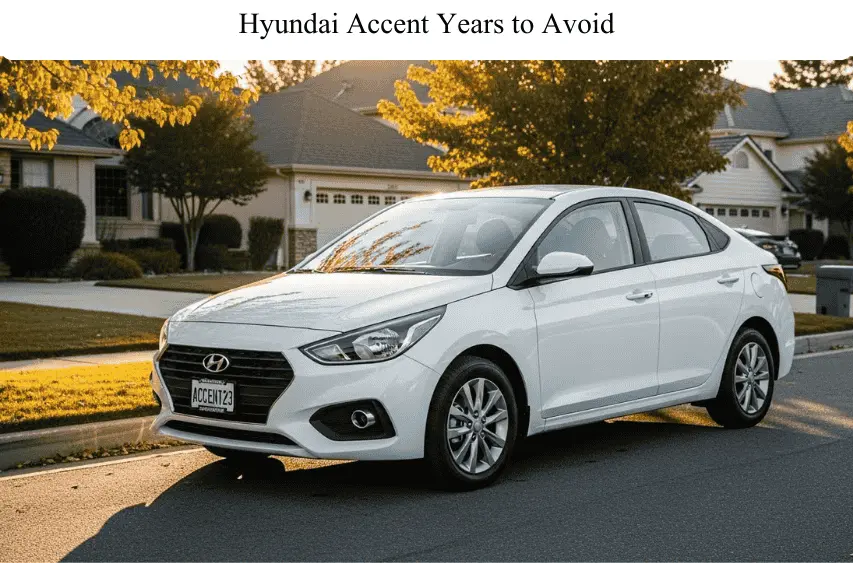
Hyundai Accent Years to Avoid: A Complete Guide to Reliability, Common Problems
The Hyundai Accent has earned a reputation as one of the most budget-friendly cars on the used market. It is small, easy to park, and generally cheap to run, which makes it a top choice for first-time drivers and commuters. However, a low price tag often comes with hidden costs if you aren’t careful.
Not every Accent is built the same. While some model years will run for 200,000 miles with basic maintenance, others are notorious for catastrophic engine failures and frustrating transmission slips. If you buy the wrong year, you might end up spending more on repairs than the car is actually worth.
In this guide, we will cut through the noise and tell you exactly which years you should steer clear of. We will look at the real data—complaints from actual owners, recall notices, and mechanical reports—to help you find a reliable daily driver. Just as smart buyers research the Hyundai Kona years to avoid before purchasing a crossover, knowing the specific weak points of the Accent is critical to protecting your wallet.
Quick Summary: Best & Worst Hyundai Accent Years at a Glance
If you are standing on a dealership lot right now and need a quick answer, here is the cheat sheet. We have categorized the model years based on the severity of mechanical faults and overall owner satisfaction.
Years to Avoid (The “Red” List):
- 2012: The absolute worst year due to engine failure.
- 2006 & 2007: Prone to transmission failure and electrical issues.
- 2011: Known for suspension problems and airbag concerns.
- 2013: Carries over many engine issues from 2012.
- 2002: Older models with significant transmission risks.
Years to Buy (The “Green” List):
- 2018–2022: The most reliable generation with modern safety tech.
- 2016–2017: Solid reliability after Hyundai fixed the earlier engine bugs.
- 2014: A decent middle-ground choice.
- 2005: A reliable, simple “beater” car if you find one rust-free.
The verdict is simple: if your budget allows, aim for a 2018 or newer model. If you are looking for something cheaper, the 2016-2017 models offer the best balance of price and reliability.
Hyundai Accent Generations Explained
To understand why reliability shifts so drastically, you need to know which generation you are looking at. Hyundai redesigns the Accent every few years, and often, the first year of a new design is the most problematic.
- First Generation (1995–1999): These are getting very old now. They are basic, simple cars, but age is their biggest enemy.
- Second Generation (2000–2005): A step up in durability. The engines are decent, but automatic transmissions in this era can be jerky.
- Third Generation (2006–2011): These introduced a rounded, bubbly look. While stylish, this generation suffered from significant engine and airbag complaints.
- Fourth Generation (2012–2017): This generation features the sharp “Fluidic Sculpture” design. It looks great, but the early years (2012-2013) were rocky for reliability.
- Fifth Generation (2018–2022): The final and best version of the Accent. It is refined, safe, and mechanically sound.
Hyundai Accent Years to Avoid (Detailed Breakdown)
We have identified the specific years that pose the highest financial risk. These aren’t just cars with minor annoyances like a stuck window; these are model years known for leaving drivers stranded.
2012: The Worst Model Year
If there is one year you simply must avoid, it is the 2012 Hyundai Accent. This was the debut year for the Fourth Generation, and unfortunately, it suffered from “new model syndrome.”
The biggest issue here is the engine. Owners frequently report a loud knocking sound that eventually leads to the engine seizing up completely. This often happens well under 100,000 miles. On top of that, the automatic transmission is known to slip, causing the car to jerk or hesitate when you try to accelerate. It is a dangerous combination that makes the 2012 model a liability.
2006 & 2007: Early Third-Gen Struggles
The start of the Third Generation was also rough. The 2006 and 2007 models are infamous for stalling at highway speeds. Imagine driving at 60 mph and having your engine suddenly cut out—that is a reality some owners faced.
Transmission failure is also common in these years. You might find the car refusing to shift into reverse or getting stuck in a single gear. Additionally, the 2007 model specifically had issues with excessive oil consumption, forcing owners to constantly top up the oil to prevent engine damage.
2011: The Suspension Nightmare
The 2011 model was the final year of its generation, which usually means the bugs are worked out. However, this year developed a new problem: weak suspension.
Owners reported premature failure of the struts and ball joints. This leads to a rough, noisy ride and uneven tire wear. If you hear a clunking noise every time you hit a bump, it’s likely the suspension giving up. Combined with reports of poor interior build quality and rattling noises, the 2011 Accent just doesn’t feel as solid as other years.
2013: Persistent Engine & Electrical Faults
You might think that after the disastrous launch of the 2012 model, Hyundai would have fixed everything for 2013. Unfortunately, that wasn’t the case. The 2013 Hyundai Accent inherited several of the major headaches from the previous year, specifically regarding the engine.
Drivers often report engine misfires, which can make the car feel rough while idling at a stoplight or cause it to lose power when accelerating. This is frequently traced back to faulty ignition coils or spark plugs, but in some cases, it points to deeper internal issues.
On top of the mechanical gremlins, the 2013 model struggled with electrical faults. A common complaint involves the alternator failing prematurely, leaving drivers stranded with a dead battery. We also see frequent reports of the air conditioning system blowing warm air due to compressor failures—a massive inconvenience if you live in a hot climate.
2002 & Older: The Transmission Risks
If you are looking at a very cheap, older Accent, specifically from 2002 or earlier, you need to be wary of the transmission. The automatic gearboxes in these early Second Generation models were not known for their longevity.
The most frightening symptom reported by owners is the transmission “skipping” gears or shifting unpredictably. You might be driving along, and the car suddenly drops into a lower gear, causing the engine to scream, or it might refuse to upshift altogether. While these cars are incredibly cheap to buy now, the cost of rebuilding a transmission often exceeds the value of the vehicle itself. Unless you find one with a manual transmission—which is generally bulletproof—it is often safer to skip these vintage years.
Common Hyundai Accent Problems & Manufacturing Defects
To understand why these cars fail, it helps to look beyond just the model year and understand the specific parts that tend to break. Whether you are looking at a 2007 or a 2012, many of these issues stem from the same engineering choices.
Engine Issues (GDI & Alpha Engines)
The most expensive problems usually happen under the hood. In the later models (2012–2017), Hyundai used a Gasoline Direct Injection (GDI) engine. While this technology is great for fuel economy, it has a downside: carbon buildup. Over time, carbon deposits can clog the intake valves, leading to rough running and loss of power.
In the worst cases—specifically the 2012 model—internal bearings inside the engine can wear out prematurely. This creates a “knocking” or “ticking” sound that gets faster as you rev the engine. If you hear this during a test drive, walk away immediately. It is usually a sign that the engine is destroying itself from the inside out.
Transmission Failures
As we mentioned with the older models, the automatic transmission has historically been a weak point. In the 2006–2007 era, the problems were often linked to sensors that would fail and prevent the car from shifting. In the 2012–2013 era, the issues were more mechanical, involving slipping gears and harsh engagement.
Signs of a bad transmission include a long delay between moving the shifter into “Drive” and actually feeling the car move, or a violent jerk when the car changes gears while driving.
Safety & Airbag Concerns
Safety is a non-negotiable for most buyers, and this is an area where the Accent has had a checkered past. Several model years, particularly between 2007 and 2009, were affected by airbag sensor issues. There were reports of airbag warning lights staying on primarily because the weight sensor in the passenger seat would malfunction.
More seriously, some Accents were part of broader industry recalls where airbags could fail to deploy in a crash. Always check if the specific car you are looking at has had its recall work performed.
Electrical Gremlins
While less critical than an engine failure, electrical issues can be incredibly annoying. In the 2015 models and newer, we start to see more complaints about the infotainment screens freezing or going black. In older models, issues like power windows getting stuck or door locks failing are par for the course. These aren’t necessarily deal-breakers, but they are bargaining chips you can use to lower the price.
Why Do Some Years Have More Problems?
You might wonder why a 2011 model is unreliable while a 2014 model is decent. It usually comes down to the “First Year Syndrome.”
Car manufacturers often rush to get a new design to market. The first year of a new generation—like 2006 (Gen 3) or 2012 (Gen 4)—often contains parts that haven’t been fully stress-tested in the real world. As thousands of drivers put miles on these new cars, the flaws become obvious, and the manufacturer quietly updates the parts for the following years.
This is why the 2012 Accent has so many engine complaints, while the 2016 Accent (which uses a nearly identical engine) is reliable. Hyundai identified the weak points and improved the manufacturing quality over time. It is a pattern we see across the industry, not just with Hyundai.
The Best Hyundai Accent Years to Buy (Reliability Winners)
Now that we have covered the years to avoid, let’s talk about the models that are actually worth your money. If you pick the right year, the Hyundai Accent can be one of the most reliable cars you will ever own.
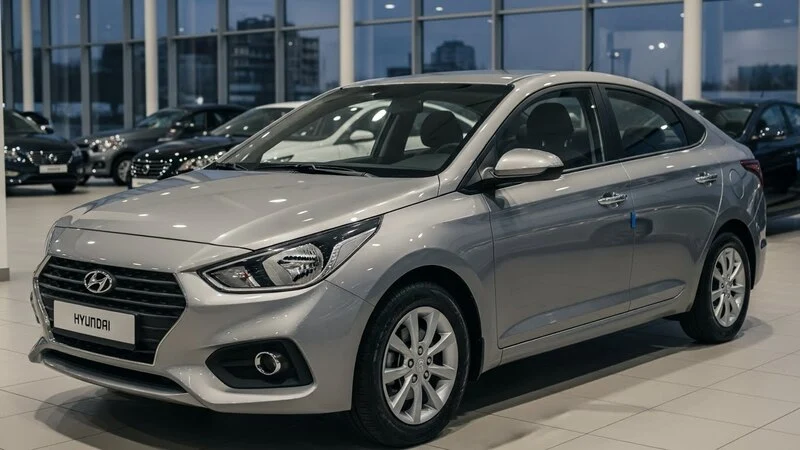
2018–2022 (Fifth Generation)
These are, without a doubt, the “Gold Standard” of Accents. By this generation, Hyundai had completely overhauled the chassis using high-strength steel, making the car safer and quieter.
From a reliability standpoint, the major engine and transmission gremlins of the past were largely eliminated. In 2020, Hyundai introduced a new CVT (Continuously Variable Transmission) which significantly boosted fuel economy. If your budget allows, a 2018 or newer model is the safest bet for a trouble-free ownership experience.
2016–2017 (Late Fourth Generation)
If you can’t stretch your budget to a newer model, the 2016 and 2017 Accents are excellent alternatives. By this point in the production cycle, Hyundai had resolved the nasty engine knocking issues that plagued the 2012 models. These cars offer a modern look and decent tech without the reliability risks of the earlier years. They represent the “sweet spot” of value—cheap to buy, but reliable enough to trust.
2005 & 2014 (Honorable Mentions)
- 2014: This year marks the turning point where the Fourth Generation started getting better. It is a balanced option if you find one with good service records.
- 2005: If you need a cheap “A-to-B” car, the 2005 model is the peak of the Second Generation. It’s simple, rugged, and parts are incredibly cheap. Just watch out for rust.
Pros and Cons of Ownership
Before you sign the paperwork, it helps to know what living with an Accent is actually like.
Pros:
- Fuel Economy: It is a gas-sipper, easily achieving 30+ MPG in the city and 40+ on the highway.
- Low Repair Costs: Unlike German luxury cars, parts for an Accent are affordable and widely available.
- Easy to Drive: Its small size makes it perfect for squeezing into tight city parking spots.
Cons:
- Road Noise: Older models (pre-2018) can be quite loud on the highway.
- Performance: It isn’t fast. merging onto freeways requires a bit of patience.
- Comfort: The seats in the older generations are basic and can get uncomfortable on long road trips.
Life Expectancy: How Long Do Hyundai Accents Last?
A common question buyers have is, “How much life is left in this car?”
If you maintain it well, a Hyundai Accent is capable of reaching 200,000 to 250,000 miles. The key phrase here is “maintain it well.” The engines in these cars are durable, but they do not tolerate neglect. Missing oil changes can lead to the sludge and timing chain issues we discussed earlier.
If you find a used Accent with 120,000 miles that has a full service history, it likely still has plenty of life left in it. However, an Accent with 120,000 miles and no maintenance records is a gamble you shouldn’t take.
Best Alternatives to the Hyundai Accent
If the specific issues of the Accent make you nervous, there are other great subcompacts to consider.
- Kia Rio: This is essentially the Accent’s cousin. They share the same engine and platform. Sometimes you can find a Rio with better features for the same price.
- Honda Fit: It is more expensive, but the “Magic Seats” offer incredible cargo space, and Honda’s reliability is legendary.
- Toyota Yaris: It’s not as exciting to drive, but it is bulletproof in terms of reliability.
Buying Guide: How to Inspect a Used Hyundai Accent
You don’t need to be a mechanic to spot a bad car. Follow this simple checklist when you go to test drive an Accent.
- The “Cold Start” Test: Tell the seller you want the engine cold when you arrive. Start the car with the hood up and listen immediately. If you hear a loud “ticking” or “clatter” that lasts more than a few seconds, walk away. That is the sound of a dying engine (common in 2012 models).
- The Transmission Shift Test: Find a road where you can accelerate slowly. The car should shift gears smoothly without jerking your head back. If there is a long pause or a “thud” when it changes gears, the transmission is on its way out.
- Check for Rust: Look under the doors and inside the wheel wells. On older models (1995–2005), rust can eat through structural parts.
- Verify Recalls: Grab the VIN (Vehicle Identification Number) from the dashboard and run it through the NHTSA website. This will tell you if the car has dangerous open recalls, like the airbag issues we mentioned.
Frequently Asked Questions (FAQ)
The 2012 model year has the highest volume of engine complaints, primarily regarding knocking noises and seizure.
Generally, no. They are among the cheapest cars to fix. However, major failures like a transmission replacement in a 2012 model can cost more than the car is worth.
It is capable, but it is best suited for city driving. At highway speeds, it can feel a bit light, and there is noticeable wind noise, though the 2018+ models are much better in this regard.
Yes, Hyundai discontinued the Accent after the 2022 model year to focus on their SUV lineup, like the Venue and Kona.
Conclusion
The Hyundai Accent proves that you don’t need to spend a fortune to get a reliable set of wheels—as long as you avoid the landmines.
To recap: Avoid the 2012, 2011, and 2006–2007 models to save yourself from expensive engine and transmission headaches. Instead, search for a 2018 or newer model for the best safety and reliability, or a 2016–2017 model for a great value buy.
By following this guide and checking the history of any used car you look at, you can drive away in an Accent that will serve you faithfully for years to come. Reliability isn’t just about the badge on the grill; it’s about choosing the right year.