Ford F-250/F-350 Powerstroke Years to Avoid: DPF & EGR Problems Every Buyer Should Know
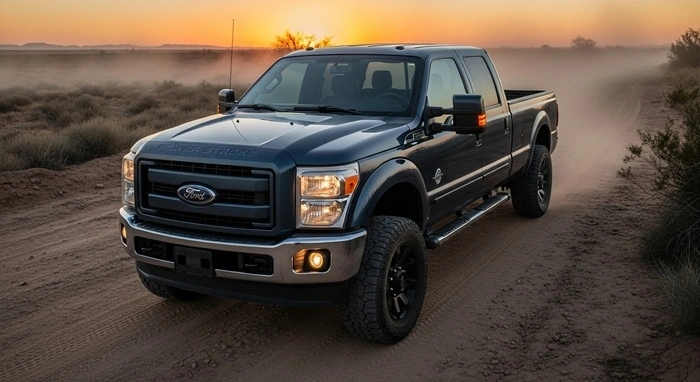
If you’re shopping for a used Ford Super Duty diesel, knowing which model years to avoid can save you thousands of dollars in repairs. The Ford F-250 and F-350 Powerstroke lineup has a long and proud history, but certain years are notorious for emissions system failures that turn a dream truck into a money pit.
In this guide, we break down the worst Powerstroke years for DPF and EGR problems, explain what causes these failures, and tell you what to look for before you buy.
A Quick Look at Powerstroke Generations
Ford has produced three modern Powerstroke diesel engines in the Super Duty platform:
- 6.0L Powerstroke (2003–2007): Infamous for EGR cooler failures and head gasket issues
- 6.4L Powerstroke (2008–2010): Plagued by DPF clogging and dual EGR cooler problems
- 6.7L Powerstroke (2011–present): Generally more reliable, but early years had their own DPF and EGR headaches
Each generation brought improvements in power and efficiency, but the emissions systems introduced during this era created a new category of expensive, common failures.
The Worst Powerstroke Years to Avoid
2003–2007 Ford F-250/F-350
The 6.0L is widely considered one of the most problematic diesel engines Ford ever produced. While it wasn’t equipped with a DPF, its EGR system is a ticking time bomb.
Key problems:
- EGR cooler failure: The 6.0L EGR cooler is prone to cracking under thermal stress. When it fails, coolant mixes with exhaust gases, leading to white smoke, overheating, and catastrophic head gasket damage.
- Oil cooler clogging: A restricted oil cooler accelerates EGR cooler failure. Many 6.0L owners discover this only after a major repair bill.
- Head gasket failure: Often a downstream consequence of the EGR and oil cooler problems. A head gasket replacement on a 6.0L can run $3,000–$5,000 at a shop.
Years to be most cautious about: 2003–2004.
What buyers should do: Demand full service records, compression test results, and coolant system inspection before purchasing any 6.0L Super Duty. Budget for an EGR delete or coolant filtration upgrade if you plan to keep the truck.
2008–2010 Ford F-250/F-350
Ford attempted to fix the 6.0L’s problems by developing the 6.4L Powerstroke. It made more power and introduced dual EGR coolers and a Diesel Particulate Filter. Unfortunately, this added complexity created an entirely new set of expensive failures.
Key problems:
- DPF clogging: The 6.4L’s DPF clogs aggressively, especially if the truck is used for short trips or light towing. A full DPF replacement costs $2,000–$4,000. Regeneration cycles are frequent and can damage the engine if they fail to complete properly.
- Dual EGR cooler failure: The 6.4L has two EGR coolers, and both are prone to the same cracking issues seen in the 6.0L. Labor alone to replace both can exceed $2,500.
- Fuel dilution: During DPF regen cycles, raw diesel is injected into the exhaust stream. Some of this fuel washes down cylinder walls into the crankcase, diluting engine oil and accelerating wear.
- Turbo failures: The compound turbo setup on the 6.4L is complex and expensive to repair.
The bottom line on the 6.4L: This is the generation most used truck experts recommend skipping entirely unless the price is very low and you have a plan for the emissions system. Many owners found that keeping the DPF functional was a losing battle, and budget accordingly.
What buyers should do: Check the DPF condition and regen history via a scan tool. Ask whether the EGR coolers have ever been replaced. If neither has been addressed on a high-mileage 6.4L, walk away or heavily negotiate the price.
2011–2014 Ford F-250/F-350
The 6.7L Powerstroke was a complete redesign, built in-house by Ford rather than sourced from Navistar. It was significantly more reliable than its predecessors, but early production years still had DPF and EGR-related growing pains.
Key problems:
- EGR valve sticking: Early 6.7L trucks, particularly 2011–2013 models, are known for EGR valves gumming up with carbon buildup. A stuck EGR valve triggers limp mode and sets fault codes, and replacement runs $500–$1,000 including labor.
- DPF failures: 6.7L DPF systems are more reliable than the 6.4L’s, but high-mileage examples often need DPF replacement or cleaning. A new DPF can cost $1,500–$3,000.
- SCR/DEF system faults: 2011+ trucks added Selective Catalytic Reduction and diesel exhaust fluid requirements. DEF system sensors and the DEF injector are common failure points on early 6.7L trucks.
Years to be most cautious about: 2011–2012.
What buyers should do: Run a pre-purchase OBD2 scan to check for stored fault codes. Pay attention to DEF fluid quality, as using poor-quality DEF is a major source of SCR system damage.
2015–2016 Ford F-250/F-350
Ford updated the 6.7L significantly for 2015, increasing output to 440 hp / 860 lb-ft. These trucks are generally well-regarded, but a specific batch of 2015 trucks had an emissions-related recall involving the EGR system.
Key problems:
- EGR recall (some 2015 trucks): Ford issued a recall for a software update related to EGR system logic. Verify any 2015 Super Duty you’re considering has had this recall completed.
- Carbon buildup: As with all EGR-equipped engines, long-term carbon accumulation in the intake manifold and EGR cooler is an ongoing maintenance item on high-mileage examples.
Verdict: 2015–2016 are among the better used Super Duty years if the recall has been addressed and maintenance is documented. These represent a sweet spot of value and reliability in the used market.
Why DPF and EGR Failures Are So Expensive
The emissions systems on modern diesel trucks were designed to meet EPA regulations, not necessarily to survive 200,000+ miles without major intervention. Here’s why repairs are so costly:
- Labor intensity: EGR coolers and DPF assemblies are buried deep in the engine bay. Even a straightforward EGR cooler swap can require 10–15 hours of labor.
- Part costs: OEM DPF assemblies for a 6.4L or 6.7L Powerstroke routinely cost $2,000–$4,000 before labor.
- Cascade failures: A failed EGR cooler can lead to head gasket damage. A clogged DPF can cause backpressure damage to the turbo. One problem often creates another.
- Regeneration dependence: Active DPF regen cycles require the engine to reach certain operating conditions. Trucks used primarily for short trips or idling never complete full regen cycles, causing premature clogging.
What Serious Diesel Owners Do About It
Many Super Duty owners who use their trucks hard for towing, work, or off-road eventually look into aftermarket solutions to address the root causes of these failures rather than paying for repeated repairs.
One well-known option is exploring Powerstroke EGR delete kits from EngineGo, which specializes in performance and emissions upgrade parts for Ford, Dodge, and GM diesel platforms. Removing the EGR from the system eliminates the most common failure point entirely. This means no more cooler cracks, no more carbon buildup, no more coolant-in-exhaust scenarios.
For trucks dealing with chronic DPF issues, owners often research 6.7L Powerstroke DPF solutions including full delete kits that replace the restrictive emissions hardware with straight-pipe exhaust systems designed to improve flow and reduce backpressure. EngineGo offers complete kits for major Powerstroke model years with tuner support to match.
Important note: Emissions delete modifications are intended for off-road or closed-course use only, and are not legal for use on public roads in the United States. Always check your local and state regulations before modifying your vehicle’s emissions system.
Pre-Purchase Checklist: Powerstroke DPF & EGR Health
Before buying any used F-250 or F-350 diesel, run through this checklist:
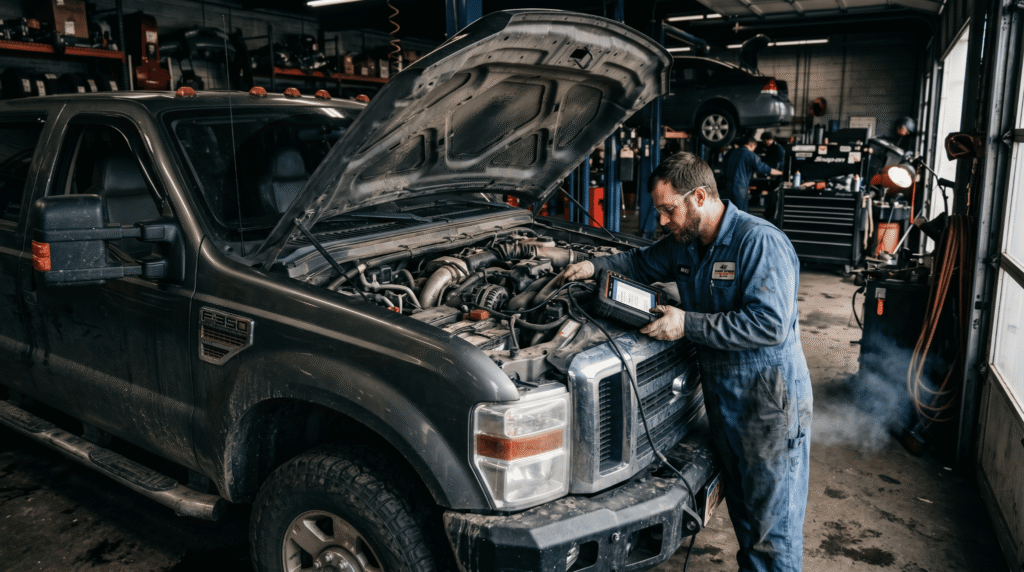
- Pull active and stored OBD2 fault codes (P0401, P2002, P246X codes are red flags)
- Check coolant condition: milky or discolored coolant suggests EGR cooler or head gasket failure
- Request DPF regen history if available via dealer scan tool
- Inspect exhaust for white or blue smoke at startup and under load
- Ask for EGR cooler replacement history on 6.0L and 6.4L trucks
- Verify DEF system function on 2011+ trucks (check for low DEF warning or SCR fault codes)
- Check oil for fuel dilution on 6.4L trucks (oil smells like diesel or level is higher than normal)
- Confirm any open recalls have been completed (NHTSA VIN lookup)
The Verdict: Which Powerstroke Years Are Worth Buying?
| Year Range | Engine | Reliability | Main Risk |
| 2003–2007 | 6.0L | Low | EGR cooler / head gasket |
| 2008–2010 | 6.4L | Very Low | DPF + dual EGR cooler |
| 2011–2014 | Early 6.7L | Medium | EGR valve / DEF system |
| 2015–2019 | 6.7L Gen 2 | Medium-High | Carbon buildup (manageable) |
| 2020–present | 6.7L Gen 3 | High | Still relatively new |
If you’re buying used and want to minimize emissions-system risk, target 2017–2019 6.7L Powerstroke trucks. By that point, Ford had refined the platform significantly, the DEF system was mature, and these trucks are still available at reasonable used prices.
Avoid the 6.4L unless the price reflects the risk, and approach any 6.0L as a project truck that will likely need EGR system work.
Final Thoughts
The Ford Super Duty Powerstroke lineup produces genuinely capable trucks, but the emissions systems on 2003–2014 models have a documented history of expensive failures. Going into a purchase informed (knowing which years carry the most risk and what to inspect) is the difference between a reliable work truck and an ongoing repair project.
Do your homework, run a thorough pre-purchase inspection, and budget realistically for the emissions system’s lifespan. The right Powerstroke at the right price is still one of the best diesel trucks on the used market.