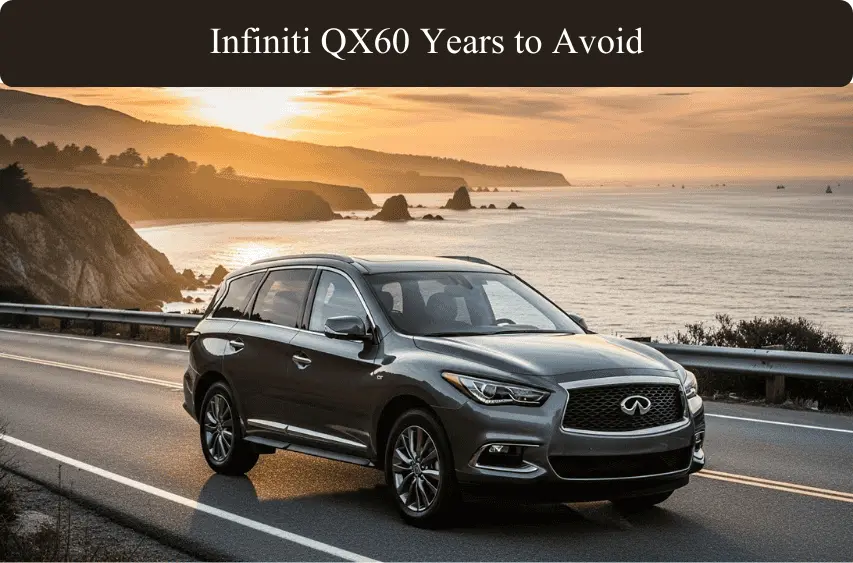
Infiniti QX60 Years to Avoid: Reliability Analysis, Common Faults, and Best Models
The Infiniti QX60 has long been a favorite for families seeking a luxury mid-size crossover. It offers three rows of seating, a spacious interior, and a premium feel without the massive price tag of European rivals. However, not every QX60 rolling off the assembly line offers the same level of dependability. While some model years provide hundreds of thousands of trouble-free miles, others are plagued by expensive mechanical failures that can turn ownership into a financial headache.
If you are in the market for a used QX60, knowing the difference between a reliable daily driver and a lemon is critical. We have analyzed consumer complaints, reliability reports, and technical service bulletins to help you navigate the used market safely.
Quick Answer: Which Infiniti QX60 Years Should You Avoid?
For those browsing listings right now, here is the bottom line. You should strictly avoid the 2014, 2015, and 2017 model years. These specific production runs suffer from higher rates of catastrophic failures, particularly involving the transmission and engine systems.
Conversely, models produced after the 2019 mid-cycle refresh have shown significant improvements in build quality and long-term durability.
Infiniti QX60 Reliability by Year
| Model Year | Verdict | Main Issues to Watch |
| 2014 | Avoid | CVT transmission failure, severe shuddering, timing chain rattle. |
| 2015 | Avoid | Transmission fluid leaks, drivetrain vibration, exterior accessory failure. |
| 2016 | Caution | A/C system faults, minor electrical glitches. |
| 2017 | Avoid | Engine oil sludge, hybrid powertrain failure, cooling fan defects. |
| 2018 | Safe | Improved transmission logic, fewer engine complaints. |
| 2019+ | Best Buy | Updated safety tech, resolved major mechanical faults. |
Understanding the Infiniti QX60 Lineage (JX35 to QX60)
To understand why certain years fail, you need to understand the car’s history. The vehicle we know today as the QX60 actually debuted in 2013 under the name Infiniti JX35. In 2014, as part of Infiniti’s brand-wide renaming strategy, the JX35 became the QX60.
Despite the name change, the underlying mechanical platform remained largely shared with the Nissan Pathfinder. This connection is important because both vehicles utilize the same powertrain components, including the widely discussed VQ35DE V6 engine and, more controversially, the Jatco-sourced Continuously Variable Transmission (CVT). This shared DNA explains why problems affecting the Pathfinder often mirror those found in the QX60.
Detailed Breakdown: Worst Infiniti QX60 Years to Avoid
While every car has the occasional bad apple, statistics show that specific production years for the QX60 have systemic design flaws. These are the years where “wear and tear” is often replaced by “premature failure.”
2014 Infiniti QX60: The Transmission Nightmare
The 2014 model year is widely considered the most problematic version of this crossover. As the debut year for the “QX60” badge, it inherited early teething issues from the platform’s initial launch. The primary culprit here is the drivetrain.
Owners frequently report a violent “shudder” or “judder” when accelerating at low speeds. This is not just a comfort issue; it is often a symptom of the CVT chain slipping against the pulleys inside the transmission. In many cases, this hesitation leads to stalling or total transmission failure, requiring a full replacement. For a luxury vehicle, experiencing a loss of power on a highway on-ramp is a severe safety oversight that potential buyers should not ignore.
2015 Infiniti QX60: Drivetrain and Accessory Failures
Infiniti attempted to address the initial complaints in 2015, but the data suggests the transmission woes persisted. The 2015 QX60 continued to suffer from the same “CVT shudder” found in the 2014 model.
Beyond the gearbox, this model year saw a rise in complaints regarding exterior build quality and accessories. Specific reports point to side mirrors that could malfunction or even detach, as well as drivetrain vibrations that persisted even after software updates. While less severe than total engine failure, these nagging issues add up to a frustrating ownership experience.
2017 Infiniti QX60: Engine Sludge and Electrical Gremlins
You might assume that by 2017, all the bugs would be worked out. Unfortunately, the 2017 QX60 remains a model to avoid, but for different reasons. While the transmission logic was updated, this year saw a spike in engine-related complaints.
Specifically, there have been reports of oil sludge formation within the 3.5L V6 engine. Oil sludge restricts lubrication, which can lead to overheating and permanent internal damage if the previous owner was not religious about maintenance. Additionally, 2017 models equipped with the hybrid powertrain faced complex failures involving the hybrid control module, leading to expensive repairs that far exceed the value of the fuel savings.
Common Mechanical Problems and Technical Root Causes
To truly understand the reliability of the QX60, we need to look past generic “check engine” lights and examine the specific components that fail. The issues plaguing this luxury crossover are rarely random; they usually stem from specific engineering choices that did not age well in real-world driving conditions.
The Jatco CVT8 Failure (CVT Shudder and Chain Slip)
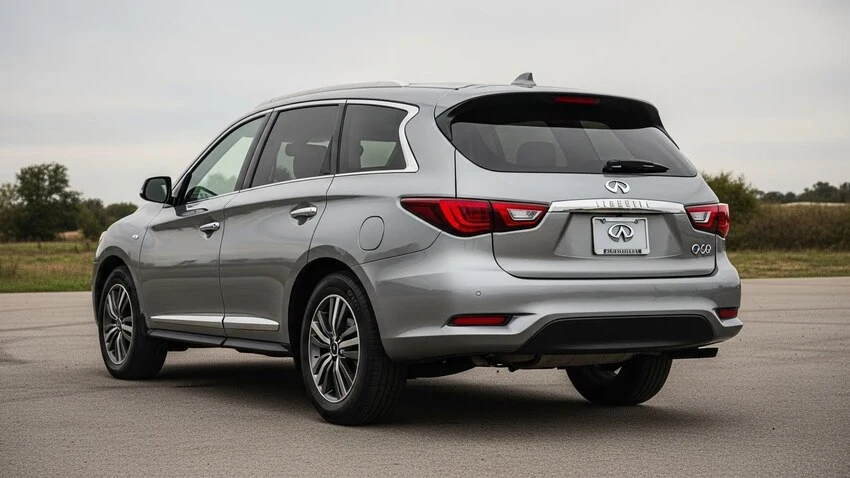
The single most reported fault in the Infiniti QX60 is the Continuously Variable Transmission (CVT). Unlike a traditional automatic transmission that uses fixed gears, a CVT uses a steel belt and two pulleys to constantly adjust the gear ratio. In theory, this provides smooth acceleration and better fuel economy. In practice, the specific unit used in the QX60—the Jatco CVT8—has been a source of frustration for thousands of owners.
The failure usually starts as a sensation of “juddering” or shaking when you accelerate between 20 and 40 mph. This happens because the internal steel belt slips against the pulley, causing a disruption in power delivery. Over time, this friction creates metal shavings that clog the valve body, leading to overheating and eventual transmission death. Because of these persistent CVT reliability concerns, many drivers simply prefer to look for reliable SUVs without CVT transmission that utilize traditional torque-converter automatic gearboxes for better long-term durability.
VQ35 Engine Oil Sludge Formation
Under the hood, the QX60 runs on the VQ35DE 3.5-liter V6 engine. This engine is generally regarded as a workhorse in the automotive world, powering everything from the Nissan Maxima to the 370Z. However, in the 2017 QX60 specifically, there was a noticeable uptick in reports regarding oil sludge.
Oil sludge is a thick, gel-like substance that forms when engine oil breaks down due to high heat or poor circulation. In the QX60, this often occurs if the Positive Crankcase Ventilation (PCV) system gets clogged or if the owner extends oil change intervals too far. Once sludge forms, it blocks vital oil passages, starving the bearings and cam phasers of lubrication. If you are looking at a 2017 model, pulling the oil filler cap to inspect for baked-on gunk is a mandatory step.
OCS Airbag Sensor Malfunctions
Safety systems are another critical area of concern. Infiniti issued significant recalls regarding the Occupant Classification System (OCS). This sensor, located in the passenger seat, is designed to detect if an adult is sitting in the front seat and arm the airbag accordingly.
In affected models, the OCS sensors were prone to failure, meaning the car might assume the seat is empty even when an adult is sitting there. In the event of a crash, the passenger airbag would not deploy, drastically increasing the risk of injury. While software updates addressed some of these issues, many owners of 2014–2016 models required full sensor mat replacements to permanently fix the glitch.
Best Infiniti QX60 Years: Models Safe to Buy
Avoiding the “bad” years is only half the battle. You also want to know which model years represent the “sweet spot” of value and reliability. Fortunately, Infiniti did not ignore the complaints; they spent years refining the QX60, and the later models are vastly superior vehicles.
Why the 2019 and 2020 Models Are Superior
If your budget allows, the 2019 and 2020 Infiniti QX60 are undeniably the best choices on the used market. By 2019, the manufacturer had implemented a significant mid-cycle refresh that went beyond just cosmetic tweaks.
Mechanically, the CVT programming was overhauled to simulate “shifts,” which not only improved the driving feel but also reduced the strain on the belt and pulleys, drastically lowering failure rates. Additionally, the V6 engine received direct injection (updated to the VQ35DD variant in newer iterations), boosting horsepower to 295 and improving fuel efficiency. These years also feature updated infotainment interfaces and standard safety tech like forward emergency braking, making them a modern and safe choice for families.
Is the 2016 Facelift Safe?
The 2016 model year sits in a grey area. It received a major facelift that introduced a bolder front grille and improved sound insulation, making for a quieter ride. Reliability-wise, it is a significant step up from the disastrous 2014 and 2015 models. However, it still predates the major powertrain revisions of 2019.
We rate the 2016 QX60 as a “Caution” buy. It is generally safe, provided it has a spotless maintenance record, but owners should still be vigilant about transmission fluid changes. If you can stretch your budget to a 2019 model, the peace of mind is worth the extra cost.
Infiniti QX60 vs. The Competition
When shopping for a three-row luxury crossover, you are rarely looking at just one model. The QX60 occupies a crowded segment, but its most direct rival is the Acura MDX. Both vehicles are Japanese luxury SUVs derived from mainstream family haulers (the Nissan Pathfinder and Honda Pilot, respectively), but they offer very different ownership experiences.
Reliability Comparison: Infiniti QX60 vs. Acura MDX
The battle between these two often comes down to transmission philosophy. The Infiniti QX60 (specifically the 2014–2018 models) relies on the Jatco CVT, which prioritizes smooth efficiency but struggles with durability under heavy load. The Acura MDX, on the other hand, utilizes traditional stepped automatic transmissions (6-speed, 9-speed, or 10-speed depending on the year).
While the QX60 offers superior access to the third row thanks to its ingenious sliding second-row seats, its mechanical record is spotty. However, the MDX is not without faults. Some model years of the MDX have suffered from transmission hunting issues and excessive oil consumption. While the QX60 struggles with transmission longevity, buyers should also investigate Acura MDX years to avoid to make a balanced luxury SUV choice. Generally, the MDX offers a sportier drive, while the QX60 focuses on a softer, more compliant highway ride.
Pre-Purchase Inspection Guide for Used QX60s
If you have found a clean QX60 that fits your budget, do not sign the paperwork until you have performed a specific inspection. Because of the known CVT vulnerabilities, a standard test drive is not enough. You need to stress-test the weak points.
- The “Shudder” Test: Find a stretch of road with a slight incline. Accelerate slowly and steadily from a stop up to about 40 mph. You are looking for a sensation of vibration or “shuddering” through the steering wheel or floorboards. If the tachometer needle bounces erratically while your foot is steady on the gas, walk away. This is the classic sign of CVT chain slip.
- Check the Service History for Fluid Changes: The CVT fluid in a QX60 degrades over time due to heat. If the previous owner believed the “lifetime fluid” marketing and never changed it, the transmission is likely living on borrowed time. Look for records of fluid exchanges every 30,000 to 60,000 miles.
- Inspect for Oil Sludge (2017 Models): Remove the oil filler cap on top of the engine. Use a flashlight to look inside the valve cover. You want to see clean golden-brown metal. If you see thick, black, tar-like deposits, the engine has sludge buildup, likely due to extended oil change intervals or PCV failure.
FAQs
With proper maintenance, a V6-powered Infiniti QX60 can easily reach 200,000 to 250,000 miles. The engine itself is robust; the limiting factor is usually the transmission. If the CVT has been serviced regularly or replaced with an updated unit, the chassis is capable of high mileage.
Compared to German rivals like the BMW X5 or Audi Q7, the QX60 is relatively affordable to maintain. Parts are often shared with the Nissan Pathfinder, making them widely available and cheaper than specialized European components. However, if the CVT fails out of warranty, you are looking at a repair bill exceeding $4,000.
Yes. The 2019 refresh introduced updated transmission logic and improved cooling that significantly reduced failure rates. The all-new 2022+ generation abandoned the CVT entirely in favor of a traditional 9-speed automatic transmission, effectively eliminating the issue.
Final Verdict
The Infiniti QX60 is a tale of two vehicles. The early models (2014–2017) are risky bets that require careful inspection and a comprehensive warranty to justify the purchase. The potential for transmission failure makes them difficult to recommend to budget-conscious families who cannot afford unexpected downtime.
However, the 2019 and 2020 models are excellent values. They offer the same luxurious interior and family-friendly practicality, but with the major mechanical kinks ironed out. If you stick to these later years and prioritize a complete service history, the QX60 remains one of the most comfortable and spacious luxury cruisers on the market.