Jeep Wrangler Years to Avoid: Reliability Analysis & Buyer’s Guide
The Jeep Wrangler is more than just a vehicle; it is an American icon that traces its lineage directly back to the battlefields of World War II. For decades, it has served as the gold standard for off-road capability, offering a rugged, utilitarian aesthetic that appeals to anyone looking for a car that looks like a tank but drives on public roads. Its removeable doors, fold-down windshield, and solid axles make it a unique entity in the automotive market.
However, that legendary status does not make it immune to mechanical failure. The Wrangler has evolved through several generations—the TJ, JK, and JL—and reliability varies wildly between them. While some model years are capable of hitting 300,000 miles with basic maintenance, others are notorious for engine failures, electrical ghosts, and suspension designs that can shake violently at highway speeds. If you are in the market for a used Wrangler, knowing the difference between a “good year” and a “bad year” can save you thousands of dollars in repairs.
Quick Summary: Worst Jeep Wrangler Model Years
Before we dive deep into the mechanics, here is a quick reference guide for the model years that statistically carry the highest risk for buyers. These years have flagged the most attention from the National Highway Traffic Safety Administration (NHTSA) due to recurring safety defects and component failures.
| Model Year | Generation | Primary Reason to Avoid | Severity |
| 2007 | JK | 3.8L Engine oil burning, Death Wobble | High |
| 2008 | JK | TIPM electrical failure, Fuel overflow | High |
| 2012 | JK | Cylinder head failure (3.6L Pentastar) | High |
| 2014 | JK | Oil filter housing cracks, Airbag recalls | Moderate |
| 2018 | JL | Frame weld defects, Steering wander | High |
| 2021 | JL | Clutch pressure plate overheating | Moderate |
Detailed Breakdown: Jeep Wrangler Years to Avoid
To truly understand why these years are problematic, we need to look beyond simple complaint numbers. We need to understand the specific parts that fail. A bad radio is annoying, but a cracked cylinder head or a fractured frame weld is a financial disaster. Below, we analyze the specific mechanical contexts that make these years risky investments.
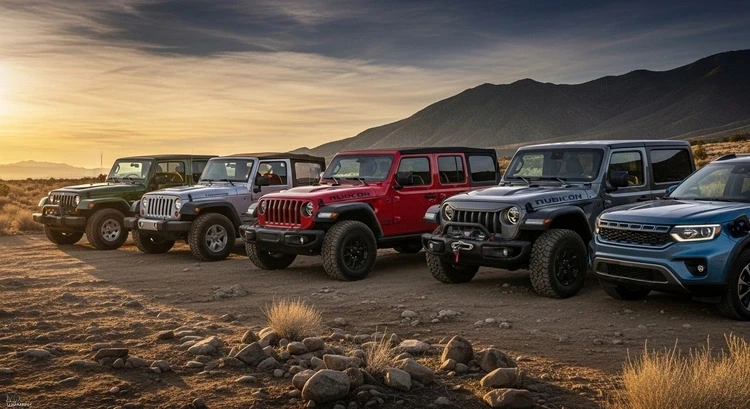
1997–2000 Jeep Wrangler (Early TJ Models)
The TJ generation, introduced in 1997, brought coil spring suspension to the Wrangler, vastly improving ride quality over the older leaf-spring YJ models. However, the first few years of this production run suffered from growing pains.
The 1997 model year, being the first of the generation, had significant issues with the cowl vent design. This often led to water leaking into the cabin and damaging the fuse box behind the glove compartment. Furthermore, the exhaust manifolds on the 4.0L engines from 1997 to 1999 were prone to cracking, which caused loud exhaust leaks and reduced engine efficiency.
By the year 2000, Jeep had moved to a coil-on-plug ignition system, but these models faced a new enemy: rust. The frame rails on TJs from this era did not have adequate drainage holes. Over time, water and road salt would get trapped inside the frame, rotting it from the inside out. If you are looking at a Wrangler from this era, a screwdriver test on the frame is mandatory.
2007 Jeep Wrangler (The JK Debut)
The 2007 model year marked a massive shift for the brand. This was the debut of the JK generation, which introduced the four-door “Unlimited” model that transformed the Wrangler from a niche off-roader into a family SUV. Unfortunately, the mechanicals did not quite match the ambition of the body design.
The biggest complaint for 2007 is the 3.8L EGH V6 engine. Replacing the legendary 4.0L inline-six, this new engine was widely criticized for being underpowered for the heavier JK body. More concerning is its thirst for oil. Many owners report the engine burning a quart of oil every 1,000 miles. Because there are often no external leaks, owners who don’t check their dipstick weekly can unknowingly run the engine dry, leading to spun bearings and total seizure.
Additionally, this year saw the first major wave of “Death Wobble” complaints on the new chassis. The track bar brackets and ball joints on the 2007 models wear out prematurely, allowing the front axle to oscillate violently after hitting a bump.
2008 Jeep Wrangler (Systemic Failures)
The 2008 model continued the struggles of the 2007 launch but introduced a new, highly frustrating electrical issue: the Totally Integrated Power Module (TIPM) failure.
The TIPM is essentially the brain of the vehicle’s electrical system. When it begins to corrode or fail internally, the car behaves as if it is possessed. Owners report horn honking at random times, door locks cycling on and off, and fuel pumps refusing to shut off, which drains the battery. This specific electrical architecture was shared across several Chrysler vehicles of this era. In fact, the symptoms found here are nearly identical to the electrical gremlins cited in Dodge Journey years to avoid, as both vehicles utilized similar, failure-prone integration modules.
Another critical defect for 2008 is the fuel spill-back issue. Due to a faulty rollover valve in the fuel tank, the pump nozzle often fails to click off when the tank is full. This results in gasoline erupting from the filler neck, dousing the side of the jeep, the ground, and often the owner’s shoes. Because the valve is molded into the tank, the only fix is replacing the entire fuel tank assembly, which is a costly repair for a design flaw.
2010–2011 Jeep Wrangler (The Transmission Transition)
As the JK generation matured, Jeep began addressing interior complaints, but mechanical gremlins persisted. The 2010 model year is particularly known for automatic transmission struggles. The 4-speed 42RLE automatic transmission, which was carried over from the previous generation, often struggled to manage the weight of the four-door Unlimited models. Owners frequently report the transmission overheating during climbs or highway driving, often triggering “Hot Oil” warnings on the dashboard.
The 2011 model year brought a significant interior refresh, replacing the hard plastics of the early JK with a much more refined cabin. However, it retained the aging 3.8L V6 engine and the problematic 4-speed automatic. This combination creates a sluggish driving experience where the transmission hunts for gears constantly. Unlike many modern competitors that have switched to efficient but often fragile belt-driven systems, the Wrangler has always been one of the few SUVs without CVT transmission options available. While this refusal to use a Continuously Variable Transmission is generally a boon for off-road durability, the specific 4-speed automatic used in these years was simply mismatched for the vehicle’s weight, leading to premature wear and torque converter failures.
2012 Jeep Wrangler (The Engine Defect)
The 2012 model year is one of the most critical years to understand because it introduced the 3.6L Pentastar V6 engine. On paper, this was a massive upgrade, jumping from 202 to 285 horsepower. However, the early production run of this engine had a fatal flaw.
The cylinder heads on the left bank (driver’s side) of the engine were prone to premature failure. The valve guides would wear out rapidly, causing the valves to seat improperly. This results in a distinctive “ticking” noise from the engine bay, followed by a Check Engine Light with misfire codes (usually P0302, P0304, or P0306). If ignored, the misfire can damage the catalytic converter and lead to a complete loss of compression in that cylinder. While Jeep extended the warranty for this specific part, finding a used 2012 model today that hasn’t had the head replaced is a financial risk.
2014 Jeep Wrangler (Oil & Airbag Woes)
By 2014, the powertrain was largely sorted, but quality control on ancillary components slipped. The most common headache for 2014 owners is the oil filter housing. Jeep utilized a plastic oil filter housing that sits deep in the engine valley. Over time, heat cycles cause this plastic to crack, spewing oil down the back of the engine and onto the transmission. Because of the labor required to remove the intake manifold to reach it, what should be a cheap part becomes a devastating repair bill.
This model year was also heavily involved in the Takata airbag recalls. The propellant in the airbag inflators could degrade over time, causing the airbag to explode with too much force and send metal shrapnel into the cabin. While this affected many manufacturers, the high volume of Wranglers on the road makes it a pertinent check for any prospective buyer.
2018 Jeep Wrangler (The JL Launch)
The launch of the all-new JL generation in 2018 brought modern technology and aluminum body panels, but it also brought structural defects. The most alarming recall involved the frame welds. On certain 2018 models, the track bar bracket—a critical suspension component that centers the front axle—was poorly welded to the frame. In extreme cases, the bracket could shear off completely, resulting in an immediate loss of steering control.
Additionally, early JL models utilized an aluminum steering gear box that flexed under load. This resulted in “wandering” steering, where the driver has to constantly correct the wheel just to keep the Jeep moving straight on the highway.
2020–2021 Jeep Wrangler (Modern Growing Pains)
Newer does not always mean better. The 2020 and 2021 models have faced scrutiny regarding their manual transmissions. A recall was issued because the clutch pressure plate could overheat and fracture. The flying debris from the clutch could puncture the transmission case, leaking hot fluid onto the exhaust and potentially causing a fire.
Furthermore, the introduction of the 4xe plug-in hybrid in 2021 came with software glitches that could cause the vehicle to shut down or fail to charge properly, leaving owners stranded.
Common Jeep Wrangler Reliability Issues Explained
To make an informed purchase, you must understand the “Big Three” problems that define Wrangler ownership. These are not just occasional defects; they are systemic issues tied to the vehicle’s unique solid-axle design.
What is the “Death Wobble”?
The term “Death Wobble” is not an exaggeration; it is a violent shaking of the front end that feels like the wheels are coming off. This occurs because the Wrangler uses a solid front axle rather than independent suspension. If any component in the steering geometry—specifically the track bar, tie rod ends, or ball joints—becomes loose or worn, a bump in the road can trigger a resonance frequency. The front tires begin to oscillate left and right uncontrollably until the vehicle slows down.
While terrifying, it is important to note that this is usually a maintenance issue, not a permanent death sentence for the car. Replacing the worn track bar with a heavy-duty aftermarket version usually cures the problem permanently.
TIPM Electrical Failure
The Totally Integrated Power Module (TIPM) is the nerve center of the Jeep’s electrical system, routing power to everything from the fuel pump to the headlights. When this module fails—most commonly in 2007–2012 models—the symptoms are erratic and frustrating. Your wipers might turn on by themselves, the horn might blare randomly, or the starter might refuse to engage.
In severe cases, the fuel pump relay inside the TIPM sticks in the “on” position, draining the battery overnight and burning out the fuel pump. Diagnosing this can be expensive because mechanics often chase the symptoms (like a bad starter or battery) before realizing the root cause is the computer module itself.
Engine & Transmission Weak Points
When evaluating the powertrain, the choice largely comes down to the era.
- The 3.8L V6 (2007–2011): Known for consuming oil and feeling sluggish. It’s reliable if maintained, but lacks the punch needed for highway passing.
- The 3.6L Pentastar (2012+): A fantastic engine once the 2012 cylinder head issues were resolved. It offers significantly more horsepower and better fuel economy.
Regarding transmissions, the Wrangler remains a standout for traditionalists. It avoids the trend of fragile CVTs found in many crossovers. This commitment to gears—whether the robust Mercedes-sourced 5-speed automatic (W5A580) found in 2012–2018 models or the modern ZF 8-speed—ensures that the transmission can handle the stress of rock crawling and towing. If you prefer boxy SUVs that feel mechanical and direct rather than computerized and numb, the Wrangler’s transmission choices are a major selling point.
Fuel System and Evap Leaks
The “fuel spill-back” issue is a hallmark of the JK generation. The check valve inside the fuel tank swells over time due to ethanol in modern gasoline. Eventually, it gets stuck open. When you are at the gas station, the pump nozzle relies on back-pressure to click off when the tank is full. Because the valve is stuck open, that pressure never builds up, and gas rushes back up the filler neck, overflowing onto the paint and the ground.
Best Jeep Wrangler Years to Buy
Not every Wrangler is a headache. In fact, some years are considered among the most reliable vehicles on the road.
2003–2004 (The Peak TJ)
If you want a classic, the 2003 and 2004 models are the “Holy Grail” for many enthusiasts. They feature the legendary 4.0L inline-six engine, which is virtually bulletproof. These years also benefited from an improved 4-speed automatic transmission and a revised interior. They offer the perfect blend of modern reliability and vintage charm.
2015–2017 (The Peak JK)
For a modern daily driver, the late-model JKs are hard to beat. By 2015, Jeep had completely solved the cylinder head cracking issue on the 3.6L engine. The oil cooler housing was updated, and the electronics were far more stable than the early years. These models offer the rugged capability of the Wrangler without the “beta tester” issues of the early 2007 or 2012 models.
2019 & Late 2021 (Refined JL)
If you want the newest features, look for a 2019 or late 2021 model. By 2019, the frame weld issues of the launch year were resolved. Late 2021 models also began receiving the updated steel steering gear box, which cured the “wandering” steering complaint that plagued the early JLs.
Jeep Wrangler Buyer’s Guide & Maintenance Tips
Ready to buy? Do not hand over the cash until you have performed these checks.
Pre-Purchase Inspection Checklist
- Rust Check: Crawl underneath. Surface rust is normal, but deep scaling or holes in the frame rails (especially near the control arm mounts) is a dealbreaker.
- The Wobble Test: Take the Jeep onto a highway. Safely accelerate to 60 mph. If the steering wheel shakes violently when you hit an expansion joint or bridge seam, factor in at least $500–$1,000 for front-end repairs.
- VIN Check: Run the VIN to ensure the specific recalls—especially the passenger airbag inflator and the clutch pressure plate (for manuals)—have been performed.
Maintenance for Longevity
Owning a solid-axle vehicle requires different maintenance than a typical sedan.
- Rotate Tires with Every Oil Change: Large off-road tires cup easily. If you don’t rotate them every 5,000 miles, they will become unbalanced and can trigger Death Wobble.
- Diff Fluid: If you go off-road or drive through deep water, change your differential fluid annually. Water contamination destroys gears quickly.
People Also Ask (FAQ)
What are the worst years for Jeep Wrangler rust? The 1997–2002 TJ models are the most prone to severe frame rot due to poor drainage design.
Do all Wranglers have Death Wobble? No, but any vehicle with a solid front axle can develop it if suspension components are worn. It is a symptom of maintenance neglect, not an inherent curse.
Is the 4-cylinder or V6 Wrangler more reliable? Historically, the V6 (specifically the 4.0L inline-six and the post-2013 3.6L V6) is more durable. However, the new 2.0L Turbo 4-cylinder has proven to be surprisingly stout, though it is more complex to repair.
The Bottom Line
The Jeep Wrangler is a rewarding vehicle to own, offering a level of freedom that few other cars can match. However, you must buy smart. Avoid the 2007, 2008, and 2012 models unless you have proof that the major defects have been addressed.
For the best experience, hunt for a 2003–2004 TJ if you want a weekend toy, or a 2015–2017 JK if you need a reliable daily driver. A little research now will ensure your adventure takes you to the trails, not the mechanic.