Toyota Tundra Years to Avoid: The Definitive Reliability Guide
You buy a Toyota for one simple reason: it doesn’t break. The Toyota Tundra has built a legendary reputation on this promise, with some owners famously clocking over one million miles on the original V8 engine. It is the kind of truck you expect to pass down to your kids, not tow to the mechanic.
However, the reality is a bit more complicated. Not every Tundra that rolled off the assembly line is bulletproof. In fact, specific model years are plagued by catastrophic engineering flaws that can turn your reliable workhorse into a money pit. From frames that rust until they snap to air pumps that fail and put the truck into “limp mode,” knowing the difference between a good year and a bad year is critical.
This guide cuts through the noise. We have analyzed owner complaints, recall data, and repair logs to give you a clear, data-driven look at which Tundra years you should absolutely avoid and which ones are worth your hard-earned money.
Quick Guide: Tundra Years to Avoid and Best Years at a Glance
If you are standing on a dealership lot right now and need a quick answer, this breakdown will help you make a safe decision instantly. We have categorized these models based on engine reliability, structural integrity, and how much they cost to keep on the road.
| Category | Model Years | Key Issues to Watch For |
| Avoid | 2000–2003 | Severe frame rust (perforation), transmission gear failure. |
| Avoid | 2007–2008 | Camshaft failure (5.7L V8), Air Injection Pump failure. |
| Avoid | 2010–2012 | Air induction pump moisture intrusion, transmission wear. |
| Caution | 2022–2023 | Turbocharger wastegate failure, infotainment glitches. |
| Best Buy | 2013–2021 | The “Golden Era.” Most mechanical issues were resolved. |
| Best Buy | 2005–2006 | Peak 1st Gen reliability, provided the frame is rust-free. |
Overview of Toyota Tundra Generations
Before we dig into the specific mechanical failures, it helps to understand the lifespan of this truck. The Tundra has evolved significantly over the last two decades, and each generation brought its own set of strengths—and weaknesses.
First Generation (2000–2006)
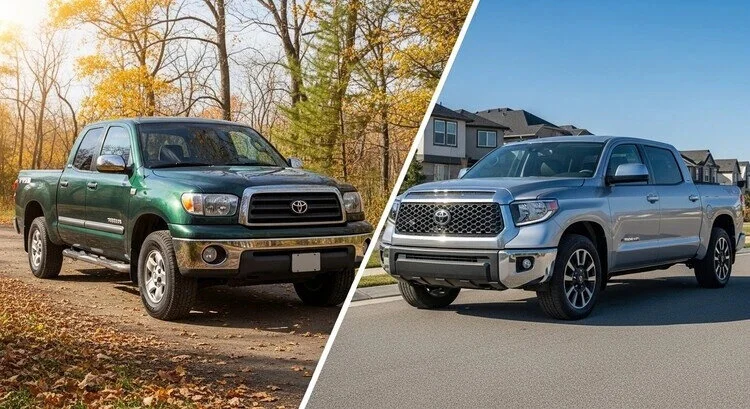
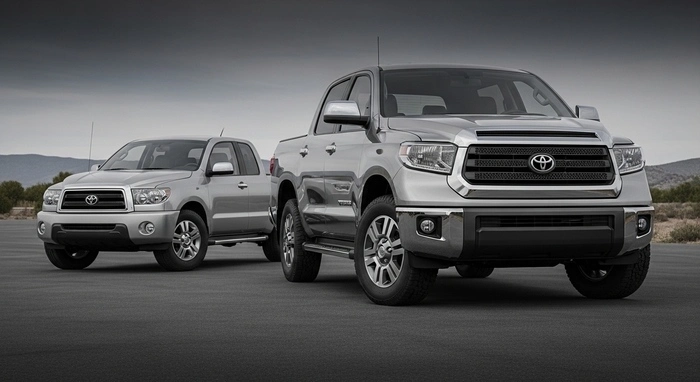
This was Toyota’s first real attempt to challenge American heavy-duty trucks. Enthusiasts often call this the “7/8ths” truck because it was slightly smaller than a Ford F-150 or Chevy Silverado. While the 4.7L V8 engine in these trucks is nearly indestructible, the steel frames supplied during these years had a fatal flaw: they lacked adequate corrosion protection.
Second Generation (2007–2021)
This is the Tundra most people know and love. Toyota went big, introducing a true full-size platform and the legendary 5.7L i-FORCE V8 engine. This generation is generally a tank, but the early years (2007–2010) suffered from “teething issues” as Toyota adjusted to the new, larger powertrain. If you want a reliable daily driver, a late-model truck from this generation is usually your safest bet.
Third Generation (2022–Present)
The V8 is gone, replaced by a twin-turbo V6 and hybrid options. While these trucks offer incredible torque and modern tech, they are structurally and mechanically different from their predecessors. Early data suggests growing pains, particularly with the new turbo systems and electronic wastegates, which are complex and expensive to repair.
The Toyota Tundra Years to Avoid (Detailed Breakdown)
Now, let’s get into the specifics. Why exactly are the years listed above so risky? It usually comes down to one or two major components failing consistently.
2005 & 2006 Tundra (1st Gen)
You might see these years listed as “Best Buys” in some places because the engines are fantastic. However, they make the “Avoid” list for one specific reason: Frame Rust.
The frames on these trucks were manufactured by Dana Corporation with a coating that was insufficient for states that use road salt. Over time, the frame rails rust from the inside out. In severe cases, the rear leaf spring mounts can detach from the chassis while driving, causing a complete loss of control. Toyota issued a massive recall to spray these frames with a corrosion-resistant compound, but many of these trucks are now nearly 20 years old. Unless you can verify the frame is solid with a hammer test, the risk is often too high.
2007 & 2008 Tundra (Early 2nd Gen)
The launch of the second generation brought more power, but it also brought a rare metallurgical defect. The 2007 and 2008 models with the 5.7L V8 engine saw a spike in camshaft failures. The camshafts were prone to fracturing under stress, which destroys the engine instantly.
Additionally, these years were notorious for torque converter shudder. The transmission fluid would degrade faster than expected, causing the torque converter to slip and shudder during acceleration. While a transmission flush can sometimes fix this, ignored units often require a full rebuild.
Gemini said
2010 & 2012 Tundra
If you are looking at a Tundra from these years, you need to ask the seller one specific question: “Has the air injection pump been replaced?”
The 2010 and 2012 models are notorious for failures in the Secondary Air Injection Pump (AIP) system. This system is designed to pump fresh air into the exhaust stream to heat up the catalytic converters quickly. The problem? The pumps were located in the fender well, where moisture could easily get inside.
When water gets in, the valves seize up. The truck’s computer detects this and immediately throws the vehicle into “Limp Mode,” limiting your speed and power to protect the engine. Fixing this isn’t as simple as swapping a fuse; it often requires replacing the entire pump assembly and valves, a repair that can easily cost over $3,000 at a dealership.
These years also saw issues with Variable Valve Timing (VVT) gear wear. You might hear a brief rattle on a cold start—that is the sound of the cam gears failing to lock into position. If ignored, this can lead to oil leaks and expensive engine work down the road.
2022 Tundra (Early 3rd Gen)
The 2022 redesign was massive. Toyota dropped the V8 for a twin-turbo V6, aiming for better fuel economy and torque. However, first-year models of any new generation often have bugs, and the 2022 Tundra was no exception.
The biggest headache here is the turbocharger wastegate actuator. On early units, these electronic actuators can fail. Because of how the engine is packaged, replacing the turbo assembly is a nightmare labor-wise. In many cases, mechanics have to lift the entire cab off the chassis just to reach the turbos. That is a massive repair bill for a relatively small part failure.
Owners also reported frustrating infotainment glitches, where the massive new screens would freeze or reboot randomly, and occasional fit-and-finish issues like misaligned body panels.
Top 5 Worst Problems Toyota Tundra Owners Face
Knowing the years is half the battle; knowing the specific failures helps you spot a lemon before you buy it. Here are the mechanical demons that plague these trucks.
Frame Rust and Corrosion (The “Achilles Heel”)
This is the Tundra’s most famous flaw. The box-section frames on 1st Gen and early 2nd Gen trucks were prone to rotting from the inside out. Unlike surface rust, which is ugly but harmless, this structural corrosion weakens the frame rails until they can actually snap under load. Always inspect the frame near the rear leaf springs with a hammer—if it sounds dull or crunchy, walk away.
Secondary Air Injection Pump Failure
As mentioned above, this emissions system is the bane of many Tundra owners. When the valves stick open or closed due to corrosion, the truck assumes catastrophic emissions failure and cuts power. It is a safety feature that ironically leaves many drivers stranded or limping home at 30 mph.
Cam Tower Oil Leaks
On the 5.7L V8, the camshafts are housed in a separate “tower” assembly. The factory RTV sealant used to bond these towers to the engine head tends to degrade over time. Oil then seeps out and drips onto the hot exhaust manifolds, creating a burning smell and a fire hazard. Resealing them is labor-intensive because the camshafts have to come out.
Integrated Brake Controller Issues (2016-2017)
For a truck built to tow, this one is frustrating. The integrated trailer brake controller on these specific years often fails to “see” the trailer. You plug in your 7-pin connector, but the truck says “No Trailer Connected.” This forces many owners to bypass the factory system and install an aftermarket controller.
Transmission Shudder and Slippage
The 6-speed automatic transmission is generally bulletproof, but it is sensitive to fluid quality. If a previous owner towed heavy loads and never changed the fluid, the torque converter can develop a “shudder.” It feels like driving over a rumble strip at 40 mph.
Reliability Context: Comparing Tundra to Other Toyota Models
It is important to remember that every vehicle has weak points. While the Tundra battles rust, other Toyota family haulers face different demons.
Tundra vs. Toyota Highlander
If you don’t need a bed and are considering an SUV, you might look at the Highlander. However, unibody SUVs have their own unique failures. For instance, the Toyota Highlander years to avoid include models that suffered from stripped engine head bolts and massive oil leaks—issues that are rare on the Tundra’s cast-iron block V8s but devastating for the SUV owner.
Tundra vs. Toyota Avalon
Perhaps you are looking for a reliable daily driver and don’t need a truck at all. You might assume a flagship sedan is flawless, but even the Avalon has had rough patches. The Toyota Avalon years to avoid often struggled with severe engine oil line leaks and steering column defects that are completely different from the heavy-duty suspension failures seen on trucks.
Tundra vs. Toyota Venza
For those who want something in between—a crossover for light utility—the Venza is a popular pick. However, it is not immune to quality control slips. The Toyota Venza years to avoid faced persistent steering rattles and interior accessory failures. While annoying, these are generally less financially crippling than a $3,000 air pump replacement on a Tundra.
Toyota Tundra Recalls and Technical Service Bulletins (TSBs)
When researching a used vehicle, you will often hear about “recalls” and “TSBs.” While they sound similar, knowing the difference can save you thousands of dollars.
Recalls are safety-related mandates issued by the NHTSA. Manufacturers must fix these for free, regardless of the vehicle’s age or mileage. Technical Service Bulletins (TSBs) are manufacturer communications to dealer mechanics about known issues. These are not free repairs unless the vehicle is still under warranty.
Major Recalls to Check by VIN
Before handing over any cash, run the truck’s VIN (Vehicle Identification Number) through the NHTSA database. Here are the big ones you need to look out for:
- Takata Airbags: Like many vehicles from the mid-2000s and early 2010s, the Tundra was part of the massive Takata airbag recall. Ensure the inflators have been replaced.
- Frame Corrosion Treatment: Toyota issued a specific campaign for frame rust on 2000–2003 models (and later extended to some 2004–2006 trucks). If the frame was perforated, Toyota replaced it. If it had surface rust, they applied a corrosion-resistant compound (CRC). You need to know which one was done.
- Fuel Pump Failure (Denso): Some newer models (late 2nd Gen and early 3rd Gen) were recalled due to faulty low-pressure fuel pumps that could cause the engine to stall while driving.
The Best Toyota Tundra Years to Buy
Now for the good news. If you avoid the specific years mentioned earlier, the Tundra is arguably the most reliable half-ton truck ever built. Here are the “green light” years where you can buy with confidence.
2013 Tundra (The Sweet Spot)
This year is often cited as the turning point for the second generation. By 2013, Toyota had redesigned the air injection pumps to prevent moisture intrusion and updated the engine internals to fix the camshaft issues. It combines the rugged simplicity of the older trucks with resolved mechanicals.
2015–2019 Tundra (Modern Reliability)
If your budget allows, this is the sweet spot for modern features and bulletproof reliability. These years benefited from a major interior refresh and, most importantly, the addition of the 38-gallon fuel tank option. The 5.7L V8 is thirsty, so having that extra capacity is a game-changer for towing. The drivetrain in these years is mature, refined, and incredibly durable.
2020–2021 Tundra (The Final V8s)
These are the last of the V8s. Collectors and purists are holding onto these trucks tight. They represent the absolute peak of the second-generation platform. All the bugs were worked out, the tech was updated to include Apple CarPlay and Android Auto, and the resale value is astronomical for a reason: they just work.
Tips for Buying a Used Toyota Tundra
Ready to buy? Do not just kick the tires. Use this checklist to inspect the specific weak points of the Tundra.
Inspection Checklist
- Hammer Test the Frame: Crawl underneath the rear of the truck, specifically near the leaf spring mounts and the spare tire. Tap the frame rails with a hammer. A solid frame rings like a bell; a rusted frame sounds like a dull thud or crunch.
- Cold Start Listen: Ask the seller not to run the truck before you arrive. Start the engine cold and listen immediately. A loud “clack-clack-clack” for the first few seconds could indicate Cam Tower leaks or VVT gear issues.
- Check the 4×4: Turn the dial to 4-Hi and 4-Lo. The actuator should engage within a few seconds with a solid “clunk.” If the light just flashes on the dash, the actuator is likely seized from lack of use.
Pricing & Market Insights
Tundras do not depreciate like American trucks. You will pay a “Toyota Tax.” A clean, low-mileage Tundra with the 5.7L V8 will often cost $5,000 to $8,000 more than a comparable Ford F-150 or Chevy Silverado. Do not let the sticker shock scare you off; you are paying for the remaining life of the truck. A Tundra with 150,000 miles is often just getting broken in, whereas competitors might be nearing the end of their service life.
Conclusion
The Toyota Tundra is a legend for a reason, but blind loyalty can be expensive. To get the million-mile reliability you expect, you simply need to navigate around the potholes.
Avoid the 2007 and 2012 models unless you have documented proof that the air pumps and camshafts have been addressed. Be cautious with the 2000–2003 models unless you live in a desert climate.
Instead, aim for a 2014 or newer model. You get the updated styling, the proven drivetrain, and the peace of mind that comes with owning the most reliable full-size truck on the road. Reliability is not about buying the newest truck; it is about buying the right truck. Stick to these years, and your Tundra will likely outlast you.