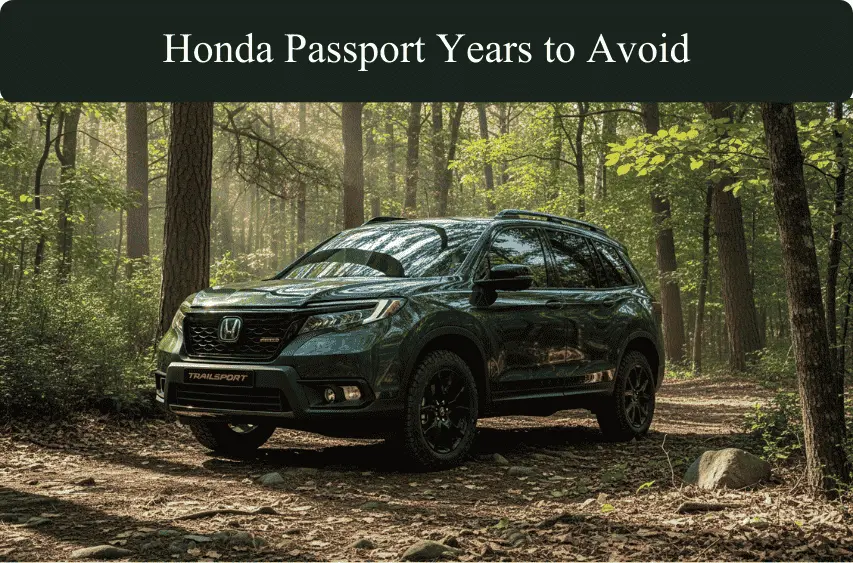
Honda Passport Years to Avoid: The Ultimate Buyer’s Guide (Best & Worst Years)
The Honda Passport is a bit of a chameleon. Depending on which model year you look at, it’s either a rugged ’90s off-roader borrowed from Isuzu or a modern, polished family hauler that’s essentially a “Honda Pilot Sport.”
Because of this split history, reliability isn’t a straight line. You can’t just assume “it’s a Honda, so it’s fine.” Some early models are notorious for dissolving into piles of rust, while the modern relaunch in 2019 stumbled out of the gate with frustrating electronic glitches.
If you are shopping for a used model, you need to know exactly which years to target and which ones are potential money pits. This guide breaks down the data from owner reports, recalls, and repair shops to help you buy the right one.
Quick Summary: Best and Worst Honda Passport Years
If you just want the cheat sheet before heading to the dealership, here is the breakdown of which years are safe bets and which ones you should run from.
| Category | Model Years | The Bottom Line |
| Years to Avoid | 1998–2002 | Dangerous frame rust and transmission failures. |
| Proceed with Caution | 2019 | “First-year” glitches: flickering screens and rough shifting. |
| Best Years | 2022–2024 | The “sweet spot.” Reliable, updated tech, and refined drive. |
| Value Pick | 2021 | Good reliability for a lower price than the 2022 facelift. |
Understanding Honda Passport Generations
To understand why reliability varies so much, you have to look at the Passport’s family tree.
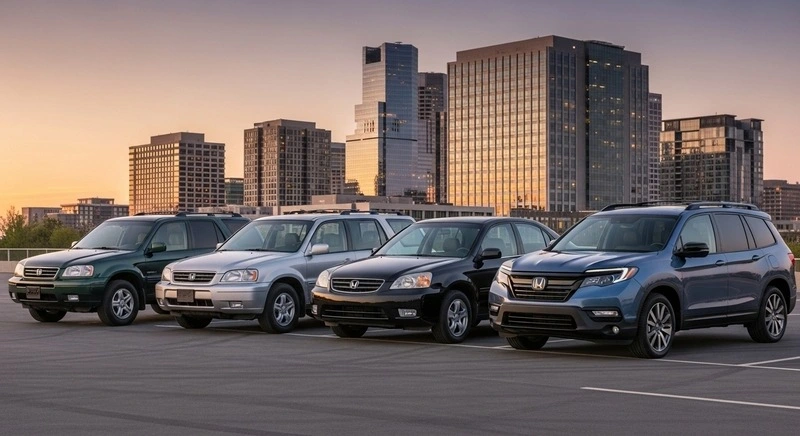
- Generation 1 (1994–1997): This was Honda’s first SUV, but Honda didn’t actually make it. It was a rebadged Isuzu Rodeo. It’s tough and simple, but finding one today that isn’t worn out is a challenge.
- Generation 2 (1998–2002): Still an Isuzu at heart. These years are famous for all the wrong reasons—specifically, structural rust that can make them unsafe to drive.
- Generation 3 (2019–Present): After a long hiatus, the Passport returned. This time, it was built 100% by Honda, sharing its bones (chassis and engine) with the Honda Pilot.
- Note: The modern Passport is basically a 2-row Pilot. If you need more space but are worried about reliability, check our guide on Honda Pilot years to avoid to see how the three-row version compares.
Honda Passport Years to Avoid (Detailed Breakdown)
Let’s get into the specifics. These are the models that usually cause the most headaches for owners.
1998–2002: The Frame Rust Disaster
The second-generation Passport is widely considered the worst era for this nameplate. The biggest culprit is severe frame corrosion, specifically in the rear section of the vehicle.
In states that use road salt, the frame rails would rust from the inside out. The most dangerous part of this is the trailing arm bracket—the piece of metal that holds the rear axle in place. On many vehicles, this bracket would rust completely off, causing the rear suspension to detach while driving. Honda eventually issued a recall and even bought back vehicles that were too far gone to fix, but you should still be extremely careful if you see one of these for sale today.
2019: The First-Year Stumbles
When Honda brought the Passport back in 2019, it looked great on paper. But as is common with “first-year” models, it had some teething issues that were sorted out in later years.
The biggest complaint involves the infotainment system. Owners reported speakers that would make loud crackling or popping noises, screens that would go black, and dashboards that would reboot randomly.
The culprit wasn’t the screen itself, but a loose connection in the wiring harness (specifically the FAKRA connectors). Think of it like a loose HDMI cable behind your TV—if the connection isn’t tight, the signal cuts out. Honda fixed this in later years, but 2019 models are the most likely to still have these gremlins.
Additionally, the 9-speed automatic transmission in the 2019 model often feels “confused.” It can be slow to downshift or jerky when coming to a stop. Software updates have helped, but the transmission feels much smoother in the 2021 and newer models.
1996: The Head Gasket Nightmare
Going way back, the 1996 model had a specific weakness with its V6 engine: head gaskets. These gaskets were prone to failure, which would cause the engine to overheat and mix coolant with oil. Repairing a blown head gasket is a major, expensive job that often costs more than the vehicle is worth today. If you are looking for a cheap, classic 90s SUV, the 1997 model is generally a safer bet than the ’96.
Common Honda Passport Problems & Reliability Issues
While knowing which years to avoid is half the battle, understanding the specific mechanical weak points can help you inspect a used vehicle like a pro. Even the reliable years can have quirks, so here is what you need to listen and look for during a test drive.
Transmission Failures & Shuddering
Transmission issues have plagued the Passport across different eras, though the symptoms have changed over time.
- The “Judder” (2019–2020): In the modern generation, the 9-speed automatic transmission is generally durable, but it can suffer from a “torque converter shudder.” You might feel a vibration or a hesitation when accelerating lightly between 20 and 40 mph. This is often caused by the transmission fluid breaking down prematurely. A software update and a fluid flush usually solve it, but it’s something to watch out for.
- The “Slip” (1998–2002): The older 4-speed automatics were far less forgiving. If you are testing an older model and feel the engine revving up without the car speeding up (slipping), or if there is a long delay when you shift into Drive, the transmission is likely on its last legs.
If you find the Passport’s driving dynamics a bit too truck-like or the transmission shifts feel too aggressive for your daily commute, you might want to look at Honda’s best-selling crossover instead. Just be sure to read our analysis on Honda CR-V years to avoid before making the switch, as certain years of that model have their own specific transmission concerns.
Electrical & Infotainment Glitches
Modern cars are basically rolling computers, and the Passport is no exception. The 2019 and 2020 models are notorious for issues with the MOST Bus network—the system that connects your dashboard, speakers, and safety displays.
- The Symptoms: You might be driving along when suddenly a loud “pop” or crackle comes through the speakers, followed by the infotainment screen going black. In some cases, you lose audio completely, or the backup camera refuses to turn on.
- The Fix: Honda recognized this was a widespread manufacturing defect with the wiring connectors and extended the warranty coverage for many vehicles. When looking at a used model, ask the seller if the “FAKRA connector” recall service has been performed.
Safety System Quirks (Phantom Braking)
The Honda Sensing suite is standard on modern Passports, providing features like adaptive cruise control and automatic emergency braking. However, early versions of this system (2019–2020) can be overly sensitive.
Some owners have reported “phantom braking,” where the car slams on the brakes because it thinks a shadow or a roadside sign is an obstacle. While software updates have improved this, it’s a good idea to test the adaptive cruise control on the highway to ensure it behaves predictably.
Honda is constantly refining these systems. If you look at the tech rolling out in the 2026 Honda Accord facelift, you can see how much smoother and more integrated these safety features are becoming in Honda’s newest vehicles.
The Best Honda Passport Years to Buy
Now that we have covered the bad, let’s talk about the good. If you want a Passport that delivers on the promise of “Honda reliability,” these are the model years you should target.
2022–2024: The Refined Choice
The 2022 model year marked a significant refresh for the Passport. Honda gave it a tougher, more squared-off look, introduced the off-road-oriented TrailSport trim, and—most importantly—fixed the bugs from the 2019 launch.
By 2022, the infotainment wiring issues were largely resolved, and the transmission programming was smoothed out for better daily drivability. These years also come standard with the larger 8-inch touchscreen and wireless phone connectivity options that make life easier. If your budget allows, a 2022 or newer model is hands-down the best experience you can get.
2021: The Value Pick
If a 2024 model is out of your price range, the 2021 Passport is the sweet spot for value. By the third year of production, the factory had ironed out most of the assembly quality issues seen in 2019. You get the same powerful V6 engine and spacious interior as the newer models, but usually for thousands of dollars less.
1994–1995: The Classic Choice
This recommendation comes with a caveat: only for enthusiasts. The first-generation Passport (1994–1995) is a simple, honest 4×4. It doesn’t have the complex computers or sensors that fail on modern cars. However, they are over 30 years old now. If you can find one that has spent its life in a dry climate (away from salt), it can be a fun, cheap, and capable trail rig. Just don’t expect it to be a comfortable daily driver by modern standards.
Smart Buying Strategy: Inspection Checklist
Buying a used car can feel like a gamble, but you can stack the odds in your favor with a simple inspection routine. Whether you are looking at a vintage 90s model or a certified pre-owned 2021, here is your cheat sheet for the test drive.
1. The Frame Check (For 1998–2002 Models) If you are looking at an older Passport, do not even start the engine until you have looked underneath. Bring a flashlight and check the rear frame rails near the back wheels. You are looking for deep, flaky rust or actual holes in the metal. If the frame looks like Swiss cheese, walk away immediately. It is not fixable.
2. The “Pop” Test (For 2019–2021 Models) Turn on the car and immediately connect your phone. Play some music and mess with the volume. You are listening for any crackling or popping sounds from the speakers. Also, put the car in reverse and make sure the backup camera comes on instantly without flickering. If the screen lags or goes black, the FAKRA connectors might need replacing.
3. Verify Critical Recalls Before handing over any cash, get the VIN (Vehicle Identification Number) and run it through the NHTSA recall tool. Specifically, check for the Fuel Pump Recall (which can cause the engine to stall while driving) and the MOST Bus Network Recall (the wiring issue mentioned above). If these have been fixed by a dealer, you are in the clear.
Honda Passport vs. The Competition
Not sure if the Passport is the right fit? Here is how it stacks up against its biggest rivals.
- Toyota 4Runner: The 4Runner is the legend of off-roading, but it drives like a truck. It is heavier, slower, and uses a lot more gas than the Passport. If you actually plan to climb mountains, get the 4Runner. If you mostly drive on pavement and do school runs, the Passport is far more comfortable.
- Subaru Outback: The Outback is technically a wagon, not an SUV, but it competes for the same buyers. It sits lower to the ground and gets better fuel economy. However, the Passport offers a much taller driving position and significantly more towing capacity (5,000 lbs vs. the Outback’s 3,500 lbs).
- Ford Edge: The Edge is similar in size but generally lags behind Honda in long-term reliability ratings. The Passport holds its resale value better and offers more usable cargo space.
Repair Costs and Resale Value
One of the best reasons to buy a Honda Passport is that it keeps its value incredibly well. Because it shares parts with the popular Pilot and Ridgeline, parts are easy to find and relatively affordable.
- Maintenance: Expect standard maintenance costs. You aren’t paying luxury tax prices for oil changes or brake pads. The V6 engine is a workhorse known to last over 200,000 miles if you change the timing belt on schedule (usually every 100,000 miles).
- Depreciation: 2019 models have taken the biggest depreciation hit because of their known first-year issues. This makes them cheap to buy, but risky. On the flip side, 2021 and 2022 models command a premium because smart buyers know they are the reliable sweet spot.
Conclusion: Should You Buy a Used Honda Passport?
The Honda Passport is a fantastic SUV, provided you pick the right year. It offers a rare mix of V6 power, genuine off-road capability, and family-friendly space without the bulk of a third row.
- Skip: The 1998–2002 models unless you are a mechanic who loves welding rusty frames.
- Avoid: The 2019 model unless you have proof that all electrical and transmission updates have been done.
- Buy: A 2021, 2022, or 2023 model. These give you the best reliability, the most refined drive, and the peace of mind that comes with a mature platform.
FAQs
The 2019 model is the most common source of complaints regarding the 9-speed automatic transmission, often cited for rough shifting. The older 1998–2002 models also suffered from frequent transmission failures due to age and design.
Yes, modern Passports (2021 and newer) are considered very reliable. They score well in long-term dependability studies once the initial 2019 teething issues were resolved.
The 2019 model year is often cited as the worst of the modern generation due to electrical glitches. For older models, 1998–2002 are the worst due to severe frame rust.
With proper maintenance, a modern Honda Passport can easily surpass 200,000 miles. The key maintenance item is the timing belt service, which must be done every 7 years or 105,000 miles.