Honda Pilot Years to Avoid: A Comprehensive Guide to Common Problems & Reliable Alternatives
You buy a Honda because you want peace of mind. For decades, the “H” badge has been a promise—a guarantee that your car will start every morning, run for hundreds of thousands of miles, and ask for nothing more than basic maintenance in return. The Honda Pilot, with its spacious three-row seating and family-friendly utility, generally delivers on that promise. It bridges the gap between the rugged capability of an SUV and the practicality of a minivan perfectly.
But here is the hard truth that many used car buyers discover too late: not every Honda Pilot is built the same.
While the vast majority of these SUVs are dependable workhorses, a few specific model years are notorious for catastrophic mechanical failures. Imagine buying what you think is a safe, reliable family hauler, only to face a $4,000 repair bill for a new transmission just months later. It happens more often than you might think. While Honda continues to push boundaries with modern engineering—just look at the sophisticated tech in the 2026 Honda Accord Facelift—some older Pilot models suffered from growing pains that left owners frustrated and stranded.
In this guide, we are cutting through the noise. We will pinpoint exactly which years you should run from, explain why they failed, and help you find the “golden years” that are actually worth your hard-earned money.
Overview of the Honda Pilot
To understand which years to avoid, it helps to see the bigger picture of the Pilot’s life cycle. Since its debut in 2003, this midsize SUV has evolved through four distinct generations. Each redesign brought better safety, more power, and smarter technology, but major changes often brought major headaches.
- First Generation (2003–2008): This was Honda’s first true attempt at a three-row midsize SUV. It was rugged and practical, but as we will see, the early transmission designs were a weak point.
- Second Generation (2009–2015): Honda switched to a boxier, truck-like design. This era introduced Variable Cylinder Management (VCM) to save gas, but it inadvertently caused engine oil consumption issues.
- Third Generation (2016–2022): The Pilot adopted a sleeker, crossover shape. While it looked modern, the introduction of a sophisticated 9-speed transmission created a new set of reliability problems.
- Fourth Generation (2023–Present): The current lineup returns to a rugged aesthetic with updated tech, largely leaving past issues behind.
Knowing these generations matters because reliability problems usually cluster around the first year or two of a new design. When engineers introduce completely new parts, real-world testing (by owners like you) often reveals defects that weren’t caught in the factory.
Quick List: Honda Pilot Years to Avoid
If you are standing on a dealership lot right now and just need the quick facts, here is your cheat sheet. These are the specific years that have generated the highest volume of complaints regarding costly repairs.
- 2003 (First Generation): Avoid at all costs. Notorious for total transmission failure and ignition switch recalls.
- 2005 (First Generation): Prone to fluid leaks where coolant mixes with transmission fluid, destroying both systems.
- 2009 – 2013 (Second Generation): Known for excessive oil consumption due to the VCM engine system.
- 2016 (Third Generation): Plagued by jerky shifting from the new 9-speed transmission and various electrical glitches.
In-Depth Analysis: The Worst Honda Pilot Years
Now that you know which years to dodge, let’s dig into the why. Understanding these failures will help you spot the warning signs during a test drive if you do encounter one of these models.
2003 Honda Pilot: The Transmission Nightmare
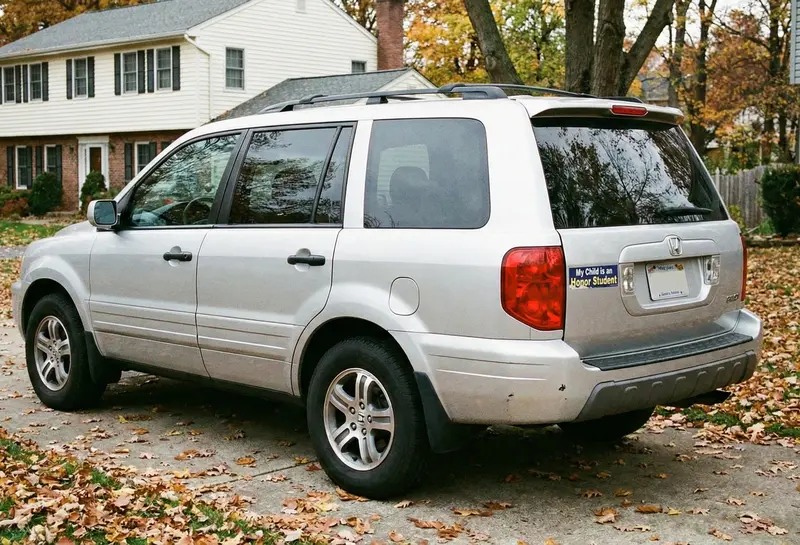
The 2003 model was the very first Pilot ever made, and unfortunately, it suffers from “first-year syndrome” more than almost any other vehicle in Honda’s history. The primary weak point is the 5-speed automatic transmission.
Thousands of owners reported that the torque converter—a vital component that helps transfer power from the engine to the wheels—would fail. This wasn’t a minor hiccup; it often blocked the flow of transmission fluid, causing the entire system to overheat and self-destruct.
If you are test-driving a 2003 model, you might feel the gears slipping or notice a delay when you shift from Park to Drive. In severe cases, the car might shudder at highway speeds. The only fix is usually a full transmission replacement or rebuild, which can easily exceed the value of the vehicle itself. Combined with recalls for faulty ignition switches that could let the key be removed while the car was still in gear, the 2003 Pilot is simply too risky for most buyers.
2005 Honda Pilot: Leaks and Lockups
While Honda engineers worked hard to patch the problems from the debut model, the 2005 Pilot stumbled into a different kind of mechanical minefield. The transmission issues persisted, but they were often caused by a failure in the cooling system rather than just the gears themselves.
Mechanics often call this the “Strawberry Milkshake” defect. It sounds harmless, but it is a death sentence for your powertrain. The barrier inside the radiator, which separates the engine coolant from the transmission fluid, is prone to corrosion and failure. When this barrier breaks, coolant (which is often pink) mixes with the transmission fluid. This mixture creates a thick, frothy sludge that destroys the friction linings inside the transmission and clogs the valve body.
Once this mixing happens, flushing the fluids rarely fixes the problem. You are usually looking at replacing both the radiator and the transmission. On top of that, this model year saw widespread complaints about paint quality. Darker colors, specifically Navy Blue and Black, tended to peel and rust prematurely on the roof and hood, killing the vehicle’s resale value.
2009–2013 Honda Pilot: The Oil Burning Era
The launch of the second generation in 2009 brought a boxier, more aggressive look, but under the hood, a new problem emerged. Honda introduced an updated version of Variable Cylinder Management (VCM) to help improve fuel economy. The idea was brilliant on paper: shut down a few cylinders when cruising on the highway to save gas.
In practice, however, this system became a major liability for reliability.
The constant activation and deactivation of cylinders caused uneven cooling and pressure differences in the engine block. Over time, this led to the piston rings wearing down prematurely, allowing oil to seep into the combustion chamber where it burns off. Owners of 2009 through 2013 models frequently report having to top off their oil between changes—sometimes as much as a quart every 1,000 miles.
This isn’t just an annoyance; it causes spark plugs to foul repeatedly, leading to engine misfires and check engine lights. If you ignore it, the lack of lubrication can cause permanent damage to the camshafts and crankshafts.
2016 Honda Pilot: Growing Pains of the Third Gen
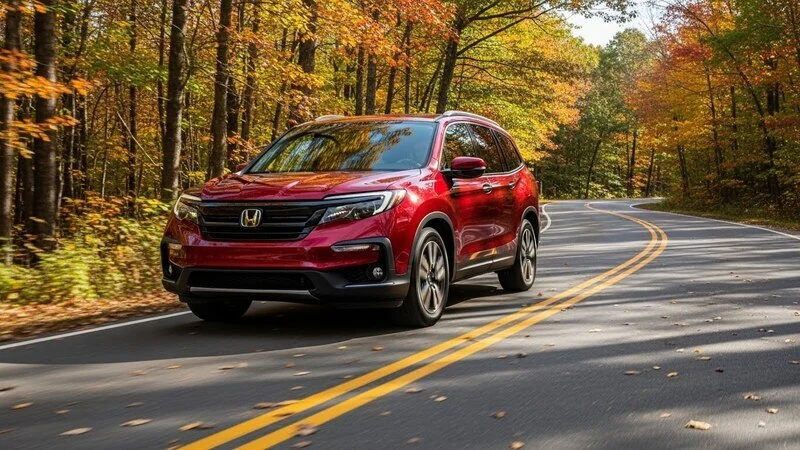
Fast forward to 2016, and Honda completely reinvented the Pilot again. They ditched the boxy look for a sleek, aerodynamic shape that resembled a larger CR-V. To compete with luxury SUVs, they also introduced a high-tech ZF 9-speed automatic transmission in the upper trim levels (Touring and Elite).
Unfortunately, this sophisticated transmission was not ready for prime time. Drivers immediately complained about “hunting”—a sensation where the car can’t decide which gear to be in. Acceleration often felt jerky or delayed, which can be terrifying when you are trying to merge onto a busy highway.
The 2016 model was also riddled with electrical gremlins. The Auto Start-Stop system, designed to save fuel at stoplights, would sometimes fail to restart the engine, leaving drivers stranded in intersections. Infotainment screens would go black or freeze randomly, cutting off navigation and backup cameras. Because 2016 was the first year of this major redesign, these “teething issues” were rampant.
Common Technical Failures Across Model Years
Understanding the specific model years is half the battle, but knowing what actually breaks helps you spot trouble before you sign the paperwork.
Transmission Failures
This is the single most expensive repair you are likely to face with a Pilot. In the first generation (2003-2005) and early third generation (2016), transmission failure is the most common complaint.
- The Symptoms: You might feel a shudder when the car shifts into overdrive, or a harsh “clunk” when shifting from Reverse to Drive.
- The Cause: In early models, it was heat and poor flow. In later models, it was software calibration and sensor issues.
Excessive Oil Consumption
As mentioned with the 2009-2013 models, the VCM system is the culprit here. While modern Hondas have largely resolved this, these older V6 engines are notorious for burning oil.
- The Fix: Many enthusiasts install a “VCM Muzzler”—a small resistor that tricks the car’s computer into thinking the engine hasn’t reached operating temperature, preventing the VCM from kicking in. It sacrifices a tiny bit of MPG for a much healthier engine.
Electrical System Malfunctions
Honda usually excels at simple, durable electronics, but the Pilot has had its share of ghosts. Beyond the infotainment glitches of 2016, earlier models (2003-2004) had ignition switch failures where the key could be removed while the car was still in gear, leading to roll-away accidents. Always check that all dashboard warning lights (TPMS, VSA, Check Engine) illuminate when you start the car and turn off shortly after. If a light never turns on, a seller might have disabled it to hide a fault.
Potential Problem: How to Identify Issues in Used Pilots
Even if you avoid the specific years we listed, every used car has a history. When you are standing on the lot inspecting a Honda Pilot, you need to know exactly what to look for to ensure you aren’t buying someone else’s headache.
First, check the transmission fluid. Pop the hood and locate the dipstick (usually marked in yellow or orange). Pull it out and wipe it on a white rag. The fluid should be a bright, translucent pink or red. If it looks dark brown, smells like burnt toast, or has metallic flakes in it, walk away immediately. That is a sign of internal wear and overheating.
Second, stress-test the transmission. During your test drive, don’t just cruise around the block. Find a hill if possible. Stop halfway up, then accelerate. The car should hold its position for a split second and then pull forward smoothly. If it rolls back significantly or shudders as it tries to climb, the transmission or torque converter is on its last legs.
Finally, listen to the suspension. Older Pilots are heavy vehicles, and they eat through suspension bushings. Drive over a speed bump or a rough patch of road. If you hear a “clunking” or “rattling” sound from the front or rear, you are likely looking at worn compliance bushings or sway bar links. While not catastrophic, it’s a repair cost you should negotiate off the price.
Reliable Alternatives: The Best Years for the Honda Pilot
Now for the good news. When Honda gets it right, they get it really right. If you want the space and utility of a Pilot without the anxiety, these are the model years that have stood the test of time.
2015 Honda Pilot
This is widely considered the “Holy Grail” of used Pilots. It was the final year of the second generation. By 2015, Honda engineers had virtually eliminated the VCM oil consumption issues and bulletproofed the transmission. It offers a comfortable ride, a boxy interior that maximizes cargo space, and excellent reliability scores.
2020–2022 Honda Pilot
If you prefer modern technology and a sleeker look, aim for the later years of the third generation. By 2020, the software issues with the 9-speed transmission were resolved, making the ride much smoother. These models also come with updated infotainment systems that support Apple CarPlay and Android Auto reliably.
However, the Pilot is a large vehicle. If you find during your search that a three-row SUV is simply too massive for your needs—or perhaps you are shopping for a new driver in the family who needs something easier to park—it might be worth exploring other categories. For example, there are many stylish, compact, and safe options often featured on lists of dream cars for girls that offer Honda reliability in a more manageable package.
Comparison: Honda Pilot vs. Competitors
If you can’t find a clean Pilot from a good model year, where should you look?
- Toyota Highlander: The Pilot’s main rival. Generally, it has slightly higher reliability ratings but offers less interior space in the third row. It often commands a higher price on the used market.
- Ford Explorer: A popular choice, but it has a spotty reliability history similar to the Pilot. If you choose an Explorer, research the specific model years carefully, as they suffer from transmission and water pump issues.
FAQs – Honda Pilot Years to Avoid
The 2003 model year is statistically the worst due to the high frequency of total transmission failures and electrical recalls.
No. The issues are heavily concentrated in the early First Generation (2003-2005) and the debut year of the Third Generation (2016). Other years generally have average to above-average transmission reliability.
It is average for its class. However, remember that the Pilot uses a timing belt (not a chain), which must be replaced every 7 years or 105,000 miles. This is a major service that typically costs between $800 and $1,200.
Conclusion
The Honda Pilot remains one of the most practical vehicles on the road, but your experience depends entirely on the year you choose. To protect your wallet, steer clear of the 2003, 2005, 2009-2013, and 2016 models. These years carry too much risk of transmission failure and engine trouble.
Instead, search for a 2015 or a 2020+ model. These years represent the best of Honda: durable, comfortable, and ready for whatever your family throws at them. Always insist on a pre-purchase inspection by a trusted mechanic, and you will end up with an SUV that serves you well for years to come.