Ram EcoDiesel Years to Avoid: The Complete Buyer’s Guide to Reliability, Issues, and Recalls
You probably remember the buzz when the Ram EcoDiesel first hit the market. It sounded like the perfect truck on paper. You were promised the grit and towing power of a V8, but with the fuel-sipping habits of a family car. For a lot of truck owners, that 3.0L diesel engine felt like the holy grail of pickups.
But for many, that dream quickly turned into a very expensive reality check. Instead of saving money at the pump, thousands of owners found themselves draining their savings at the mechanic. We aren’t just talking about minor annoyances like a loose piece of trim or a finicky radio. We are talking about catastrophic engine failures, cracked exhaust systems, and repair bills that often cost more than the truck is worth.
If you are in the market for a used pickup, navigating the used market can feel like walking through a minefield. This guide is here to help you step carefully. We will break down exactly which model years you need to leave on the lot, the specific mechanical nightmares that plague them, and which newer models finally got the formula right.
History and Development: Understanding the Generations
Before we start pointing fingers at the bad apples, it helps to understand what is actually under the hood. The engine in question isn’t a HEMI; it is a 3.0-liter turbocharged V6 diesel engine manufactured by a company called VM Motori. Ram put this engine in the Ram 1500 to give drivers a light-duty truck that could tow significantly more than a gas V6 while hitting fuel economy numbers that were unheard of at the time.
In fact, the promised MPG was so impressive it rivaled what you might expect from a midsize SUV with best gas mileage, making it an incredibly attractive option for commuters who needed occasional utility. However, not all EcoDiesels are built the same. The engine has gone through significant changes over the last decade, generally categorized into three distinct generations. Knowing the difference between them is your first line of defense against buying a lemon.
What is the EcoDiesel Engine?
At its core, this engine was designed to bridge the gap between efficiency and capability. It uses advanced common-rail fuel injection and a variable geometry turbocharger to produce high torque at low RPMs. This makes it fantastic for towing trailers without burning through a tank of diesel in an hour. But this complex engineering introduced complex problems, specifically in the earlier iterations.
The Three Generations
- Gen 1 (2014–2016): This was the launch window. While these trucks won awards for innovation, they are now infamous for having the highest failure rates.
- Gen 2 (2017–2019): Ram made some refinements to the engine block and emissions software, but many of the core issues from the first generation lingered.
- Gen 3 (2020–2023): This was a major overhaul. Ram redesigned about 80% of the parts, fixing many of the fatal flaws found in the earlier models.
The Ram EcoDiesel Years You Should Avoid (Detailed Breakdown)
If you take only one thing away from this guide, let it be this: be extremely cautious with the early models. The years 2014, 2015, and 2016 are widely considered the absolute worst years for reliability. These trucks might look tempting because of their lower price tags on the used market, but that discount usually comes with a heavy “maintenance tax” later on. Much like the Ford Edge years to avoid, these specific Ram models have earned a reputation that makes them a risky bet for any buyer.
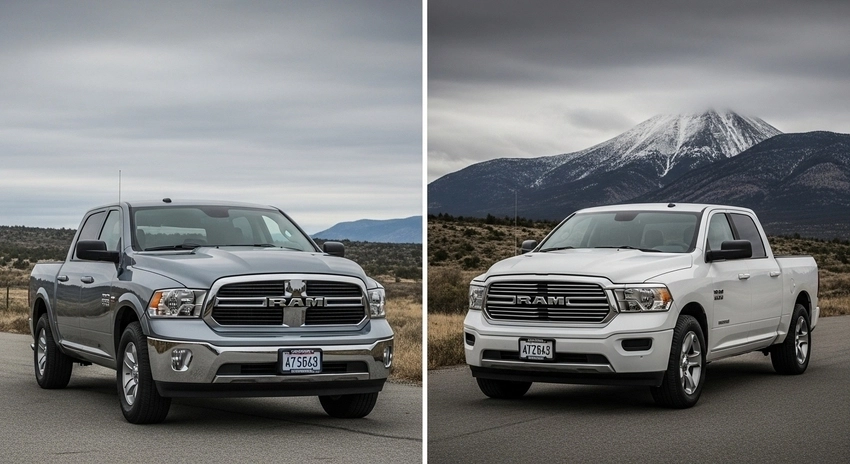
2014 Ram 1500 EcoDiesel: The First-Year Flops
Never buy the first year of a new generation. It is an old rule of thumb in the automotive world, and the 2014 Ram EcoDiesel proves why it exists. Being the “guinea pig” for new technology hurt early adopters badly.
The 2014 models suffer from high failure rates in the bottom end of the engine. Owners have reported catastrophic engine failures occurring well under 100,000 miles. Specifically, the main bearings have a tendency to seize, locking up the engine while driving. Additionally, the crankshaft position sensor on these units is known to fail frequently. When this sensor goes, your truck might stall in traffic or refuse to start altogether, leaving you stranded.
2015 Ram 1500 EcoDiesel: Carry-Over Catastrophes
If you thought Ram would have ironed out the kinks after one year, think again. The 2015 model year inherited almost all the mechanical defects of the 2014 version. There was very little improvement in the engine’s durability, and reports of cracked EGR coolers continued to pile up.
On top of the engine risks, the 2015 models became notorious for transmission pairing issues. Drivers often report a shuddering sensation when shifting gears or an indecisive transmission that hunts for gears while towing. This erratic shifting puts extra stress on an already fragile powertrain, compounding the risk of failure.
2016 Ram 1500 EcoDiesel: The Emissions Scandal Peak
The 2016 model year is where things got messy on a legal level. You might remember the headlines about “Dieselgate” regarding other manufacturers; well, Ram had its own battle with the EPA regarding emissions compliance.
The 2016 EcoDiesel was at the center of this controversy. To make these trucks legal to drive, Ram had to issue mandatory software updates. While this satisfied the federal regulators, it infuriated owners. The post-recall software often resulted in what many describe as “turbo lag”—a dangerous hesitation when you step on the gas pedal. Furthermore, many owners noticed a drop in fuel economy after the update, effectively removing the one major advantage this truck had over its gasoline competitors.
Common Mechanical Nightmares: What Owners Regret Most
If you are wondering why these specific years have such a bad reputation, you have to look inside the engine bay. It’s not just one bad part; it’s a series of cascading failures that can turn a running truck into a 6,000-pound paperweight. These aren’t hypothetical scenarios—they are the hard realities that thousands of owners have faced.

EGR Cooler Failures & Thermal Fatigue
The Exhaust Gas Recirculation (EGR) cooler is widely considered the Achilles’ heel of the Gen 1 and early Gen 2 EcoDiesel engines. Its job is to cool down hot exhaust gases before they are sent back into the engine to lower emissions. However, the factory coolers on the 2014–2016 models were prone to “thermal fatigue.”
In plain English, the metal expands and contracts until it cracks. When it does, coolant leaks internally. Unlike a puddle on your driveway, this coolant goes straight into the engine’s cylinders. This can lead to engine fires in extreme cases, but more commonly, it causes “hydrolocking”—where liquid fills the cylinder and prevents the piston from moving, effectively destroying the engine in seconds.
Bottom End Engine Failures
Perhaps the most terrifying phrase for an EcoDiesel owner is “spun bearing.” This refers to a failure in the bottom end of the engine, specifically the main bearings and connecting rods.
On many 2014–2015 units, the main bearings would fail prematurely, often well under the 100,000-mile mark. The exact cause is debated—ranging from manufacturing debris left in the block to improper torque specs at the factory—but the result is the same: a seized engine. If you are test-driving a used model and hear a deep, rhythmic knocking sound from the bottom of the engine, walk away immediately. That is the sound of a $15,000 repair bill waiting to happen.
Oil Cooler System Malfunctions
You might have heard mechanics talk about the “forbidden milkshake.” This happens when the oil cooler fails, allowing engine oil and coolant to mix. The resulting sludge looks like a thick, chocolate shake, but it is deadly for your engine.
In the EcoDiesel, the oil cooler gaskets are a common failure point. Once that barrier is breached, the oil loses its ability to lubricate, and the coolant loses its ability to cool. If this isn’t caught immediately—usually by checking for oil in the coolant overflow tank—it will ruin every bearing and seal in the engine.
Turbocharger Issues
The variable geometry turbocharger (VGT) on these trucks is complex. It uses moving vanes to adjust airflow, giving you power when you need it. However, soot and carbon buildup can cause these vanes or the wastegate actuator to stick.
When this happens, you might experience “underboost” (no power) or “overboost” (which can blow head gaskets). Another common issue is the carbon buildup in the intake piping, which can choke the engine over time. If you are used to reliable naturally aspirated engines found in many boxy SUVs from the same era, the level of maintenance required to keep this turbo running clean can be a shock.
Fuel System Disasters
The High-Pressure Fuel Pump (HPFP), specifically the Bosch CP4 pump used in these trucks, is infamous in the diesel world. American diesel fuel has lower lubricity than European diesel, and this pump struggles to handle it.
When the CP4 pump fails, it doesn’t just stop working; it disintegrates internally. It sends tiny metal shavings—glitter—through the entire fuel system. This debris ruins the fuel injectors, the fuel rails, and requires the entire fuel system to be replaced. It is a catastrophic failure that requires lifting the cab off the truck to fix properly.
The Legal Landscape: Lawsuits, Recalls, and Settlement
The reliability issues became so widespread that they spilled out of the mechanic shops and into the courtrooms. Understanding the legal history of these trucks is critical because it explains why some used models might have extended warranties while others are risky purchases.
The EcoDiesel Engine Failure Lawsuit
Class-action lawsuits were filed representing owners who suffered from the bottom-end engine failures and EGR fires. These legal battles highlighted that Ram knew about the thermal fatigue issues in the EGR coolers long before a proper fix was implemented.
While some owners received compensation or extended warranties, many who bought their trucks used or outside of specific windows were left footing the bill. This legal turmoil is a major reason why the resale value of 2014–2016 models is often surprisingly low—the market knows the risks.
EPA Emissions Settlement (AEM)
The most significant legal event was the settlement with the EPA and the Department of Justice. Ram was accused of using “defeat devices” to cheat emissions tests, similar to the Volkswagen scandal.
To settle this, Ram released the Approved Emissions Modification (AEM). This was a mandatory software update for 2014–2016 models. While it made the trucks legal, it fundamentally changed how they drove.
- The “Turbo Lag” Complaint: Post-update, many drivers reported a dangerous hesitation when pulling into traffic. The truck would delay accelerating for a second or two—a terrifying experience when merging onto a highway.
- Reduced Economy: Owners also reported losing 1-3 MPG after the update, diminishing the primary reason they bought the truck in the first place.
When looking at a used 2014–2016 EcoDiesel, checking if the AEM has been performed is vital. It triggers an extended warranty (up to 10 years/120,000 miles from the original sale date in some cases), which might be the only safety net you have against these expensive failures.
Ram EcoDiesel Years to Consider: The Safe Bets
After reading about cracked coolers and exploding fuel pumps, you might be ready to write off the EcoDiesel entirely. But that would be a mistake. Ram didn’t just ignore these problems; they eventually fixed them. If you want the fuel economy and torque without the anxiety, you need to look for the right generation.
2020–2023 (Gen 3): The Redemption
The “Gen 3” EcoDiesel, introduced in 2020, is effectively a different engine. Ram redesigned over 80% of the components. They installed a new water-cooled turbocharger to prevent overheating, redesigned the intake ports for better flow, and most importantly, introduced a low-pressure EGR system that puts significantly less stress on the engine.
These models produce 480 lb-ft of torque—more than the original—and have proven to be far more reliable. While no modern diesel is maintenance-free, the 2020–2023 models are widely considered the “safe bets” by mechanics and owners alike.
2018–2019: The Middle Ground?
The late-model Gen 2 trucks (2018–2019) occupy a grey area. By this time, Ram had addressed some of the most glaring quality control issues from 2014–2016. The engine blocks were reportedly sturdier, and the emissions software was better sorted from the factory. However, they still utilize the older EGR and high-pressure fuel pump designs. They are better than the early years, but they still require strict maintenance to stay reliable.
Maintenance and Longevity: Keeping an EcoDiesel Alive
If you buy a safe year, longevity comes down to how you treat it. You cannot treat a modern diesel like a gas truck.
The Critical Oil Spec
Oil is the lifeblood of this engine, and there was massive confusion regarding the correct specification. Originally, the spec was 5W-30, but after bearing failures, it was updated to 5W-40 (Rotella T6 is a favorite among enthusiasts). Using the heavier 5W-40 synthetic oil is non-negotiable for protecting the bottom-end bearings.
Managing the Emissions System (DPF & DEF)
Modern diesels hate short trips. The Diesel Particulate Filter (DPF) needs heat to burn off soot (a process called regeneration). If you only drive 10 minutes to the grocery store, the filter will clog, leading to expensive repairs.
- Drive it hard: Once a week, get the truck on the highway for 30 minutes. High speeds generate the heat needed to clean the DPF.
- Watch the DEF: Don’t let Diesel Exhaust Fluid sit in the tank for months, as it can crystallize and clog the injectors.
Buying Guide: How to Inspect a Used Ram EcoDiesel
Ready to look at a truck? Don’t kick the tires; check the vitals.
- The Service History Non-Negotiable: If the seller cannot prove oil changes happened every 10,000 miles (or preferably sooner), walk away. Sludge kills these turbo timers.
- The “Cold Start” Test: Tell the seller you want the engine stone cold when you arrive. Start it with the hood up. Listen for a rattling sound for the first few seconds—this indicates timing chain tensioner failure.
- Verifying Recall Status: Check the VIN to ensure the “Z46” high-pressure fuel pump recall and the “V08” emissions modification have been performed.
Alternatives to the EcoDiesel
Sometimes, the best EcoDiesel is… not an EcoDiesel. If the potential repair costs scare you, consider the alternatives.
Ram 5.7L Hemi V8
It’s thirsty, but it’s bulletproof. You trade MPG for peace of mind. The Hemi paired with the ZF 8-speed transmission is one of the most reliable powertrains on the road, similar to the robust traditional gearboxes found in SUVs without CVT transmission. You won’t get 30 MPG, but you also won’t get a $15,000 repair bill for a fuel pump failure.
Competitor Diesels
- Chevy Silverado 3.0L Duramax: This inline-6 diesel is incredibly smooth and gets exceptional fuel economy, rivaling the Ram.
- Ford F-150 3.0L Power Stroke: A solid option, though it was discontinued, meaning parts might eventually become harder to source than the Ram or Chevy.
FAQs
Ram ended production of the EcoDiesel in January 2023. The decision was driven by the shift toward electrification and the immense cost of updating the engine to meet increasingly strict emissions regulations.
A well-maintained Gen 3 EcoDiesel can easily surpass 200,000 miles. However, early Gen 1 models often faced catastrophic failure before 100,000 miles if not meticulously maintained or updated.
Statistically, yes. It has one of the highest complaint volumes regarding engine failure and transmission issues. It is generally safer to avoid it unless it has a brand-new engine installed under warranty.
If your engine seizes, you are looking at a bill between $12,000 and $18,000 for a full replacement, depending on labor rates and parts availability.
Conclusion
The Ram 1500 EcoDiesel is a truck of extremes. When it works, it is arguably the best light-duty towing rig ever made—efficient, powerful, and comfortable. But the 2014, 2015, and 2016 models carry a financial risk that is hard to justify for most buyers. The history of bearing failures, cracked EGR coolers, and emissions headaches makes them a gamble.
If you have your heart set on the diesel rumble, stretch your budget for a 2020 or newer Gen 3 model. You will get the truck you dreamed of, without the nightmare repair bills. Otherwise, the trusty Hemi V8 remains the king of reliability in the Ram lineup. Choose wisely, and inspect thoroughly.