Ford Edge Years to Avoid: The Ultimate Reliability Guide
The Ford Edge has been a staple on American roads since it first hit the scene in 2007. It bridged the gap perfectly for families who needed something larger than a sedan but didn’t want the bulk of a full-size truck-based SUV. With its spacious cabin and smooth ride, it became a hit. However, buying a used Edge can be a gamble if you don’t know the history.
While many model years are reliable daily drivers, others are plagued by expensive mechanical failures. We are talking about engines that leak coolant into the cylinders, transmissions that shudder and fail, and electrical sensors that drain your battery overnight. This guide breaks down exactly which years keep on running and which ones will spend more time in the shop than in your driveway.
Quick Answer: Ford Edge Best vs. Worst Years
If you are standing on a dealership lot right now and just need a quick “yes or no,” here is your cheat sheet. We categorized these based on complaint data from the NHTSA and repair trends reported by actual owners.
| Category | Model Years |
| Years to Avoid | 2007, 2008, 2011, 2012, 2013, 2015, 2016, 2017 |
| Years to Buy | 2014, 2019, 2020, 2021, 2022, 2023 |
Generally, the rule of thumb with the Ford Edge is to avoid the first year of any new generation. The mid-cycle refreshes, like the 2014 and 2019 models, typically resolved the major engineering defects found in earlier versions.
Ford Edge Generations: A Brief History
Understanding the generations helps you spot where the problems usually hide. Ford released two distinct generations of the Edge, each with its own set of mechanical personalities.
1st Generation (2007–2014)
This era launched the Edge on the CD3 platform, which it shared with the Mazda CX-9. These SUVs used a naturally aspirated 3.5L V6 engine. In 2011, Ford gave the Edge a facelift. This update introduced the controversial MyFord Touch infotainment system and a new 2.0L EcoBoost engine option. While the technology was exciting, it brought a wave of electrical glitches.
2nd Generation (2015–Present)
Ford moved the Edge to the CD4 platform in 2015, sharing its bones with the Ford Fusion. This generation leaned heavily on turbocharged EcoBoost engines. While they offered better fuel economy, the early years of this generation suffered from a critical engine block design flaw that has cost owners thousands in repairs. In 2019, Ford refreshed the lineup again, swapping the older transmission for a new 8-speed automatic and, crucially, fixing the engine block issues.
Ford Edge Years to Avoid (Detailed Breakdown)
We have analyzed owner reports and recall data to identify the specific years that pose the highest financial risk. These are the models you should approach with extreme caution.
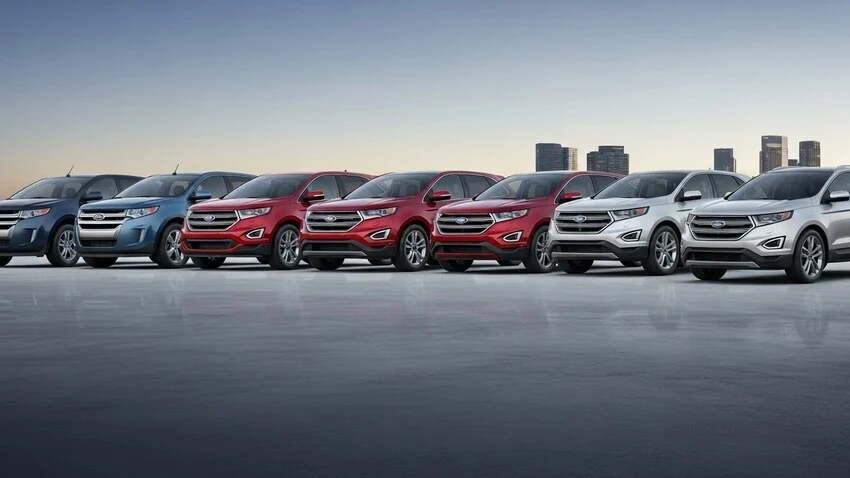
2007 & 2008: First-Generation Growing Pains
The 2007 Ford Edge was a brand-new vehicle, and like many first-year models, it had significant “teething” issues. The most severe problem involves the Power Transfer Unit (PTU) on All-Wheel Drive (AWD) models.
The PTU in these early years has a tendency to overheat. The fluid inside “cooks” into a thick sludge because it sits too close to the hot catalytic converter. Since these units were marketed as “filled for life,” many lacked a drain plug for easy servicing. Once the fluid degrades, the PTU fails, often causing the entire transmission to seize or shudder violently. Owners also frequently report a “clunking” noise from the rear suspension and heater cores that clog up, leaving the cabin freezing cold in winter. Despite the low price tag on these older models, the repair bills often exceed the vehicle’s value.
2011–2013: The Electrical & Sensor Nightmares
Just when Ford updated the Edge’s look in 2011, a new set of problems arrived. These years are infamous for frustrating electrical gremlins that are not just annoying—they can leave you stranded.
The “Door Ajar” Sensor Failure This is one of the most widespread complaints for this generation. A small sensor inside the door latch assembly fails, tricking the computer into thinking a door is wide open even when it is securely shut. This triggers a cascade of issues: the dome lights stay on (draining your battery overnight), the doors refuse to lock while you are driving, and the “Door Ajar” warning chimes incessantly. Ford eventually issued a Customer Satisfaction Program to address this, but many used buyers are still finding themselves stuck with the repair bill.
MyFord Touch Glitches The 2011 model introduced the MyFord Touch infotainment system. While it looked futuristic, the early versions were prone to freezing, lagging, or going completely black. Owners reported backup cameras failing to display an image or the screen becoming unresponsive to touch inputs. While software updates helped, the hardware in these early years remains a weak point.
2015–2018: The Coolant Intrusion Era
If you are looking at a second-generation Edge, this is the most critical section to read. The 2015 to 2018 models equipped with the 2.0L EcoBoost engine suffer from a severe manufacturing defect that can destroy the engine.
These engines were built with an “open-deck” cooling design. Unfortunately, a flaw in the engine block allows coolant to seep across the head gasket and into the cylinders—a problem known as “coolant intrusion.” Once coolant enters the combustion chamber, it causes misfires, white exhaust smoke, and eventually, catastrophic engine failure.
Unlike a simple gasket replacement, fixing this often requires replacing the entire engine block (“long block”), a repair that can easily cost upwards of $4,000 to $7,000. This issue is so prevalent that it has sparked class-action lawsuits. If you are considering a Ford from this era, be extremely careful; a similar engine defect affects other models, so it is wise to research Ford Escape years to avoid if you are cross-shopping for a smaller SUV.
Common Ford Edge Problems & Mechanics
Understanding the why behind these failures can help you inspect a used car more effectively. Here is a technical breakdown of the two biggest mechanical threats to the Ford Edge.
The “Filled for Life” PTU Myth
On All-Wheel Drive (AWD) models, the Power Transfer Unit (PTU) sends power to the rear wheels. Ford designed this unit to be “filled for life,” meaning it doesn’t have a regular drain plug for easy fluid changes. However, the PTU sits right next to the hot catalytic converter. Over time, this heat cooks the small amount of gear oil inside until it turns into a thick sludge. Once the fluid breaks down, the gears grind together and fail. If you hear a whining or clunking noise from the front of an AWD Edge, walk away.
EcoBoost Coolant Intrusion Explained
The coolant intrusion issue is specific to the 2.0L EcoBoost engines built before the 2019 redesign. The groove between the engine cylinders in the original block design was prone to cracking or degrading, breaking the seal that keeps coolant out of the engine. Ford eventually redesigned the block in 2019 to close this gap, effectively solving the problem. This is why newer models are significantly safer bets than the 2015–2018 versions. If you need a larger vehicle, the Explorer also faced its own set of powertrain challenges during specific years, so checking the Ford Explorer years to avoid is a smart move before upgrading to a three-row SUV.
In this video, a mechanic explains the coolant intrusion problem on the 1.5L and 2.0L EcoBoost engines, showing exactly where the block fails and why replacement is often the only fix.
The video provides a clear visual of the engine block defect that causes coolant intrusion, helping you identify the specific mechanical failure discussed in the 2015-2018 section.
The Best Ford Edge Model Years to Buy
After navigating through the minefield of potential failures, it is time to highlight the gems. There are specific model years where Ford got the formula right, offering a perfect balance of reliability, performance, and value.
2014: The Sweet Spot of the First Generation
If you are working with a tighter budget, the 2014 Ford Edge is widely considered the “golden year” of the first generation. By this time, Ford had seven years of production data to iron out the wrinkles. The transmission issues that plagued the 2007–2008 models were largely resolved, and the infotainment system was significantly more stable than the 2011–2012 versions. It remains one of the highest-rated model years for long-term dependability, offering a solid ride without the premium price tag of a newer vehicle.
2019–Present: The Refined Modern Choice
For those looking for modern safety features and a newer feel, the 2019 model year and onwards are your safest bets. This mid-cycle refresh was more than just a facelift; it was a mechanical overhaul. Ford introduced a new 8-speed automatic transmission that is smoother and more durable than its predecessor.
Most importantly, Ford redesigned the 2.0L EcoBoost engine block for 2019, effectively eliminating the dreaded “coolant intrusion” defect. These newer models also come standard with the Ford Co-Pilot360 safety suite, making them excellent family haulers. If you can afford it, skipping the 2015–2018 era and jumping straight to a 2019+ model is the best financial decision you can make.
Pre-Purchase Inspection Checklist
Even when buying a “good” year, a used car is still a used car. Take this checklist with you or hand it to your mechanic to ensure you aren’t inheriting someone else’s headache.
- The “Coolant Sniff” Test: On any EcoBoost model, check the coolant reservoir. Is the level low? Does the exhaust smell sweet (like maple syrup) when the car starts? These are tell-tale signs of coolant burning inside the engine.
- Listen to the PTU: On an All-Wheel Drive model, listen for a whining or grinding noise from the front of the car during the test drive. This suggests the Power Transfer Unit is failing due to “cooked” fluid.
- Test the Electronics: Spend five minutes playing with the infotainment screen, backup camera, and door locks. Ensure the “Door Ajar” light doesn’t flicker on when the doors are closed.
- Check for Open Recalls: Ford is proactive about safety, frequently issuing recalls to fix known issues. For instance, just as Ford recalls hundreds of thousands of Maverick pickup trucks to address body control modules, they have issued similar campaigns for the Edge’s brake hoses and shifters. Always run the VIN through the NHTSA database to ensure all free safety repairs have been performed.
Conclusion
The Ford Edge occupies a unique spot in the SUV market—it is spacious, comfortable, and fun to drive. But as we have seen, the difference between a reliable daily driver and a money pit often comes down to the year stamped on the door jamb.
To drive away happy, stick to the 2014 model for a budget-friendly option or aim for a 2019 or newer model for maximum peace of mind. Avoid the 2015–2018 years unless you have proof that the engine block has already been replaced. By following this guide and performing a thorough inspection, you can find a Ford Edge that serves your family reliably for years to come.