Toyota Highlander Years to Avoid: Reliability Issues You Should Know
You probably know the Toyota Highlander as the quintessential midsize SUV. It bridges the gap perfectly between the rugged utility of a 4Runner and the family-first comfort of a Sienna minivan. For over two decades, it has served as a dependable workhorse for millions of families, earning a reputation for being nearly indestructible.
But blind loyalty to the brand can be expensive. While Toyota generally builds tanks, specific Highlander model years suffer from frustrating—and costly—engineering flaws. From stripped engine head bolts in the early models to transmission hesitations in newer generations, there are definite “stay away” zones in the used market.
This guide cuts through the noise. We have analyzed the mechanical DNA of the Highlander to help you identify exactly which years to skip, ensuring you get the legendary reliability you expect without the surprise repair bills.
Quick Answer: Which Toyota Highlander Years Should You Skip?
If you are standing on a dealership lot right now and need a quick “yes or no,” this section is for you. We have categorized the model years based on failure rates, repair costs, and safety recalls.
| Category | Model Years | Why? |
| ⚠️ Avoid (High Risk) | 2003, 2008, 2014, 2015, 2020 | Engine failure, transmission whining, massive oil leaks. |
| ⚠️ Caution (Check VIN) | 2001–2002, 2005–2007, 2017–2019 | Hybrid inverter issues, 8-speed transmission lag. |
| ✅ Best Bets (Safe) | 2009–2013, 2021–Present | Proven reliability, post-facelift refinements. |
The “Avoid” years listed above aren’t just prone to minor annoyances like a stuck radio knob. These are the years where owners frequently face catastrophic mechanical failures. For example, the 2008 model year is often cited as one of the most problematic due to a mix of engine oil leaks and hybrid system failures. On the other hand, the “Best Bets” represent the golden era of the Highlander, where Toyota had ironed out the kinks of the previous generations.
Deep Dive: The Worst Toyota Highlander Years by Generation
To truly understand why these years are risky, we need to look under the hood. The Highlander shares its platform and powertrains with other Toyota staples, meaning it often inherits both their strengths and their weaknesses.
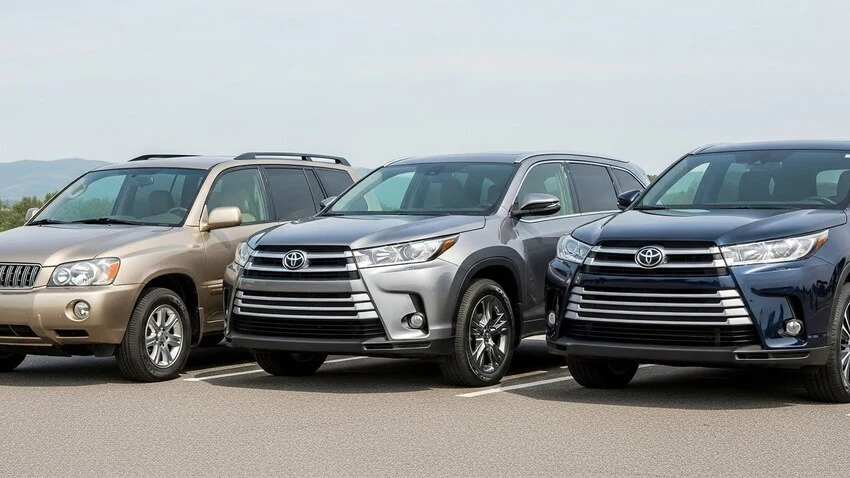
First Generation (2001–2007): The Engine Bolt Crisis
The first-generation Highlander established the formula for a car-based SUV. It was smooth, easy to drive, and spacious. However, if you are looking at models from this era, specifically the 2003 model year, you need to be extremely careful with the 4-cylinder engine option.
The core issue here is the 2AZ-FE 2.4L engine. While generally a decent motor, this specific production run suffered from a defect where the head bolts would strip the threads right out of the aluminum engine block. This isn’t a simple gasket failure; the actual metal threads disintegrate. When this happens, the cylinder head lifts, coolant sprays out, and the engine overheats rapidly.
This issue typically rears its ugly head around 120,000 to 130,000 miles. Repairing it correctly often requires drilling the block and installing steel thread inserts (Time-Serts) or replacing the entire engine block. If this sounds familiar, it’s because this engine was widely used across the lineup. Buyers researching Toyota RAV4 years to avoid often encounter the exact same warning regarding thread integrity and excessive oil consumption.
Beyond the engine, early Highlanders also suffer from smaller, yet annoying, interior gremlins. The sun visors are notorious for breaking internally and flopping down, blocking your view while driving. It sounds minor until it happens to you on the highway.
Second Generation (2008–2013): Growing Pains of the Redesign
Toyota launched the second-generation Highlander for the 2008 model year, offering significantly more size and power. Unfortunately, first-year redesigns often come with “teething issues,” and the 2008 Highlander is the poster child for this rule.
This model year is plagued by a serious flaw in the VVT-i oil line on the 3.5L V6 engine. The original part utilized a rubber section that is prone to bursting over time. When it fails, it pumps the engine’s oil supply onto the ground in seconds. If you don’t shut the engine off immediately, you are looking at a seized motor.
It is worth noting that the Highlander is built on the Camry platform, and they share many of these mechanical traits. A deep dive into Toyota Camry years to avoid reveals that the 2007–2009 era was a low point for V6 reliability across the board for Toyota, with this oil line issue being a primary culprit.
For those looking at the 2008 Hybrid, the news isn’t much better. The Intelligent Power Module (IPM) inside the inverter assembly has a high failure rate due to overheating solder joints. If this unit fails, the replacement cost can easily exceed $3,000, totaling the vehicle’s value in many cases.
Third Generation (2014–2019): Transmissions and Tech
The third-generation Highlander, debuting in 2014, brought a sleek new look and a modernized interior that families loved. However, this generation is a tale of two halves. The early years struggled with quality control, while the later years stumbled over a new transmission design.
The 2014–2015 “Soggy” Interior
If you are looking at a 2014 or 2015 Highlander, specifically the XLE or Limited trims with a sunroof, you need to check for water damage. These years suffer from a design flaw in the roof rail channels. The bolts that secure the roof rails to the car were often not torqued correctly or lacked sufficient sealant.
Over time, water seeps past these bolts and runs down the A-pillars (the metal frame next to your windshield). This isn’t just a cosmetic annoyance; the water soaks into the headliner and can damage the side-curtain airbags and floor electrical connectors. If you smell mold or see water stains near the grab handles, walk away.
Another frustration for these years is the door lock actuators. Owners frequently report that the power locks simply stop working, requiring manual locking of each door—a massive inconvenience for a family vehicle.
The 2017–2019 Transmission “Whine”
In 2017, Toyota replaced the trusty 6-speed automatic with a new Direct Shift-8AT (8-speed automatic) to improve fuel economy. While efficient, this transmission (Model UA80) introduced a new set of headaches.
Drivers of the 2017–2019 models often complain of a distinct high-pitched whining noise during acceleration, coupled with hesitation when shifting from 2nd to 3rd gear. The transmission computer (ECU) often seems confused, “hunting” for the right gear on inclines or hesitating when you need to merge onto a highway. While Toyota released software updates to smooth out the shift points, the whining noise often points to internal mechanical harmonics that software can’t fix.
This contrasts sharply with the smoother powertrain developments seen in their smaller vehicles. For instance, the engineering lessons learned here have pushed Toyota to refine the drivetrains in newer models, such as the Direct Shift-CVT found in the 2026 Toyota Corolla Hatchback FX Edition, which manages torque much more effectively than these early 8-speeds.
Fourth Generation (2020–Present): The Fuel Tank Glitch
The 2020 redesign moved the Highlander to the TNGA-K platform, making it safer and structurally stiffer. However, the Hybrid model stumbled out of the gate with a bizarre manufacturing defect.
The 2020 Fuel Tank Defect
The 2020 Highlander Hybrid was marketed with a 17.1-gallon fuel tank, promising over 600 miles of range. Owners quickly realized they could only fill the tank with about 12 to 14 gallons of fuel before the pump clicked off.
The issue stemmed from the shape of the tank and the venting system, which trapped air pockets and prevented the tank from filling to capacity. This reduced the real-world range significantly. While Toyota initiated a customer support program to replace the fuel tank and sending unit sensors, it is a critical check for any used 2020 Hybrid buyer. Ensure this recall work has been performed, or you will be stopping for gas far more often than you should.
Common Reliability Issues Across All Highlander Models
While we have highlighted specific years, some problems transcend a single generation. These are the recurring “Toyota quirks” that you should identify during any test drive.
The “Whining” Transmission
As mentioned with the 2017–2019 models, transmission whine is a red flag. It typically sounds like a jet engine spinning up as you accelerate. This can indicate issues with the torque converter or the front differential bearings. If you hear this noise, do not let a seller convince you it is “normal for a Toyota.” It is a sign of internal wear that could lead to a $4,000 replacement bill.
Hybrid Inverter Failures
If you are in the market for an older Highlander Hybrid (2006–2010), the Intelligent Power Module (IPM) is your main concern. When this unit overheats, it triggers “Limp Mode,” severely restricting power to protect the system. It is a known weak point that can turn a bargain SUV into a money pit. If these complex hybrid issues or transmission headaches sound too risky for your budget, many buyers find peace of mind by downsizing to simpler, proven Toyota compact cars, which often lack these expensive failure points.
This video demonstrates the severity of the stripped head bolt issue found in the 2AZ-FE engines, a critical repair to understand if you are considering an older Toyota model.
The Best Toyota Highlander Years for Reliability
Now that we have covered the years to avoid, let’s focus on the good news. There are plenty of “golden era” Highlanders where Toyota’s legendary build quality truly shines. If you want a trouble-free ownership experience, these are the model years you should target.
Why the 2009–2013 Era is the Sweet Spot
For value-conscious buyers, the 2009–2013 model years (specifically the post-facelift 2011–2013 models) represent the peak of the second generation. By this time, Toyota had resolved the VVT-i oil line issues that plagued the 2008 launch.
The 2012 and 2013 models, in particular, are standout performers. They feature the robust 3.5L V6 (2GR-FE) paired with a proven 5-speed automatic transmission—a setup known to clock over 300,000 miles with basic maintenance. These years lack the complex direct-injection systems and 8-speed transmissions of newer models, making them simpler and cheaper to maintain.
The 2021 Model and Beyond
If you prefer modern tech and safety features, the 2021 Toyota Highlander is your safest bet in the newer lineup. Following the rocky 2020 redesign, Toyota corrected the fuel tank capacity issues in the Hybrid models and patched the infotainment software glitches.
The 2021 model also refined the 8-speed transmission programming, significantly reducing the “hunting” and hesitation felt in the 2017–2019 models. With top-tier safety ratings and a matured TNGA-K platform, this year offers the best balance of modern amenities and mechanical stability.
Practical Buying Advice for Used Highlanders
Even if you buy a “good year,” every used car has a history. To protect your wallet, you need to inspect specific components that are known weak points for this platform.
Inspection Checklist
Before you sign any paperwork, perform these specific checks:
- The Cold Start Listen: Ask the seller not to run the car before you arrive. Start the engine cold and listen for a brief “rattle” for the first 1-2 seconds. This can indicate wear on the VVT-i cam gears, a common issue on high-mileage V6 engines.
- Transmission Whine Test: On the test drive, turn off the radio and accelerate moderately from 0 to 40 mph. If you hear a high-pitched whine that rises with RPMs (especially on 2017–2019 models), walk away. This often signals internal torque converter or differential wear.
- Roof Rail Inspection: For 2014–2016 models, open the doors and look for water stains on the headliner near the grab handles. This confirms the roof rail leak issue.
- VIN Check: always run the VIN to check for outstanding recalls. The fuel pump recall (denso pump failure) affects millions of Toyota vehicles, including many Highlanders.
Estimated Repair Costs for Common Fixes
Negotiation is easier when you know the numbers. Here is what you can expect to pay if you encounter these common failures:
| Component | Estimated Repair Cost | Notes |
| Stripped Head Bolts | $2,500 – $4,500 | Requires drilling block or engine replacement (2002-2005 4-cyl). |
| ABS Actuator Assembly | $1,800 – $2,500 | Critical safety part; part alone is ~$1,200+. |
| Hybrid Inverter (IPM) | $3,000 – $4,500 | Causes “Limp Mode” on older Hybrids. |
| Door Lock Actuator | $350 – $600 (per door) | Common on 2014-2015 models. |
FAQs
The 2003 model (4-cylinder) is arguably the worst due to the catastrophic head bolt failure. However, the 2008 model is a close second due to the sheer volume of oil leak and hybrid inverter complaints.
With regular oil changes and transmission fluid services, a Highlander can easily surpass 250,000 to 300,000 miles. It is not uncommon to see first-generation models still on the road with original powertrains.
Yes, generally. The hybrid system is durable, but buyers of 2006–2008 models should verify if the inverter assembly has been replaced, as it is a high-ticket failure point.
Conclusion
Absolutely. Despite the specific years we have warned you about, the Toyota Highlander remains one of the smartest buys in the midsize SUV market. Its resale value is class-leading for a reason.
By avoiding the 2003, 2008, and 2014–2015 model years, you effectively bypass the majority of the expensive defects. Focus your search on a well-maintained 2012–2013 model for value, or a 2021+ model for modern safety.
Always insist on a pre-purchase inspection from an independent mechanic. Spending $150 now could save you from a $4,000 engine rebuild later. Drive smart, buy smart, and enjoy the ride.