Toyota Venza Years to Avoid: A Complete Reliability Guide & Best Model Years
Toyota has built a legendary reputation for manufacturing vehicles that run forever. However, even a giant like Toyota has the occasional stumble. The Toyota Venza is a unique vehicle—it sits comfortably between a refined sedan and a practical crossover—but not every model year lives up to the gold standard of reliability.
If you are in the market for a used Venza, you need to know which production years are prone to expensive mechanical failures and which ones will drive trouble-free for hundreds of thousands of miles. This guide cuts through the noise of forums and technical data to give you a clear, actionable list of the Toyota Venza years to avoid.
A Quick Look at Toyota Venza Generations
Before we dig into the specific problems, it is helpful to understand the two distinct lives this vehicle has lived. The Venza isn’t just one continuous line; it was discontinued and then reborn with a completely different identity.
1st Generation (AV10): 2009–2015
The original Venza was Toyota’s answer to the “station wagon” question. Built on the sturdy Camry chassis, it offered a car-like ride with the cargo space of an SUV. Buyers could choose between a fuel-efficient 2.7L 4-cylinder engine or a powerful 3.5L V6. It was designed specifically for North American roads, prioritizing comfort and width over off-road capability. While it shares some DNA with its larger sibling, families who needed a third row often opted to check the Toyota Highlander years to avoid instead, leaving the Venza as a spacious five-seater option.
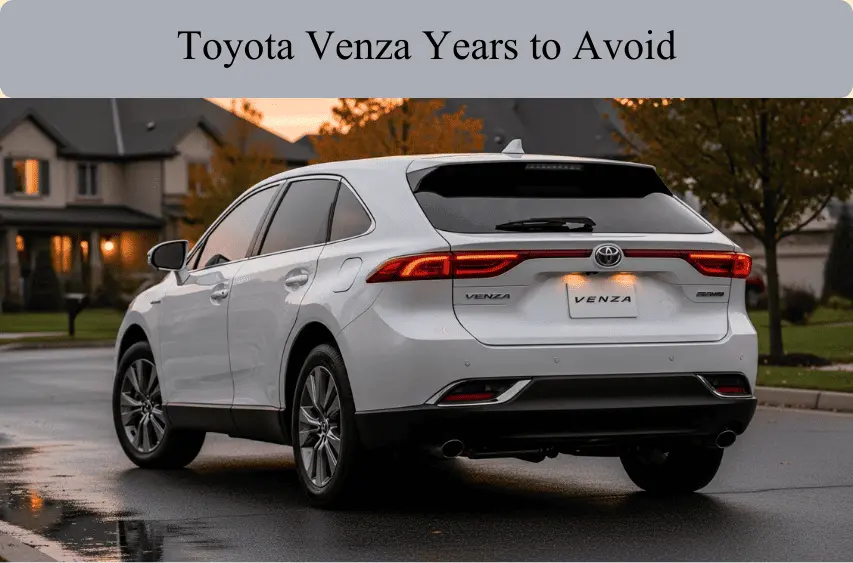
2nd Generation (XU80): 2021–Present
After a six-year hiatus, the Venza returned in 2021. This time, Toyota changed the recipe entirely. The new Venza is exclusively a hybrid, built on the modern TNGA-K platform. It is effectively a rebadged Toyota Harrier from the Japanese market. It is sleeker, more efficient, and positions itself as a more upscale alternative to the compact SUV segment. In fact, it shares a lot of its mechanical heart with the RAV4 Hybrid, so it is worth comparing it against the Toyota RAV4 years to avoid if you are shopping for a reliable hybrid crossover.
Toyota Venza Years to Avoid: The Short List
If you are standing on a dealership lot right now and just need a quick answer, here is the cheat sheet. These are the years that have generated the most complaints regarding reliability, repair costs, and frustration.
- 2009 (Avoid): The debut year suffered from “first-year jitters,” including widespread steering rattles and interior quality issues.
- 2010 – 2011 (Avoid): These years carried over many electrical gremlins and brake rotor warping problems from the 2009 launch.
- 2021 (Caution): The first year of the new hybrid generation is infamous for spontaneous windshield cracking and buggy infotainment software.
Detailed Breakdown: Why You Should Avoid These Years
Simply knowing the years isn’t enough; you need to know why they are risky so you can inspect them properly if you choose to buy one. Here is the deep dive into the mechanical failures that plague these specific production runs.

2009–2011: Mechanical & Steering Struggles
The first-generation Venza had a rough start. The 2009 model year, in particular, has the highest volume of reported complaints. The most persistent issue is a “clunking” or “popping” noise coming from the steering column.
The Steering Shaft Defect
This isn’t just a cosmetic rattle. The noise typically points to a worn intermediate steering shaft or a defect in the electric power steering assembly. Drivers report feeling a distinct pop in the steering wheel when turning at low speeds, such as when parking. While Toyota issued Technical Service Bulletins (TSBs) to address this, many used models on the market today may still have the original, defective parts installed.
Interior Quality and Brakes
Beyond the steering, these early years suffered from undersized brake rotors. The Venza is a heavy vehicle, and the original rotors were prone to warping, leading to a vibrating steering wheel when braking. Additionally, owners frequently noted that the interior materials in the 2009-2011 models were prone to rattling and premature wear, falling short of the “Lexus-lite” vibe Toyota was aiming for.
2012–2013: The “Caution” Years
By 2012, Toyota had resolved the steering clunk, but new issues emerged, specifically under the hood of the base models.
2.7L Engine Oil Consumption
The 2012 and 2013 models equipped with the 2.7L 1AR-FE 4-cylinder engine have a reputation for burning oil. The culprit is often the piston ring design. Over time, these rings can get clogged with carbon deposits, preventing them from sealing the combustion chamber properly. This leads to oil slipping past the rings and burning off. If you are looking at a Venza from this era, the V6 engine is widely considered the safer, more robust choice.
2021: The Hybrid Growing Pains
When the Venza returned as a hybrid in 2021, it brought a sleek new look but also a very specific, very annoying problem.
The Exploding Windshield Issue
It sounds dramatic, but it is a real headache for owners. The 2021 Venza has been the subject of class-action lawsuits regarding its windshields. Owners report that the glass cracks spontaneously without any impact—no rock chips, no debris. The cracks often start at the edge of the glass and spread rapidly. This is believed to be caused by stress on the glass due to manufacturing tolerances or thermal expansion. Replacing these windshields is expensive because they contain sensors for the safety systems that must be recalibrated.
Common Problems Found in Bad Venza Years
While we have highlighted specific years to avoid, understanding the specific failures helps you spot a bad deal before you sign the paperwork. These are the recurring issues that mechanics often see in the Venza lineup.
Engine Oil Consumption
This is primarily a concern for the 1AR-FE 2.7L 4-cylinder engine found in the 2009–2013 models. As mentioned, worn piston rings allow oil to enter the combustion chamber. If you are test-driving a Venza from this era, ask the owner how often they top up the oil. A puff of blue smoke from the exhaust on a cold start is a major red flag.
Electrical System Failures
Electrical gremlins are frustrating because they are often intermittent. In the Venza, the most common complaints involve door lock actuators that stop working, leaving you unable to lock or unlock the car remotely. Additionally, the power liftgate motor on the first-generation models is known to fail, turning a convenient feature into a heavy, manual chore.
Transmission Shifting Issues
The 6-speed automatic transmission in the early Venza models is generally reliable, but it isn’t perfect. Some drivers report “gear hunting,” where the transmission struggles to pick the right gear on an incline, or hesitation when accelerating from a stop. This is often solved with a software update (ECU reflash) from the dealer, but in rare cases, it signals internal wear.
Best Toyota Venza Years You Can Buy With Confidence
Now for the good news. Toyota fixed almost all these issues as production went on. If you want a Venza that lives up to the brand’s reputation, these are the model years to target.
2014 – 2015 (The Sweet Spot)
These are arguably the best used Venza models money can buy. By 2014, Toyota had updated the steering components, resolved the worst of the interior rattles, and ironed out the electrical kinks. The 2015 model, being the final year of the first generation, is practically bulletproof. If you can find a 2015 Venza V6 with good maintenance records, snap it up.
2023 and Newer
If you want the modern hybrid experience, skip the 2021 and look for a 2023 or newer model. By this time, the supply chain issues with the windshield glass were largely resolved, and the infotainment system received a massive upgrade to Toyota’s new, faster interface. These years offer incredible fuel economy (around 40 MPG) without the first-year headaches.
Is the Toyota Venza Worth Buying? (Comparison & Alternatives)
The Venza is an excellent vehicle for a specific type of driver: someone who wants comfort, easy entry and exit, and a smooth ride on pavement. It is not an off-roader, and it is not a minivan.
If you love the Toyota badge but the Venza doesn’t quite fit your lifestyle, consider the siblings in the lineup. The RAV4 is smaller and easier to park, while the Highlander offers that crucial third row for bigger families.
However, if your daily drive involves dirt roads, towing a boat, or genuine adventure, the unibody Venza will disappoint you. For those tasks, you need a body-on-frame truck. In that case, you should look at the Toyota 4Runner years to avoid to find a rig that can handle the abuse while avoiding the rust-prone years of that legendary SUV.
What to Inspect Before Buying a Used Toyota Venza
Don’t just take the seller’s word for it. When you go to check out a used Venza, use this mini-checklist to protect yourself.
- Maintenance History: For 2009–2013 models, look for proof of regular 5,000-mile oil changes. Extended oil change intervals are the death knell for the 2.7L engine.
- Test All Electrical Features: physically press every window switch, lock button, and adjust the power seats. Check that the touchscreen responds instantly to your touch.
- Listen for Steering Noises: In a safe parking lot, turn the steering wheel all the way to the left and then all the way to the right while moving slowly. If you hear a “clunk” or feel a pop in the wheel, walk away.
- Verify Recalls: Grab the VIN (Vehicle Identification Number) and run it through the NHTSA recall tool. Ensure that any airbag recalls or software updates have been performed.
Toyota Venza Resale Values
Because the Venza was discontinued and then brought back, its resale value is interesting. The first-generation (2009-2015) models have bottomed out on their depreciation curve, making them excellent value buys. They won’t lose much more money if you keep them maintained.
The second-generation hybrids (2021+) are holding their value incredibly well due to high gas prices and the demand for hybrids. Expect to pay a premium for them, but know that they will likely return a good chunk of that money when you eventually sell.
FAQs
The 2009 model year has the highest volume of complaints, mostly related to steering and interior accessory issues.
Yes, the Venza was discontinued after the 2015 model year and then again after the 2024 model year to make room for the Toyota Crown Signia.
Yes, the powertrain is very reliable. The main issues with the 2021 hybrid launch were related to the windshield glass and infotainment software, not the engine or battery.
With proper maintenance, a V6 Venza can easily surpass 200,000 miles. There are many reports of them reaching 300,000 miles without major engine repairs.
Final Verdict
The Toyota Venza is a hidden gem in the used car market, provided you navigate around the potholes.
- SKIP: The 2009, 2010, and 2011 models due to steering and electrical gremlins. Be wary of the 2021 hybrid due to glass issues.
- BUY: The 2014 and 2015 models are rock-solid, comfortable cruisers. The 2023 and newer hybrids are excellent fuel-sippers with modern tech.
By choosing the right year, you get all the comfort of a sedan with the utility of an SUV, minus the headaches. Happy hunting!