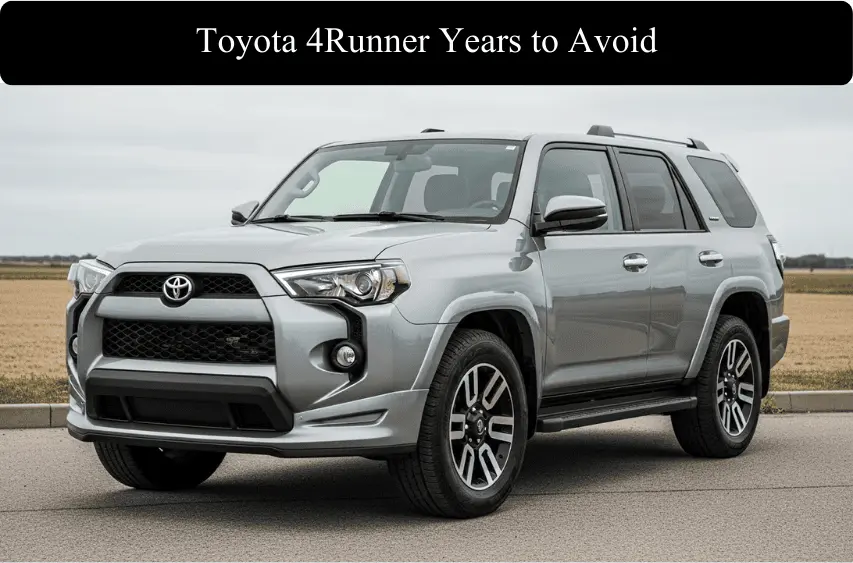
Toyota 4Runner Years to Avoid and What to Buy Instead
The Toyota 4Runner is a legend in the SUV world. It is built like a tank, drives through anything, and generally refuses to quit. I have seen plenty of these rigs roll into the shop with over 300,000 miles on the odometer, still running strong. But that reputation for being invincible can be a bit of a trap. Not every single model year is a winner. In fact, picking the wrong year can leave you stuck with a rusted frame, a blown engine, or electrical gremlins that never seem to go away.
If you are looking for a used SUV, knowing which years to skip is just as important as knowing which ones to buy. Similar to the specific Toyota Highlander years to avoid, even Toyota’s most rugged vehicles have had production runs that missed the mark. This guide will help you spot the trouble models so you can put your money into a rig that lasts.
Problematic Toyota 4Runner Model Years: A Quick Overview
While the 4Runner is famous for reliability, certain generations faced distinct manufacturing defects. Some early models struggled with serious engine design flaws, while trucks from the early 2000s were plagued by severe corrosion that could condemn the entire vehicle.
You need to know the difference between a minor annoyance, like a stuck window switch, and a catastrophic failure, like a cracked frame. The worst offenders usually fall into specific generation gaps where Toyota was either testing new technology or dealing with supplier issues.
The Early Years: 1988–1995 (1st & 2nd Generation)
If you love the retro look, the first and second-generation 4Runners are tempting. They have that classic boxy style that off-roaders love. However, these older trucks carry significant mechanical risks, especially if you find one with the V6 engine.
The 3.0L V6 Head Gasket Nightmare
The biggest deal-breaker for this era is the 3.0-liter V6 engine. Mechanics and enthusiasts often call this engine the “3.Slow” because it lacks power, but the real issue is reliability. This engine is notorious for repeated head gasket failures.
The design of the exhaust system caused excessive heat to build up near the number six cylinder. Over time, this heat cooks the gasket until it fails. I have spoken to owners who replaced the gasket, only to have it blow again 20,000 miles later. It is an expensive repair that often costs more than the truck is worth. If you really want this body style, look for the 2.4-liter 4-cylinder engine (22R-E). It’s slower, but it is nearly bulletproof.
Suspension Sagging and Power Steering Leaks
Beyond the engine, these older 4Runners are famous for “rear sag.” The rear coil springs were not quite strong enough to support the vehicle’s weight over decades of use. This causes the back end to droop, affecting handling and making the truck look tired. Additionally, the power steering gearboxes from this era often develop leaks, leaving messy puddles on your driveway.
The Rust Era: 2001–2005 (3rd & 4th Generation)
While the engine issues of the 90s were frustrating, the problems facing the turn-of-the-century models were far more structural. If you live in the Rust Belt or any coastal area with salt air, you need to be extremely careful with 4Runners from this specific period.
2001–2002: Safety Systems and Frame Corrosion
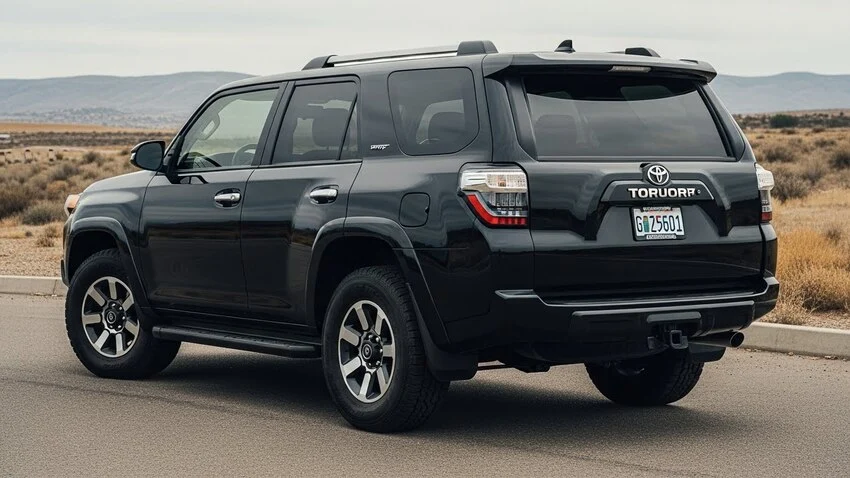
The late third-generation models are generally loved, but the 2001 and 2002 years have a dark side. The biggest enemy here is frame rot. I have seen frames on these trucks that look like Swiss cheese. The corrosion often starts near the rear control arm mounts and the muffler. Once the rust eats through the metal here, the rear axle can actually become unstable, making the vehicle dangerous to drive.
Aside from rust, these years saw the introduction of more complex safety systems like Vehicle Skid Control (VSC) and Traction Control (TRAC). While good in theory, the early sensors were finicky. A failure in a single sensor often lights up the dashboard like a Christmas tree and can disable your 4WD system right when you need it most.
2003–2005: Cracked Dashboards and Structural Rot
When Toyota launched the fourth generation in 2003, they improved the ride quality, but the rust issues persisted. The frames on 2003 to 2005 models are notorious for rotting out prematurely. If you are inspecting one of these, bring a hammer and tap the frame rails. A solid thud is good; a crunching sound means you should walk away immediately.
Inside the cabin, these years suffer from a strange cosmetic defect: melting dashboards. The material Toyota used reacts poorly to sunlight and heat over time, causing it to crack and become sticky. It sounds minor, but replacing a dashboard is a labor-intensive job that costs hundreds of dollars. If you don’t need the heavy-duty towing capacity of a 4Runner, you might consider looking into the Toyota RAV4 years to avoid for a smaller, more city-friendly alternative that faced different challenges.
Modern Glitches: 2010–2016 (5th Generation)
You might assume that newer is always better, but the early years of the fifth generation proved that even modern Toyotas have growing pains. While mechanically stout, these years struggled with accessories and safety tech.
Airbag Defects and Electrical Gremlins
The 2010 and 2011 models were part of the massive Takata airbag recall. The inflators in the passenger-side airbags could rupture during deployment, spraying metal fragments into the cabin. Most should have been fixed by now, but you must verify the VIN before buying.
We also see complaints about the electrical system in these early fifth-gen models. Issues range from seat heaters that short out to faulty wiring harnesses that cause intermittent power loss. These gremlins are hard to diagnose and frustrating to live with.
Door Lock Actuators and Infotainment Issues
By 2015, the major mechanicals were solid, but the accessories started failing. The most common annoyance is the door lock actuators. It is not uncommon for a 2015 4Runner to have two or three doors that refuse to lock or unlock electronically. You end up having to manually lock each door like it is 1985.
Additionally, the infotainment systems in the 2014-2016 models feel dated and are prone to freezing. Bluetooth connectivity often drops, and the touchscreens can become unresponsive. While these won’t leave you stranded on the side of the road, they definitely ruin the daily driving experience.
Common Toyota 4Runner Problems Over the Years
While we have looked at specific bad years, some issues haunt the 4Runner across multiple generations. Understanding these common failures will help you inspect any used model like a pro.
Severe Frame Rust and Undercarriage Corrosion
I cannot stress this enough: rust is the number one killer of these SUVs. The boxed frame design traps moisture, mud, and road salt, eating the metal from the inside out. This isn’t just cosmetic; it is structural.
- Where to check: Look closely at the frame rails near the catalytic converters and the rear control arm mounts. If you see deep flaking rust or holes, walk away.
Transmission Issues and the “Pink Milkshake”
This funny name refers to a serious mechanical disaster, primarily affecting third-generation models (1996–2002). The stock radiator has an internal cooler for the transmission fluid. When the wall between the coolant and transmission fluid corrodes, the two fluids mix. The result is a strawberry-colored sludge that destroys the transmission and damages the engine cooling system. If you buy a 4Runner from this era, ask if the radiator has been replaced recently or if an external transmission cooler has been installed to prevent this.
Most Reliable Toyota 4Runner Years to Consider
Now that we know what to avoid, let’s talk about the gems. If you find one of these years in good condition, you are likely buying a vehicle that will outlast you.
1999–2000: The Off-Road Peak
For pure off-road enthusiasts, the 1999 and 2000 models are often considered the “Holy Grail.” They combine the reliable 3.4-liter V6 engine with a simpler electronic system than later years. Best of all, they were available with a factory rear locking differential and a slightly taller suspension from the factory (specifically the 1999 “Highlander” edition springs), making them trail-ready right out of the box.
2008–2009: The Refined Fourth Gen
If you want the power of a V8 without the early teething issues, the 2008 and 2009 models are excellent. By this point, Toyota had solved the head gasket issues of the early 2000s and improved the corrosion resistance. These are smooth, powerful highway cruisers that can still tow heavy loads.
2017–2021: Modern Dependability
For those who want modern safety and tech, the 2017 to 2021 models are nearly bulletproof. These years benefit from over a decade of refinement on the fifth-generation platform. The kinks with the door locks and infotainment were largely ironed out, resulting in one of the most reliable vehicles on the road today.
Practical Tips for Buying a Used Toyota 4Runner
- Check the Frame: Bring a flashlight and a screwdriver. Poke the frame rails gently. If the metal crunches, do not buy it.
- Test the 4WD: Shift into 4-High and 4-Low to ensure the actuators engage quickly. If the lights just blink on the dashboard, the actuator might be seized.
- Look for Maintenance Records: A well-maintained high-mileage 4Runner is often a better buy than a neglected low-mileage one.
If you love Toyota reliability but decide that an off-road SUV is too much maintenance or gas for your daily commute, you might want to check out the Toyota Camry years to avoid. A sedan offers that legendary Toyota durability with significantly lower running costs.
FAQs
There isn’t a hard limit. A well-maintained 4Runner can easily surpass 300,000 miles. However, be cautious of models over 200,000 miles if they lack service records, as suspension bushings and timing belts (on V8s and older V6s) will likely need replacement.
The 4.0-liter V6 (1GR-FE) found in late 4th-gen and all 5th-gen models is widely considered the best balance of power and reliability. It uses a timing chain rather than a belt, reducing maintenance costs.
Generally, no. Routine maintenance is affordable. However, fuel costs are high due to poor gas mileage, and specific repairs like the X-REAS suspension on Limited models can be pricey if they fail.