What Is an Estate Car? – 10 Best Estate Cars 2026
While the automotive world remains fixated on SUVs, the estate car—or station wagon—quietly retains its crown as the ultimate family hauler. For 2026, the best estate cars offer a blend of driving dynamics, aerodynamic efficiency, and sheer cargo capacity that high-riding crossovers struggle to match. Whether you need a plug-in hybrid for tax-efficient commuting or a cavernous boot for cross-country adventures, this year’s lineup is stronger than ever.
What Is An Estate Car?
At its core, an estate car is a saloon with an extended roofline that stretches rearward to a hatchback-style trunk. This two-box design incorporates A, B, C, and D-pillars, maximizing internal volume without increasing the vehicle’s footprint.
The primary advantage of this layout is versatility. Unlike a sedan’s restricted trunk opening, an estate’s rear door allows for loading bulky items like furniture or bicycles with ease. Most models feature split-folding rear seats, enabling owners to toggle between carrying five passengers or prioritizing a van-like cargo area.
Is An Estate Car The Same As A Station Wagon?
Yes, the terms are interchangeable depending on where you are. “Estate” is the British term, while “Station Wagon” is standard in the United States. Despite the different names, the vehicle architecture remains identical. Both feature the distinct extended roofline and D-pillar design that separates them from standard hatchbacks or saloons.
Why Choose an Estate Over an SUV in 2026?
The argument for the estate car in 2026 centers on efficiency and physics.
SUV or Estate?
Because estates sit lower to the ground than SUVs, they boast a superior center of gravity. This translates to sharper handling, less body roll in corners, and a more engaged driving experience.
Aerodynamics also play a crucial role. The sleeker profile of an estate cuts through the air more cleanly than a blocky SUV, resulting in better fuel economy and longer ranges for electric models. For buyers investigating [Toyota compact cars] or similar reliable hatchbacks, stepping up to the estate version of those same platforms often grants significantly more utility without the bulk or running costs of a crossover.
10 Best Estate Cars to Buy in 2026
Our selection process prioritizes load capacity, running costs, and onboard technology. We have evaluated these models based on real-world usability—from the height of the load lip to the ease of folding seats.
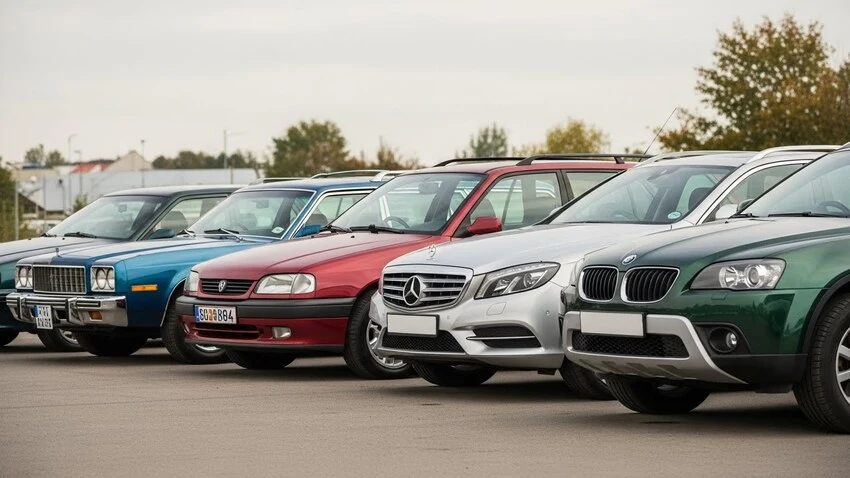
1. Skoda Superb Estate
The Skoda Superb Estate remains the undisputed king of the segment for 2026. It defines what a modern wagon should be: vast, comfortable, and intelligently designed.
With a massive 690-liter boot that expands to over 1,900 liters with the seats down, the Superb outclasses vehicles a size above it. The interior quality rivals premium German competitors, yet it retains Skoda’s “Simply Clever” practical touches, such as the umbrella hidden in the door and intuitive storage solutions. For 2026, the plug-in hybrid (PHEV) variant is the standout choice, offering an impressive pure-electric range that handles daily commutes with ease, making it a favorite for both private families and company car drivers seeking low tax rates.
2. Toyota Corolla Touring Sports
The Toyota Corolla Touring Sports proves that you don’t need to sacrifice efficiency for space. It is a masterclass in hybrid engineering, delivering exceptional fuel economy without the need for plugging in.
While its 596-liter boot is slightly smaller than the Superb’s, it is thoughtfully shaped with a low load lip that makes sliding in heavy suitcases effortless. The 1.8-liter and 2.0-liter self-charging hybrid powertrains are seamless in urban traffic, offering quiet, electric-only driving for short bursts. Inside, the 2026 model benefits from a vastly improved infotainment system, addressing one of the few criticisms of previous generations. It’s a pragmatic, reliable choice that feels built to last a lifetime.
3. Audi A6 Avant e-tron
For those ready to embrace the electric future without giving up the classic estate silhouette, the Audi A6 Avant e-tron is a triumph. It combines Audi’s legendary build quality with cutting-edge EV technology.
This isn’t just an electric conversion; it’s a ground-up design that maximizes aerodynamic efficiency to deliver a range of up to 437 miles on a single charge. The cabin is a tech-lover’s dream, dominated by crisp displays and premium materials. Comfort is paramount here, with optional air suspension that glides over imperfections. While the 502-liter boot is modest compared to the Skoda, the A6 Avant e-tron makes up for it with rapid charging capabilities—top up from 10% to 80% in just over 20 minutes—making it a genuinely viable long-distance cruiser.
4. Volkswagen Passat
If the Skoda Superb is the pragmatic choice, the Volkswagen Passat is the refined executive sibling. Sharing the same underlying architecture, the 2026 Passat distinguishes itself with a slightly more polished interior and a suspension tune that leans heavily into comfort.
Gone are the sedan versions; the Passat is now exclusively an estate. It boasts the same cavernous 690-liter boot as the Superb, making it a tie for class-leading practicality. The plug-in hybrid model is particularly impressive, offering over 80 miles of electric-only driving range. This makes it a fantastic option for drivers who want to handle the school run and daily commute on battery power alone, reserving the petrol engine for weekend getaways. While it lacks physical buttons for the climate control—relying instead on the touchscreen—the system is responsive and packed with features.
5. BMW 5 Series Touring
For drivers who refuse to accept that a family car must be boring, the BMW 5 Series Touring is the answer. It remains the benchmark for handling in the large estate class, shrinking around the driver in corners in a way that defies its size.
The 2026 model brings the “Power of Choice” philosophy to life, offering petrol, plug-in hybrid, and the fully electric i5 Touring. The boot offers 570 liters of space—plenty for golf clubs or holiday luggage—and the load area is perfectly flat. The i5 version is a game-changer for business users, combining the 5 Series’ legendary dynamics with zero-emission running costs. It’s quiet, incredibly swift, and feels every bit the premium product its badge suggests.
6. Mercedes E-Class Estate
The Mercedes E-Class has always been synonymous with comfort, and the latest estate takes this to a new level. It feels like a sanctuary on wheels, isolating occupants from the outside world with superior sound deadening and an optional air suspension that floats over road imperfections.
Inside, the cabin is dominated by the available “Superscreen,” a glass panel stretching across the dashboard that integrates infotainment and passenger displays. It’s a tech-heavy environment that feels years ahead of the competition. While its 615-liter boot is slightly smaller than the Superb’s, the shape is incredibly usable. Buyers looking for longevity will be pleased to know that the E-Class consistently ranks highly among the most reliable Mercedes models currently in production, continuing the brand’s legacy of building durable long-distance cruisers.
7. BMW 3 Series Touring
If the 5 Series is the ultimate cruiser, the BMW 3 Series Touring is the athlete of the group. It is arguably the best-driving estate car on sale today, offering a perfect 50:50 weight distribution and steering feedback that connects you directly to the road.
It doesn’t sacrifice utility for fun, though. The 500-liter boot features a clever separate opening rear window—a hallmark BMW touring feature—allowing you to drop small bags into the trunk without opening the entire tailgate. It’s perfect for tight parking spots. Whether you choose the efficient 320d diesel or the potent M340i petrol, the 3 Series Touring hits a sweet spot of size, performance, and everyday usability that is hard to beat.
8. Mercedes C-Class Estate
The C-Class Estate brings the luxury of the flagship S-Class down to a more manageable size. The interior is a stunner, featuring a portrait-oriented touchscreen and high-quality materials that make every journey feel special.
It rides with a sophisticated suppleness that rivals struggle to match. The plug-in hybrid version is a standout, offering a usable electric range that covers most daily needs. This modern reliability is a far cry from some of the brand’s past struggles; looking back at older utility models and Mercedes GLK years to avoid highlights just how much Mercedes has improved its build quality and electronics in recent generations. The C-Class Estate is now a dependable, high-tech companion for the modern family.
9. Volkswagen ID.7 Tourer
Volkswagen’s first dedicated electric estate, the ID.7 Tourer, is a compelling alternative to the ubiquitous SUV. It focuses entirely on efficiency and comfort, boasting a slippery aerodynamic profile that helps it achieve over 400 miles of range on the larger battery pack.
Unlike many EVs that compromise on space, the ID.7 offers a healthy 605-liter boot. The cabin is incredibly spacious, taking advantage of the flat electric platform to offer limo-like legroom in the rear. Charging is rapid, too, capable of taking on 175kW, meaning pit stops on long road trips are brief. It’s a calm, logical, and highly practical entry into the electric estate market.
10. Audi A6 Avant
While its electric sibling grabs the headlines, the combustion-powered Audi A6 Avant remains a formidable choice for high-mileage drivers who aren’t ready to switch to EV. It retains the classic Audi traits: a rock-solid interior, Quattro all-wheel drive stability, and understated style.
The 503-liter boot is smaller than some rivals due to the rakish rear window, but the load area is wide and accessible. On the motorway, the A6 Avant is in its element, eating up miles with minimal fuss. The diesel engines, in particular, offer a range that EVs can only dream of, making this the go-to choice for trans-continental blasts.
How We Choose the Best Estate Cars
Selecting the best estate cars for 2026 isn’t just about reading spec sheets. Our evaluation process focuses heavily on real-world utility because that is exactly why people buy these vehicles. We test the load lip height to see if you’ll hurt your back lifting heavy items, and we measure the actual width of the boot to ensure a stroller or golf bag fits without forcing it.
Beyond the tape measure, we analyze running costs, reliability data, and value for money. An estate car needs to be a dependable workhorse, not a delicate garage queen. We also prioritize driving dynamics—if it drives exactly like a heavy SUV, it loses the primary advantage of the estate format.
Key Buying Considerations: How You Can Choose the Best Estate Car
Before signing on the dotted line, you need to match the car’s capabilities to your specific lifestyle.
How Much Luggage Space Do You Need?
Don’t just look at the total liter count. The shape of the boot is equally important. Some “shooting brake” styles, like the Audi A6 Avant, feature sloping rooflines that cut into vertical space, making them less practical for carrying boxy furniture. If maximum utility is your goal, look for a boxy rear end like that of the Skoda Superb or Volvo V90, which allows you to stack items all the way to the roofliner.
What Fuel Type Do You Want?
The powertrain landscape in 2026 is diverse.
- Diesel: Still the king for high-mileage drivers who spend hours on the motorway. It offers unbeatable range and torque for towing.
- Plug-in Hybrid (PHEV): Ideal for those with a short daily commute who can charge at home. You get electric driving for the school run and a petrol engine for long trips.
- Electric (EV): perfect for reducing tax bills (BiK) and running costs, provided you have reliable access to charging.
How Much Towing Capacity Do You Need?
If you plan to tow a caravan or horsebox, check the specs carefully. Traditional diesel estates often have higher towing limits (often exceeding 2,000kg) compared to their electric counterparts. While EVs are improving, many are still limited by the weight of their battery packs, which reduces the legal towing allowance.
Rental Market Basics: When It’s Best To Book An Estate Car
Sometimes you don’t need to buy an estate; you just need one for a week. Whether it’s a family road trip or moving into a new apartment, renting an estate is a smart move.
Estate Rental Cars-Sub Categories
Rental agencies typically break these cars down into three tiers:
- Compact Estates: Vehicles like the Toyota Corolla Touring or Ford Focus Estate. Great for couples with extra luggage.
- Full-Size Estates: The sweet spot for families. Think VW Passat or Skoda Octavia.
- Luxury Estates: Premium models like the BMW 5 Series or Mercedes E-Class, offering superior comfort for long-distance travel.
Learn More About Your Rental Car Type
When booking, remember that you are reserving a category, not a specific car. This is often governed by ACRISS codes—a four-letter industry standard that defines the vehicle’s features. Seeing “or similar” on your booking means you might book a VW Passat but drive away in a Skoda Superb. Both fit the same “Intermediate/Standard Estate” classification, ensuring you get the space you paid for even if the badge is different.
Conclusion
The estate car remains a resilient and intelligent choice in 2026. By resisting the urge to follow the SUV crowd, estate buyers enjoy cars that are better to drive, cheaper to run, and often easier to load. From the value-packed Skoda Superb to the futuristic Audi A6 e-tron, there is a wagon to suit every budget and need. Whether you are buying or renting, the estate car proves that you really can have it all: space, pace, and grace.