Nissan X-Trail Years to Avoid: The Nightmare Years No Dealer Talks About
You probably see the Nissan X-Trail everywhere. It is the quintessential family workhorse—spacious, generally affordable, and capable enough for the weekend school run or a light dirt road. For over two decades, it has been the go-to SUV for families who want reliability without the bulk of a dedicated 4×4.
However, a shiny exterior often hides a messy history. While many X-Trails will run forever with basic maintenance, specific model years are notorious for expensive failures. We are talking about specific production runs where engines rattle themselves to death, transmissions fail before 100,000 kilometers, and electrical systems light up the dashboard like a Christmas tree. If you aren’t careful, that bargain SUV could turn into a money pit.
This guide cuts through the dealership noise to identify exactly which generations you should skip, the specific fault codes to watch for, and the models that are actually safe to buy.
Quick Answer: Which Nissan X-Trail Years Should You Avoid?
If you are standing on a used car lot right now and need a quick answer, here is your cheat sheet. These are the specific production years where owner complaints and repair reports increase noticeably.
- 2002–2003 (T30 First Gen): Plagued by timing chain tensioner failures and dangerous rust near the fuel tank.
- 2005–2006 (T30 Mid-Gen): The introduction of the CVT brought overheating issues and fragile electrical systems.
- 2014–2015 (T32 Third Gen): The most modern “nightmare.” Notorious for CVT shuddering, air conditioning failures, and body leaks.
The “Big Three” killers for these years are almost always the Timing Chain, the Jatco CVT Transmission, and Structural Rust. If you find a cheap model from these years, there is usually a reason it’s cheap.
Detailed Breakdown: The X-Trail Generations to Skip
To understand why these specific years are dangerous, we need to look at what was happening under the hood during each generation. Nissan often updated engines and transmissions mid-cycle, which means a 2004 model might be fine, while a 2005 model is a risk.
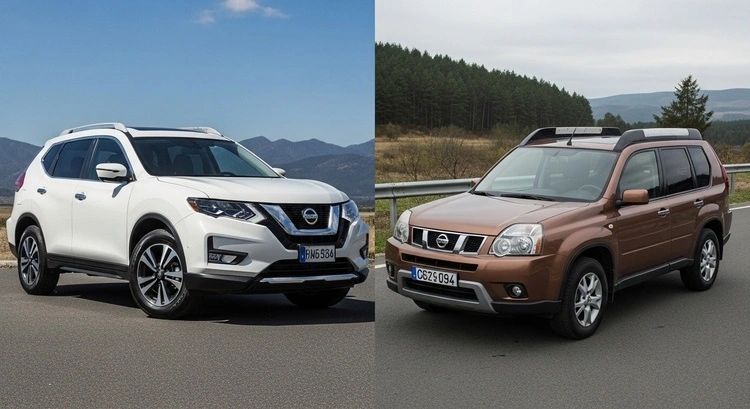
2002–2003 (T30 First Gen) – The Timing Chain Disaster
The early T30 X-Trails look rugged and simple, but the 2.0L and 2.5L petrol engines had a severe weakness: the timing chain tensioner.
In a reliable engine, the timing chain stays tight. In the 2002–2003 X-Trail, the tensioner was prone to failure. When this part fails, the chain becomes loose and starts to slap against the engine casing. You might hear a distinct “rattle” on a cold start. If ignored, the chain can slip or snap, causing the pistons to hit the valves. That is an instant, catastrophic engine failure that costs more to fix than the car is worth.
Beyond the engine, these early models suffered from rust near the fuel tank filler neck. This isn’t just a cosmetic issue; it leads to fuel leaks and potential fire hazards. Owners also reported random airbag warning lights and steering that felt dangerously loose due to worn rack ends. Unless you find one with a documented history of a timing chain replacement, walk away.
2005–2006 (T30 Mid-Gen) – Electrical and Transmission Gremlins
By 2005, Nissan was trying to modernize the X-Trail, but this transition period introduced new headaches. This era saw the wider adoption of the CVT (Continuously Variable Transmission), a technology that would haunt Nissan for years.
The early CVTs in these years struggled with heat management. Owners reported that during long drives or uphill climbs, the transmission would overheat, forcing the car into a safety “limp mode” where it wouldn’t accelerate past a crawl.
Electrical gremlins also started to appear in the 2005–2006 models. It is common to find issues with the instrument cluster failing or dashboard lights flickering. The fuel pump was another weak point, leading to engine hesitation or stalling in traffic. Even the air conditioning compressors were known to seize up early, leaving drivers sweating in the summer heat.
2014–2015 (T32 Third Gen) – Modern Tech, Major Headaches
The launch of the T32 generation marked a massive shift. The X-Trail moved away from its boxy, rugged roots to a sleeker, crossover design. While it looked better, the mechanical reliability took a nosedive in the first two years of production.
The 2014 and 2015 models are arguably the riskiest of the modern era. The primary culprit is, once again, the CVT transmission. Nissan used a Jatco CVT that was notorious for shuddering, delayed acceleration, and total failure at relatively low mileage. You might press the gas pedal to merge onto a highway, only to find the engine revving high but the car barely moving.
It is worth noting that this generation of the X-Trail shares its platform and many mechanical components with the US-market Nissan Rogue. The reliability issues are almost identical between the two. If you are researching the North American equivalent of this generation to see if the issues overlap, you must check our guide on Nissan Rogue years to avoid to see how the reliability data overlaps.
Aside from the transmission, the 2014–2015 models had poor quality control on body seals. Many owners discovered water leaks entering the cabin through the sunroof drains or door seals, leading to wet carpets and moldy interiors.
Common Problems on the 2014–2021 Nissan X-Trail (T32)
If you own a third-generation X-Trail or are looking to buy one, do not panic if a warning light suddenly pops up. Modern Nissans are sensitive, and they often throw codes for minor issues that look terrifying on the dashboard. Knowing what these codes mean can save you from being overcharged by a mechanic who sees a confused owner coming a mile away.
The “Christmas Tree” Dashboard: ABS and ESP Warning Lights
Imagine driving down the highway when suddenly your ABS (Anti-lock Braking System) and ESP (Electronic Stability Program) lights flash on simultaneously. Your first thought is probably that your brakes are failing.
In the X-Trail Mk3, this is often a “ghost” fault. The actual problem is frequently a poor earth connection on the left-hand engine mount. The grounding cable corrodes or works loose, cutting the circuit and confusing the car’s computer. Before you let a garage sell you a new ABS pump for thousands of dollars, check that earth cable. A simple clean and tighten might be all you need.
Interpreting Engine Fault Codes (P062B, P0340, P2263)
Investing in a cheap OBDII scanner is the best thing you can do for your wallet. If your “Check Engine” light glows, plug it in. Here are the three most common codes specifically for the X-Trail:
- P062B: This usually points to a fuel injector performance issue or an internal fault in the Engine Control Unit (ECU). If your engine feels sluggish or misfires, this is likely the culprit.
- P0340: This code indicates a Camshaft Position Sensor circuit malfunction. Symptoms include difficult starting, stalling at traffic lights, or rough idling. It is a frustrating issue, but the sensor itself is relatively cheap to replace.
- P2263: If you are driving a diesel (dCi) model and see this, it refers to the Turbocharger Boost Control System. It often means the turbo vanes are sticking or there is a vacuum leak, not necessarily that the entire turbo is dead.
Other Niggling Issues You Should Expect
Beyond the major engine codes, the T32 generation has a reputation for smaller, annoying faults that can ruin the ownership experience:
- Suspension Clunks: If you hear a knocking sound while going over speed bumps, it is likely the anti-roll bar bushes or drop links. These wear out faster than expected on this model.
- Infotainment Glitches: The touchscreen system is known to freeze, reboot randomly, or lose Bluetooth connection. A software update from the dealer often fixes this, but sometimes the entire head unit needs replacing.
- Stop-Start System Failure: If the “Stop/Start” system stops working, check the battery health. The system is very sensitive to voltage drops, and a failing battery often triggers a “System Fault” warning long before the car actually fails to start.
- AC Compressor Failure: In hotter climates, the AC compressor clutch can fail early, or the control unit (Code B24A1) can glitch, blowing warm air when you need cooling most.
- EGR Valve (Diesel Models): On the 1.6 dCi engines, the Exhaust Gas Recirculation (EGR) valve is prone to clogging with soot, especially if the car is only driven on short city trips. This leads to hesitation and eventually “limp mode.”
Recalls You Must Know About
Nissan has issued specific recalls that you must check before buying used. The most critical one involves the tailgate gas struts. The paint coating on the factory struts was flawed, allowing rust to eat through the metal. This eventually causes the gas to escape, meaning the heavy boot lid could drop on your head unexpectedly.
Always verify if the specific car you are looking at has outstanding recalls. You can do this easily by entering the VIN (Vehicle Identification Number) into Nissan’s official online recall lookup tool or by calling your local dealership service department.
Mechanical Reliability: Engines and Transmissions
The heart of the X-Trail is generally strong, but the transmission attached to it has been a point of contention for over a decade.
The Jatco CVT Transmission Controversy
The Continuously Variable Transmission (CVT) is designed for fuel efficiency, keeping the engine in its optimal rev range. However, the Jatco units used in the X-Trail generally do not handle heat well.
If the previous owner skipped transmission fluid changes, the CVT belt can begin to slip. You will feel this as a “shudder” when accelerating from a stop, or a hesitation where the engine revs but the car speed doesn’t increase. If you hear a high-pitched whining noise during a test drive, walk away. That transmission is on its last legs.
Diesel (dCi) vs. Petrol: Which Lasts Longer?
The diesel models (1.6L and 2.0L dCi) offer fantastic torque for towing, but they come with modern diesel baggage. If you only do short school runs, the Diesel Particulate Filter (DPF) will clog up because it never gets hot enough to burn off the soot. This forces the car into limp mode.
The petrol engines (2.0L and 2.5L) are thirstier but mechanically simpler. They don’t have a DPF or complex turbo systems (on the naturally aspirated models), making them a safer bet for city drivers who want to avoid expensive repair bills.
How Does the X-Trail Compare to Older Workhorses?
The evolution from the boxy T30 to the curvy T32 marked a shift from “rugged utility” to “urban comfort.” The modern X-Trail is a fantastic family car, but it is not a heavy-duty hauler.
Buyers looking for pure utility often compare older SUVs to classic trucks. However, even legendary workhorses have bad years; for instance, you should review the Chevy S10 years to avoid if you are considering a vintage pickup alternative. The X-Trail is refined and comfortable, but it won’t tolerate the abuse a dedicated truck frame will.
The Safer Bets: Best X-Trail Years to Buy
If you love the X-Trail’s practicality but want to sleep soundly at night, you don’t have to avoid the model entirely. You just need to buy the right year.
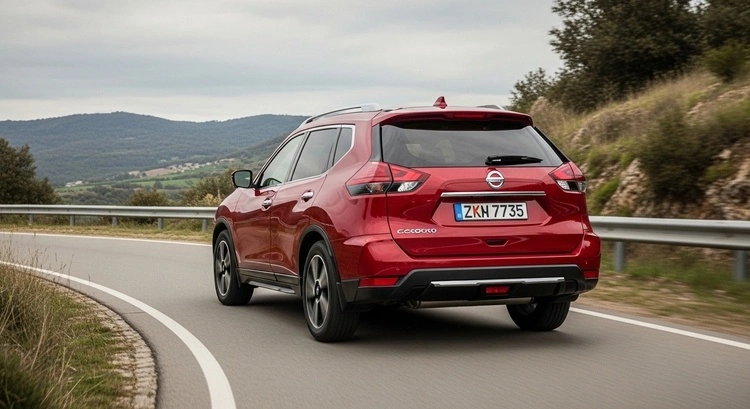
Best Value: 2017–2019 (The Sweet Spot)
The 2017 facelift was more than just a cosmetic update. Nissan engineers quietly addressed many of the early T32 reliability complaints.
- Why it’s better: The CVT software was retuned to reduce the “rubber band” effect and improve cooling, significantly lowering the risk of transmission failure.
- Build Quality: Sound insulation was improved, and the suspension was retuned to be more compliant, fixing many of the earlier knocks and rattles.
- Verdict: This era offers the best balance of modern features and depreciated price.
Best Newer Model: 2020–2021
As the T32 generation reached the end of its production run, the manufacturing process was nearly perfect.
- Why it’s better: These late-model units have the most updated electronics, with Apple CarPlay and Android Auto becoming standard on more trims. The “teething problems” regarding sunroof leaks and sensor faults were largely resolved by the factory.
- Verdict: If your budget allows, a 2020+ model is the safest bet for long-term reliability.
The Future: T33 Generation (e-Power)
The newest T33 generation (e-Power) is showing great promise. It uses a petrol engine solely as a generator to charge a battery, which then drives the wheels. This eliminates the traditional gearbox stress points and offers a much smoother drive.
Conclusion and Pre-Purchase Checklist
The Nissan X-Trail is not a bad car; it just has bad years. By avoiding the early 2014–2015 CVT models if the service history is unclear, you can find a reliable, spacious SUV that serves your family well.
Before you hand over your cash, run through this final checklist:
- Cold Start: Listen for a rattling chain for the first 3 seconds.
- The Shudder Test: Accelerate smoothly from 0–60 km/h. Any jerking is a CVT red flag.
- Damp Check: Feel the carpets in the footwells for dampness (sunroof leaks).
- Scan It: Plug in an OBDII scanner to check for hidden P0xxx codes.
Drive safe, and choose your model year wisely.