Chevy Traverse Years to Avoid: Best and Worst Models Ranked by Reliability
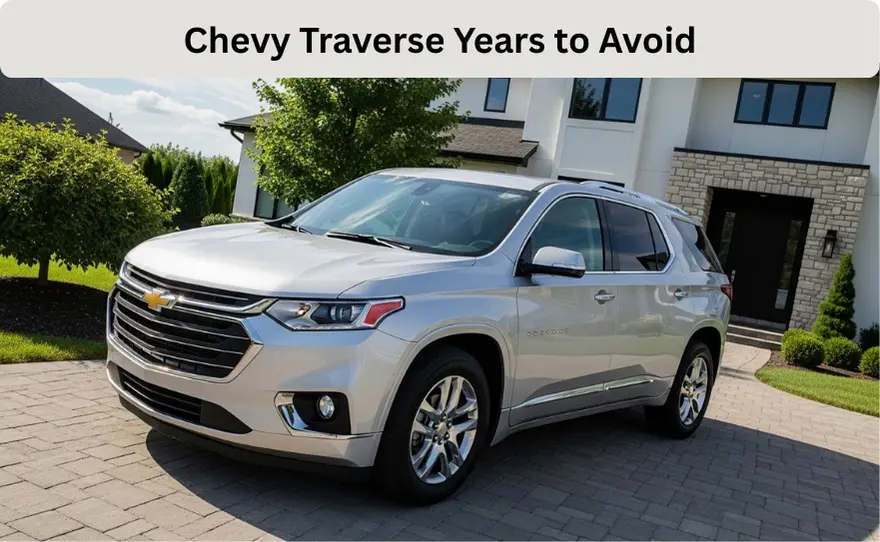
General Motors hit a home run when it introduced the Chevy Traverse. Families needed a spacious midsize three-row SUV that did not drive like a massive truck. But if you want to buy a used Traverse today, you must tread carefully. Some model years offer incredible value, while others will drain your bank account with endless repair bills.
Overview of the Chevy Traverse
Chevrolet designed the Traverse to sit perfectly between the smaller compact crossovers and the massive Tahoe. It gives buyers the cargo space of a minivan combined with the stylish look of a traditional SUV. If you look at GM’s wider lineup, buyers often compare its reliability trajectory to its smaller siblings. For instance, just like smart shoppers research the Chevy Equinox years to avoid to bypass early engine flaws, Traverse buyers must do exactly the same. The Traverse offers a smooth ride and modern safety tech, but its dependability heavily depends on the exact year it rolled off the assembly line.
Chevrolet Traverse Generations Ranked By Reliability
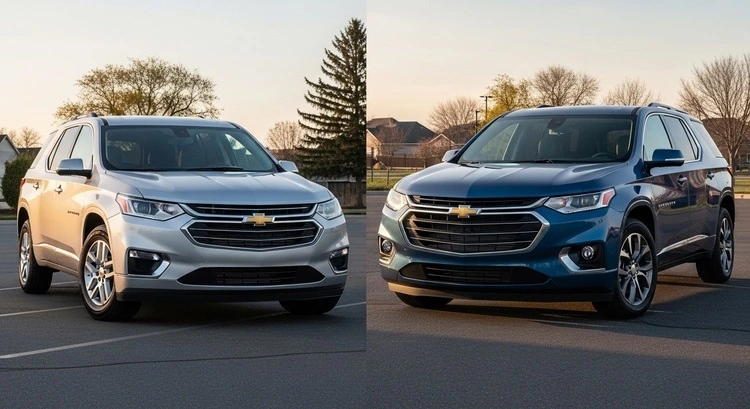
To understand Traverse reliability, you need to know its generational history. General Motors built the first generation from 2009 to 2017 on the Lambda platform. This generation suffered the most growing pains. The second generation arrived in 2018 and ran until 2023 on the much-improved C1XX platform, bringing massive improvements in overall dependability. Finally, Chevy launched the redesigned third generation in 2024.
The Worst Chevy Traverse Years to Avoid
When we analyze National Highway Traffic Safety Administration (NHTSA) complaints and failure data from CarComplaints, clear patterns emerge. Certain Traverse models suffer from catastrophic engine failures, transmission faults, and highly expensive electrical gremlins. If you are shopping for a used family SUV, cross these specific years off your list immediately.
2009 and 2010 Chevy Traverse
The first two years of production remain the riskiest options on the used market. The 2009 and 2010 Traverse models suffer from severe transmission failures. The Hydra-Matic six-speed automatic transmission contains a weak 35R clutch wave plate. When this metal plate breaks, the SUV completely loses reverse and struggles to shift into higher gears. Drivers also report sudden power steering collapse at very low speeds. Fixing these combined transmission and steering issues easily costs over $3,000.
2011 and 2012 Chevy Traverse
Things did not improve much for the 2011 and 2012 models. In fact, automotive experts often flag the 2011 Traverse as the absolute worst model year due to complete engine failure. The 3.6-liter V6 engine develops timing chain stretch. The timing chain wears out prematurely, throwing off the engine’s precise timing and destroying internal components. You will likely see check engine lights and experience drastically reduced engine power before the engine completely seizes. Replacing a blown Traverse engine can cost upwards of $5,000.
2015 Chevy Traverse
General Motors fixed the major timing chain issues by 2015, but this specific model year developed a new, highly frustrating problem. The 2015 Chevy Traverse suffers from widespread air conditioning (AC) system failures. The AC compressor frequently melts or seizes up at relatively low mileage, usually around the 50,000-mile mark. This failure contaminates the entire refrigerant system with metal debris, leading to uncomfortable summer drives and repair bills routinely topping $1,000.
2018 Chevy Traverse
Chevrolet introduced the completely redesigned second generation in 2018. As with many major vehicle redesigns, this first year suffered from frustrating teething issues. Owners frequently report an electrical glitch where the instrument cluster displays a “Shift to Park” message even when the vehicle is already securely in park. Additionally, drivers complain about low-speed transmission shuddering caused by software calibration errors in the brand new nine-speed automatic transmission.
Most Common Chevy Traverse Problems
When you look at the historical complaint data, a few specific components break down far more often than others. Understanding these mechanical weak points helps you know exactly what to listen to and feel for during a test drive.
Engine Troubles & Timing Chain Wear
The early 3.6-liter V6 engines consume oil too quickly. Running the engine on low oil causes the internal timing chain to stretch and wear out the tensioners. If you ignore the rattling sounds on startup and the check engine lights, the engine will eventually seize and require a total replacement.
Transmission and Power Steering Concerns
First-generation models often suffer from broken transmission clutch wave plates. This causes harsh shifting, slipping gears, or a complete loss of reverse. Drivers also frequently report whining power steering pumps and fluid leaks from the steering rack that make the steering wheel incredibly stiff at low city speeds.
Recall History and Safety Issues
Chevrolet has issued several necessary recalls for the Traverse over its lifespan. You should never buy a used SUV without checking its official recall status first.
Airbags and Structural Defect Campaigns
Many Traverse models fall under the massive Takata airbag recall, where defective inflators could rupture during a crash. General Motors also recalled certain years for powertrain transmission fluid leaks and missing half-shaft retaining rings, which directly impact how the vehicle delivers power to the wheels.
The Most Reliable Chevy Traverse Years to Buy
Not every Traverse spends its life sitting in the repair shop. If you know exactly which years to target, you can get a fantastic, family-friendly vehicle that lasts for years.
2016 to 2017 Chevy Traverse
By 2016, Chevy finally worked out the major bugs in the first-generation platform. They updated the engine’s timing chain design and fixed the transmission flaws. These final two years of the first generation are highly dependable and offer great value.
2019 to 2023 Chevy Traverse
Once Chevrolet resolved the 2018 redesign teething issues, the second generation became a stellar choice. Models from 2019 through 2023 feature a refined nine-speed transmission, excellent tech features, and great reliability scores. These newer years offer a very stable ownership experience.
Tips for Buying a Used Chevy Traverse
Smart shoppers take a few extra steps to protect their wallets before handing over any cash. Much like inspecting an older work truck to figure out the Chevy S10 years to avoid, you must do your homework on this SUV.
Review the Vehicle History and Inspect
Always run a full vehicle history report using the VIN to check for unfixed safety recalls and hidden accident damage. Next, pay an independent mechanic to perform a pre-purchase inspection. They will easily spot hidden power steering leaks and listen closely for the dreaded timing chain rattle.
Conclusion
The Chevy Traverse is absolutely worth buying if you pick the right year. It gives you incredible cargo space, three rows of seating, and a comfortable highway ride. Just stay away from the problematic early models (2009–2012), keep up with routine oil changes, and you will have a highly reliable family hauler.
FAQs
Yes, the newer models show excellent reliability. The second generation, specifically 2019 and newer, scores well above average in dependability.
With proper maintenance and regular synthetic oil changes every 5,000 miles, a Chevy Traverse can easily last over 200,000 miles.
The 2012 through 2015 Traverse models frequently suffer from faulty air conditioning systems. The AC compressors tend to melt internally and require expensive replacements.