Chevy Equinox Years to Avoid: A Complete Reliability Guide & Common Problems
The Chevrolet Equinox has established itself as a staple in the American driveway. Since its debut in 2004, it has offered families a spacious, budget-friendly alternative to the pricier imports from Honda and Toyota. It is the definition of a practical, utilitarian vehicle. While it rarely tops the charts as one of the ultimate dream cars for girls or enthusiasts seeking high-octane thrills, it usually gets the job done for students, parents, and daily commuters.
However, for thousands of owners, the Equinox dream quickly turned into a mechanical nightmare. Reliability history for this crossover is a mixed bag. A closer look at the problematic car model years analysis for the Equinox reveals why opinions about this SUV vary so widely. While some model years will easily clock 200,000 miles with basic maintenance, others suffer from catastrophic engine failures that can happen as early as 60,000 miles. If you are in the market for a used SUV, knowing the difference between a good deal and a money pit is critical. T
his guide breaks down the specific Chevy Equinox years to avoid, the technical reasons why they fail, and which models are actually worth your hard-earned money.
Quick Summary: Which Chevy Equinox Years Are Safe?
Not everyone has time to dig through technical service bulletins. If you are standing on a dealership lot right now, this quick reference guide will help you filter out the lemons immediately. We have categorized these years based on NHTSA complaints, recall data, and documented mechanical trends.
- Years to Avoid (The “Do Not Buy” List): 2005, 2006, 2007, 2010, 2011, 2012, 2013, 2015, 2018.
- Years to Caution: 2014, 2016 (Better, but still require a thorough inspection).
- Best Years to Buy: 2009 (Best of Gen 1), 2017 (Best of Gen 2), 2019–2021 (Best of Gen 3).
The “Do Not Buy” List: Chevy Equinox Years to Avoid by Generation
We cannot treat all Equinox failures the same. The problems plaguing the early models are vastly different from the issues found in the newer generations. To understand what you are up against, we need to look at the specific “danger zones” in the Equinox production timeline.
First Generation Stumbles (2005–2007)
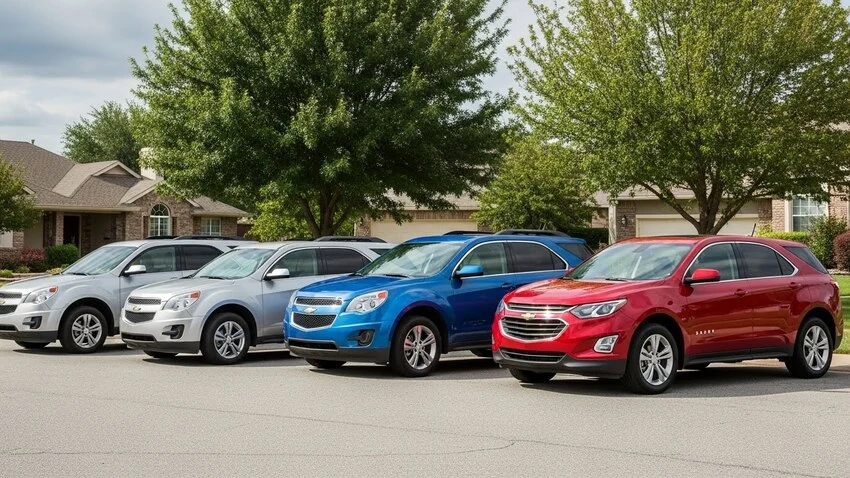
The first-generation Equinox was Chevy’s attempt to replace the S-10 Blazer and the Tracker with something more modern. Unfortunately, the engineering didn’t quite match the ambition. The primary culprit in these years (2005, 2006, and 2007) is the 3.4L V6 engine.
This engine is notorious for head gasket failures. The factory gaskets often degrade due to issues with the Dex-Cool coolant or poor intake manifold sealing. When the gasket blows, coolant mixes with the oil, leading to severe overheating and internal engine sludge. It’s a repair that often costs more than the vehicle’s current market value.
Beyond the engine, the 2006 model has a peculiar and dangerous defect: the heater blend door. This plastic component controls the mix of hot and cold air. In the 2006 Equinox, the door frequently snaps, leaving the driver with no heat. While this sounds like a minor annoyance, it becomes a major safety hazard in winter when you cannot defrost your windshield.
The “Oil Consumption” Crisis (2010–2013)
If you remember only one thing from this guide, let it be this: be extremely wary of the early second-generation Equinox. The years 2010, 2011, 2012, and 2013 represent the absolute bottom of reliability for this nameplate. The severity of these engine failures rivals the well-known controversies surrounding specific Hyundai Santa Fe years to avoid, where owners faced similar battles with manufacturing defects.
The core issue here lies with the 2.4L Ecotec 4-cylinder engine. GM utilized “low-tension” piston rings in an effort to reduce friction and improve fuel economy. In theory, it was a smart engineering move. In practice, it was a disaster. These rings fail to seal the combustion chamber properly, allowing oil to slip past and burn off during combustion.
Owners report their vehicles consuming up to a quart of oil every 1,000 miles. Because most drivers rely on the dashboard oil life monitor—which doesn’t account for this excessive burning—many drive their engines dry. The result is a seized engine and a repair bill that necessitates a full engine replacement.
To make matters worse, low oil levels wreak havoc on the timing chain. The timing chain relies on oil pressure to stay tense. When the oil drops, the chain becomes loose, stretches, and eventually breaks. Since the Ecotec is an interference engine, a broken chain causes the valves to smash into the pistons, instantly destroying the engine.
The 2015 & 2018 Anomalies
While General Motors scrambled to fix the oil consumption issues of the early 2010s, they didn’t completely clear the hurdles. Two specific model years often catch buyers off guard because they sit outside the typical “danger windows.”
The 2015 Chevy Equinox was supposed to be the refined version of the second generation. However, it suffers from a unique and frustrating problem in colder climates. The PCV (Positive Crankcase Ventilation) system is prone to freezing up when temperatures drop. When the valve freezes, pressure builds up inside the crankcase with nowhere to go. Eventually, that pressure blows out the rear main seal. You might walk out to your driveway on a cold morning to find a massive puddle of oil under the car. It is a messy, expensive fix that requires dropping the transmission to reach the seal.
Then there is the 2018 Chevy Equinox. This marked the start of the third generation, bringing a completely new design and lighter chassis. Unfortunately, it also brought a terrifying safety defect. The vacuum brake booster pump in these models has a high failure rate.
Internal components of the pump can disintegrate, sending debris into the brake system. As a driver, you experience this as a brake pedal that suddenly becomes “hard” or stiff. You have to stand on the pedal with both feet to get the car to slow down. While GM has issued recalls for this, it remains a critical check for any 2018 model you consider buying.
In-Depth Look at Common Chevy Equinox Reliability Issues
To protect your wallet, you need to look beyond just the model year. You need to know the symptoms of failure before you sign the paperwork. Here is a breakdown of the specific systems that fail, regardless of the year on the title.
Excessive Oil Consumption & Engine Failure
We touched on this with the 2010-2013 models, but it is important to understand the mechanics of why it happens. The 2.4L engine uses piston rings that are too thin and have low tension. Over time, these rings get gummed up with carbon deposits and stick to the piston grooves.
Once they stick, they can no longer scrape oil off the cylinder walls. The oil stays in the combustion chamber and gets burned. If you look at the cylinder walls of a failed Equinox engine, you will often see vertical scuff marks, known as “zebra striping.” This damage is permanent. No amount of oil additives or flushes will fix it; the engine usually requires a complete rebuild or replacement.
Timing Chain Rattle and Breakage
The timing chain issue is almost always a side effect of the oil consumption problem. The timing chain tensioner relies on hydraulic oil pressure to keep the chain tight. When the oil level drops because the engine is burning it, the tensioner loses pressure.
The chain then becomes loose and starts to slap against the plastic guides inside the engine. The warning sign is distinct: a loud rattling or “diesel-like” clatter for the first 2-3 seconds after you start the car cold. If you hear this noise on a used Equinox, walk away. If that chain jumps a tooth or snaps while driving, the pistons will collide with the valves, destroying the top end of the engine instantly.
Transmission Hesitation and Failure
While engine troubles grab the headlines, the 6-speed automatic transmission (6T40/6T45) has its own weak point, particularly in the 2010 and 2011 models. The “35R” wave plate—a metal cushion plate inside the transmission clutch pack—is prone to stress fractures.
When this plate breaks, metal fragments circulate through the transmission, jamming valves and gears. You will feel this as a harsh “slam” when shifting gears, a flare in RPMs without acceleration, or a complete loss of reverse gear. Unlike the engine issues which give some warning, the wave plate failure is often sudden and leaves you stranded.
Electrical & Interior Malfunctions
Not every problem will leave you on the side of the road; some will just drive you crazy. The Equinox struggles with several electrical gremlins. The windshield wiper motor module is known to corrode due to water intrusion. This can cause the wipers to stop working in the middle of a heavy rainstorm—a pulse-pounding situation for any driver.
Additionally, owners frequently report issues with the infotainment screens freezing or going black, particularly in the 2015-2017 models. While this won’t stop the car from driving, it does cut off your navigation and Bluetooth, making the daily commute much less enjoyable.
If you are looking for a vehicle that can take a beating and keep going without these types of fragile component failures, a crossover might not be the right class for you. Drivers who need absolute durability often look toward body-on-frame SUVs. While different in price and size, researching the Toyota 4Runner years to avoid can provide a benchmark for what “rugged reliability” looks like compared to the unibody construction of the Equinox.
Best Chevy Equinox Years to Buy Used
Now that we have covered the minefield of bad years, let’s focus on the good news. The Chevy Equinox is not a bad car inherently; it just had a bad era. If you navigate around the problem years, you can find a reliable, comfortable, and safe SUV for a fraction of the price of a RAV4 or CR-V.
Why the 2017 Model is the “Safe Bet” of Gen 2
If you are looking for a bargain under $15,000, the 2017 Chevy Equinox is your sweet spot. This was the final year of the second generation. By this point, General Motors had largely resolved the piston ring and timing chain issues that plagued the 2010–2013 models.
While the 2.4L engine is decent in this year, the real gem is the 3.6L V6 (LFX engine). It turns the Equinox from a sluggish commuter into a surprisingly quick SUV with 301 horsepower. It is robust, reliable, and free from the oil consumption headaches of its 4-cylinder counterpart.
2019–2021: The Sweet Spot
For those who want modern safety tech without the new car price tag, the 2019, 2020, and 2021 models are excellent choices. By 2019, Chevy had ironed out the teething issues of the third-generation launch (specifically the 2018 brake booster failures).
These years come standard with critical safety features like Lane Keep Assist and Automatic Emergency Braking. The 1.5L Turbo engine offers great fuel economy, and the optional 2.0L Turbo provides plenty of passing power. These models currently have very few NHTSA complaints and high reliability scores from major automotive publications.
Buyer’s Guide: How to Inspect a Used Chevy Equinox
You don’t need to be a mechanic to spot a lemon. If you are going to look at a used Equinox, bring a flashlight and follow this 5-minute inspection checklist.
- The Dipstick Test: Before you even start the car, pop the hood and pull the dipstick. If the oil level is below the minimum mark, or if the oil looks thick and sludgy, walk away immediately. This is the #1 sign of an oil-burning engine.
- The “Cold Start” Listen: Tell the seller you want the engine to be cold when you arrive. Start the car with the hood up and listen carefully for the first 3 seconds. If you hear a loud, metallic clatter or rattling sound that goes away after a few seconds, the timing chain is loose. Do not buy that car.
- The Brake Pedal Check: With the engine running, press the brake pedal firmly. It should feel consistent. If it feels rock hard, like stepping on a brick, the vacuum pump might be failing (common on 2018 models).
- Check the Spare Tire Well: Open the trunk and lift the floor cover to expose the spare tire. If you see water or rust in there, the sunroof drains or rear hatch seals are leaking. This creates mold and electrical corrosion.
- Test the Heat: Turn the heater on full blast. Switch the vent modes from face to feet to defrost. If you hear clicking noises or if the air stays cold on the driver’s side, the blend door is broken.
FAQs
A well-maintained Equinox from a “good” year (like 2017 or 2020) can easily last 150,000 to 200,000 miles. However, the 2010–2013 models often suffer catastrophic engine failure between 80,000 and 120,000 miles due to oil consumption.
It is a mixed bag. It is significantly better than the 2010 model, but it still has higher-than-average complaints about oil leaks and electrical issues. It is not the worst year, but definitely not the best.
Yes, for the most part. The issue was most prevalent in the 2010–2013 models. By the 2016 and 2017 model years, GM had updated the piston ring design and the PCV systems, drastically reducing the occurrence of oil burning.
Final Verdict
The Chevy Equinox is a vehicle of extremes. The 2010–2013 models are statistically some of the riskiest used cars you can buy, prone to engine replacements that cost more than the car is worth. Conversely, a 2017 V6 or a 2020 2.0L Turbo offers incredible value, reliability, and comfort.
Your strategy is simple: Avoid the early second-generation years at all costs. Spend a little extra to get into a 2017 or newer model, and always inspect the service history for regular oil changes. If you follow these rules, the Equinox can be a fantastic, budget-friendly companion for your family.