Honda Civic Years to Avoid: The Ultimate Reliability Guide
The Honda Civic is a global icon of fuel efficiency, affordability, and reliable commuting. However, even legends stumble. While many Civics easily cruise past the 200,000-mile mark, specific model years hide catastrophic mechanical failures that can quickly empty your wallet.
If you are shopping for a used car, buying the wrong year could mean dealing with cracked engine blocks, faulty airbags, or failing transmissions.
A Brief History of Honda Civic Generations
Before you buy a used Civic, you need to identify its generation. Automakers usually carry over the same underlying parts—and the same mechanical flaws—until a complete generational redesign.
Here is a quick look at the modern eras of the Honda Civic:
- 7th Generation: 2001–2005
- 8th Generation: 2006–2011
- 9th Generation: 2012–2015
- 10th Generation: 2016–2021
- 11th Generation: 2022–Present
Honda Civic: Most Complaints and Recalls by Model Year
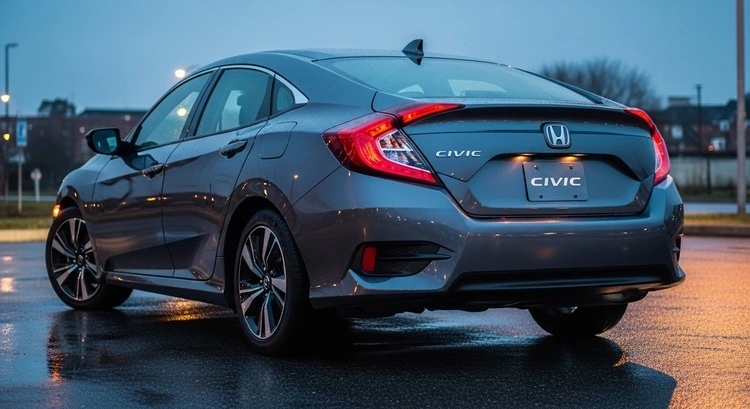
A high number of consumer complaints usually signals a production year you should skip. We analyzed safety and reliability data from the National Highway Traffic Safety Administration (NHTSA) to find clear patterns in the Civic’s history.
It is important to understand the difference between a recall and a complaint. A safety recall means the manufacturer legally must fix a dangerous defect for free. A consumer complaint, on the other hand, often highlights an expensive, annoying flaw that you have to pay for out of pocket.
The 2001, 2006, and 2016 model years hold the highest complaint volumes in recent history. Notice a trend? These years mark the beginning of new generations. They suffer heavily from “first-year syndrome,” a period where engineers are still working out the bugs of a brand-new design.
Breakdown by Generation: Best, Neutral, and Worst Years
Let’s dive into the specifics. Here is your generation-by-generation guide to the exact Honda Civic years you should avoid and the ones you can safely buy.
7th Generation (2001–2005): The Most Problematic Era
The Worst Years: 2001, 2002, and 2003. The 2001 Civic is widely considered the absolute worst model year Honda ever produced. It racked up over 1,200 NHTSA complaints. The primary culprit was total automatic transmission failure. The torque converter routinely failed, causing severe gear slippage and often requiring a $3,000 replacement well before the car hit 100,000 miles. Furthermore, these early 2000s models suffered heavily from the deadly Takata airbag inflator recalls.
If you are shopping for an older, budget-friendly vehicle but need more space for a growing family, you might look at Honda’s early SUVs instead. Just be careful to do your research on the Honda Pilot years to avoid, as early Pilots suffered from their own expensive automatic transmission defects during this exact same era.
The Best Years: 2004 and 2005, Honda managed to fix the widespread transmission bugs by the end of the generation. The 2004 and 2005 models are slightly safer bets if you are on a very tight budget.
8th Generation (2006–2011): The Cracked Engine Block Crisis
The Worst Years: 2006, 2007, and 2008. The 8th generation introduced a sleek, futuristic design, but it hid a massive flaw under the hood. The R18A1 1.8-liter four-cylinder engine was notorious for cracking near the coolant passages. This manufacturing defect caused severe coolant leaks, sudden overheating, and total engine failure. Honda eventually settled a class-action lawsuit and extended the warranty, but those protections have long expired. These years also suffered from flawed rear suspension geometry, which caused severe tire cupping and rapid tread wear.
The Best Years: 2009, 2010, and 2011. By 2009, Honda finally reinforced the engine block and corrected the rear suspension issues. The 2011 Civic stands out as one of the most reliable compact cars of the decade, offering fantastic fuel economy without the ticking time bomb under the hood.
9th Generation (2012–2015): The Rushed Redesign
The Worst Year: 2012 Honda rushed the 2012 redesign to market, and it showed. Critics slammed the car for its cheap interior plastics and harsh ride quality. But the real danger lay underneath. The 2012 model suffered from sudden power steering failures and a major recall for a defective left driveshaft that could snap while driving.
The Best Years: 2013, 2014, and 2015. Honda heard the complaints and executed a rare “emergency facelift” for 2013. They upgraded the interior materials, retuned the suspension for a smoother ride, and fixed the glaring mechanical bugs. By 2014, they introduced the reliable CVT and tech upgrades like the Honda LaneWatch blind-spot system. These three years represent a fantastic sweet spot for used car buyers.
10th Generation (2016–2021): AC and Tech Glitches
The Worst Year: 2016. The 10th generation brought a massive, sporty redesign. Unfortunately, the 2016 rollout was a disaster for long-term reliability. The biggest headache? Chronic air conditioning failures. Both the AC condenser and evaporator are highly prone to leaking Freon. While Honda extended the warranty for the condenser, evaporator replacements still leave owners with massive out-of-pocket bills.
The Neutral Years: 2017 and 2018. These years are decent, but still suffer from a buggy, lag-prone touchscreen infotainment system and occasional AC hiccups.
The Best Years: 2019, 2020, and 2021. Honda finally hit its stride here. They resolved the major AC leaks, refined the CVT responsiveness, and thankfully brought back the physical volume knob. More importantly, the Honda Sensing Suite—featuring adaptive cruise control and lane-keeping assist—became standard, making these years exceptionally safe and reliable.
11th Generation (2022–Present): Sticky Steering Concerns
The Worst Year: 2022. History repeated itself with the launch of the 11th generation. The 2022 Civic currently has hundreds of NHTSA complaints specifically targeting the Electronic Power Steering (EPS). Drivers report the steering wheel locking up or getting “sticky” at highway speeds. This forces the driver to overcorrect, heavily increasing the risk of a crash.
The Best Year: 2023 and Newer Honda smoothed out the steering bugs for the 2023 model year. With its mature, refined interior and excellent fuel economy, the 2023 Civic is a brilliant modern commuter.
Most Common Honda Civic Problems
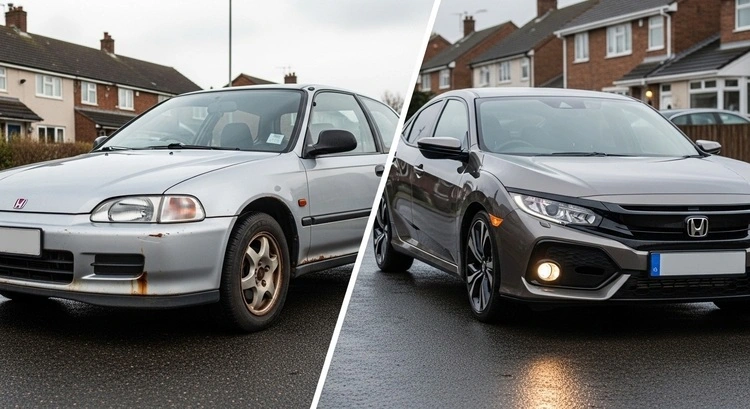
If you are inspecting a used Civic, you need to know exactly what breaks. Here is a quick cheat sheet of the most widespread mechanical failures:
- Transmission Failures: Early 2000s automatics suffer from slipping gears and complete torque converter failure.
- Air Conditioning Breakdowns: 10th-generation models (especially 2016) frequently require multiple AC repairs due to faulty condensers and evaporators.
- Cracked Engine Blocks: The 2006–2008 models hide a manufacturing defect that cracks the engine block and leaks coolant.
- Steering Rack & EPS Failures: The 2022 model is notorious for sticky, locking steering at high speeds.
Best Honda Civic Configurations and Generations
If you want the best driving experience, look for a 10th-generation Civic with the 1.5L turbocharged engine paired with a 6-speed manual transmission. It perfectly balances sporty performance with daily reliability. If you just want an indestructible commuter, find a well-maintained 2011 model with the naturally aspirated 1.8L engine.
Love Honda’s engineering but realize the Civic might be too small? Many buyers pivot to Honda’s compact SUV. However, you must carefully navigate the Honda CR-V years to avoid, as some models share the exact same 1.5L turbo engine found in the Civic, which suffered from severe oil dilution issues in certain climates.
Honda Civic Average Resale Values
The Civic holds its value incredibly well, competing directly with the Toyota Corolla for top resale honors. A well-kept Civic will barely depreciate after its first five years. However, savvy buyers know about the “problem years.” If you try to sell a 2006 model with a high risk of engine cracking, or a 2016 with broken AC, expect buyers to aggressively negotiate your asking price down.
Summary
The Honda Civic is a legendary vehicle, but you must navigate its history carefully.
If you are on a strict budget, hunt for a 2011 or a 2013–2015 model. If you want modern tech and safety features, prioritize a 2019 or newer model. Whatever you do, walk away from the 2001, 2006, 2012, 2016, and 2022 model years. Stick to the proven years, and your Civic will easily reward you with decades of reliable driving.