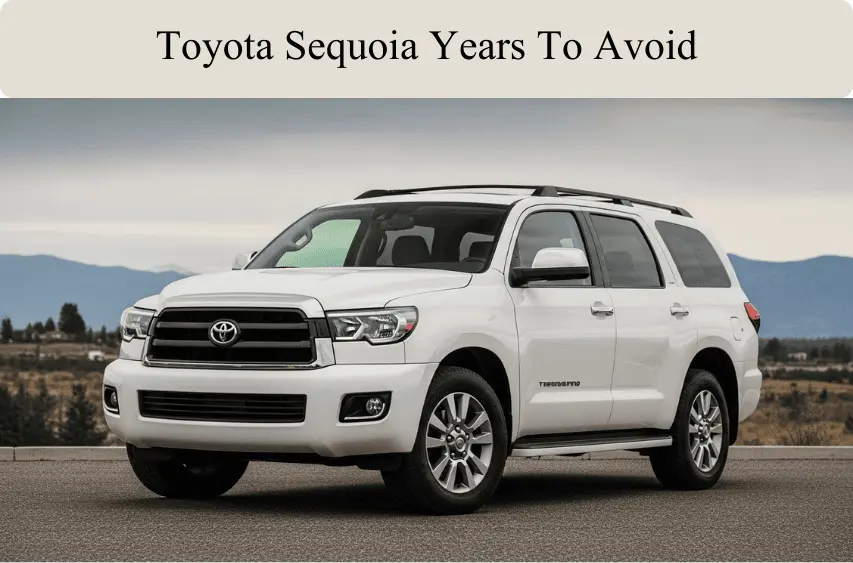
Toyota Sequoia Years To Avoid: Models, Problems & Reliability Guide
You’re looking for a Toyota Sequoia because you want a tank. You want an SUV that can haul the kids, tow a boat, and arguably survive the apocalypse. And generally, you’re right—the Sequoia is legendary for hitting 300,000 miles without breaking a sweat.
But even legends have bad days.
Not every Sequoia is built the same. Some model years are prone to frame rot that can snap the chassis in half. Others suffer from engine failures or electronic glitches that will leave you stranded in “limp mode.” If you buy the wrong year, that “bulletproof” Toyota reputation won’t save your wallet.
This guide cuts through the noise. We’ll show you exactly which years to skip, which ones to buy, and what to check before you hand over your cash.
Quick Answer: Which Toyota Sequoia Years Should You Avoid?
If you are standing on a dealership lot right now, here is your cheat sheet. These are the years that historically suffer from the most severe mechanical issues and highest repair bills.
| Category | Model Years | Why? |
| Avoid ❌ | 2001–2004 | Severe frame rust (Dana Corp frames), lower ball joint failure, transmission risks. |
| Avoid ❌ | 2008 | First year of Gen 2. Cam tower oil leaks, electrical gremlins, aux input failures. |
| Caution ⚠️ | 2010–2012 | Secondary air injection pump failures that trigger “Limp Mode.” |
| Best Buy ✅ | 2007 | The “Holy Grail” of the first generation. Most bugs fixed. |
| Best Buy ✅ | 2015–2020 | Peak reliability. Updated tech, reliable 5.7L V8, solid safety scores. |
| Best Buy ✅ | 2023+ | Modern hybrid tech and improved fuel economy (though new and expensive). |
Toyota Sequoia Generations: A Brief History
To understand why some years are better than others, you have to look at the bones of the truck. The Sequoia has evolved through three distinct eras, each with its own quirks.
1st Generation (2001–2007): The Tundra Origins
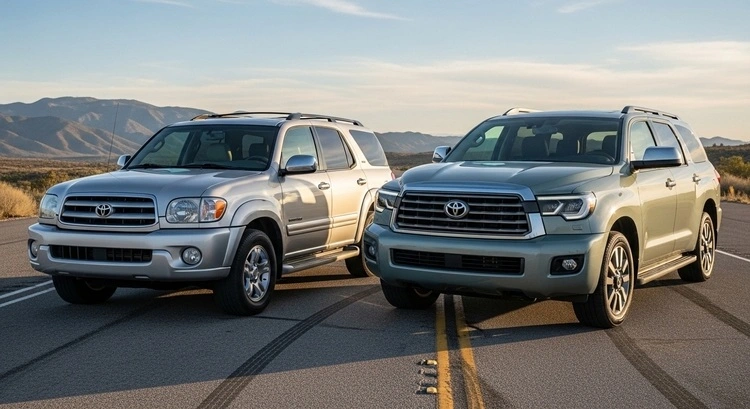
Toyota launched the Sequoia in 2001 to compete with the Ford Expedition and Chevy Tahoe. They didn’t build it from scratch; they built it on the back of their rugged full-size pickup. Given that the Sequoia shares its chassis and many mechanical parts with the Tundra, it also inherited the Tundra’s specific weaknesses—most notably, the frame rust issues that plagued early models. If you are looking at this era, you are essentially buying a Tundra with a third row.
2nd Generation (2008–2022): The Massive Upgrade
In 2008, Toyota went big. They introduced a larger, curvier body and the legendary 5.7L V8 engine. This generation ran for an incredible 15 years. While the engine is nearly indestructible, the early years of this generation (specifically 2008–2010) had some teething issues as Toyota adjusted to the new platform.
3rd Generation (2023–Present): The Hybrid Era
The current generation ditched the V8 for a twin-turbo V6 hybrid powertrain. It’s powerful and more efficient, but since it is still new, long-term reliability data is still rolling in. So far, it looks promising, but it lacks the 20-year track record of the older V8s.
Worst Toyota Sequoia Years in Detail
Let’s dig into the specific years that give mechanics the most headaches.
First Generation Stumbles (2001–2004): The Rust & Brake Era
The early 2000s were a rough patch for Toyota truck frames. The 2001 through 2004 Sequoias used frames supplied by Dana Corp that were improperly treated against corrosion.
This isn’t just surface rust. In salt-belt states, these frames can rot from the inside out. We are talking about holes in the frame rails large enough to put your hand through. Toyota issued a massive recall and replaced many frames, but you must inspect any survivor carefully.
Beyond rust, these years are infamous for lower ball joint failures. The ball joints support the weight of the vehicle, and on early models, they were prone to wearing out prematurely. If one snaps while driving, your wheel essentially collapses, causing immediate loss of control.
The 2008 Model Year: A Rough Start to the Second Generation
You should generally avoid the first year of any new vehicle generation, and the 2008 Sequoia is proof of that rule.
While the new 5.7L V8 was a beast, the 2008 model suffered from cam tower oil leaks. The sealant applied at the factory wasn’t sufficient, leading to oil seeping out from the cam towers. This is a labor-intensive repair because the mechanic has to tear down the top of the engine to fix a simple seal.
Owners also reported annoying electrical issues, particularly with the auxiliary (AUX) input jacks failing and dashboard lights acting up. It’s not a terrible truck, but a 2009 or 2010 model will give you the same performance with fewer headaches.
Other Years to Approach with Caution (2010–2012)
These years are generally solid, but they have one specific, expensive Achilles’ heel: the Secondary Air Injection System.
This emission system pumps fresh air into the exhaust to help burn pollutants. In the 2010–2012 models, the plastic pumps and valves were prone to sucking in moisture and failing. When they fail, the truck throws a check engine light and often goes into “Limp Mode,” limiting your speed significantly. Fixing this properly can cost upwards of $2,000 to $3,000 if you use OEM parts, though cheaper bypass kits do exist.
Common Toyota Sequoia Problems Reported by Owners
Even the “safe” years can have issues. Here are the specific gremlins you need to watch out for during your test drive.
Frame Rust and Undercarriage Corrosion
We mentioned this before, but it bears repeating: Rust is the number one killer of Sequoias.
While Gen 1 (2001–2007) is the worst offender, early Gen 2 models (2008–2010) are not immune. When inspecting a used Sequoia, don’t just look at the body paint. Crawl underneath. Look at the frame rails near the rear tires and where the suspension mounts to the chassis. If you see flaking metal (called “delamination”) or deep pitting, walk away. Surface rust is normal; structural rot is a dealbreaker.
Transmission & Engine Issues
The transmissions in Sequoias are generally tough, but they aren’t invincible.
- Strawberry Milkshake (Gen 1): In early models, the transmission cooler inside the radiator could fail. This allows pink transmission fluid to mix with the coolant, creating a thick, pink sludge that looks like a strawberry milkshake. This mixture destroys the transmission and the engine bearings.
- Rough Shifting (Gen 2): Some 2008–2010 owners report hard shifting or “hunting” for gears, often fixed with a software update (TCU reflash) from the dealer.
Suspension and Braking System Wear
The Sequoia is a heavy beast. It eats brake pads and rotors for breakfast. It is common to see warped rotors (which cause a shimmy when braking) every 30,000 to 40,000 miles if you drive aggressively or tow often.
Also, check the air suspension if you are looking at a Platinum or Limited trim. The rear air bags that level the load eventually leak. If the rear of the truck looks like it’s squatting low after sitting overnight, you are looking at a suspension repair bill soon.
Electrical Gremlins and Interior Quirks
While the Sequoia’s mechanical bits are solid, the creature comforts can be a little temperamental.
The most famous feature of the Sequoia is the roll-down rear window. It’s fantastic for hauling lumber or giving your dog some fresh air. However, the motor and regulator inside the tailgate often fail after years of use, leaving the window stuck down—usually right before a rainstorm.
Inside the cabin, you might also encounter sticky dashboard materials in 2008–2010 models, where the plastic degrades and becomes tacky to the touch. Door lock actuators are another common fail point; if your key fob stops unlocking one specific door, the actuator motor is likely dead. These aren’t deal-breakers, but they are annoying bargaining chips you can use to lower the asking price.
The Best Toyota Sequoia Years to Buy
Now that we have scared you with rust and repair bills, let’s talk about the good news. The Toyota Sequoia is still one of the most reliable vehicles ever made. If you pick the right year, you are getting a truck that will likely outlast you.
The “Holy Grail” of Gen 1: 2007
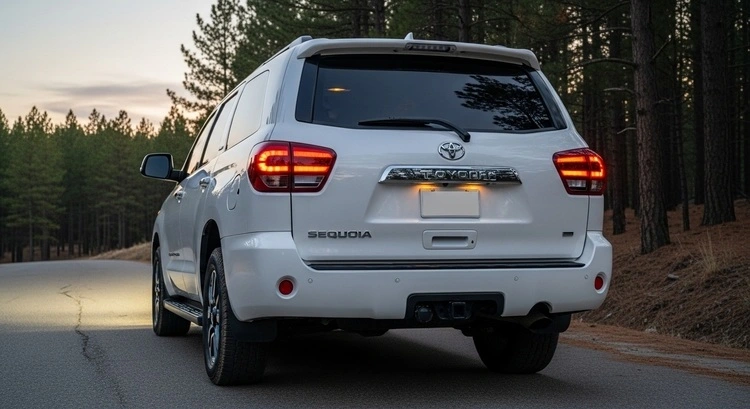
If you are on a budget and love the smaller, more agile size of the first generation, hunt down a 2007 model.
By 2007, Toyota had ironed out almost every major kink in the platform. The frame coating process was improved (though you should still inspect it), the lower ball joints were stronger, and the 4.7L V8 engine was at its peak. This engine, the 2UZ-FE, is legendary. It uses a timing belt that needs changing every 90,000 miles, but if you do that, it is virtually unkillable.
The Peak of Reliability: 2015–2020
For most buyers, this is the sweet spot. These years give you the modern look of the second generation without the early production headaches.
By 2015, the massive 5.7L V8 had been perfected. The cam tower oil leaks were rare, the electronics were stable, and safety tech like blind-spot monitoring became more common. These trucks are expensive on the used market, but they hold their value incredibly well.
Toyota is renowned for engines that last over 200,000 miles, a trait shared by their flagship sedan. Just as the Toyota Avalon sets the standard for sedan longevity, the late-model Sequoias define SUV durability. You simply cannot buy a tougher family hauler from this era.
Modern Marvels: 2023–Present (Hybrid Era)
If you have the budget for a new car, the 2023 redesign is a masterpiece. It brings the Sequoia into the modern age with a hybrid twin-turbo V6. It has significantly more torque than the old V8 and manages much better fuel economy. While it’s too new to declare it “bulletproof,” it uses the same proven architecture as the new Tundra and Land Cruiser, which is a very good sign.
Reliability Data & Ownership Costs
Buying the truck is one thing; feeding it is another. Here is what you need to know about living with a Sequoia daily.
Safety Ratings & Crash Tests
Size matters in safety, and the Sequoia has physics on its side. The second-generation models (2008+) are wide, heavy, and feature side-curtain airbags that cover all three rows. NHTSA ratings for these years are generally 4 or 5 stars. The first generation is decent, but it lacks the advanced crumple zones and stability control logic of the newer trucks. If safety is your top priority, stick to 2010 or newer.
Fuel Economy (MPG) Reality Check
Let’s be honest: The Sequoia has a drinking problem.
The 5.7L V8 is a thirsty beast. You can expect 13 MPG in the city and maybe 17 MPG on the highway if you are driving downhill with a tailwind. The 4.7L V8 in the older models isn’t much better. You are paying for power and towing capacity, not efficiency.
If the fuel economy of a V8 scares you, consider looking at the mid-size segment. For families that don’t need massive towing capacity, the Toyota Venza offers a more fuel-efficient alternative that still provides plenty of room for kids and groceries without the gas station heartbreak.
Maintenance Costs: Is the Sequoia Expensive to Fix?
Surprisingly, no. While parts for a full-size SUV are more expensive than a Corolla, the Sequoia is cheaper to maintain than its American rivals like the Tahoe or Expedition.
You won’t face the turbo failures of EcoBoost Fords or the lifter failures of GM V8s. The most expensive standard maintenance item is the timing belt on the 4.7L engine (Gen 1), which costs about $800–$1,000 every 90k miles. The 5.7L engine (Gen 2) uses a timing chain, which typically lasts the life of the engine.
Buying a Used Toyota Sequoia: Inspection Checklist
Before you sign the check, take this list to your mechanic. It could save you thousands.
- The Hammer Test: Crawl under the rear of the truck. Tap the frame rails with a small hammer. It should ring like solid metal. If it sounds dull or crunchy, or if rust flakes off in chunks, walk away immediately.
- 4LO Engagement: Put the truck in neutral and switch it into 4WD Low. Many suburban owners never use this feature, and the actuator can seize up from lack of use. Make sure it engages and disengages smoothly.
- Cold Start Ticking: Start the engine when it is stone cold. Listen near the front wheel wells. A ticking sound that goes away after a minute usually indicates a cracked exhaust manifold. It’s not fatal, but it’s an annoying and pricey fix.
- Cam Tower Leaks (Gen 2): Shine a flashlight down the side of the engine block. Look for oil seeping from the rectangular “towers” that hold the camshafts.
- Rear Window Operation: Roll the back window all the way down and up. It should move smoothly without grinding noises.
FAQs
The 2020 model year is widely considered the peak of Sequoia reliability. It combines the bulletproof mechanicals of the late second generation with updated infotainment tech (like Apple CarPlay) that earlier years lacked.
With regular oil changes and rust prevention, a Sequoia can easily surpass 300,000 miles. There are documented cases of these trucks hitting 500,000 miles on the original engine and transmission.
It’s not “bad” compared to a unreliable German SUV, but it is the worst of the Sequoias. The combination of early electrical bugs, potential oil leaks, and higher resale prices makes it a poor value compared to a 2011 or 2012 model.
The 5.7L (3UR-FE) is better for towing and doesn’t require a timing belt replacement, making it lower maintenance. However, the 4.7L (2UZ-FE) is smoother and famously durable, provided you change the belt on schedule.
Final Verdict
The Toyota Sequoia is one of the few vehicles that actually lives up to the hype. It is big, comfortable, and relentlessly reliable.
If you can find a rust-free example—preferably a 2007 or a 2015+ model—you are making one of the smartest automotive investments possible. Just remember that you aren’t buying it for the gas mileage; you’re buying it because you want a truck that will start every single morning, no matter what.
Avoid the rusty early years, skip the 2008 teething troubles, and enjoy the drive. Your Sequoia will likely be part of the family for a very long time.