Hyundai Santa Fe Years To Avoid: What You Need to Know
The Hyundai Santa Fe has built a strong reputation as a reliable daily driver. Since it first hit the road in 2000, families have flocked to it for its roomy interior and affordable price tag. It often shows up on lists of practical vehicles for new parents or even as a top choice among dream cars for girls looking for a safe, stylish SUV. However, not every model year lives up to that legacy. While some versions of this SUV will run smoothly for over a decade, others are notorious for mechanical failures that can drain your bank account.
If you are in the market for a used Santa Fe, knowing the difference between a good year and a bad one is critical. A mistake here isn’t just about paying for extra oil changes; it could mean replacing an entire engine. This guide breaks down exactly which Hyundai Santa Fe years to avoid and why, helping you steer clear of expensive repair bills.
Brief information about the Hyundai Santa Fe
Brief History and Popularity
Hyundai introduced the Santa Fe as its first major step into the SUV market. It was a bold move that paid off, proving the brand could compete with heavy hitters like Ford and Toyota. Over the last two decades, the vehicle has gone through five distinct generations. It started as a quirky, budget-friendly option and evolved into a refined, tech-heavy midsize SUV. Its primary appeal has always been value—giving drivers premium features without the premium price tag.
Why It Is Important to Know the Worst Years
Reliability can vary wildly depending on when a car was built. A 2019 Santa Fe might offer a flawless ownership experience, while a 2012 model could suffer from a seized engine before the odometer hits 100,000 miles. Understanding the specific flaws of certain model years protects you from buying a lemon. Issues like sudden stalling on the highway or electrical shorts that drain your battery aren’t just annoying; they are serious safety hazards for you and your passengers.
Quick Summary: The Hyundai Santa Fe Years to Stay Away From
If you are scrolling through listings right now and need a quick answer, there are specific production years you should flag as “high risk.” Based on consumer complaints and recall data, these years have the highest failure rates:
- 2007–2009: Known for frustrating fuel system failures, electrical glitches, and transmission slips.
- 2012: The peak year for engine failures linked to the widespread Theta II engine defect.
- 2013–2014: Continued engine risks combined with steering locking issues and turbocharger failures.
- 2017: Often plagued by transmission hesitation and rough shifting patterns.
Just as we advise caution in our guide on Hyundai Kona years to avoid, buying a Santa Fe requires similar vigilance. The brand has struggled with specific powertrain setups during these periods, and checking the vehicle’s history is non-negotiable.
Hyundai Santa Fe Years To Avoid: Key Problems
Before we look at the specific years in detail, it is helpful to understand the main mechanical failures that define the unreliable eras of the Santa Fe. These aren’t minor quirks; they are significant component failures.
1. Engine Issues (Theta II & Oil Consumption)
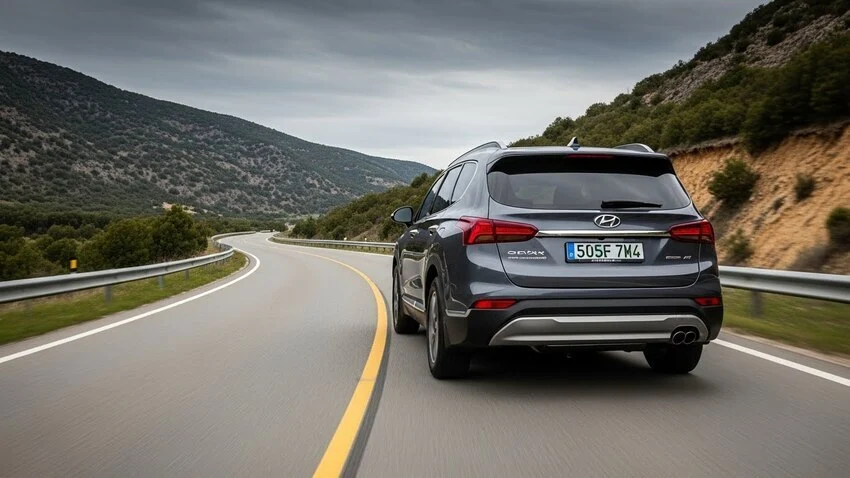
The most severe issue facing older Santa Fe models involves the Theta II Gasoline Direct Injection (GDI) engine. In affected vehicles, debris left over from manufacturing can block oil flow to the connecting rod bearings. This causes the bearings to wear out prematurely, often resulting in a loud knocking sound and, eventually, a seized engine. Beyond that, many owners report excessive oil consumption, where the engine burns oil rapidly. If you don’t check the level constantly, this can lead to internal damage with zero warning lights.
2. Transmission Failures
Transmission problems tend to pop up in specific generations. Early models, specifically from 2007 to 2009, often suffered from hard shifting and delayed engagement, making acceleration feel jerky and unpredictable. Later models, particularly the 2017 year, faced software logic issues. Drivers often describe a hesitation when accelerating from a stop, as if the transmission is slipping or struggling to find the right gear.
3. Electrical System and ABS Fire Risks
Electrical gremlins are a common headache in the years to avoid. These range from fuel gauges that read “Empty” when the tank is full to dashboard lights that flicker or go dark. More alarmingly, certain 2016–2018 models were subject to recalls involving the Anti-Lock Brake System (ABS) module. This component can short circuit due to moisture and catch fire, even when the car is parked and turned off. Hyundai has issued urgent warnings for owners of these specific vehicles to park outside until repairs are made.
Breakdown of the Worst Hyundai Santa Fe Model Years
To really understand why certain years are risky, we need to look under the hood. The specific failures associated with these models aren’t just minor annoyances; they are systemic flaws that can leave you stranded on the side of the road. Here is a detailed look at the worst offenders.
2007–2009 Hyundai Santa Fe
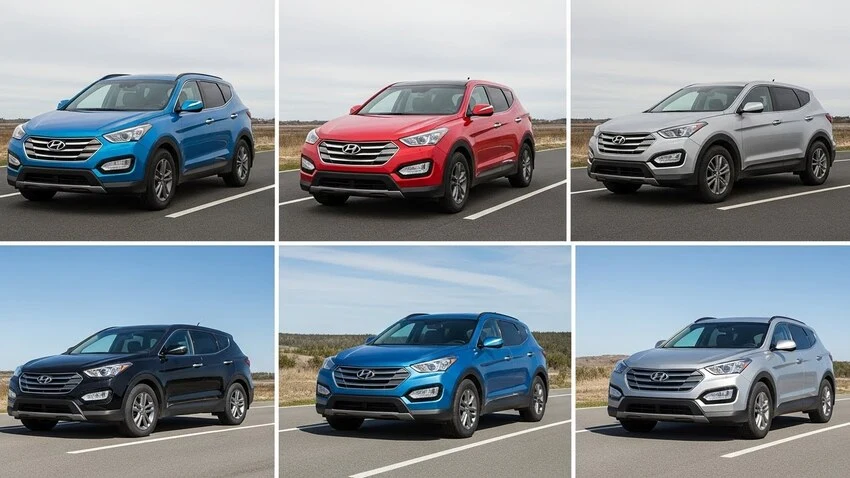
The second generation of the Santa Fe brought a curvier, more modern design to the lineup. While it looked like a major upgrade on the outside, the early years of this generation suffered from significant quality control issues that have only worsened with age.
Fuel System Malfunctions and Alternator Leaks
One of the most widespread annoyances in the 2007–2009 models involves the fuel system. The fuel level sensors are notorious for failing prematurely. When they do, your gas gauge might drop to “Empty” immediately after you fill the tank, often triggering a Check Engine light with code P0463. While this won’t stop the car from running, driving without knowing how much gas you have is stressful.
A more critical mechanical flaw involves the 3.3L V6 engine found in many of these units. The valve cover gaskets tend to leak oil as they age. Due to the engine’s layout, this leaking oil drips directly onto the alternator. Over time, the oil saturation ruins the alternator, causing the vehicle to lose electrical power while driving. Replacing the alternator without fixing the gasket leak is just a temporary band-aid, making this a double repair bill.
Transmission Instability
Owners of 2007 and 2008 models frequently report that the transmission shudders or refuses to shift gears smoothly. This is often caused by faulty input or output speed sensors within the transmission housing. In severe cases, the transmission may slip out of gear entirely or get stuck in “limp mode,” preventing you from accelerating past a certain speed.
2012 Hyundai Santa Fe
If there is one year you should absolutely avoid, it is 2012. This model year sits at the transition between generations and is statistically one of the most problematic vehicles Hyundai has ever produced.
The Theta II Engine Failure Peak
The 2012 Santa Fe is infamous for catastrophic engine failure. It utilizes the 2.4L Theta II engine, which has been the subject of massive recalls and class-action lawsuits. The issue stems from manufacturing debris that restricts oil flow to the connecting rod bearings. Without proper lubrication, these bearings wear down rapidly, causing the engine to seize. Many owners have reported their engines stalling at highway speeds with little to no warning. Unless the seller can provide paperwork proving the engine was already replaced under warranty, buying a used 2012 model is a financial gamble you shouldn’t take.
2013 Hyundai Santa Fe
Hyundai redesigned the Santa Fe in 2013, giving it a sharper, more aggressive look. Unfortunately, the mechanical demons from the previous year followed it into the new generation.
Turbocharger Failures and Steering Defects
Alongside the continuing risk of engine seizure, the 2013 model introduced a 2.0L turbo engine option that came with its own set of headaches. Turbocharger failures were common, leading to sudden power loss during acceleration.
Even more concerning were the steering complaints. Drivers reported that the steering wheel could feel loose, make clicking noises when turning, or in extreme cases, lock up while driving. This was often traced back to failures in the steering column assembly. The sheer volume of complaints regarding steering control makes this year particularly risky for family use.
2014 Hyundai Santa Fe
The 2014 model year saw a slight reduction in engine complaints compared to the disaster of 2012, but it wasn’t a clean slate. The primary frustrations shifted toward the drivetrain and ride quality.
Powertrain and Axle Vibrations
A distinct issue with the 2014 Santa Fe involves the axles. Owners often report a noticeable vibration or shudder when accelerating, typically between 20 and 40 mph. This sensation usually indicates premature wear in the CV axles or the drive shaft. While this isn’t always a catastrophic failure, it significantly degrades the driving experience. If left unchecked, these vibrations can damage other suspension components, turning a minor repair into a major overhaul. Additionally, this model year still falls within the danger zone for the 2.4L engine, so buyers must remain vigilant about oil levels and potential knocking sounds.
2017 Hyundai Santa Fe
The 2017 model received a facelift and updated technology, making it look like an attractive, modern option on the used market. However, it introduced a new set of drivability issues that many drivers find jarring.
Hesitation and “Rough Idle” Logic Issues
The most common complaint for the 2017 Santa Fe revolves around the transmission and throttle response. Many drivers experience a disturbing hesitation when trying to accelerate from a stop or when merging onto a highway. This lag can feel dangerous in heavy traffic when you need instant power.
The root cause is often traced to the vehicle’s transmission software logic. To save fuel, the system attempts to shift into a neutral-like state when the car is stopped. Unfortunately, it doesn’t always re-engage the gear smoothly when you press the gas. This results in a “rough idle” sensation or a sudden jerk as the transmission catches up. While dealership software updates can sometimes improve this, it remains a persistent annoyance for many owners.
Best Years of Hyundai Santa Fe
After navigating through the minefield of problematic model years, you might be wondering if any Hyundai Santa Fe is actually safe to park in your driveway. The answer is yes. Hyundai has produced several iterations of this SUV that offer excellent reliability, often rivaling top competitors from Japan. The key is knowing exactly when the manufacturing quality improved and targeting those specific production runs.
Reliable Model Years to Buy (2015–2016, 2019+)
If your budget keeps you in the market for a third-generation model (2013–2018), the 2015 and 2016 model years represent the “sweet spot.” By this time, engineers had ironed out many of the early steering kinks and addressed some of the most glaring engine manufacturing defects. These years provide a solid mix of modern styling and decent durability without the premium price tag of a brand-new vehicle.
For buyers willing to spend a bit more, the 2019 and newer models (Fourth Generation) are widely considered the gold standard for the Santa Fe nameplate. These vehicles marked a complete overhaul in engineering and design. The chassis is stiffer, the safety technology is standard across all trims, and crucially, the powertrain reliability has improved significantly.
Why These Years Are Reliable
The dramatic shift in quality for the 2019+ models stems from tighter quality control and a gradual move away from the specific manufacturing flaws that plagued the early Theta II engines. Hyundai also standardized advanced safety features like automatic emergency braking and lane-keeping assist, making these years safer operationally, not just mechanically. If you are considering other vehicles in the Hyundai lineup, applying this same scrutiny is essential; for instance, reviewing Hyundai Accent years to avoid can help you dodge similar powertrain pitfalls in their smaller sedans.
Comparison with Competitors
When shopping for a midsize SUV, it is vital to understand how the Santa Fe compares to its direct rivals in terms of long-term reliability.
- Toyota Highlander: This is widely regarded as the benchmark for reliability in the segment. While a used Highlander will almost always cost more than a comparable Santa Fe, it rarely suffers from the catastrophic engine seizures or transmission failures seen in the 2012–2014 Hyundais.
- Honda CR-V: Although it sits in a slightly smaller size class, the CR-V is a fierce competitor due to its high resale value. However, buyers should be aware that certain recent model years have faced their own challenges with oil dilution in cold climates.
- Mazda CX-5: This SUV is often praised for its premium interior and engaging driving dynamics. It generally boasts a strong reliability record, though its infotainment system is often criticized for being less intuitive than Hyundai’s user-friendly interface.
Hyundai Santa Fe: How to Identify a Potentially Dangerous Used One
Even if you target a “safe” model year, every used car has lived a different life. Identifying a lemon before you sign the paperwork is the single most important step in the buying process. A visual inspection is not enough; you need to dig deeper into the specific mechanical history of the car.
Inspection Tips
Your first line of defense is a VIN check. Run the vehicle’s unique identification number through the NHTSA website to check for open recalls. This is non-negotiable for 2011–2019 models. You need to verify that the “Knock Sensor Detection System” (KSDS) software update has been performed. If a seller cannot prove this critical safety update was done, or if there are open recalls regarding the ABS module fire risk, walk away immediately.
Key Areas to Inspect
When you arrive for the test drive, pay close attention to these specific warning signs:
- Engine Sounds: Start the engine when it is cold and open the hood. Listen for a rhythmic, metallic tapping or knocking sound that gets faster as you rev the engine. This is the classic “rod knock” associated with bearing failure.
- Transmission Logic: For 2017 models specifically, test the car’s behavior at a complete stop. When you lift your foot off the brake, the car should creep forward smoothly. If it hesitates, lurches, or feels like it slipped into neutral, it likely suffers from the transmission logic flaw.
- Oil Condition: Pull the dipstick. If the oil level is dangerously low or the oil itself looks like thick, black sludge, the engine has likely been consuming oil or has been severely neglected.
Practical Tips for Buying a Used Hyundai Santa Fe
Buying a used vehicle is always a negotiation between price and risk, but you can stack the deck in your favor with the right strategy. Approaching the purchase with a checklist and a skeptical eye will help you filter out the problematic vehicles quickly.
Conduct Thorough Research
Never rely solely on the salesperson’s assurances. Visit online forums and resources like CarComplaints.com to see what current owners are saying about the specific year you are considering. Real-world experiences often reveal patterns of failure—like door latches sticking or sunroofs shattering—that official recalls might not cover.
Test Drive Checklist
Turn off the radio and the air conditioning during your test drive. You need to hear the car.
- Engine Noise: Do not dismiss any faint ticking or whining noises. These are often the first whispers of a dying component.
- Transmission Behavior: Accelerate briskly onto a highway on-ramp. The gear shifts should be crisp, immediate, and smooth. Any flare in RPMs without acceleration (slipping) is a major red flag.
- Electronics: Test every switch and button. Ensure the backup camera doesn’t flicker and that safety systems like blind-spot monitoring provide audible alerts.
Pre-Purchase Inspection
If you want total peace of mind, take the vehicle to an independent mechanic for a pre-purchase inspection. They can put the car on a lift and spot issues you can’t see, such as oil leaks dripping onto the alternator or burnt-smelling transmission fluid.
Measures That Hyundai Has Taken to Fight Problems
Recognizing the severity of these powertrain failures, Hyundai has moved beyond standard service bulletins to implement broad consumer protection measures. The manufacturer has faced intense scrutiny and class-action pressure, resulting in several initiatives designed to assist affected owners.
Recalls and Customer Support
Hyundai has launched massive campaigns to try and rectify these legacy issues. The most notable is the installation of Knock Sensor Detection Software (KSDS) on millions of vehicles. This software monitors engine vibrations and forces the car into “limp mode” if it detects the frequencies associated with rod bearing failure. While this prevents the engine from blowing up on the highway, it is effectively a safety net rather than a fix for the underlying mechanical weakness.
Warranty Programs
To restore faith in the brand, Hyundai extended the powertrain warranty for many vehicles equipped with the Theta II engine to 10 years or 120,000 miles. In some class-action settlements, this coverage was extended to a lifetime warranty for the specific issue of connecting rod bearing failure. Always verify if the specific VIN of the used Santa Fe you are looking at is covered by these warranty extensions.
Conclusion: Making the Right Choice
Knowing which Hyundai Santa Fe years to avoid is the difference between buying a reliable family hauler and a money pit. The 2007–2009, 2012–2014, and 2017 model years carry statistically higher risks of expensive mechanical failures. However, the Santa Fe remains a compelling value proposition if you choose wisely. By targeting the 2015–2016 or 2019+ models and performing a rigorous inspection, you can enjoy all the benefits of this popular SUV without the fear of the unknown.
Always prioritize:
- Comprehensive Vehicle Inspections
- Thorough Test Drives
- Reviewing Vehicle History Reports
By following this roadmap, your purchase will be a smart investment, providing you with a safe and dependable vehicle for years to come.