
Hyundai Kona Years to Avoid: A Comprehensive Buyer’s Guide
The Hyundai Kona quickly became a hit, injecting personality into the often-dull subcompact SUV segment. Its mix of bold styling, affordability, and practical features made it an instant favorite against rivals like the Honda HR-V and the Mazda CX-30. But for anyone considering a used model, a critical detail often goes overlooked: not all Kona years were built equally.
I. Introduction: Why Buyers Must Know the Years to Avoid
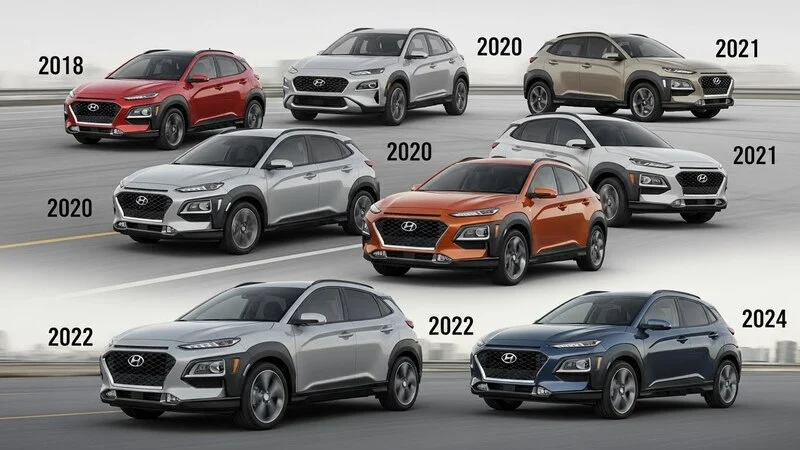
Selecting a used vehicle means inheriting its history—both the good and the bad. For any automaker, the initial release models are often a proving ground, where unforeseen defects emerge. Ignoring the history of the Kona’s first generation (2018–2021) can expose you to engine failures, costly electrical issues, and even major safety recalls.
The Importance of Selecting the Right Model Year
Experienced buyers know that later model years often incorporate fixes for a vehicle’s initial kinks, leading to better performance and more reliable ownership. Choosing the wrong year—one with unresolved manufacturing defects—means facing expensive engine replacements or dealing with safety-critical component failures. The most risk is concentrated in the early production run.
Overview of the Hyundai Kona’s Appeal and Early Challenges
Launched in 2018, the Hyundai Kona was lauded for its fun driving dynamics and competitive price. It offered multiple powertrain options, including a base 2.0-liter engine, a snappy turbocharged variant, and the all-electric Kona Electric. However, over time, a pattern of serious reliability concerns arose, forcing Hyundai to issue numerous safety recalls. Conscious buyers must learn which years carry the most risk to save themselves significant money and stress.
II. The Most Problematic Kona Years: A Detailed Breakdown (2018–2021)
Based on official recalls and numerous owner complaints filed with the NHTSA, several years demand extreme caution. These are the Hyundai Kona Years to Avoid if you want a smooth, worry-free commute.
2018 Hyundai Kona: The Troublesome Debut
As the debut model, the 2018 Hyundai Kona bore the brunt of the initial manufacturing flaws. Many owners praised its style but quickly faced functional setbacks.
- Engine Stalling and Knocking Sounds: Drivers reported the base 2.0-liter engine would suddenly lose power, stall unexpectedly, or emit unusual knocking noises. These events were early warnings of the more severe mechanical defects that would later plague the engine.
- Widespread Electrical System Malfunctions: Electrical problems were a constant annoyance. The infotainment system frequently froze or reset, and critical features like the blind-spot collision warning system would malfunction, compromising driver assistance.
- Serious Safety Concern: Reports of Airbag Deployment Failures: In the gravest reports, some owners claimed that safety features, including airbags, failed to deploy correctly in a crash, raising serious questions about the vehicle’s protection in critical moments.
2019 Hyundai Kona: Engine Recalls and the EV Battery Threat
The 2019 Hyundai Kona introduced the Kona Electric but saw the engine problems from 2018 become a widespread and verified defect, leading to massive recalls.
- Engine Flaw: Focus on Defective Piston Oil Rings: The 2019 model (and others) was recalled because the piston oil rings in the 2.0-liter engine were inconsistently heat-treated. This defect caused damage to the cylinder bore, leading to excessive oil consumption, engine failure, and, in severe cases, the potential for an engine fire.
- Kona Electric Risk: Lithium-ion Battery Short-Circuiting and Fire Danger: For EV buyers, the risk was different but equally alarming. The Kona Electric was part of a major recall due to a manufacturing defect in its LG battery cells that created a risk of internal short-circuiting and fire, especially when the battery was fully charged.
2020 Hyundai Kona: Lingering Faults and Shifting Safety Ratings
The 2020 Hyundai Kona saw the continuation of problems. While Hyundai updated some active safety technologies, the underlying mechanical flaws remained. Engine stalling and electrical glitches similar to earlier years were reported. Furthermore, this year saw the engine recall related to the 2.0-liter piston rings extend to cover the 2020 model as well.
- Transmission Jerkiness and Harsh Shifting: Complaints about the dual-clutch transmission (DCT) became more prominent, with drivers experiencing hesitation and jerky shifts at low speeds or during acceleration.
2021 Hyundai Kona: Unresolved Glitches and Brake System Recalls
The 2021 Hyundai Kona marked a slight improvement, but it was not entirely free of fault, with some problems rolling over from prior years. The piston ring defect recall still included certain 2021 models.
- EV Recall: Integrated Electronic Brake System Sensor Problems: A separate safety recall affected the Kona Electric variants for the integrated electronic brake system (IEB). A sensor signal could become abnormal, reducing braking performance and increasing the risk of a crash.
III. Recurring Mechanical and Electrical Problems Across Risky Years
Beyond the specific year-by-year complaints, a few core manufacturing flaws repeated across the 2018 through 2021 models, confirming why these are the main Hyundai Kona Years to Avoid.
Engine Catastrophe: The Piston Ring/Oil Consumption Crisis
The most serious defect affected the gasoline-powered 2.0-liter engine found in many Konas. The issue stemmed from manufacturing errors in the piston oil rings, causing them to be improperly heat-treated. This defect allowed the cylinder walls to wear down quickly. The unmistakable consequence is excessive oil consumption—owners report having to add oil constantly—and, worse, a distinct ticking or knocking noise from the engine. This noise signals impending failure, often leading to total engine seizure. Hyundai addressed this with a major recall, typically replacing the entire engine block and installing a specialized computer update called the Piston Ring Noise Sensing System (PNSS) software. This system listens for the specific frequency of the knocking sound, alerting the driver before a total mechanical disaster occurs.
EV Battery and Electrical System Failures
For the Kona Electric variants, the threat was concentrated in the power source itself. Early models (especially 2019 and 2020) were subject to a major recall because their LG-made lithium-ion battery cells had an internal flaw that could cause an electrical short. This posed a severe fire risk, particularly when the battery was fully charged. The ultimate remedy involved Hyundai replacing the entire Battery System Assembly free of charge. Separate from the battery, owners of both gas and electric models frequently reported general electrical glitches: unresponsive touchscreens, failing safety sensors, and intermittent dash display malfunctions.
Transmission and Drivetrain Complaints
Buyers considering the faster, turbocharged Kona equipped with the dual-clutch transmission (DCT) need to proceed with caution. This sophisticated transmission is notorious for its drivability issues in the early years. Drivers frequently experience jerky shifts, pronounced hesitation when pulling away from a stop, and delayed engagement at low speeds. While the DCT can be quick on the highway, its unpredictable low-speed behavior makes city driving a continuous frustration.
IV. The True Cost of Owning a Problematic Kona
The initial savings gained by buying an early, cheaper used Kona disappear quickly when these core defects surface.
Financial Burden of Engine and Electrical Repairs
While a recall should cover the engine failure for eligible models, that coverage is complex and depends on a clear service history. For non-recalled issues or vehicles outside the extended warranty, the repair cost is shocking. A full engine replacement can easily cost an owner $7,000 to $9,000, based on average shop rates. Even if Hyundai covers the engine, owners often pay hundreds in associated costs, like fluid flushes or new sensors, to complete the installation. For the Kona Electric, replacing the high-voltage battery pack outside of warranty or recall coverage can cost thousands of dollars, far outweighing the price of any repair on the gas model.
Impact on Resale Value
The widespread public knowledge of the engine and battery recalls has inevitably reduced the market value of the 2018 and 2019 Hyundai Kona models. These years are viewed as high-risk, meaning you will struggle to sell them later and receive a much lower price compared to the problem-free newer versions. Choosing a reliable year is not just about maintenance; it is about protecting your investment.
V. Hyundai Kona Years That Are Safer Choices (2022 Onward)
The good news is that Hyundai has worked hard to correct the problems. If you appreciate the Kona’s style and features, you should focus your search entirely on the refreshed models.
2022 Model Year: The Turning Point for Reliability
The 2022 Hyundai Kona received a significant design and mechanical refresh. Hyundai engineers applied lessons learned from the recalls, resulting in a substantial drop in owner complaints. This model year features smoother transmission programming (especially for the base engine, which switched to a CVT) and improved overall build quality. It is widely considered the first reliable used Kona you should buy.
2023 and 2024 Models: Refinement and the Next Generation
The 2023 Hyundai Kona built on the improvements of the 2022 model, offering the most dependable and refined experience of the entire first generation. The 2024 Kona then introduced a completely redesigned second generation, which is larger, packed with updated technology, and has had its mechanical defects thoroughly ironed out. These later models represent the best chance for a truly worry-free ownership experience.
VI. Essential Tips for Evaluating a Used Kona Safely
Even when focusing on the safer model years, smart buying requires meticulous preparation. You must approach every used Kona with a clear inspection plan to prevent unexpected problems.
The Buyer’s Pre-Purchase Checklist
The first step in due diligence is running the car’s history. You need more than just a clean title.
- Mandatory: How to Check Recall Status using the VIN: Never assume a recall fix was completed. Use the Vehicle Identification Number (VIN) to check for outstanding recalls on the National Highway Traffic Safety Administration (NHTSA) website. This instantly confirms if the vehicle is still waiting for the critical piston ring or EV battery fix. A Hyundai dealer can also provide this information quickly.
- Reviewing Maintenance and Service Records: Ask for full service records. Consistent regular oil and filter changes are vital to the engine’s health, particularly for the 2.0-liter models. Gaps in service history often indicate neglect or, worse, a period when the previous owner avoided addressing a major mechanical fault.
The Professional Inspection and Test Drive
No purchase should be finalized without a thorough third-party inspection and an extended test drive.
- Importance of a Trusted Mechanic: Have a mechanic familiar with Hyundai models perform a pre-purchase inspection. Specifically ask them to check the engine for signs of oil leaks, check the tailpipe for blue smoke (a sign of oil burning), and run a diagnostic scan for any hidden ECU error codes, which often betray intermittent electrical failures.
- Test Drive Focus: The drive must be deliberate. Listen for that distinct knocking noise at idle and under light acceleration—a major red flag. For models with the dual-clutch transmission (DCT), drive slowly in a parking lot and then accelerate hard on the highway. Look for jerky shifts or moments of hesitation. Finally, test every electrical system: the climate control, the infotainment screen, the rearview camera, and the blind-spot warning system. If one system is unreliable, others may soon follow.
Long-Term Maintenance to Ensure Longevity
Choosing a reliable year is only half the battle. To ensure the Kona lasts, you must commit to consistent care. Sticking rigidly to Hyundai’s schedule for fluid changes, checking coolant and brake fluid levels regularly, and replacing filters on time are your best defense against the costly engine issues that plagued the early models. For EV owners, monitor the charging status and battery health readings closely.
Conclusion
The Hyundai Kona is a vehicle that offers great value, but the risks are heavily weighted toward the early model years.
If you are determined to buy the first generation of the Hyundai Kona Years to Avoid are unquestionably the 2018 and 2019 models. They carry the highest risk of catastrophic engine failure, transmission issues, and dangerous battery defects (in the EV variant). The 2020 and 2021 models are only marginally better.
For a dependable, stress-free experience, limit your search to the 2022, 2023, and 2024 model years. These vehicles benefited from the lessons learned and include significant mechanical and software updates that ensure greater reliability.
Ultimately, your best protection as a buyer is research and diligence. Do not let a low price tag on an early model year tempt you into accepting thousands of dollars in potential future repairs. Find the safest year, perform a rigorous inspection, and enjoy the fun, worry-free drive the Kona was designed to deliver.