Buick Encore Years to Avoid: The Ultimate Reliability & Buying Guide
You want a luxury feel without the luxury price tag. That is the promise of the Buick Encore. It is small, it is easy to park, and thanks to Buick’s “QuietTuning” technology, it shuts out the noise of the city better than almost anything else in its class.
But there is a catch.
If you pick the wrong model year, that quiet cabin won’t stay quiet for long. It will be interrupted by the sound of a sputtering engine, a grinding transmission, or the constant ding of warning lights on your dashboard.
The difference between a Buick Encore that runs for 200,000 miles and one that lives at the mechanic’s shop often comes down to a single digit: the year it was built. We dug into the data from the NHTSA, listened to real owner stories, and analyzed mechanic reports to separate the lemons from the gems.
Here is the no-nonsense guide to finding a reliable Buick Encore.
Quick Reliability Cheat Sheet
If you are standing on a used car lot right now and just need a quick answer, start here. We have categorized every model year based on engine failure rates, electrical complaints, and safety recalls.
| Category | Model Years | The Verdict |
| 🚫 AVOID | 2013, 2014, 2015 | High risk of turbo failure, battery drains, and engine stalling. |
| ⚠️ CAUTION | 2016, 2017 | Better, but still plagued by electrical glitches and airbag recalls. |
| ✅ BUY | 2018, 2019, 2020+ | The “Golden Era.” Most major mechanical defects were resolved. |
The Buick Encore Generations: A Brief History
To understand why some years fail while others thrive, you have to look at the timeline. The Buick Encore hit the US market in 2013. It was General Motors’ answer to the growing demand for small crossovers.
First Generation (2013–2022)
This is the generation that most used car buyers are looking at. While the exterior stayed mostly the same until the 2017 facelift, the internals changed drastically. The early years (2013–2015) were essentially the “beta test” phase, where GM was still figuring out the kinks in the 1.4L turbo engine.
Second Generation (2020–Present)
Later, Buick introduced the Encore GX, a slightly larger and more modern sibling. For this guide, we are focusing strictly on the classic Encore, as that is where the biggest reliability gaps exist.
Buick Encore Years to Avoid (The “Do Not Buy” List)
If you value your wallet and your sanity, you should steer clear of the early production years. These models suffer from what mechanics call “teething issues”—defects that happen when a manufacturer rushes a new design to market before it is fully battle-tested.
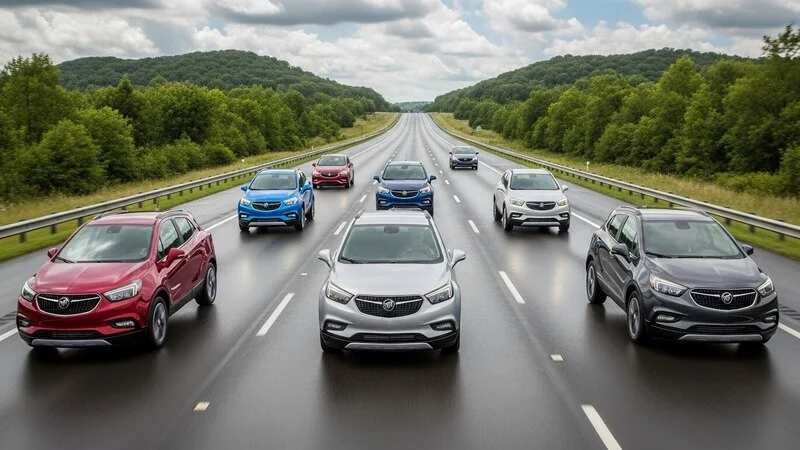
2013 Model Year: The First-Year Curse
Never buy the first year of a new model. It is the oldest rule in the book, and the 2013 Buick Encore proves why it exists.
This debut model has the highest volume of severe engine complaints. The primary culprit is the cooling system and the turbocharger. Owners often report that the plastic components in the cooling system crack and leak coolant. Once the coolant runs low, the engine overheats, often warping the cylinder head or destroying the turbocharger.
If you see a 2013 Encore for a “great price,” there is usually a reason. The cost to replace a blown turbo and fix the cooling system can easily exceed the value of the car.
2014 Model Year: Peak Electrical Gremlins
By 2014, the mechanical issues persisted, but a new problem took center stage: the electrical system.
The 2014 Encore is infamous for “parasitic battery drain.” You drive the car home, park it, and everything seems fine. But when you try to start it the next morning, the battery is dead. This isn’t just an old battery issue; it’s often a computer module that fails to go to “sleep” when the car is off, slowly sucking the life out of the battery.
Owners also reported display screens that would flicker, freeze, or go completely black while driving, cutting off access to navigation and the backup camera.
2015 Model Year: The Low Point for Reliability
If there is one year you absolutely must avoid, it is the 2015 Buick Encore. This year combined the engine headaches of the 2013 model with the electrical gremlins of the 2014 model, and then added serious safety concerns on top.
The 2015 model was heavily involved in brake system complaints. Drivers reported a “spongy” feel in the brake pedal or excessive vibration when stopping. It feels unsafe because it is unsafe.
Furthermore, this model year is part of a massive history of electrical faults within the GM lineup. It’s similar to the electrical and transmission hurdles detailed in our guide on Buick Lucerne years to avoid, where aging components lead to expensive dashboard warnings. The 2015 Encore struggles with similar module failures that can prevent airbags from deploying during a crash—a risk no family should take.
2016-2017 Model Years: The “Proceed with Caution” Era
By 2016, Buick engineers began to catch up with the problems. The 2016 Encore saw a drop in the sheer volume of catastrophic engine failures compared to the 2013–2015 models. However, it wasn’t a clean slate just yet.
In 2017, Buick gave the Encore a facelift. They updated the front styling, added nicer headlights, and modernized the interior dashboard. On the surface, a 2017 model looks much newer than a 2016 model. But under the hood, many of the same mechanical gremlins remained.
Owners of these “middle years” still report frustration with the check engine light. While the engine is less likely to blow up than in previous years, sensitive sensors often trigger warnings that prevent the car from passing emissions tests. If you find a pristine 2017 model with service records showing the turbo or intake manifold has already been replaced, it might be a safe buy. If not, you are rolling the dice.
Common Mechanical Problems & Why They Occur
To truly understand why you should avoid specific years, we need to look at the parts that actually break. You don’t need to be a mechanic to spot these red flags, but knowing them will save you from buying a money pit.
Engine Vulnerabilities: The 1.4L Turbo Troubles
The heart of the problem in the First Generation Encore is the 1.4L Turbocharged Ecotec engine. It is a small engine working very hard to move a heavy SUV.
The most frequent failure point is the PCV (Positive Crankcase Ventilation) valve. In most cars, this is a cheap, easy-to-replace part. In the Buick Encore, the PCV valve is built directly into the intake manifold. When the valve fails (and it often does), it causes a vacuum leak.
You might hear a distinct “hissing” sound from the engine bay while the car is idling. If ignored, this vacuum leak causes the engine to run lean, which creates excessive heat. That heat then damages the internal seals of the turbocharger, leading to oil leaks, blue smoke from the exhaust, and eventually, total turbo failure.
Transmission Irregularities
The Encore uses a 6-speed automatic transmission that is generally durable, but specific years struggle with smoothness.
In the 2013–2015 models, drivers often complain about “hard shifting.” You might feel a clunk when the car shifts from 1st to 2nd gear, or a hesitation when you press the gas pedal to merge onto the highway. This is often due to software calibration issues in the Transmission Control Module (TCM), though in severe cases, it indicates internal wear that requires a full rebuild.
Electrical & Infotainment Glitches
Buick markets the Encore as a premium vehicle, which means it is packed with technology. Unfortunately, in the 2014 and 2015 models, the IntelliLink infotainment system was prone to freezing.
Imagine you are relying on your GPS to navigate a busy city, and the screen suddenly goes black. That is a reality for many owners of early models. Bluetooth connections are also known to drop randomly, and the backup camera guidelines sometimes disappear. While these aren’t safety hazards, they are annoying flaws in a car that is supposed to feel “luxury.”
Safety Critical Defects
Reliability is one thing; safety is another. Two major defects forced GM to issue recalls that you must check for.
First is the Airbag SDM (Sensing and Diagnostic Module) issue. In certain driving conditions, the software in early models would mistakenly enter a “test mode.” If you were to crash while the car was in this mode, the airbags would not deploy.
Second is the Seat Track Instability. In 2013 and 2014 models, the welds on the front seat tracks were sometimes weak. During hard braking or a collision, the seat could actually break loose and move, increasing the risk of injury.
Buick Encore Reliability in Context
It is easy to get discouraged looking at a list of problems. However, it is important to place the Encore in the context of the broader market. Every car has bad years, but how long does the Encore last when it works?
Expected Lifespan
If you avoid the problematic years (2013–2015) and stick to the rigorous maintenance schedule required for a turbocharged engine, a Buick Encore can easily last 150,000 to 200,000 miles.
The key is oil changes. Turbochargers are lubricated by engine oil. If you delay an oil change, the oil turns to sludge, and the turbo is the first component to die. A well-maintained 2018 Encore is a vehicle that can serve a family reliably for over a decade. But a neglected 2013 model is likely on its last legs before it even hits 100,000 miles.
Competitor Comparison: Is There a Better Alternative?
Before you commit to a Buick Encore, it is wise to look at what else your money can buy. The subcompact SUV market is crowded, and while the Encore offers a quiet, premium cabin, other rivals might suit your lifestyle better.
Buick Encore vs. Mazda CX-5
If your main goal is a “premium feel,” the Mazda CX-5 is the Encore’s strongest rival. Mazda’s interiors often rival luxury brands, and the driving dynamics are far superior. The CX-5 feels planted and sporty, whereas the Encore feels tall and narrow. However, the Encore is significantly smaller, making it easier to park in tight city spots.
Buick Encore vs. Toyota RAV4
The Toyota RAV4 is the pragmatic choice. It isn’t as quiet as the Buick, and the ride is a bit stiffer. But reliability is where the RAV4 shines. A 2013–2015 RAV4 is statistically far less likely to suffer the catastrophic engine failures that plagued the early Encore models. If you prioritize longevity over luxury features, the Toyota is the safer bet.
Buick Encore vs. Honda CR-V
For many buyers, the decision comes down to space. The Buick Encore is tiny; it is great for couples but tight for families. The Honda CR-V offers significantly more cargo room and rear-seat legroom. It is the practical hauler of the segment.
However, no car is perfect. The CR-V has its own history of mechanical hiccups, particularly with oil dilution in its Earth Dreams engines. Before you switch your search to Honda, you should review the Honda CR-V years to avoid to ensure you don’t trade the Encore’s turbo issues for a different set of expensive headaches.
The Best Buick Encore Years to Buy
So, you have decided the Encore is the right size and style for you. Which year should you hunt for?
2018 Model Year: The Turning Point
This is the sweet spot for value. In 2018, General Motors finally addressed the major PCV and turbocharger defects. The engine in the 2018 model is far more robust than the earlier versions. Plus, you get the benefit of the 2017 facelift design without the lingering “first-year” bugs of the refresh.
2019 Model Year: The Safe Bet
The 2019 Encore continued the upward trend. By this point, the infotainment system was simplified and made more reliable. Connection drops became rare, and the interface became faster. If you want a car that just works, the 2019 model is a fantastic choice.
2020–2022 Model Years: The Golden Era
If your budget allows, aim for a 2020 or newer model. These represent the peak of the First Generation Encore. They feature the most advanced safety tech, including Blind Spot Monitoring and Rear Cross Traffic Alert, as standard on more trims. The engine tuning is smoother, and the cabin materials feel more durable. These years are widely considered the most reliable Encores ever built.
Buying Guide: Pre-Purchase Inspection Checklist
Even if you are looking at a “good” year, you must inspect the specific vehicle. Used cars are only as good as their previous owner. Bring this checklist with you:
- The “Hiss” Test: Start the engine and let it idle. Pop the hood and listen carefully near the top of the engine. A loud hissing sound often indicates a failed PCV valve. If you hear it, walk away.
- Transmission Check: During your test drive, accelerate moderately from a stop. The shift from 1st to 2nd gear should be barely noticeable. If the car jerks or hesitates, the transmission may have solenoid issues.
- The Turbo Inspection: After driving the car for 10–15 minutes, check the exhaust. Blue smoke indicates burning oil, a classic sign of a dying turbocharger.
- Service Records: Ask to see the maintenance history. Look specifically for “Airbag SDM software update.” If this recall hasn’t been performed, the car is a safety risk until you get it fixed.
FAQs
Compared to a Toyota, yes. Compared to a German luxury car, no. The Encore requires synthetic oil and strict adherence to service intervals because of its turbo engine. Expect slightly higher costs than a standard economy car, but nothing exorbitant.
No. The turbo failures are heavily concentrated in the 2013–2016 models. The 2018 and newer models have a much lower failure rate for the turbocharger system.
The 2018 Buick Encore offers the best balance. It has the reliability fixes of the newer models but has depreciated enough to be affordable for most used car buyers.
Conclusion
The Buick Encore is a unique vehicle. It brings quiet, upscale comfort to a price point that is usually filled with loud, cheap-feeling economy cars. But that luxury comes with a responsibility to choose wisely.
Avoid the 2013, 2014, and 2015 models. The risk of engine replacement and electrical failure is simply too high.
Target the 2018 model year or newer. These vehicles deliver on the promise of the Buick brand: a smooth, quiet, and reliable ride that makes city driving a pleasure. Do your homework, listen for that PCV hiss, and you will find a compact SUV that serves you well for years to come.