Honda CR-V Years to Avoid: The Ultimate Reliability Guide
When you ask someone to name a reliable SUV, the Honda CR-V is usually the first car that comes to mind. Since it hit the roads in 1997, it has earned a reputation as the “safe bet” for families, commuters, and anyone who hates visiting the mechanic. It’s spacious, efficient, and holds its value like gold. But here is the hard truth that dealerships won’t tell you: not every CR-V is built the same.
While most model years are bulletproof, a few specific years are notorious for catastrophic failures. We are talking about engines that mix gas with oil, air conditioning systems that implode, and steering wheels that stick while driving on the highway. If you buy the wrong year, that “reliable” Honda could end up costing you thousands in repairs.
This guide breaks down exactly which Honda CR-V years to avoid and which ones are worth your money. We have analyzed data from the NHTSA, owner complaints, and mechanic reports to cover everything from the classic models to the newest generation.
Quick Reference: Best and Worst Honda CR-V Years
If you are standing on a used car lot right now and need answers fast, this table is for you. We have categorized the models so you can see the winners and losers at a glance.
| Generation | Years to Avoid | Years to Buy (Best Reliability) | Major Known Issues |
| Gen 1 | N/A (Check for rust) | 2000, 2001 | Valve adjustments needed due to age. |
| Gen 2 | 2002, 2003, 2004 | 2005, 2006 | “Black Death” AC failure, Airbags. |
| Gen 3 | 2007, 2008, 2011 | 2009, 2010 | Door locks, Steering, Oil consumption. |
| Gen 4 | 2014, 2015 | 2013, 2016 | Severe idle vibration, CVT issues. |
| Gen 5 | 2017, 2018, 2019 | 2020, 2021, 2022 | Oil dilution (Turbo), Phantom braking. |
| Gen 6 | 2023, 2024, 2025 | N/A (Too new) | Sticky Steering Gearbox, Fuel Pump. |
If you realize the CR-V might be too big or complex for your needs, many drivers actually prefer the smaller sibling. In fact, the Honda HRV as dream car material is a popular sentiment for those wanting a compact, stylish ride without the turbo-engine headaches found in newer CR-Vs.
The Worst Honda CR-V Years: Models You Should Skip
To protect your wallet, you need to know exactly what went wrong during these specific production runs. We have organized these chronologically so you can spot the red flags immediately.
2002–2004: The “Black Death” Era
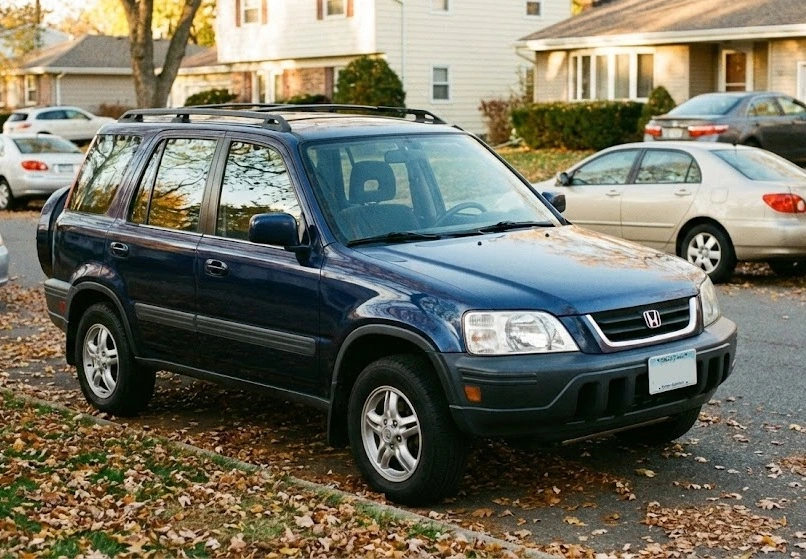
The second-generation CR-V is a beloved vehicle, but the early years (2002, 2003, and 2004) suffer from a legendary failure known by mechanics as the “Black Death.” This isn’t an exaggeration. The air conditioning compressor in these models is prone to shattering internally.
When the compressor breaks, it sends metal shards through the entire AC system. This creates a black sludge that contaminates the condenser, evaporator, and lines. You can’t just replace the compressor; you have to replace the entire cooling system, which often costs over $2,000. These years also faced significant Takata airbag recalls, making them a risky purchase today unless you have proof these repairs were done.
2007–2008: Electrical & Airbag Issues
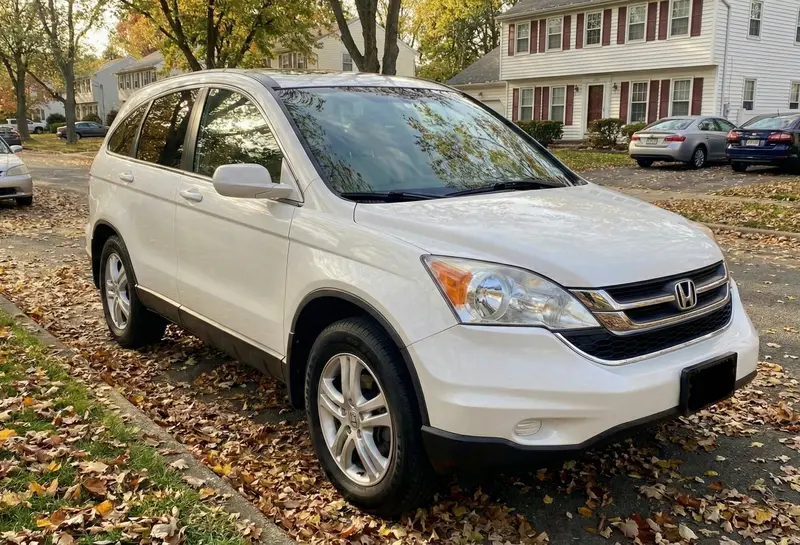
The third generation brought a curvier design, but the launch years of 2007 and 2008 had some teething issues. The most annoying problem for daily drivers involves the power door locks. The actuators are known to fail, causing doors to lock and unlock by themselves while driving, or refuse to lock at all.
Beyond the electrical ghosts, owners reported excessive tire wear and safety concerns regarding the airbags. While less mechanically catastrophic than the 2002 models, these electrical gremlins can be a constant source of frustration.
2011: The “Clunker” Year
Ideally, the last year of a generation should be the best, but 2011 is an odd exception. It saw a sudden spike in complaints that didn’t affect the superior 2010 model. Owners reported premature oil consumption—a sign of things to come in later engines—and issues with steering response.
Some drivers experienced situations where the steering felt heavy or unresponsive, coupled with reports of unwanted acceleration. Because the 2009 and 2010 models are so reliable, there is almost no reason to risk buying a 2011.
2014–2015: The Vibration Years
If you test drive a 2014 or 2015 CR-V, pay attention to how it feels when you stop at a red light. The 2015 model, in particular, introduced the “Earth Dreams” engine and a Continuously Variable Transmission (CVT). While this improved fuel economy, it had a nasty side effect: severe vibration.
The car shakes so noticeably at idle that it can rattle the passenger seat and cause motion sickness. Honda released software updates and new tailgate dampers to try and absorb the shaking, but the vibration remains a core characteristic of this year. Additionally, the 2014 model is known for a grinding noise at startup caused by a faulty VTC actuator.
2017–2019: Turbo Engine Troubles
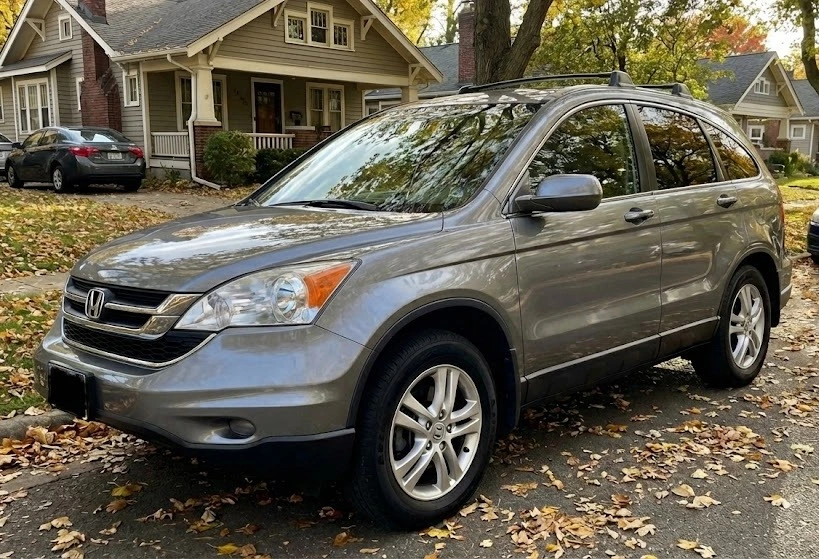
The fifth-generation CR-V looked fantastic on paper. It introduced a modern 1.5-liter turbocharged engine that promised better power and fuel efficiency. Unfortunately, in the real world, this engine brought a serious headache known as “oil dilution.”
In the 2017, 2018, and 2019 models, the engine struggles to warm up quickly, especially in cold weather. Because the engine runs cold, unburned gasoline condenses on the cylinder walls and washes down into the oil pan. This thins out the engine oil and raises the fluid levels, which can lead to long-term engine wear and a strong smell of raw fuel in the cabin.
On top of the engine worries, these years were plagued by “phantom battery drain.” Owners would park their car overnight only to find a dead battery in the morning, caused by electronics that refused to shut down properly.
2023–2025: The Sticky Steering Crisis
You might expect a brand-new car to be flawless, but the latest CR-V generation has stumbled out of the gate. If you are looking at a 2023, 2024, or 2025 model, you need to be aware of a critical safety defect involving the steering.
In late 2024, Honda issued a massive recall because the steering gearbox can feel “sticky” or “catchy” when driving at highway speeds. This happens because a manufacturing error causes an internal part (the worm wheel) to swell. It creates a notch in the steering that forces you to push harder to make small corrections, which can lead to oversteering.
This generation also faces a recall for high-pressure fuel pumps that can crack and leak. While Honda is fixing these issues under warranty, it’s a rocky start for the new model. Interestingly, Honda seems to be refining its approach with its sedans. The upcoming 2026 Honda Accord Facelift is expected to feature updated software and hybrid architectures that hopefully bypass these initial teething issues found in the CR-V’s recent launch.

Common Honda CR-V Problems Explained
To really understand why you should avoid these years, it helps to know exactly what is breaking under the hood. It’s not just “bad luck”—it’s usually a specific design flaw.
What is “Oil Dilution”?
This sounds technical, but it’s actually simple. In the 1.5L turbo engines, fuel is sprayed directly into the combustion chamber. When it’s cold outside, some of that fuel doesn’t burn; it turns back into liquid on the cylinder walls.
In older engines, the heat would evaporate this fuel. But the CR-V’s turbo engine is so efficient at cooling itself that it doesn’t get hot enough to burn off the gas. The gas drips down past the piston rings and mixes with your oil. Over time, your oil becomes thin and watery, which means it can’t protect your engine components as well as it should.
AC Compressor Failure (“Black Death”)
We mentioned this regarding the 2002-2004 models, but it’s worth repeating because of the cost. The AC compressor is the heart of your cooling system. In these specific years, the internal parts of the compressor were weak and would shatter.
When they break, they don’t just stop working; they grind themselves into a fine metal powder. This powder travels through the AC lines like a virus, clogging up every other part of the system. You can’t just swap the compressor because the lines are full of debris that will destroy the new part immediately.
“Sticky” Steering Gearbox
The recent issue in the 2023-2025 models comes down to heat and moisture. The worm wheel inside the electronic steering system was not annealed (heat-treated) correctly during manufacturing.
Because of this, the wheel absorbs moisture and swells up. When it expands, it squeezes out the grease layer between the gears. This friction creates that “sticky” feeling where the steering wheel fights you slightly when you try to turn it.
Phantom Braking (Honda Sensing)
Technology is great until it misbehaves. The “Honda Sensing” suite uses radar and cameras to prevent accidents. However, in the 2017-2019 models, the Collision Mitigation Braking System (CMBS) is known to get confused. It might see a shadow, a metal plate on the road, or a car in a different lane and think it’s an obstacle. The car then slams on the brakes automatically, which can be terrifying if you are driving at speed with traffic behind you.
Best Honda CR-V Years: The “Safe” Bets
Enough about the disasters. Let’s talk about the diamonds. If you want a CR-V that will run for 200,000 miles with just oil changes and tire rotations, these are the model years you should hunt for.
2005–2006 (Second Generation Refreshed)
These are the golden years for budget buyers. By 2005, Honda had completely fixed the “Black Death” AC compressor issue. You get the rugged, boxy charm of the early CR-V with a bulletproof engine. They are older now, so check for rust, but mechanically, they are solid.
2009–2010 (Third Generation Peak)
If you want a daily driver that feels modern enough but costs less than $10,000, this is the sweet spot. The 2009 and 2010 models avoided the electrical glitches of the 2007 launch and the steering weirdness of the 2011 model. They are widely considered some of the most reliable SUVs Honda ever built.
2016 (Fourth Generation Finale)
This is arguably the best modern CR-V you can buy. It was the final year before the turbo engines arrived, meaning it has a naturally aspirated 2.4-liter engine that was simple and long-lasting. It also solved the vibration issues that plagued the 2015 model. You get a backup camera, Bluetooth, and modern safety tech without the engine risks.
2020–2022 (Fifth Generation Facelift)
If you want a newer car, skip the 2017-2019 models and go straight for a 2020 or later. Honda released software updates and engine tweaks that largely resolved the oil dilution problems. These years offer the best balance of fuel economy, advanced safety features, and reliability.
Reliability by Generation: A Closer Look
When shopping for a used car, understanding the “era” of the vehicle helps you know what you are getting into.
First Generation (1997–2001)
These are classics now. They are incredibly tough, but they are getting old. If you buy one, be prepared for age-related maintenance like rubber hoses leaking or suspension bushings wearing out. They also need their engine valves adjusted every 30,000 miles—something many owners forget.
Second & Third Generations (2002–2011)
This era offers great utility. The engines are strong, but as we discussed, you must dodge the “Black Death” years (2002-2004) and the shaky 2011 model.
However, families often outgrow the compact CR-V. If you find yourself needing a third row of seats but want to stay in the Honda family, you should definitely research the Honda Pilot years to avoid. The Pilot offers more space, but like the CR-V, it has specific years prone to transmission failures that you need to watch out for.
Fourth & Fifth Generations (2012–2022)
This is the modern era. The dividing line is 2017. Before 2017, you have simpler non-turbo engines (except for the vibration-prone 2015). After 2017, you get turbos and complex electronics. The 2016 model remains the reliability king of this group.
Sixth Generation (2023–Present)
These are high-tech machines, but the “sticky steering” recall is a major black eye. If you are buying one, ensure the dealership provides proof that the steering gearbox has been inspected or replaced under the official recall campaign.
Ownership Costs & Resale Value
One of the biggest reasons to buy a CR-V is that it protects your wallet. Even with the issues mentioned in this guide, the CR-V holds its value better than almost any competitor, including the Nissan Rogue or Ford Escape.
- Maintenance: Expect to pay around $400 to $500 annually for routine maintenance.
- Resale: A well-maintained CR-V from a “good” year (like 2016) can command a premium price, often selling for thousands more than competitors of the same age.
- The Cost of “Bad” Years: Buying a 2015 model might save you money upfront, but one CVT repair or a fix for the vibration issue can erase those savings instantly.
Protecting Your Honda CR-V’s Value
Avoiding problematic model years is only part of the equation. Consistent maintenance is key to long-term reliability and resale value. Regular car detailing helps protect your CR-V’s paint, interior surfaces, and overall condition, especially for used vehicles.
Using a professional mobile detailing service makes it easy to maintain your vehicle without the hassle, helping extend its lifespan while keeping it in top condition.
FAQs
The 2017, 2018, and 2019 models are the most likely to have engine trouble due to the oil dilution issue in the 1.5L turbo engine. The 2015 model is also known for severe engine vibration, though this is a comfort issue rather than a reliability failure.
Yes, for the most part. Honda issued software updates that help the engine warm up faster, and hardware changes in the 2020 and newer models have significantly reduced the occurrence of oil dilution.
It is too early to give it a perfect score. While the engine seems solid, the 2024 model is part of the massive steering gearbox recall. Once that specific part is fixed, it is expected to be a reliable vehicle, but that steering defect is a serious safety concern right now.
The 2.4-liter naturally aspirated 4-cylinder engine found in the 2016 and older models is widely considered the best for longevity. It doesn’t have a turbocharger, so there are fewer parts to break over time.
Conclusion
The Honda CR-V deserves its spot in the hall of fame of family SUVs, but blind loyalty can be expensive. By steering clear of the 2002-2004 AC disasters, the 2014-2015 vibration machines, and the 2017-2019 oil dilution years, you can find a vehicle that lives up to the legendary Honda badge.
For the best experience, aim for a 2009-2010 model if you are on a budget, or a 2016 or 2021 model if you want something modern. Do your homework, check the VIN for recalls, and enjoy the drive.