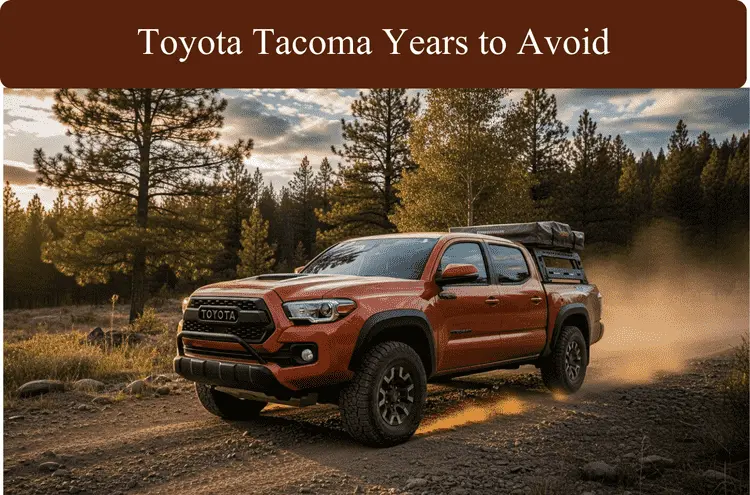
Toyota Tacoma Years to Avoid: The Ultimate Used Truck Buyer’s Guide
The Toyota Tacoma holds a legendary status in the pickup truck world. Drivers love it for its rugged durability, strong off-road capability, and incredible resale value. Many owners easily push their Tacomas past the 250,000-mile mark with just basic maintenance.
However, buying a used Tacoma is not a guaranteed ticket to a trouble-free life. Even this iconic midsize truck has a few skeletons in its closet. If you buy the wrong model year, you might end up dealing with severe frame rust, a clunky transmission, or shockingly expensive engine repairs.
Why Choosing the Right Toyota Tacoma Year Matters
Not all Tacomas are built the same. Since its debut in 1995, Toyota has pushed the truck through multiple distinct generations. With every major redesign, engineers introduced new powertrains, updated safety tech, and fresh styling.
While these updates usually improved the vehicle, they sometimes introduced new bugs. A first-year redesign often acts as a testing ground for new components, and buyers of those early models end up dealing with the growing pains.
Your specific needs also dictate your choice. If you frequently tow heavy loads, you might quickly realize the Tacoma’s limits and need to step up to a full-size pickup. If that happens, researching the Toyota Tundra years to avoid will help you bypass the powertrain issues specific to its larger sibling. For the Tacoma, knowing the specific weaknesses of each generation helps you protect your wallet and ensure you buy a truck that actually lasts.
Quick Reference: The Best and Worst Tacoma Model Years
If you are standing on a dealership lot right now and just need the fast facts, use this quick cheat sheet to guide your test drive:
- Absolute Worst Years to Avoid: 2006–2009, 2011, 2012, and 2016–2017.
- High-Risk Rust Years: 2000–2004 (Always inspect the undercarriage).
- The Most Reliable Years to Buy: 1995–1999, 2013–2015, and 2018–2023.
The Worst Toyota Tacoma Years to Avoid (By Generation)
To truly understand what goes wrong with this truck, you have to look at the problems generation by generation. Here is a breakdown of the specific model years you should walk away from.
First-Generation Flaws: 2000–2004
The first-generation Tacoma (1995–2004) is a classic. It features a simple design, it is easy to work on, and it houses the rock-solid 3.4L V6 engine. But the later years of this generation hide a dark, expensive secret.
Between 2000 and 2004, the supplier that provided Toyota’s frames failed to apply proper rust-proofing. In areas that use heavy road salt during the winter, these frames practically dissolved. The corrosion was so severe that it caused leaf springs to snap and compromised the structural safety of the entire truck. Toyota eventually issued a massive recall to replace these frames, but you should still avoid these years entirely unless the seller provides hard, documented proof of a factory frame replacement.
Second-Generation Struggles: 2005–2009, 2011, and 2012
The second generation hit the market in 2005. It gave buyers a larger cab, a more comfortable ride, and a heavier payload capacity. Sadly, it also carried over some old problems and introduced a few frustrating new ones.
2005–2009: Rust and Transmission Issues
Toyota did not immediately fix the rust problem. The 2005 through 2009 models still suffer from severe frame rot, meaning you must inspect the rear axle and spare tire mounts carefully. On top of the rust, these years generated hundreds of complaints regarding the drivetrain. Automatic models often hesitated before shifting, while manual trucks suffered from premature clutch failure.
If you are strictly a daily commuter, dealing with a stiff truck ride and transmission slips might make you rethink a pickup entirely. Many buyers in this exact situation pivot to a reliable crossover. If you go that route, knowing the Toyota RAV4 years to avoid ensures you still get that famous Toyota reliability without the truck-sized headaches.
2011 and 2012: Recalls and Limp Mode
The 2011 model year was hit with an unusually high number of factory safety recalls. These defects included seatbelt anchor detachments and leaf spring fractures that could physically puncture the fuel tank.
The 2012 model is risky for a completely different reason: the Secondary Air Injection System. The pumps and valves in this emissions system frequently fail due to moisture buildup. When they do, the truck throws a check engine light and forces the engine into “Limp Mode,” severely cutting your power so you can barely drive. Fixing this requires removing the intake manifold, and the repair bill easily tops $2,000.
Early Third-Generation Bugs: 2016–2017
Toyota completely redesigned the Tacoma for 2016. They dropped in a brand new 3.5L V6 engine and a 6-speed automatic transmission. Unfortunately, they did not tune the software very well.
Drivers quickly complained about the new automatic transmission. It constantly “hunted” for gears on the highway, shifting up and down at the slightest hill. It caused a frustrating, shuddering ride that software updates could not always fix. These early third-generation years also suffer from timing cover oil leaks. Because the factory used weak sealant, the engine slowly leaks oil over time. Fixing it requires a mechanic to completely pull the engine out of the truck, which costs thousands of dollars in labor alone.
The Best Toyota Tacoma Years to Buy
If you want a truck that perfectly balances rugged performance with peace of mind, focus your search on these standout model years.
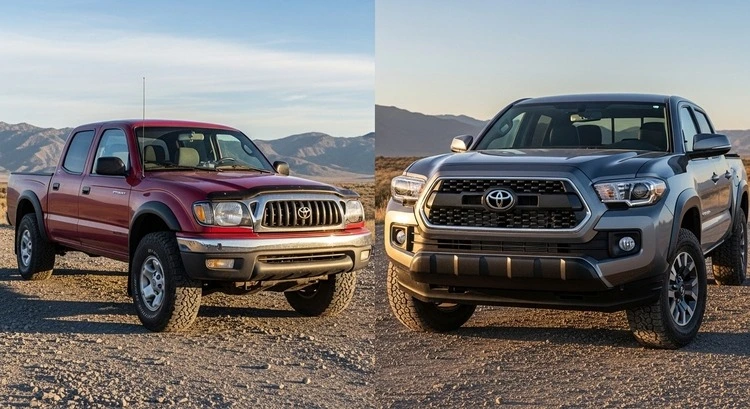
Peak First-Gen Durability: 1995–1999
These early models offer pure, rugged simplicity. They escape the worst of the early-2000s frame rust issues and feature the legendary, bulletproof 3.4L V6 engine. They are perfect for budget buyers who want a reliable workhorse.
The Reliable Late Second-Gen: 2013–2015
This is the ultimate sweet spot of the used market. By 2013, Toyota had worked out the rust formulas and transmission bugs. You get a highly dependable, refined truck that still holds its value perfectly today.
Refined Third-Gen Models: 2018–2023
By 2018, Toyota finally fixed the transmission software mapping. These newer trucks offer modern technology, standard active safety features, and excellent long-term powertrain reliability.
The Most Common Toyota Tacoma Problems (Across All Years)
Even the best years have a few quirks. Always look out for these historical weak points during your test drive.
Severe Frame Rust and Corrosion
Always inspect the rear axle, leaf spring mounts, and spare tire area. Surface rust is normal on an older truck; however, peeling, flaking, or brittle metal is an absolute dealbreaker.
Transmission Hesitation and Shuddering
Automatic models, especially those from 2016 and 2017, often hunt for gears. Take the truck on the highway and pay close attention to how smoothly it shifts on an incline.
Paint Peeling and Clear Coat Flaking
White and silver Tacomas built in the late 2000s often suffer from factory paint defects. You will frequently spot peeling roofs, bubbling hoods, and faded door frames.
Lower Ball Joint Failures and Suspension Wear
Older first-generation models wear through lower ball joints quickly. Drive over a bumpy road and listen closely for heavy clunking sounds or loose steering feedback.
Engine Stalling, Misfires, and Unexpected Acceleration
Starting in 2012, Toyota transitioned to soy-based wiring sheaths. Rodents love to chew this material, which causes sudden engine misfires and highly frustrating electrical gremlins.
Toyota Tacoma Buying Guide: Types, Specs, and Features
Pick the right setup for your specific lifestyle to get the most out of your purchase.
Cab Configurations
The Regular Cab is meant for pure utility work. The Access Cab offers small jump seats for brief trips. The Double Cab provides four real doors and maximum passenger room. If the Double Cab still feels too cramped for your growing family, a midsize SUV is a much better fit. Just make sure you research the Toyota Highlander years to avoid so you don’t accidentally trade truck problems for SUV engine issues.
Trim Levels Explained
The SR and SR5 trims are perfect, affordable daily drivers. The TRD Off-Road adds heavy-duty Bilstein shocks and locking differentials for real trail use. The Limited trim skips the dirt and focuses entirely on leather, tech, and comfort.
Engine Options and Drivetrains
Skip the sluggish 2.7L 4-cylinder engine if you plan to haul heavy gear or tow. The 3.5L or 4.0L V6 engines paired with a 4WD system unlock the truck’s true capability.
How to Buy a Used Tacoma (Checklist & Market Insights)
Protect your cash by shopping smart.
Pre-Purchase Inspection Checklist & Red Flags
Always pull a complete vehicle history report. Avoid buying trucks with cheap, undocumented aftermarket lift kits, as poor installations destroy suspension geometry and void warranties.
Price & Market Insights
Tacomas hold their value incredibly well. You will pay a premium “Toyota Tax” up front, but you will easily get that money back when you eventually sell it.
Sourcing Tips & Supplier Advice
Certified Pre-Owned (CPO) trucks from a dealership offer the safest bet with warranty extensions. Private sellers offer much better deals but require an independent mechanic’s inspection before you hand over cash.
Top-Seller & Competitive Analysis
The Tacoma easily beats the Chevy Colorado and Ford Ranger in long-term resale value and off-road capability, though competitors often offer slightly better fuel economy and a softer highway ride.
Maintenance, Safety, and Ownership Considerations
Keep up with the basics to keep your truck running forever. Change your differential fluid every 30,000 miles if you off-road frequently. Always wash the undercarriage thoroughly after winter driving to prevent salt buildup and rust.
Final Thoughts: Is a Used Toyota Tacoma Worth It?
Absolutely. Despite the high asking prices on the used market, a well-maintained Tacoma from a reliable year is one of the smartest, safest automotive investments you can make.
FAQs
With regular fluid changes and basic care, a Tacoma easily lasts 250,000 to 300,000 miles.
Routine maintenance and basic repairs are cheap and very DIY-friendly. However, replacing a rusted frame or fixing 2016-2017 timing cover leaks will cost thousands.
Hire an independent mechanic. Have them put the truck on a lift to inspect the frame for rust and scan the computer for hidden transmission codes.
The TRD Sport features stiffer suspension tuned for smooth highway driving and cornering. The TRD Off-Road features a softer suspension setup and a locking rear differential designed specifically for crawling over rough trails.