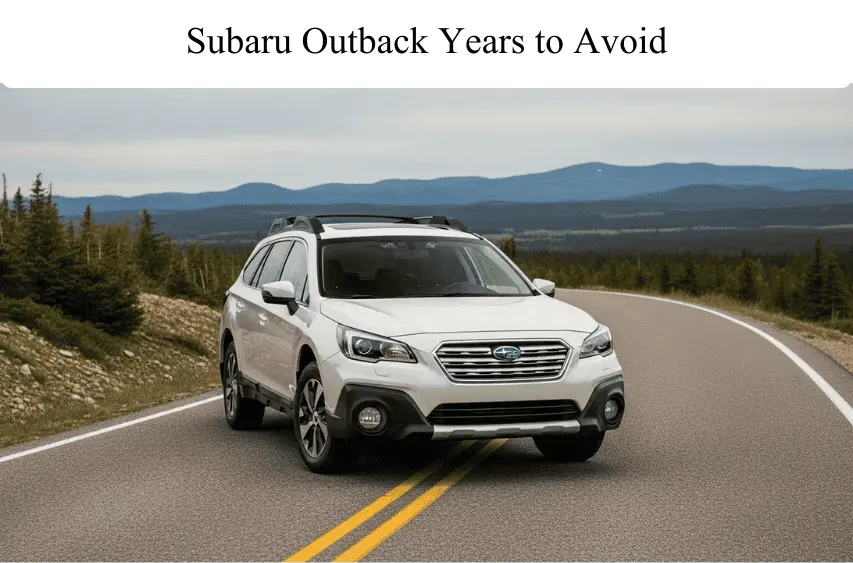
Subaru Outback Years to Avoid: The Ultimate Reliability Guide
The Subaru Outback has long been the go-to vehicle for drivers who want the comfort of a station wagon with the rugged soul of an SUV. Since it first hit American roads in 1994, it has built a reputation on its Symmetrical All-Wheel Drive and distinct Boxer engine, earning a loyal following among outdoor enthusiasts and families alike. However, that reputation for bulletproof durability doesn’t apply to every single model that rolled off the assembly line.
Buying a used Outback without doing your homework can be a gamble. While many model years will easily clock over 200,000 miles with basic maintenance, others are plagued by expensive mechanical failures. Data from the National Highway Traffic Safety Administration (NHTSA) and owner complaints reveal that specific production years suffer from severe issues ranging from excessive oil consumption to transmission failures.
This guide cuts through the marketing noise to identify exactly which Subaru Outback years you should steer clear of and which ones are worth your hard-earned money.
Quick Summary: Subaru Outback Years to Avoid vs. Best Years
If you are standing on a dealership lot right now and need a quick answer, here is the breakdown. We have categorized the model years based on failure rates, repair costs, and safety concerns.
| Model Year | Generation | Verdict | Primary Reliability Concerns |
| 2013 | 4th Gen | AVOID | Excessive oil consumption, transmission failure. |
| 2015 | 5th Gen | AVOID | Electrical system failure, dead batteries. |
| 2011 | 4th Gen | AVOID | Headlight burnout, torque converter shudder. |
| 2017–2018 | 5th Gen | CAUTION | Spontaneous windshield cracking, steering pull. |
| 2009 | 3rd Gen | BUY | Reliable engine, durable build. |
| 2014 | 4th Gen | BUY | Fixed major oil/CVT issues of previous years. |
| 2020–2024 | 6th Gen | BUY | Excellent safety scores, improved technology. |
The Worst Subaru Outback Years (Detailed Breakdown)
To make a smart purchase, you need to understand why these specific years fail. The issues are rarely random; they usually stem from specific engineering changes, such as the introduction of the Lineartronic CVT transmission or updates to engine piston rings to meet fuel economy standards.
The Fourth Generation (2010–2014): The Oil Consumption Era
The fourth-generation Outback marked a major shift for Subaru. The vehicle became larger and more SUV-like, which increased its mass appeal. However, this period also introduced some of the most significant mechanical flaws in the model’s history.
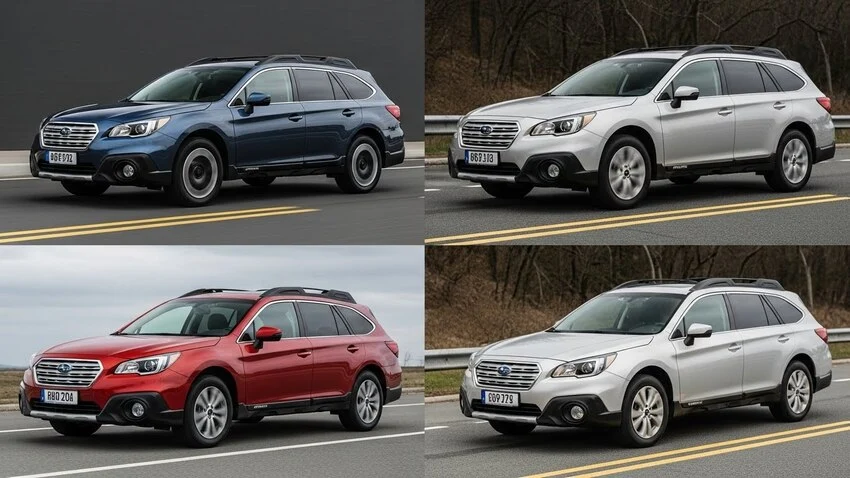
1. The 2013 Subaru Outback (High Risk)
If there is one year you should absolutely cross off your list, it is the 2013 model. This year is widely regarded as the nadir of Outback reliability. The core issue lies in the FB25 engine. In an effort to improve fuel efficiency, Subaru utilized low-tension piston rings. Unfortunately, these rings often failed to seal the combustion chamber effectively.
This engineering oversight led to excessive oil consumption. Owners frequently reported that their vehicles would burn through quarts of oil between changes, often without any visible leaks on the ground. This wasn’t just a maintenance annoyance; low oil levels caused premature engine wear and, in severe cases, total engine seizure before the odometer even hit 75,000 miles. The problem was widespread enough that it sparked class-action litigation, forcing Subaru to extend warranties for many affected drivers.
2. Transmission and Torque Converter Issues (2010–2012)
The early years of this generation—specifically 2010, 2011, and 2012—faced a different beast: transmission failure. These models were some of the first to rely heavily on the Continuously Variable Transmission (CVT).
Drivers reported a distinct “shuddering” sensation when coming to a stop, almost as if driving over a rumble strip. This was often caused by a faulty torque converter that wouldn’t disengage properly, causing the engine to stall. While a stalled car is dangerous enough, the repair bill was often the real shock. Fixing this usually required replacing the torque converter or the entire transmission assembly, a repair that can easily cost thousands of dollars.
If you are looking for a budget-friendly SUV from this era but are worried about these transmission risks, you might want to look at competitors. For instance, knowing the Toyota Highlander years to avoid can help you weigh if a Toyota of the same vintage is a safer bet, though no manufacturer is immune to specific bad production years.
The Fifth Generation (2015–2019): Electrical and Structural Defects
While the fourth generation struggled with mechanical heart issues like engines and transmissions, the fifth generation introduced a different set of headaches. These models are generally more refined and technologically advanced, but that complexity came with a cost. The 2015 model year, in particular, marks the start of this generation and brought with it some frustrating electrical gremlins.
1. The 2015 Subaru Outback (Electrical Failure)
The 2015 Outback is notorious for leaving owners stranded due to a mysterious and persistent dead battery issue. You could park the car in your garage on a Friday, and by Monday morning, it would be completely unresponsive. This wasn’t just a case of leaving the headlights on; it was a parasitic battery drain.
The root cause was often traced back to the Data Communications Module (DCM). This component is responsible for the car’s Starlink connectivity features. In many 2015 models, the DCM would continuously attempt to connect to a cellular network even after the engine was turned off. Because it never entered “sleep mode,” it would drain the battery overnight. Owners found themselves replacing batteries multiple times a year before realizing the car itself was the culprit.
2. Windshield Durability and Steering (2017–2018)
As the generation progressed, the problems shifted from under the hood to the glass in front of your face. The 2017, 2018, and even 2019 models have suffered from widely reported windshield fragility. Subaru used a specific type of “acoustic glass” intended to reduce cabin noise. While it made for a quieter ride, the glass proved structurally weak.
Owners reported “spontaneous cracking,” where a windshield would develop a hairline fracture while sitting in a driveway, with no impact from a rock or debris. This is more than just a cosmetic annoyance. The Outback’s safety system, EyeSight, relies on cameras mounted behind the windshield. If a crack develops in front of those lenses, the entire driver-assist system can be disabled.
Additionally, the 2018 model year saw a spike in complaints regarding steering. Drivers described a sensation where the vehicle would pull to one side, requiring constant correction on the highway. Unlike a simple alignment fix, this issue often persisted even after professional service, leaving many drivers feeling unsafe at higher speeds.
Older Models (2000–2006): The Head Gasket Legacy
If you are shopping for a budget-friendly, older Outback, you need to be aware of the “head gasket era.” The second-generation models (2000–2004) and early third-generation models utilize the EJ251 engine. While this engine is capable, it utilized a composite graphite-coated head gasket that notoriously degraded over time.
When these gaskets fail, coolant leaks into the oil or drips externally from the engine block. If caught early, it is a repairable leak. If ignored, it leads to severe overheating and catastrophic engine failure. If you are looking at an Outback from this era, ask the seller immediately if the head gaskets have been replaced with updated multi-layer steel (MLS) gaskets. If they haven’t, you should factor a significant repair bill into your offer price.
Most Common Subaru Outback Problems Explained
Understanding why these failures happen can help you spot trouble before you sign the paperwork. Whether you buy a Subaru or a competitor, knowing the mechanical weak points is essential.
Excessive Engine Oil Consumption
We mentioned this regarding the 2013 model, but it is important to understand the mechanics. Manufacturers face immense pressure to improve fuel economy. To reduce friction inside the engine, Subaru engineers used “low-tension” piston rings. Ideally, these rings glide smoothly against the cylinder walls. In reality, they sometimes allowed oil to slip past them and into the combustion chamber where it burned away.
If you are cross-shopping for a premium SUV to avoid these kinds of engine hassles, you might look at the luxury segment. However, even high-end vehicles have their bad years. It is worth checking the Acura MDX years to avoid to ensure you don’t trade a burning engine for a faulty luxury transmission.
CVT Transmission Shuddering
The Continuously Variable Transmission (CVT) is designed to provide seamless acceleration without standard gear shifts. However, in the 2010–2014 Outbacks, the metal chain inside the transmission could slip, or the torque converter could fail to lock up properly. This creates that shuddering or stalling sensation. Because the CVT is a sealed unit, repair shops rarely fix the internal components; they simply replace the whole transmission, which is why the cost is so high.
Electrical System & Structural Fragility
Beyond the engine and transmission, specific years struggled with components that should last the lifetime of the car. The issue with the 2015–2019 windshields stems from the manufacturing process of the acoustic glass layer. While designed to dampen sound frequencies, the glass lacked the tensile strength to withstand minor temperature fluctuations or road vibrations, leading to cracks that compromise the vehicle’s structural integrity and safety sensors.
Similarly, the electrical drain issues in the 2015 models were a software-hardware mismatch. The DCM (Data Communications Module) was essentially “insomniac,” refusing to power down because it was searching for 3G networks that were often spotty or eventually decommissioned, constantly drawing amperage from the battery.
Best Subaru Outback Model Years to Buy
Now that we have covered the minefield of bad years, let’s look at the gems. The Subaru Outback has had several “golden eras” where reliability, performance, and build quality aligned perfectly.
The Golden Era (2005–2009)
If you are looking for a reliable, inexpensive used wagon, the 2009 Subaru Outback is a standout. By this final year of the third generation, Subaru had largely resolved the head gasket issues that plagued the earlier 2000–2004 models. For the best experience, look for the 3.0L H6 (six-cylinder) models. These engines are chain-driven (no timing belt to replace) and are historically much more robust than the 4-cylinder options of the same era.
The Redeemed Fourth Gen (2014)
The 2014 model year is a fascinating case study in automotive correction. After the disastrous 2013 model, Subaru engineers scrambled to fix the piston ring seal issues and the CVT programming. As a result, the 2014 Outback offers the spacious body style of the fourth generation without the catastrophic oil consumption risks of its immediate predecessor. It is often the “sweet spot” for value—modern enough to feel safe, but old enough to be affordable.
The Modern Standard (2020–Present)
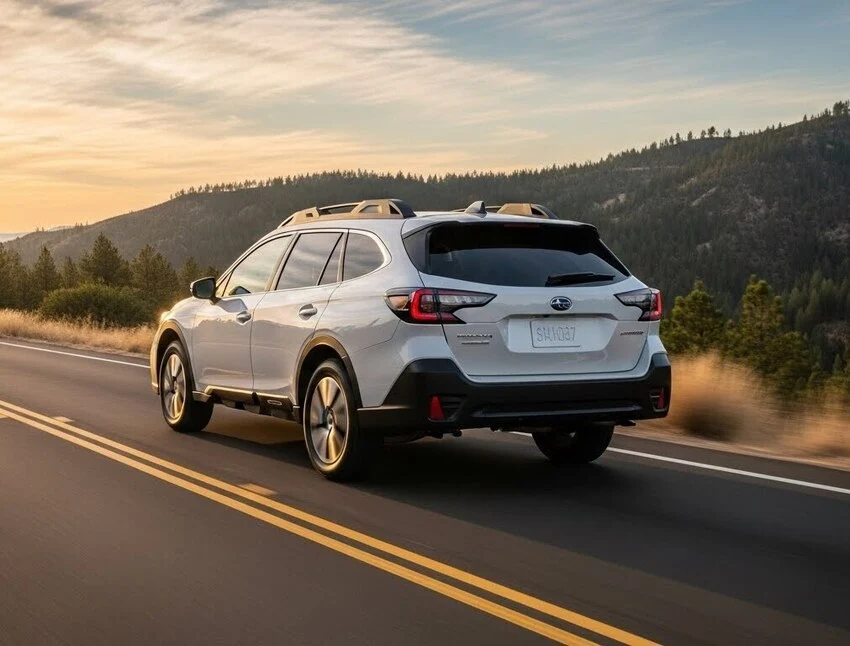
The current sixth generation, built on the Subaru Global Platform, represents the brand at its best. The chassis is stiffer, the cabin is quieter, and crucially, the 2.4L turbocharged engine has proven to be a reliable workhorse. The 2021 and 2022 models have excellent reliability scores, and the 2023 model received the highest safety accolades from the IIHS. If your budget allows, these newer years are the safest investment.
Buying Used? Pre-Purchase Inspection Tips
Even if you pick a “good” year, every used car has a history. When inspecting a Subaru Outback, follow this checklist to ensure you aren’t inheriting someone else’s headache:
- The “Cold Start” Test: Always inspect the car when the engine is completely cold. Start it up and listen for any rattling. A puff of blue smoke from the exhaust indicates burning oil (a sign of piston ring failure).
- The CVT Stress Test: On a test drive, bring the car to a complete stop, then accelerate briskly. If you feel a hesitation, a shudder, or a delay in engagement, the transmission may be failing.
- Check the Dash: Ensure the “Check Engine” light turns on when you turn the key to “On” (before starting) and turns off after the engine starts. Unscrupulous sellers sometimes remove the bulb or tape over the light to hide faults.
- Inspect the Glass: Run your fingernail along the edges of the windshield. Chips near the edge are the most likely to turn into long, unrepairable cracks.
Financial Considerations
Mechanical repairs on an all-wheel-drive vehicle can be expensive. A transmission rebuild on an Outback can easily exceed $3,000. If the risk of out-of-warranty repairs keeps you up at night, you might consider leasing a brand-new vehicle instead. Leasing allows you to drive a car during its most reliable years (under factory warranty) for a lower monthly cost than financing. There are often deals available, such as car leases under $200 a month with no money down, which can provide peace of mind and reliable transportation without the long-term commitment of owning an aging vehicle.
FAQs
You should strictly avoid the 2013 model due to oil consumption issues and the 2015 model due to electrical battery drain defects. The 2011 model is also risky regarding transmission longevity.
Compared to a standard sedan like a Toyota Camry, yes. The All-Wheel Drive system requires specific maintenance (like matching tire tread depth perfectly), and boxer engines can be more labor-intensive to service. However, compared to other 4WD SUVs, costs are average.
A well-maintained Outback can easily surpass 200,000 miles. The key is adhering to the maintenance schedule, specifically oil changes and transmission fluid services, to prevent the common failures mentioned above.
Final Verdict
Despite the specific years highlighted in this guide, the Subaru Outback remains a top-tier vehicle for a reason. Its blend of safety, visibility, and all-weather capability is nearly unmatched in its price range. The key to a happy ownership experience is simply avoiding the pitfalls of the 2013 and 2015 production runs.
By targeting a 2009, 2014, or a newer 2020+ model, you can enjoy all the adventure-ready benefits of the Outback without the financial burden of its notorious “growing pains.” Drive safe, and choose wisely.