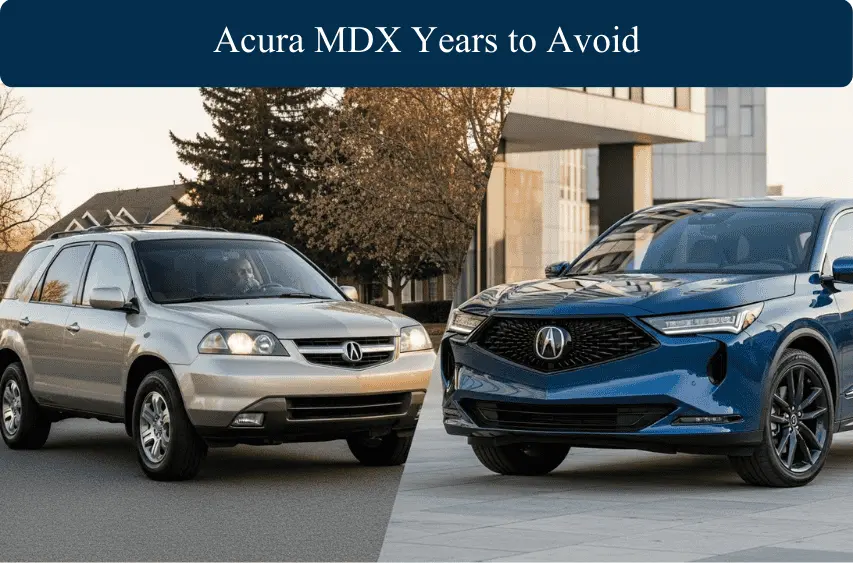
Acura MDX Years to Avoid: A Complete Reliability Guide & Buyer’s Checklist
The Acura MDX changed the game when it arrived in 2000. It proved that a three-row SUV didn’t have to drive like a truck or feel like a minivan. For over two decades, it has blended Honda’s legendary engineering with genuine luxury, making it a default choice for families who want reliability without boredom.
However, reputation isn’t everything. While the badge says “Acura,” the data tells a more nuanced story. Not every MDX left the factory with the same level of bulletproof durability. Some model years are prone to specific, expensive failures that can turn a dream car into a financial nightmare. If you buy the wrong year, you might find yourself on a first-name basis with your local transmission mechanic.
This guide cuts through the noise. We will break down exactly which model years to steer clear of, which ones offer the best value, and what red flags to look for during your test drive.
Quick Summary: The Cheat Sheet
If you are standing on a dealership lot right now and need answers fast, here is the bottom line. We have categorized the model years based on verified owner complaints, recall data, and repair statistics.
- Years to Strictly Avoid: 2001–2005, 2014, 2016
- Years to Approach with Caution: 2010, 2012
- Best Model Years: 2006, 2015, 2018–2020
The “Avoid” years largely suffer from systemic issues like transmission failure or frustrating electrical glitches that are difficult to permanently fix. The “Best” years represent the sweet spot where Acura ironed out the bugs, offering that famous Japanese reliability.
Why Model Year Matters: The Cost of Choosing Wrong
You might wonder if a specific model year really makes that much of a difference. In the world of used luxury vehicles, the answer is a definitive yes. The difference between a 2013 MDX and a 2014 MDX isn’t just cosmetic; it’s a completely different platform, transmission, and set of potential headaches.
Financial Impact
Buying a “lemon” year doesn’t just mean more time in the shop; it hits your bank account hard. For example, a transmission replacement on an early MDX can easily exceed $3,000. When you add up the cost of premium fuel, insurance, and unexpected repairs, the total cost of ownership skyrockets. This is a common theme across the used luxury market. Whether you are looking at an MDX or researching Mercedes GLK years to avoid, avoiding the worst production runs is the single best way to protect your investment.
Resale Value
Reliability reputation sticks. Models known for excessive oil consumption or jerky transmissions depreciate faster because educated buyers avoid them. When it comes time to sell your vehicle, owning a model year known for durability means you will likely get a better trade-in offer or private sale price.
Acura MDX Generations Overview
To understand why certain years fail, it helps to know the vehicle’s history. The MDX has evolved through four distinct generations, each with its own personality and mechanical quirks.
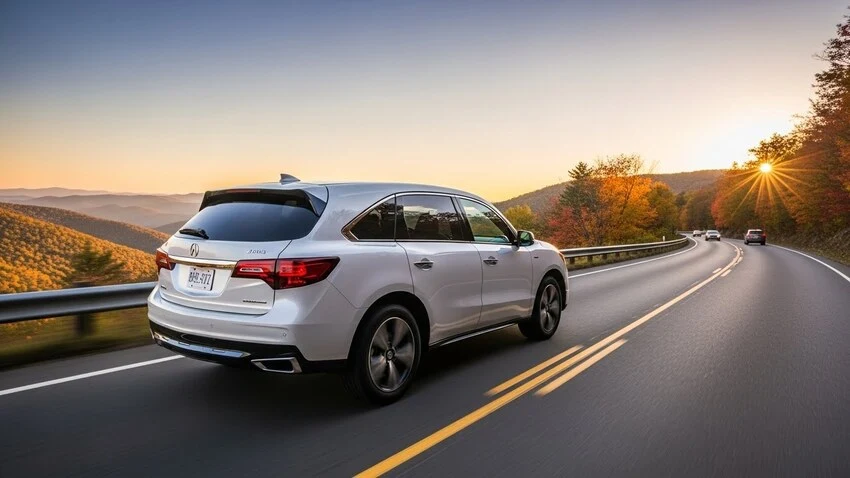
First Generation (2001–2006)
This was the pioneer. It offered a V6 engine and standard all-wheel drive, which was rare for a unibody crossover at the time. While it set the standard for driving dynamics, the early automatic transmissions were a major weak point. These 5-speed units struggled to handle the engine’s power over time, leading to widespread failures in the earliest models.
Second Generation (2007–2013)
Acura sharpened the styling and introduced the “shield” grille during this era. They also added a larger, more powerful 3.7L V6 engine and the sophisticated Super Handling All-Wheel Drive (SH-AWD) system. While the transmissions were significantly improved, this generation faced a new challenge: oil consumption.
Third Generation (2014–2020)
This era marked a shift toward high technology and fuel efficiency. Acura introduced direct injection engines and, later, a 9-speed transmission. While these changes improved gas mileage, the introduction of new tech often brings “teething problems.” This is particularly true for the infotainment systems and the early versions of the 9-speed transmission, which felt unrefined to many drivers.
Fourth Generation (2022–Present)
After skipping the 2021 model year, Acura launched the fourth generation on a completely new platform. These models return to a focus on performance, especially with the introduction of the Type S variant. Since these are still relatively new, long-term reliability data is still being gathered, but initial quality scores are promising.
Acura MDX Years to Avoid (Detailed Analysis)
Now that we have outlined the generations, let’s zoom in on the specific model years that keep mechanics busy. While every car has the occasional bad apple, these specific production runs have documented, systemic flaws that you should take seriously.
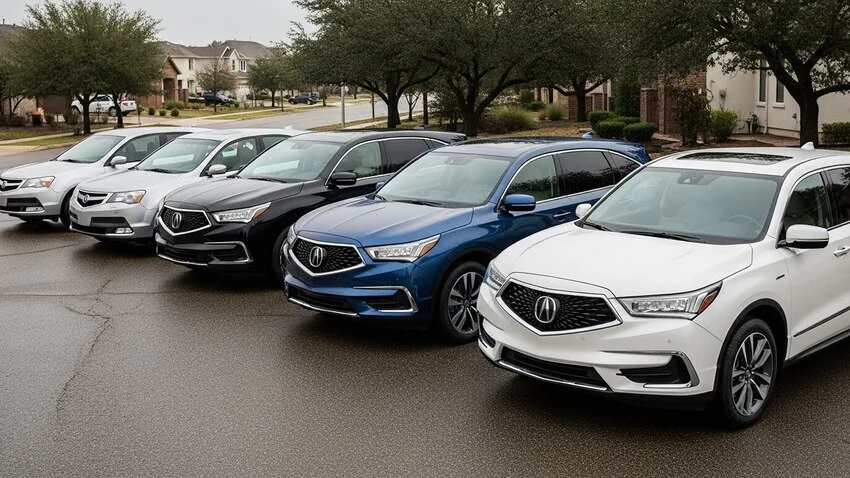
The Early Years: 2001–2005
The first-generation MDX is a spacious and capable vehicle, but it suffers from a significant weak point: the transmission. The 2001 and 2002 models are notoriously risky. The automatic transmission in these vehicles often fails prematurely due to overheating and internal clutch wear.
Owners frequently describe a specific warning sign known as the “rumble strip” sensation. When driving at steady speeds between 35 and 45 mph, the car shudders as if you are driving over rough pavement. This is usually the torque converter failing to lock up properly. While Acura improved the design slightly for 2003 and 2004, the risk remains high for any high-mileage example from this era. Unless you have proof that the transmission was recently rebuilt, these years are a gamble.
The Oil Burners: 2010–2013
The second generation brought more power, but it came with a catch. The 3.7-liter V6 engine (code J37) used in the 2010 to 2013 models is prone to excessive oil consumption. This isn’t just a minor leak; the design of the piston rings and cylinder liners can allow oil to slip into the combustion chamber and burn off.
Drivers often report the low oil light coming on well before their scheduled oil change. If a previous owner ignored this and ran the engine low on oil, it could have caused permanent internal damage. If you are looking at an MDX from this period, ask the seller specifically about their oil top-up habits.
The Redesign Stumbles: 2014 & 2016
When Acura launched the third generation in 2014, they overhauled the technology and the powertrain. Unfortunately, the first year of a new generation often has “growing pains,” and the 2014 MDX is no exception. Owners reported frustrating infotainment glitches where screens would freeze or go black, along with confusing navigation software.
The 2016 model year is another one to approach with caution. This was the year Acura introduced a 9-speed automatic transmission to improve fuel economy. However, the software calibration was not quite ready for prime time. Drivers often complain about the transmission hunting for gears, hesitating when they step on the gas, or shifting roughly in stop-and-go traffic.
Common Acura MDX Problems & Mechanical Faults
It helps to understand the specific mechanical gremlins that plague these vehicles so you can spot them during a test drive. These issues aren’t always guaranteed to happen, but they are common enough to warrant a close inspection.
Transmission Failures & Jerkiness
We have touched on this, but it bears repeating: the transmission is the most common complaint across all generations. In the early 2000s, it was total failure. In the 2016–2017 models, it is more about drivability. The 9-speed ZF transmission can feel indecisive. If you test drive a 2016 model, pay attention to how it behaves when you accelerate to merge onto a highway or when you slow down for a red light. If it jerks or delays, walk away.
Electrical & Infotainment Glitches
Modern luxury cars are packed with sensors and computers, which means there are more things to break as they age. On the second-generation MDX, a common issue is the Hands-Free Link (Bluetooth) module failing. When it breaks, it doesn’t just stop working; it often creates a parasitic draw that drains the car’s battery overnight.
Electrical gremlins are the bane of many aging luxury cars, not just Acuras. If you look at domestic rivals from the same era, you will see similar patterns in the Buick Lucerne years to avoid, where aging wiring and sensors can turn a comfortable cruiser into a maintenance headache. On the MDX, specifically the 2014 models, watch out for dual-screen setups that lag or reboot randomly.
Auto Idle Stop System
To save fuel, newer MDX models shut off the engine when you come to a complete stop. However, in some 2016–2020 models, this system can malfunction. Some drivers have reported the car failing to restart quickly or stalling out completely. This is often tied to a weak 12-volt battery or software that needs updating, but it can be a scary experience in heavy traffic.
Suspension & Steering
The MDX is known for its handling, partly thanks to the available Active Damper System on higher trim levels. These magnetic struts work wonders for ride quality, but they are expensive to replace when they eventually leak or fail. Additionally, listen for clunking sounds when going over bumps during your test drive, as this often indicates worn suspension bushings or sway bar links, which are standard wear items on heavy SUVs.
The Best Acura MDX Years to Buy
After filtering out the years with transmission troubles and oil consumption issues, several model years stand out as excellent purchases. These models represent Acura at its best: reliable, comfortable, and well-engineered.
The Golden Standard: 2018–2020
If your budget allows, the refreshed third-generation models from 2018 to 2020 are the safest bet. By this time, Acura had updated the software for the 9-speed transmission, smoothing out the jerky shifts that plagued the 2016 models. Furthermore, the infotainment system was significantly improved to reliably support Apple CarPlay and Android Auto. These years offer modern technology without the “new model” glitches.
The Reliable Value: 2015
The 2015 MDX is a sweet spot for value seekers. Crucially, many trim levels in 2015 still used the proven 6-speed automatic transmission rather than the controversial 9-speed ZF unit introduced later. This transmission is known for its durability and smooth operation. You get the modern body style of the third generation with a powertrain that feels traditional and robust.
The Budget Choice: 2006 & 2009
If you are shopping for an older, lower-priced SUV, look for a 2006 model. As the final year of the first generation, most of the early transmission demons had been exorcised. Alternatively, the 2009 model sits right before the oil consumption issues of the 2010 update began, making it a solid choice for a reliable winter beater or a first car for a teen driver.
Real Ownership Costs & Maintenance
Luxury cars generally cost more to maintain than economy cars, and the MDX is no exception. However, it is significantly cheaper to keep running than its German rivals. You can expect to spend between $500 and $800 annually on routine maintenance for a well-kept example.
There is one critical maintenance item you must budget for: the timing belt. Unlike many modern engines that use a metal chain, the Acura V6 uses a rubber timing belt that must be replaced every 105,000 miles or 7 years. This service typically costs between $800 and $1,200. If a seller claims this has been done, ask for the receipt. If the belt snaps, the engine is effectively destroyed.
Buyer’s Guide: How to Inspect a Used MDX
Before you hand over your cash, perform these specific checks to ensure you aren’t buying someone else’s problem.
The Test Drive Checklist
Start the car and immediately listen to the engine. A ticking sound could indicate valve issues or low oil pressure. On the road, accelerate moderately to 45 mph. You are feeling for that “rumble strip” shudder we mentioned earlier. The transmission should shift crisply, not flare up (rev high) before engaging the next gear.
Under the Hood
Pull the transmission dipstick (on 2001–2015 models). The fluid should be pink or red. If it looks dark brown or smells like burnt toast, the transmission has been neglected. Also, check the oil level. If it is low, the car might be one of the “oil burners” from the 2010–2013 era.
Service History Red Flags
Missing fluid changes are a major warning sign. The SH-AWD system requires specific differential fluid changes. If these have been skipped, the all-wheel-drive system can shudder or fail.
Acura MDX vs. The Competition
The MDX fights in a crowded arena. Its main rival is the Lexus RX, which offers slightly better reliability scores but a much softer, less engaging driving experience. If you prioritize pure utility and cargo space over sporty handling, the Toyota Highlander is the standard-bearer for family hauling. However, even Toyota has its stumbles. Before cross-shopping, review the Toyota Highlander years to avoid to ensure you don’t accidentally trade one set of mechanical risks for another.
Another common alternative is the Infiniti QX60. While stylish, the QX60 uses a Continuously Variable Transmission (CVT) that has a history of reliability struggles, making the MDX’s traditional automatic transmission a generally safer choice for longevity.
Final Verdict
The Acura MDX remains one of the smartest buys in the used luxury market. It offers Honda reliability wrapped in a premium package. To get the best experience, target the 2015 model for value or the 2018–2020 models for modern tech. Strictly avoid the 2001–2002 transmission disasters and be very wary of the 2010–2013 oil-consuming engines. With a little due diligence and a thorough test drive, you can find an MDX that will serve your family reliably for hundreds of thousands of miles.
FAQs
The 2001 and 2002 models have the highest failure rates for transmissions. The 2014 and 2016 models also have high complaint volumes regarding jerky shifting and hesitation, though total failure is less common than in the early years.
Compared to brands like BMW or Audi, the MDX is affordable. However, it is more expensive than a standard Honda Pilot due to the requirement for premium fuel and the complexity of the SH-AWD system.
With proper maintenance—especially timely timing belt changes and transmission fluid services—an Acura MDX can easily surpass 200,000 or even 300,000 miles.
Yes. The oil consumption issue was primarily linked to the 3.7L engine used from 2010 to 2013. The 3.5L engine reintroduced in the third generation (2014+) does not suffer from the same piston ring defect.