
Kia Sorento Years to Avoid: A Comprehensive Buyer’s Guide
The Kia Sorento has earned a spot in thousands of driveways for a good reason. It offers families a spacious, three-row interior without the high price tag of its Japanese or American competitors. For the most part, it is a dependable workhorse that handles school runs and road trips with ease. However, not every model year has lived up to this reputation.
While recent versions of the Sorento are praised for their safety and build quality, there are specific generations that suffer from serious mechanical defects. If you buy the wrong year, you could face catastrophic engine failures or electrical nightmares that cost thousands to fix. This guide breaks down the data from owner complaints and safety recalls to help you steer clear of the lemons.
Quick Look: Best and Worst Kia Sorento Model Years
If you are standing on a dealership lot right now and need answers fast, this breakdown will point you in the right direction. We have categorized these years based on the severity of reported mechanical failures.
- Years to Avoid: 2004, 2006, 2011, 2012, 2013, 2014, 2016
- Years to Buy: 2009, 2010, 2015, 2017–2020, 2021–Present
- Use Caution: 2005, 2007, 2008
The “Avoid” years are largely plagued by the infamous Theta II engine issues or persistent electrical gremlins. In contrast, the “Buy” years represent periods where Kia tightened its quality control and resolved these engineering flaws.
One major advantage the Sorento has over many competitors is its transmission. While many modern family haulers have switched to Continuously Variable Transmissions (CVTs), the Sorento has largely stuck with robust traditional automatic transmissions. If you are specifically looking for SUVs without CVT transmission, the Sorento is a fantastic candidate, provided you choose a safe model year.
The Critical Years to Avoid (Detailed Breakdown)
To understand why these cars made the “do not buy” list, we need to look under the hood. The problems aren’t just minor annoyances like a stuck window; they often involve the heart of the vehicle.

The “Theta II” Disaster Era (2011–2014)
The second generation of the Sorento launched in 2011, marking a shift from a truck-based design to a smoother, car-like unibody frame. While this improved fuel economy, it introduced the Theta II gasoline direct injection (GDI) engine. This engine became the source of massive headaches for owners.
The 2011 Sorento is statistically the riskiest model you can buy. It has the highest number of recorded complaints, ranging from doors that refuse to open to engines that seize while driving. The manufacturing process for these engines often left metal debris inside the block, which restricted oil flow to the bearings.
From 2012 to 2014, Kia attempted to address some issues, but the core engine problems persisted. Owners frequently report excessive oil consumption and blown head gaskets. This era of manufacturing was a difficult time for Korean automakers; similar engine patterns can be seen when you look at Hyundai Accent years to avoid, where component failures followed a similar timeline.
The Relapse Year: Third-Generation Stumbles (2016)
After a solid year of reliability in 2015, the redesigned 2016 model took a step backward. Being the first year of a new generation often comes with “teething” issues, and the 2016 Sorento was no exception.
The primary complaints for this year involve a resurgence of engine seizing issues and electrical glitches. Drivers reported warning lights flashing randomly and infotainment screens going black. Suspension wear also became a common grievance, with control arms and struts failing earlier than expected.
Early Generation Growing Pains (2004 & 2006)
The first-generation Sorento was a rugged, body-on-frame SUV, but it showed its age quickly. The 2004 model is known for crankshaft bolt failures, a defect that can destroy the engine instantly. The 2006 model struggled with expensive AC compressor failures and electrical shorts.
At this point, these older vehicles are often very cheap, but they are risky. The cost of a major repair will likely exceed the value of the car itself. If you are on a strict budget, exploring car leases under $200 a month no money down might actually be a more financially predictable option than trying to keep a 20-year-old SUV with known defects on the road.
Common Mechanical Problems & Failure Points
Understanding why these vehicles fail can help you spot a bad deal before you sign the paperwork. The issues plaguing the Sorento during its “bad years” are consistent and often traceable to specific engineering flaws.
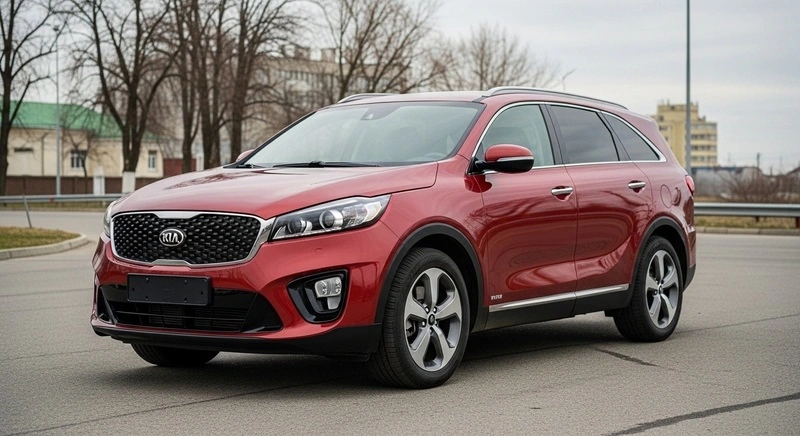
Catastrophic Engine Failure (Theta II Issues)
The most severe problem is undoubtedly the engine failure associated with the 2.4L and 3.3L engines. In many cases, manufacturing debris left inside the engine block restricts oil flow to the connecting rod bearings. When these bearings fail, they produce a rhythmic “knocking” sound known as rod knock. If ignored—and sometimes even if caught early—the engine can seize completely while driving, leading to a sudden loss of power.
Excessive Oil Consumption & Leaks
Many owners of 2011–2014 models report their engines burning through oil at an alarming rate. It is not uncommon for these vehicles to consume a quart of oil every 1,000 miles. Because there are often no external leaks, drivers don’t notice the low oil level until the dashboard warning light comes on, by which point internal damage has likely already occurred.
Transmission & Drivetrain Faults
While less common than engine issues, the transmission systems in early second-generation models (2011–2013) have their own quirks. Drivers often report jerky shifting at low speeds or hesitation when trying to accelerate onto a highway. In some cases, the transmission slips gears, making the driving experience unpredictable and unsafe.
Electrical System & Safety Glitches
Electrical gremlins are notoriously difficult to diagnose, and the Sorento has had its share. The most concerning issue involves the door latches. On certain models, the latch assembly can fail, preventing the doors from opening from the outside. This poses a serious safety risk in the event of an accident. Other common complaints include headlight bulbs that burn out repeatedly due to voltage spikes and airbag warning lights that stay illuminated.
The Best Kia Sorento Years to Buy
Fortunately, Kia learned from its mistakes. The company made significant changes to its manufacturing processes, resulting in some truly excellent model years that offer reliability and value.
The Golden Era (2017–2020)
By 2017, the third generation of the Sorento had hit its stride. Kia resolved the major Theta II engine defects and significantly improved build quality. These years are the “sweet spot” for used buyers. They feature modern safety technology, including Apple CarPlay and Android Auto, and have earned “Top Safety Pick” awards. The ride is refined, and the cabin materials feel much more premium than previous years.
The Modern Choice (2021–Present)
The fourth-generation Sorento, introduced in 2021, is a completely different beast. It features sharper styling, a new 8-speed transmission, and hybrid options. While there were some minor software recalls for the transmission in early 2021 models, these have largely been resolved. These newer models come with excellent warranty coverage and are generally considered very safe bets.
Reliable Budget Options (2009–2010)
If you are on a tighter budget, the 2009 and 2010 models are surprisingly durable. These years sit at the transition between the first and second generations. While they lack the fancy tech of modern SUVs, they also avoided the catastrophic engine failures that plagued the 2011 rollout. They are simple, rugged, and cheap to maintain.
Buying Guide: How to Inspect a Used Sorento
When you are testing a used Sorento, a few simple checks can save you thousands of dollars.
Warning Signs to Watch For
- Listen for “Rod Knock”: Start the engine cold and listen for a ticking or knocking sound that gets faster as you rev the engine.
- Check the Dipstick: Pull the oil dipstick. If the oil is thick, black, and sludge-like, walk away. This indicates poor maintenance, which is a death sentence for these engines.
- Test the Doors: Open and close every door from both the inside and outside to ensure the latches are functioning.
- Scan for Lights: Ensure no “Check Engine” or “ABS” lights remain on after the car starts.
Essential Maintenance Checks
Always ask for service records. Because these engines are sensitive to oil quality, regular oil changes are non-negotiable. Also, run the VIN to see if the “Knock Sensor Detection System” (KSDS) software update has been performed. This update is often required to keep the lifetime powertrain warranty extension valid.
FAQs
The 2011 model year has the highest volume of complaints regarding engine failure.
A well-maintained Sorento from a good year can easily last over 200,000 miles. However, neglected models from “bad” years often fail before reaching 100,000 miles.
Routine maintenance is affordable, but replacing a seized engine in a 2012 or 2013 model can cost between $4,000 and $6,000.
Generally, yes. The V6 Lambda engine has historically been more robust and less prone to seizing than the 2.4L GDI 4-cylinder engine.
Conclusion
The Kia Sorento is a fantastic family vehicle, provided you navigate the used market carefully. By avoiding the trouble-prone years of 2011–2014 and the 2016 model, you can sidestep expensive repairs. Opting for a 2017 or newer model—or a well-maintained 2010—will get you a reliable, safe, and comfortable SUV that offers incredible value for money. Always get a pre-purchase inspection, and drive with confidence knowing you picked a winner.