The Invisible Danger of Tailgating on Modern Highways
High-speed driving often brings out a competitive side in people that they might not show elsewhere. It is easy to feel like the road is a race track where every car in front is an obstacle to be passed. This psychological shift leads many to ignore basic safety habits that keep traffic moving smoothly.
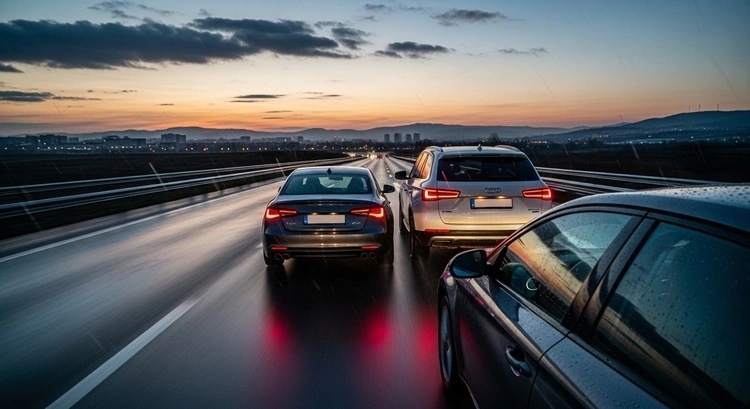
Aggressive tendencies manifest most clearly when a driver decides to ride the bumper of the person ahead. There is a sense of urgency that overrides logic, making it feel as though closing the gap will somehow get them to their destination faster. In reality, it just creates a high-pressure environment for everyone.
Most people forget that space is the best tool they have for avoiding a sudden crisis. When traffic flows at seventy miles per hour, every inch of room becomes a valuable asset for reaction time. Maintaining a proper following distance is the single most effective way to prevent a chain reaction pileup.
The Physics of Stopping at High Speeds
Speed and distance have a relationship that is not linear but rather exponential in nature. Doubling the velocity of a vehicle does not just double the distance needed to stop. Instead, the energy required to halt a moving object grows much faster than the number on the speedometer suggests.
Tires and brakes must work much harder to dissipate heat and friction when a car is traveling at highway speeds. A small increase in pace can lead to a massive increase in the physical space consumed before a full stop occurs. This is why a safe gap at forty is insufficient at sixty.
Physics does not care about how good a driver someone thinks they are during a commute. The laws of motion dictate that a certain amount of ground must be covered to bleed off momentum. Ignoring these physical realities is the primary reason why rear-end collisions happen so frequently on modern roads.
Human Limitations and Mechanical Delay
Human reaction time is often much slower than drivers want to admit when they are behind the wheel. It takes a fraction of a second for the brain to process a visual cue and send a signal to the foot. In that tiny window, a car travels a surprising distance.
This delay is further compounded by what experts call brake lag in heavy freeway traffic. Even after the pedal is pressed, the mechanical systems take a moment to engage fully and begin slowing the vehicle down. When cars are packed tightly, there is simply no room for this pause.
Traffic patterns also create a ripple effect where one person braking causes everyone behind them to react. If the first car stops suddenly, the fifth car in line has almost no time to respond if they are tailgating. The cumulative delay across several drivers makes a collision nearly inevitable.
When Technology Creates New Risks
Modern vehicles come equipped with advanced technology designed to intervene when a human fails to act. Automatic emergency braking systems use sensors to detect obstacles and apply the brakes faster than a person could. While helpful, these tools can sometimes surprise the people driving directly behind them.
A car that stops abruptly due to a computer sensor might not give trailing drivers enough warning to react. If the person following is too close, they cannot possibly stop as fast as the automated system in front of them. The technology solves one problem while potentially creating a new one.
Relying entirely on electronic assists can lead to a dangerous sense of complacency on the highway. Drivers might feel they can follow closer because they assume the car will save them from a hit. True safety comes from keeping enough space to handle both human error and mechanical intervention.
Environmental Variables and Road Conditions
The condition of the road surface plays a massive role in how much grip a vehicle actually has. Rain, oil, or even loose gravel can significantly reduce the tension between the rubber and the pavement. What feels like a safe gap on dry concrete becomes a trap during a storm.
Visibility also dictates how much space is truly necessary for a safe journey. Fog or heavy spray from a truck can obscure the brake lights of the car ahead until it is too late. Drivers must adjust their expectations based on how far they can clearly see.
Night driving introduces another layer of risk because perception of depth and speed changes in the dark. Headlights only illuminate a small portion of the road, leaving hazards hidden until they are within striking distance. Adjusting gaps based on these environmental factors is essential for arriving home safely.
Effective space management is a proactive choice that sets a driver apart from the rest of the pack. It requires a shift in mindset from being reactive to being prepared for any possible scenario. Keeping a wide margin of error is a sign of a truly skilled motorist.
Reflexes are great to have, but they are a last resort when things go wrong on the highway. A driver who relies on their quickness is already at a disadvantage compared to one who stays far back. Planning for the unexpected is always better than reacting to a crisis.
Taking control of the space around a vehicle reduces stress and increases the chances of a smooth trip. It is about more than just avoiding a ticket or a scratch on the bumper. Ultimately, respecting the gap ensures that everyone on the road has the time they need.