How Long Can You Stay in a Car with the Windows Closed?
We have all been there. You are waiting for a friend in a parking lot, taking a quick nap at a rest stop, or perhaps sitting out a heavy rainstorm. It feels natural to roll up the windows, lock the doors, and relax in your own private, quiet bubble. It seems perfectly safe, but that sense of security is often misleading.
The air inside a stationary vehicle changes much faster than most drivers realize. Without the engine moving the car and forcing air through the vents, that “bubble” begins to heat up and run low on fresh air in a matter of minutes. Knowing the safe time limits isn’t just about comfort—it is a critical safety practice for you, your passengers, and your pets.
Is It Safe to Stay in a Car with the Windows Closed?
The short answer is yes, but only for a very limited time.
There is a pervasive myth that cars are airtight, sealed boxes like a submarine. They aren’t. If they were, you would not be able to slam a door shut without popping your eardrums due to air pressure. All vehicles have passive ventilation. Small amounts of air seep in through door seals, the floor, and the trunk area. This “leakiness” is intentional, but it is not enough to keep the air fresh for a long period when the car is not moving.
The Myth of the Sealed Bubble
Because cars are not perfectly sealed, you are not at immediate risk of suffocating the moment you close the door. A healthy adult can usually sit in a parked car with the windows up for a short break without any serious health risks. However, the quality of that air degrades with every breath you take.
It does not matter what you drive. Whether you are behind the wheel of a budget commuter car or one of the [most reliable Mercedes] models engineered for ultimate comfort, the laws of physics inside the cabin remain the same. High-end insulation might keep road noise out, but it also traps heat and exhaled air in.
Short Rest vs. Prolonged Confinement
The danger lies in the duration. Sitting for 10 to 15 minutes to finish a phone call is generally harmless in mild weather. The air exchange from those small leaks is sufficient to keep oxygen levels stable for a brief window.
The dynamic changes when you stretch that break into an hour-long nap. As you stay longer, two things happen: the temperature creates a greenhouse environment, and the carbon dioxide you exhale begins to replace the oxygen in the cabin. Most experts suggest a safety baseline of 20 to 30 minutes for a healthy adult in mild weather. Beyond that, you need to crack a window or step outside to reset the environment.
The Thermodynamics of a Closed Cabin: Why Temperature Spikes
Temperature is the most immediate threat in a closed car, usually hitting dangerous levels long before the air runs out. You might think you are safe because it is a cloudy day or because you parked in the shade, but thermal energy accumulates rapidly in such a small volume of space.
The Greenhouse Effect Inside a Parked Car
A car acts exactly like a greenhouse. Shortwave radiation from the sun passes easily through your windshield and side windows. It strikes the dashboard, the dark upholstery, and the steering wheel. These surfaces absorb the energy and radiate it back out as longwave heat radiation.
Here is the trap: that longwave heat cannot pass back through the glass. It gets trapped inside. This causes the interior temperature to spiral upward, totally independent of the air temperature outside.
Real-World Data: How Fast Does a Car Heat Up?
The speed of this heat increase is shocking. Studies and real-world tests have consistently shown that the interior temperature of a car can rise 20°F (about 11°C) in just 10 minutes.
If it is a pleasant 75°F (24°C) day outside, your car can hit 95°F (35°C) inside before you have even finished a short playlist. Give it another 20 minutes, and the cabin can exceed 110°F. At these temperatures, the human body struggles to cool down. Sweat doesn’t evaporate efficiently in the stagnant air, leading to rapid dehydration and the early stages of heat exhaustion.
This thermal spike is why you often feel a wave of lethargy or a headache setting in after sitting in a parked car for a while. Your body is working overtime to regulate its temperature, and it is losing the battle.
Air Quality Dynamics: Carbon Dioxide (CO₂) vs. Oxygen Depletion
Once you understand that heat is the immediate enemy, the next concern is usually the air itself. Many people worry about “running out of air” in a sealed car. While the fear of suffocation is common, the reality of what happens to the air chemistry is slightly different and more complex.
Does Oxygen Actually Run Out in a Sealed Car?
You typically will not run out of oxygen in a car, at least not in the way you might imagine. Because cars are not hermetically sealed capsules, a healthy adult would have to stay inside a small vehicle for many hours—sometimes up to a day or more—before oxygen depletion became the primary threat to life.
However, you will feel sick long before you are in danger of suffocating. This is because your body is much more sensitive to the buildup of waste gas than the lack of oxygen.
The Real Culprit: CO₂ Buildup (Hypercapnia)
The real issue is Carbon Dioxide (CO₂). Every time you exhale, you release CO₂ into the cabin. In a small, enclosed space like a sedan or truck cab, the concentration of this gas rises surprisingly fast.
When CO₂ levels climb, you experience a condition called hypercapnia. It starts subtly. You might notice the air feels “stuffy” or “stale.” You will start yawning more frequently. If you ignore these signs and stay put, the symptoms escalate to a dull headache, dizziness, and a feeling of heavy fatigue.
This mental fog is dangerous because it impairs your judgment. You might decide to “just close your eyes for a minute” because you feel sleepy, not realizing that the drowsiness is chemically induced by the air you are breathing.
Health Conditions That Make It Riskier
For most people, stepping out for fresh air clears these symptoms quickly. But for those with pre-existing health issues, the tolerance window is much narrower.
People suffering from asthma, heart disease, or high blood pressure are far more sensitive to changes in air quality. A drop in oxygen quality that a healthy teenager might ignore can trigger chest tightness or anxiety in an older adult with respiratory issues. If you have any of these conditions, the “safe” time you can spend in a closed car is significantly shorter.
Carbon Monoxide (CO): The Silent Killer in Stationary Vehicles
While CO₂ makes you feel tired, Carbon Monoxide (CO) can kill you. This is the single most dangerous factor when discussing staying in a parked car, and it almost always involves one specific mistake: leaving the engine running.
The Dangers of Engine Idling
It is tempting to keep the engine on to run the air conditioner in summer or the heater in winter. However, an idling car does not move air away from the vehicle effectively. If there is no wind, a bubble of exhaust gas can pool around the car and slowly seep inside.
CO is odorless, colorless, and tasteless. You cannot smell it coming. It binds to your red blood cells and starves your body of oxygen from the inside out.
Why Modern Tech Isn’t Enough
We often trust our modern vehicles to warn us of danger. We have sensors for tire pressure, lane departure, and blind spots. But technology is not infallible. Just as drivers panic when a [FCW system failed on Honda] vehicles—leaving them without the collision warnings they relied on—you cannot rely on your car’s standard climate control system to filter out carbon monoxide. Standard cabin air filters are designed for dust and pollen, not lethal gases.
If there is an exhaust leak you don’t know about, or if the tailpipe is partially blocked by snow, mud, or a backing curb, the gas is forced back up into the cabin. This can turn a car into a lethal chamber in less than an hour.
Why a Cracked Window Is Not Enough
Many drivers think cracking a window an inch is a “magic shield” against carbon monoxide. It isn’t.
Physics works against you here. A small crack does not create enough cross-ventilation to clear heavy gases, especially if the air outside is still. The concentration of CO can still reach fatal levels even with a window slightly open. If the engine is on, the only safe way to sleep or rest is to have the windows fully open—which defeats the purpose of trying to stay warm or cool.
Safe Duration Guidelines: Time Limits by Condition
Since there are so many variables—weather, health, and car size—there is no single timer that works for everyone. However, based on air quality and temperature data, we can look at general safety limits.
- Mild Weather (Engine Off): 20–30 minutes. This is the “safe zone” for a healthy adult to nap or wait.
- Hot Weather (Engine Off): 10–15 minutes. This is the danger zone. Once you pass this mark, the greenhouse effect spikes the temperature to risky levels.
- Cold Weather (Engine Off): 30–60 minutes. The air stays breathable longer because you aren’t sweating and raising humidity, but the cold eventually becomes the limiting factor.
Who Is Most at Risk?
These time limits do not apply to everyone. Children and pets have smaller bodies that heat up 3 to 5 times faster than adults. For them, there is no “safe duration” in a closed car during warm weather. Leaving a child in a closed car for even 5 minutes on a hot day is a gamble with their life.
Surviving Cold Weather: Hypothermia and Insulation
If heat is the enemy in summer, the lack of insulation is the enemy in winter.
How Quickly a Car Loses Heat
A car is essentially a metal box with glass sides. Metal is an excellent conductor, which means it transfers heat very efficiently—straight out of your car and into the cold air.
Once you turn the engine off, the residual heat from the heater vanishes almost instantly. Within 20 minutes, the interior temperature will drop to match the freezing temperature outside.
Risks of Sleeping in a Car in Winter
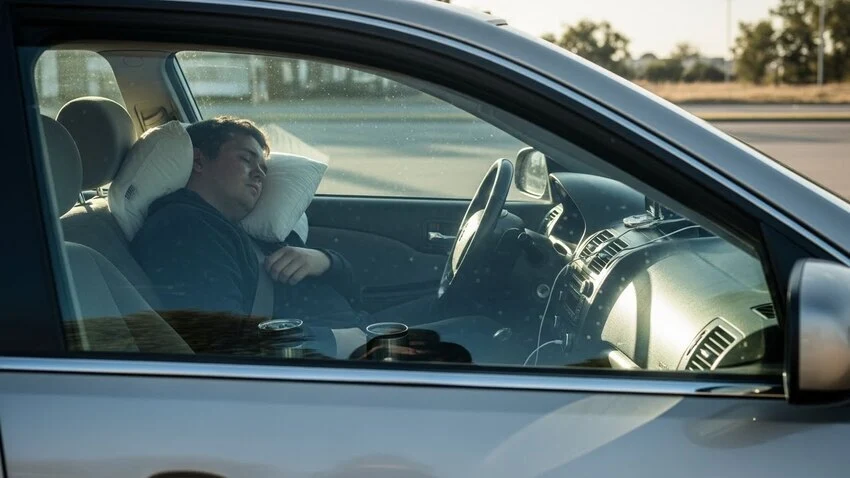
This creates a dangerous cycle for stranded drivers. You get cold, so you turn the engine on to warm up. You fall asleep, and the snow piling up around the car blocks the exhaust, leading to CO poisoning.
To survive a long stay in a cold car safely, you must rely on insulation, not the engine. This means using sleeping bags, thermal blankets, and body heat rather than idling the motor all night.
Essential Winter Survival Gear
If you live in a region with severe winters, relying on your car’s heater is a safety gamble you shouldn’t take. Instead, keep a dedicated survival kit in your trunk. Based on expert recommendations, this kit should include:
- Zero-degree sleeping bags: These trap body heat far better than standard blankets.
- Battery-operated CO detector: This small device can wake you up if exhaust fumes leak into the cabin.
- Wool blankets and insulated clothing: Layering is key to retaining warmth without running the engine.
- High-calorie food and water: Digestion creates internal body heat.
- A folding shovel: Crucial for clearing snow away from the tailpipe if you must run the engine for short intervals.
Best Practices for Ventilation and Safety
If you must stay in your car, active ventilation is the only way to mitigate the risks of CO₂ buildup and condensation.
Ventilation Is Everything
Don’t just crack one window. For effective airflow, you need cross-ventilation. Open one front window about an inch and the opposite rear window an inch. This pressure differential helps pull fresh air through the cabin even if there is no strong breeze outside.
Investing in window visors (rain guards) is also a smart move. They allow you to keep windows cracked during rain or snow without letting the interior get wet. For longer stays, a small battery-powered fan clipped to the grab handle can force air circulation, preventing that “stuffy” feeling and keeping humidity levels down.
Safer Alternatives
Whenever possible, avoid the car entirely. If you are fighting fatigue on a long drive, a 20-minute nap in a well-lit rest stop lobby is safer than sleeping in the driver’s seat. If you are stranded, look for public shelters, 24-hour diners, or motels. Your car should always be your shelter of last resort, not your first choice.
Monitoring Your Health
Listen to your body. If you are sitting in a parked car and start to feel a headache behind your eyes, sudden nausea, or confusion, leave the vehicle immediately. These are not just signs of tiredness; they are the biological warning bells for bad air quality. Step out, walk around, and breathe fresh air for at least five minutes.
Legal and Practical Considerations
Beyond the physical dangers, there are legal ones. Is it illegal to sleep in your car? The answer depends entirely on where you park.
Understanding Idling Laws and Regulations
Many cities have strict “anti-idling” laws that fine drivers for leaving their engines running while parked. This is an environmental measure, but it also enforces safety. Furthermore, sleeping in your car on public streets is illegal in many municipalities.
Your safest legal bets are designated rest areas, truck stops, or Walmart parking lots (where allowed). Always check signage. Parking on the shoulder of a highway is dangerous and illegal unless it is a genuine emergency.
FAQs
No, it is not recommended. Even with the AC on, the engine must run to power the compressor. This keeps the risk of Carbon Monoxide poisoning high if there is an exhaust leak or if the wind shifts.
It is highly unlikely you will suffocate from a lack of oxygen. Most cars are not airtight enough for this to happen quickly. You will suffer from heat exhaustion (in summer) or hypothermia (in winter) long before oxygen depletion becomes critical.
In warm weather, absolutely not. Cracking the windows has very little effect on the greenhouse heating of the car. A dog can suffer fatal heatstroke in a parked car in less than 15 minutes, even with windows slightly open.
Bottom Line
How long can you stay in a car with the windows closed? The safest answer is: as briefly as possible.
Your vehicle is a masterpiece of engineering designed to transport you, not to house you. While it offers temporary protection from the elements, it is not a controlled living environment. The risks of heat, CO₂ buildup, and Carbon Monoxide poisoning are real and fast-acting.
If you must stay in your car, turn the engine off, crack the windows for cross-ventilation, and stay awake to monitor your condition. Prioritize your health over convenience, and remember that fresh air is the best safety feature you have.