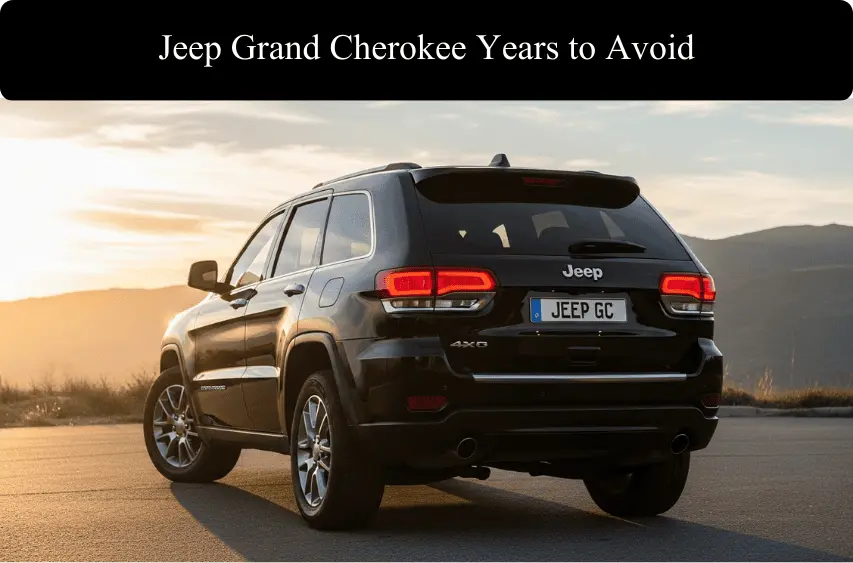
Jeep Grand Cherokee Years to Avoid: The Ultimate Reliability Guide
The Jeep Grand Cherokee is more than just a vehicle; it is a piece of American history. From the moment the first ZJ model crashed through a glass window at the Detroit Auto Show in 1992, it redefined what we expect from an SUV. It blended the rough-and-tumble capability of boxy SUVs with the comfort of a luxury sedan, creating a segment that competitors have been chasing ever since.
However, owning a legend doesn’t always guarantee a smooth ride. While the Grand Cherokee is celebrated for its off-road prowess and premium interior, the lineage is not spotless. Over its five generations, certain model years have been plagued by severe mechanical flaws, frustrating electrical gremlins, and costly repair bills. For a prospective buyer, the difference between a high-mileage hero and a financial money pit often comes down to one simple factor: the model year.
This guide is designed to help you navigate the used market with confidence. We have analyzed owner complaints, recall data, and technical service bulletins to identify exactly which Grand Cherokees you should drive home and which ones you should leave on the lot.
Quick Overview: Jeep Grand Cherokee Years to Avoid
If you are standing on a dealership lot right now and need a quick answer, this section is for you. While reliability can vary based on maintenance history, statistics show that specific production years have significantly higher failure rates than others.
Here is the “Stay Away” list you need to memorize:
- 2005: The first year of the WK generation suffered from severe transmission issues and electrical glitches.
- 2011: As the debut of the WK2 platform, this year is notorious for TIPM (electrical) failures and suspension issues.
- 2014–2015: These years struggled with a confusing electronic gear shifter design and transmission software problems.
Generally, the rule of thumb with the Grand Cherokee—and many other vehicles—is to avoid the first year of a new generation. It often takes the engineers a year or two to iron out the bugs in the assembly process and software calibration.
The Absolute Worst Jeep Grand Cherokee Years (Deep Dive)
To truly understand why these years are risky, we need to look under the hood. The issues listed below aren’t just minor annoyances; they are systemic engineering faults that have left thousands of owners stranded or facing four-figure repair estimates.
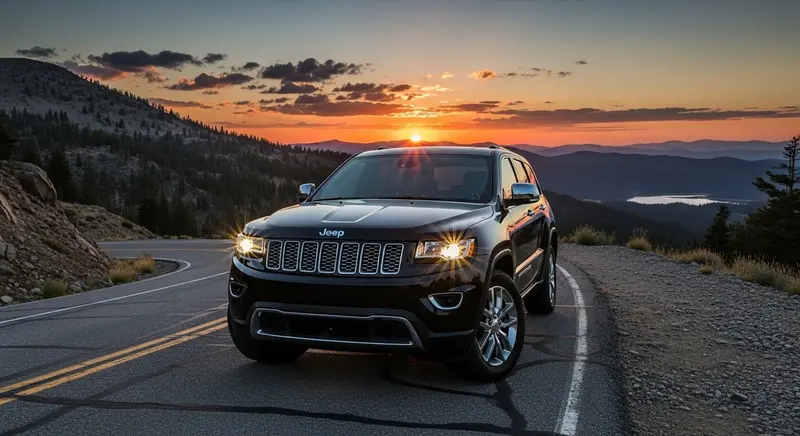
1. 2011 Jeep Grand Cherokee: The WK2 Debut Disasters
The 2011 model year marked a massive shift for Jeep. It was the launch of the 4th generation (WK2), built on a platform shared with the Mercedes-Benz M-Class. On paper, it was a masterpiece of chassis engineering. In reality, it was one of the most problematic years in the vehicle’s history.
The primary culprit here is the Totally Integrated Power Module (TIPM). Think of the TIPM as the nervous system of the car; it distributes power to everything from the fuel pump to the power windows. In the 2011 Grand Cherokee, this module had a high failure rate. When it acts up, the fuel pump relay can stick “on,” draining your battery overnight, or worse, it can cut power to the engine while you are driving at highway speeds.
This electrical instability wasn’t unique to Jeep. It plagued several vehicles under the Chrysler umbrella during this era. If you research Dodge Journey years to avoid, you will find the exact same TIPM gremlins causing headaches for owners of that crossover as well.
Beyond the electrical nightmare, the 2011 model also faced issues with the Quadra-Lift air suspension. While this feature allows the Jeep to raise and lower itself for better aerodynamics or off-road clearance, the system is prone to leaks. When the air springs leak, the compressor overworks itself and burns out, leading to a very expensive repair bill to get the vehicle sitting level again.
2. 2014 & 2015 Jeep Grand Cherokee: The Transmission & Shifter Crisis
Just as Jeep seemed to be getting the WK2 generation sorted out, they introduced a mid-cycle refresh in 2014. This update brought a new exterior look and, crucially, a new 8-speed automatic transmission built by ZF. While the transmission itself is mechanically robust, its integration into the Grand Cherokee was disastrous in the early years.
The most public failure involved the “monostable” electronic gear shifter. Unlike a traditional shifter that slides into a specific position (like P, R, N, D), this shifter would pop back to the center after you selected a gear. This design lacked tactile feedback, confusing many drivers who thought they had shifted into Park when the vehicle was actually in Neutral or Reverse. This confusion led to hundreds of rollaway incidents and prompted a massive safety recall.
Furthermore, the software controlling the new transmission was poorly calibrated in 2014 and 2015. Owners reported rough shifting, hesitation when accelerating, and hard “clunks” when coming to a stop. While software updates from dealerships have mitigated this over time, the driving experience in these early 8-speed models remains less refined than in later years.
3. 2005 Jeep Grand Cherokee: The WK Generation Growing Pains
If you go back a bit further in time, the 2005 model year stands out as another major stumbling block. This year marked the debut of the third generation (WK), which was a radical departure from the Jeeps that came before it. It swapped the traditional solid front axle for an independent front suspension to improve on-road handling. While the ride got smoother, the build quality took a hit.
The most frustrating issue for 2005 owners involves the transmission. The Transmission Control Module (TCM) in these early models is known to fail unexpectedly. When this happens, the Jeep can go into “limp mode,” severely restricting power and often leaving drivers stranded on the side of the road.
On top of mechanical failures, the 2005 Grand Cherokee had a hard time keeping the elements out. Poorly designed seals around the sunroof and windshield often allowed water to leak into the cabin. Over time, this moisture would seep into the floorboards and corrode the wiring harnesses, leading to a cascade of electrical gremlins that are notoriously difficult to diagnose.
4. 1999–2000 Jeep Grand Cherokee: The “Death Wobble” Era
The turn of the millennium brought us the second generation (WJ) Grand Cherokee. While these vehicles are loved by enthusiasts for their classic looks and capable 4.0L inline-six engines, the early years of this generation were rough.
The most infamous problem here is the “Death Wobble.” If you haven’t experienced it, the name is no exaggeration. It occurs when worn suspension parts—usually the track bar or ball joints—cause the front wheels to oscillate violently after hitting a bump at highway speeds. The steering wheel shakes so hard it feels like it might fly off in your hands.
This issue is inherent to vehicles with a solid front axle design. It isn’t just a Grand Cherokee problem; it is a family trait. If you are considering the brand’s more rugged off-roader, you should read up on the Jeep Wrangler years to avoid, as that model is even more notorious for this exact terrifying phenomenon.
Beyond the wobble, the 1999 and 2000 models suffered from warped brake rotors. The original calipers exerted uneven pressure, causing the rotors to overheat and warp, which resulted in a pulsating brake pedal that made stopping feel inconsistent and unsafe.
Other Model Years with Known Complaints
While the years listed above are the absolute worst offenders, a few others deserve a cautionary note.
- 2012 & 2013: These years are better than the disastrous 2011 debut, but they didn’t escape the electrical curse entirely. The TIPM issues were still present, though less frequent. Owners also began reporting that the leather on the dashboards of higher trims (like the Overland) would bubble and peel away due to heat and poor adhesive.
- 2016: By this time, the gear shifter was fixed, but new annoyances popped up. This year saw a spike in complaints regarding the electronic stop/start system, where the engine would fail to restart quickly at traffic lights, causing panic in busy intersections.
Common Engineering Faults Across Generations
Sometimes, the issue isn’t specific to a year but rather a specific component used for a decade. Knowing these can help you inspect any used Jeep, regardless of the year.
The “Hemi Tick”
If you are looking at a Grand Cherokee equipped with the powerful 5.7L V8 HEMI engine, listen closely to the engine at idle. A ticking noise often indicates that the exhaust manifold bolts have snapped. This causes an exhaust leak that sounds like a distinct “tick-tick-tick.” While it doesn’t usually destroy the engine, fixing it is labor-intensive because the bolts often break off inside the cylinder head.
Quadra-Lift Air Suspension
We mentioned this with the 2011 model, but it applies to any sophisticated Grand Cherokee. The air suspension provides a cloud-like ride, but it is a “when, not if” failure item. Rubber air bags dry rot and leak over time. If you are buying a used model out of warranty, you should budget for the eventual replacement of these air struts, or consider swapping them out for traditional steel coil springs to save money in the long run.
Generational Breakdown: Best Years to Buy Instead
Now that we have covered the minefield of years to avoid, let’s focus on the gems. Every generation of the Grand Cherokee eventually reached a point where the engineers ironed out the kinks, resulting in a vehicle that is reliable, comfortable, and incredibly capable.
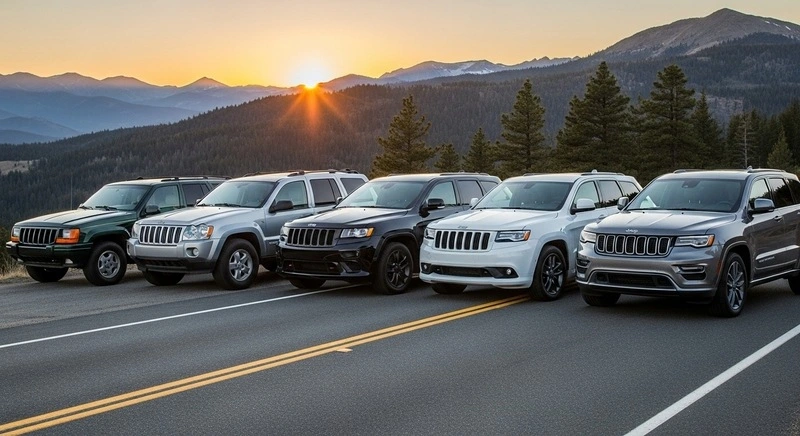
Best of the 4th Generation (WK2): 2018–2020
These are arguably the best used Grand Cherokees you can buy today. By 2018, Jeep had standardized the user-friendly mechanical gear shifter, solving the rollaway confusion. They also refined the transmission software, making the 8-speed automatic incredibly smooth.
Crucially, these years feature the updated Uconnect infotainment system with Apple CarPlay and Android Auto, making them feel modern inside. The 3.6L Pentastar V6 in these years is widely regarded as bulletproof if maintained properly.
Best of the 3rd Generation (WK): 2009–2010
If you are shopping on a tighter budget, the final years of the WK generation are the safest bet. By 2009, Jeep had resolved many of the early electrical gremlins and water leak issues. These models also benefited from a revised 5.7L HEMI V8, which offered more power and slightly better reliability than the earlier versions.
Best of the 2nd Generation (WJ): 2004
For the purists who want a solid front axle for serious off-roading, the 2004 “Special Edition” models are the peak. This was the final year of the WJ platform. It combines the legendary 4.0L inline-six engine—known for running hundreds of thousands of miles—with the most refined interior and braking components of that generation.
Jeep Grand Cherokee Resale Value & Depreciation
Understanding reliability doesn’t just save you on repairs; it saves you on depreciation. The “bad years” we listed (2005, 2011, 2014) tend to suffer from sharper depreciation curves because their reputation precedes them. Informed buyers avoid them, driving prices down.
Conversely, the 2018–2020 models hold their value remarkably well. Because they are known for being trouble-free, they are in high demand on the used market. Paying a little extra upfront for a 2018 model often results in a lower “total cost of ownership” compared to buying a “cheap” 2014 model that depreciates rapidly while draining your wallet at the mechanic.
Buying Advice & Inspection Checklist
Before you hand over your hard-earned cash, perform these specific checks during your test drive:
- Test the 4WD Low: Find a gravel lot or dirt patch and shift the vehicle into 4WD Low. It should engage with a reassuring mechanical thud, not a grind. Drive forward slowly to ensure it doesn’t pop out of gear.
- Listen for Clunks: Drive over speed bumps with the windows down. A clunking sound from the front often indicates worn control arm bushings or sway bar links—a common wear item on heavy SUVs.
- Check for Water Stains: Lift the floor mats in the front passenger footwell and check for dampness. Also, look at the headliner around the sunroof. Water stains here indicate clogged drain tubes or bad seals, which can ruin the electronics.
A Note on the Cherokee: Be careful not to confuse the Grand Cherokee with the smaller Jeep Cherokee (model code KL). The smaller Cherokee has its own set of distinct issues, particularly regarding its 9-speed transmission, which is entirely different from the 8-speed found in the Grand Cherokee.
Conclusion
The Jeep Grand Cherokee remains a benchmark for a reason. It offers a blend of style, comfort, and ruggedness that few competitors can match. However, the difference between loving your Jeep and hating it lies entirely in the model year you choose.
By steering clear of the 2005, 2011, and 2014–2015 models, you avoid the worst of the electrical and transmission headaches. Instead, aim for a 2018 or newer model for a modern, reliable experience, or a 2004 model for classic durability. Always run a VIN check for open recalls, and enjoy the adventure that comes with owning one of the most capable SUVs on the road.