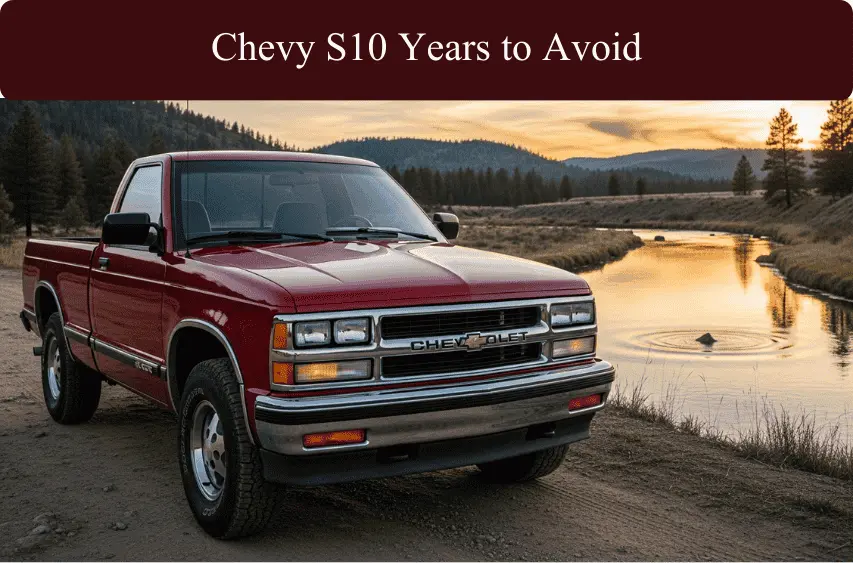
Chevy S10 Years to Avoid: A Complete Buyer’s Guide to Smarter Purchasing
Buying a used truck is more than just a transaction; it is an investment in utility. For decades, the Chevy S10 has stood as a symbol of the American compact pickup—affordable, agile, and ready for work. From weekend warriors hauling mulch to small business owners needing a reliable fleet vehicle, the S10 has served millions. However, nostalgia can be expensive if you choose the wrong model year.
Not every S10 left the factory with the same level of build quality. While some years are celebrated for their bulletproof durability, others are notorious for draining bank accounts with endless repairs. If you are in the market for this classic compact truck, knowing the difference between a reliable daily driver and a “money pit” is critical. This guide cuts through the noise to help you identify exactly which Chevy S10 years to avoid and which ones are worth your hard-earned cash.
Introduction to the Chevy S10 Legacy
The Chevrolet S10 holds a special place in automotive history. Before its arrival, American roads were dominated by massive full-size trucks that guzzled gas and were often impractical for casual use. The S10 changed the game by offering a smaller, lighter, and more fuel-efficient alternative without sacrificing too much utility.
It wasn’t just a shrunk-down truck; it was a bridge between the rugged capability of a work vehicle and the comfort of a passenger car. This balance made it incredibly popular. However, as production spanned over two decades, General Motors made significant changes to the engine, transmission, and electronics. These updates were hit-or-miss. Some introduced modern conveniences, while others introduced complex mechanical failures that plague owners to this day. Understanding this legacy helps explain why a 1994 model might run forever, while a 2000 model might struggle to leave the driveway.
Short History of the Chevy S10
To understand the reliability of the used S10 market, we need to look at its timeline. The truck’s life cycle is generally divided into two distinct generations, each with its own set of strengths and weaknesses.
The First Compact Prototype (1982 Launch)
In 1982, Chevrolet released the S10 as the first domestically produced compact pickup. It was a direct response to the rising fuel prices of the 1970s and the growing popularity of small Japanese trucks. The first generation was simple, boxy, and utilitarian. These trucks were often called “quarter-ton” pickups and were praised for their ease of maintenance. If you open the hood of an early 80s S10, you find an engine bay with plenty of room to work—a feature DIY mechanics still love today.
Evolution of the S10
As the 90s approached, the S10 evolved. The Second Generation launched in 1994, bringing a more aerodynamic look, improved safety features, and a more comfortable interior. This era saw the S10 transition from a purely functional tool into a versatile daily driver. Options like the Extended Cab and Crew Cab made it viable for families, while the legendary 4.3L V6 engine gave it serious towing power. However, as the truck became more complex with added electronics and emissions systems, reliability became inconsistent. This inconsistency is where smart buyers need to be vigilant.
Chevy S10 Years to Avoid: The Worst Offenders
If you are browsing listings for a used Chevy S10, you need to exercise extreme caution with models produced around the turn of the millennium. Data from consumer complaints, repair shops, and long-term ownership logs point to a specific window where quality control dipped significantly.
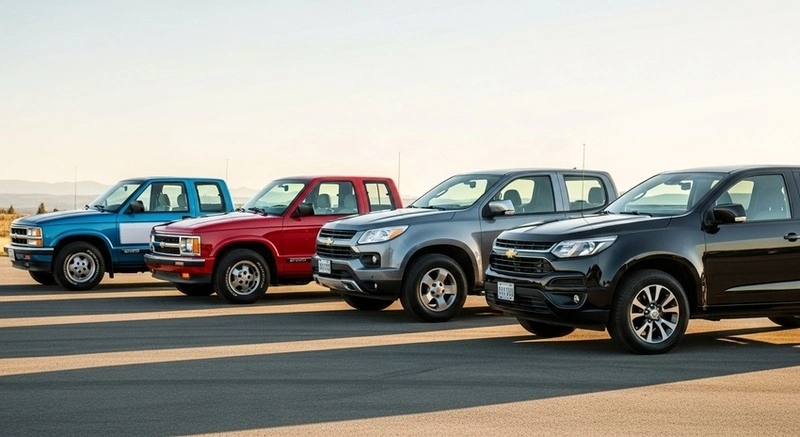
1999 Chevy S10: The Start of Transmission Troubles
The 1999 model year is often cited as the beginning of the S10’s “dark ages.” The primary culprit here is the transmission. Owners frequently report jerky shifting, slipping gears, and in worst-case scenarios, total transmission failure before the truck hits 100,000 miles.
Rebuilding a transmission is a costly repair that often exceeds the value of the truck itself. Beyond the gearbox, the 1999 S10 suffered from early onset rust on the rocker panels and frame. If you are looking at a 1999 model in a state that uses road salt, inspect the undercarriage thoroughly. The structural integrity of these trucks can be compromised much faster than their predecessors.
2000 Chevy S10: A Year of Mechanical Setbacks
The problems from 1999 didn’t just persist into 2000; they worsened. The 2000 Chevy S10 is widely regarded as one of the most problematic years. The fuel pump is a notorious weak point for this year. Unlike a simple mechanical failure, these pumps often fail without warning, leaving drivers stranded on the side of the road.
Furthermore, the 2000 model saw a spike in engine stalling issues. This was often traced back to the intake manifold gasket, which was prone to leaking coolant into the engine oil. This “coolant-oil mix” is a death sentence for an engine if not caught immediately. While Chevy vehicles are generally known for robust engines, this specific gasket flaw tarnished the reputation of the 2000 S10. If you are comparing reliability across the GM lineup, you might find similar era struggles when researching Chevy Impala years to avoid, as many GM vehicles from this period shared similar supplier parts and engineering headaches.
2001 Chevy S10: A Hotbed of Electrical Headaches
Just when buyers hoped the new millennium would bring better quality control, the 2001 Chevy S10 proved them wrong. While the mechanical failures of previous years persisted, 2001 became infamous for electrical gremlins.
Owners often describe a dashboard that looks more like a Christmas tree than a gauge cluster. The ABS (Anti-lock Braking System) module is a frequent point of failure, triggering warning lights that are difficult to diagnose and expensive to replace. Beyond the brakes, the instrument panel itself often shorts out, leading to flickering gauges or inaccurate fuel readings.
Perhaps most frustrating is the security system passlock sensor. When this component glitches, the truck essentially thinks it is being stolen and cuts off the fuel supply. You turn the key, the engine cranks, starts for a second, and then dies immediately. For a vehicle meant to be a reliable workhorse, this inability to start due to a sensor error is a major dealbreaker.
2002 Chevy S10: The Peak of Unreliability
If there is one year you should absolutely steer clear of, it is the 2002 Chevy S10. This model year seems to combine the transmission woes of the late 90s with the engine leaks of the early 2000s.
The cooling system in the 2002 model is particularly fragile. Radiators tend to crack, and heater cores clog, leading to overheating issues that can warp the cylinder heads. This is also the year where head gasket failures became statistically significant. A blown head gasket is a catastrophic engine failure that requires a massive tear-down to fix. When you factor in the low resale value of a non-running truck, a 2002 S10 with these issues is practically worthless.
2003–2004 Chevy S10: The Final Years
By 2003 and 2004, the S10 was on its way out, set to be replaced by the Chevy Colorado. Unfortunately, “end of production” models often suffer from assembly fatigue, and the S10 was no exception. While not as disastrous as the 2002 model, these final years still suffered from poor build quality.
Drivers reported loose interior trim, rattling dashboards, and continued issues with the 4-speed automatic transmission. It was clear that GM’s engineering focus had shifted to the next generation of trucks. While a well-maintained 2004 can be a decent buy, you are often paying a premium for a “newer” year that still uses outdated tech.
Common Problems by Generation
To be a smart buyer, you need to know exactly what you are signing up for. The S10 came in two distinct flavors, and the problems vary wildly between them.
First Generation (1982–1993): Rust and Simplicity
The first-generation S10s are simple machines. They lack the complex computers of modern trucks, which makes them easier to fix. However, their biggest enemy is time—specifically, rust.
These trucks were built before modern galvanization processes were standard. In the “Rust Belt,” it is rare to find a First Gen S10 with its original cab corners or rocker panels intact. Mechanically, the carbureted engines can be finicky in cold weather, and the clutches on manual models tend to wear out prematurely. However, because parts are cheap and the engine bay is spacious, these issues are manageable for a hobbyist.
Second Generation (1994–2004): Modern Tech, Modern Problems
The second generation introduced fuel injection and better safety, but it also introduced the S10’s most expensive flaws.
- Transmission Failure: The 4L60E automatic transmission found in these trucks is notorious for losing its “sun shell” gear. When this happens, you lose reverse, 2nd, and 4th gears instantly.
- Intake Manifold Gaskets: On the 4.3L V6, the factory gaskets were made of a plastic material that degraded over time when exposed to Dex-Cool coolant. This is a known defect across many GM trucks from this era. If you are also looking at larger trucks, you will find this same gasket issue listed in the GMC Sierra years to avoid, proving it was a widespread manufacturing oversight, not just bad luck for the S10.
- Fuel System (The “Spider” Injector): The central fuel injection assembly, often called the “spider,” is prone to leaking fuel internally inside the intake plenum. This causes rough idling, poor fuel economy, and hard starting.
Best Years to Own a Chevy S10
So, is the S10 a lost cause? Absolutely not. When GM got it right, they built a truck that could run for 300,000 miles with basic maintenance.
1993: The Peak of the First Generation
If you love the boxy, retro look, buy a 1993 S10. It was the final year of the first generation, meaning Chevy had a decade to iron out all the kinks. It features the most refined version of the early suspension and the most reliable versions of the 2.8L and 4.3L engines available in that body style. It’s the perfect blend of classic simplicity and reliability.
1994–1998: The Sweet Spot
For those who want a more modern look without the headaches of the 2000s, the 1994 to 1998 models are the golden era. The 1998 model is particularly sought after. It received a slight interior refresh and improved airbags, but it predates the severe quality control dip that started in 1999.
These years are also arguably the best for the 4.3L V6 engine. Known as the “Vortec,” this engine produces 180+ horsepower and makes the lightweight S10 feel genuinely quick. It has plenty of torque for towing jet skis or small campers, making it a versatile tool for weekend adventures.
Chevy S10 vs. The Competition
When shopping for a compact pickup, the S10 isn’t your only option. While it holds a special place in American automotive history, it faces stiff competition from rivals that offer different strengths.
Toyota Tacoma: The Reliability King
The Toyota Tacoma is the elephant in the room. It is legendary for hitting 300,000 miles with just oil changes. However, that reputation comes with a steep price tag. A used Tacoma with 200,000 miles often costs as much as a mint-condition S10 with half the mileage. If your budget is tight, the S10 offers far better value per dollar, even if it requires a bit more wrenching.
Ford Ranger: The Closest Rival
The Ford Ranger (1998–2011) is the S10’s direct domestic competitor. Like the Chevy, parts are cheap and plentiful. The Ranger is often praised for a slightly more robust suspension in its 4×4 trims, but its interior feels more dated than the S10’s. It’s a toss-up between the two, often coming down to brand loyalty.
Nissan Frontier: The Rugged Alternative
Often overlooked, the Nissan Frontier offers a middle ground. It’s tougher than the S10 but cheaper than the Tacoma. The supercharged V6 models are a blast to drive, though they are thirsty at the pump.
Considering an SUV Instead?
Sometimes, buyers realize they don’t actually need an open bed; they just need cargo space and all-weather capability. If you are leaning towards a Chevy but want more passenger comfort than an old truck provides, a compact SUV might be the smarter move. However, just like the S10, not all models are perfect. Before making the switch, it is wise to research the Chevy Equinox years to avoid to ensure you don’t trade one set of mechanical headaches for another.
Key Tips for Buying a Used Chevy S10
You’ve read the warnings, and you’ve picked your target year. Now, how do you ensure the specific truck in front of you isn’t a lemon? Use this quick inspection checklist before handing over any cash.
1. The “Rust Belt” Check
Rust is the silent killer of the S10. Get on the ground and look at the frame rails, specifically where they curve up behind the cab. This is a notorious rot spot. Also, check the cab corners and rocker panels. If the seller has freshly painted these areas, be suspicious—they might be hiding body filler over rust holes.
2. The Transmission Fluid Test
Since the transmission is the weak link in many model years, pull the dipstick. The fluid should be bright red and smell like oil. If it is dark brown or smells like burnt toast, the transmission is overheating and likely on its last legs. Walk away.
3. Listen for the “Clunk”
During your test drive, shift from Park to Drive and then to Reverse. If you hear a loud metallic clunk or feel a delay before the gear engages, the U-joints or the rear differential are worn out. While fixable, it’s a bargaining chip to lower the price.
4. Check the Heater Core
Turn the heater on full blast. if you smell a sweet, syrupy scent (antifreeze) or see a greasy film on the windshield, the heater core is leaking. On an S10, replacing this part requires tearing apart the entire dashboard—a labor-intensive and expensive job.
Final Thoughts: Is a Used S10 Still Worth It?
The Chevy S10 is a survivor. It represents an era when trucks were simple, honest tools. Is it perfect? Far from it. The years between 1999 and 2002 are undeniably risky, plagued by transmission failures and electrical gremlins that can turn a cheap truck into a costly burden.
However, if you find a well-maintained 1994–1998 model or a final-run 2004 edition, you are getting a capable machine that is easy to fix and fun to drive. It fits in a standard garage, hauls more than you’d expect, and has a charm that modern, oversized trucks just can’t match.
The Verdict: Avoid the troubled years, inspect for rust, and don’t be afraid to get your hands dirty. Do that, and a Chevy S10 will be one of the best investments you ever make.