Road Trip Gear Without the Backseat Pile
Road trips tempt overpacking: the car itself feels like flexible space. Snacks, jackets, bags, tools. A “just in case” item or two. All stuffed into the backseat with good intentions… and little room for comfort. Piles jostle in corners, essentials drop below the scattered surface, passengers jockey for legroom and peace of mind. The issue isn’t preparation, it’s structure. In this article, we’ll explore how clutter settles in the backseat and how to stop it without stopping for an overhaul. You’ll learn when to stop and how to start, how to decide what really belongs inside the cabin, how to stage items before departure, and how to keep gear accessible without crowding it. With a system in place, the road is a more comfortable, safe space to manage from the first mile to the last stop.
How backseat piles reduce comfort and safety
Backseat piles do more than make a car feel cramped. Loose bags, boxes, and gear shift during turns and stops, creating distractions and potential hazards. Passengers lose space to move comfortably, and essentials like snacks, chargers, or first-aid kits get buried under everything else. Over long drives, this clutter increases fatigue because the cabin never fully settles into a calm, usable layout. The issue isn’t bringing too much, it’s letting items ride without roles or boundaries. To avoid this, many drivers stage non-cabin gear elsewhere ahead of time, sometimes using options like Trenton Ave storage NSA Storage to keep bulky or nonessential items out of the vehicle until they’re truly needed. Recognizing how piles affect safety and comfort makes structure feel necessary, not restrictive.
What gear actually needs to ride along
Not everything packed for a road trip belongs in the passenger cabin. Clear rules keep the ride comfortable and safe.
Essential Principles to Follow:
- Prioritize safety and navigation items
First-aid kits, emergency tools, and maps should be reachable without digging. - Keep comfort items intentional
Snacks, water, and layers should be limited to what will be used during the drive. - Move bulk out of the cabin
Large bags and backups should stay secured in the trunk or cargo area.
Common Pitfalls to Avoid:
- Treating the backseat as flexible storage
- Letting “just in case” items pile up
- Blocking seatbelts or passenger movement
- Repacking repeatedly during stops
Creating a staging system before departure
Step 1: Lay out everything you plan to bring before it goes into the car. Seeing items together makes it easier to spot duplicates and unnecessary gear.
Step 2: Assign each item a role and a zone. Decide what belongs in the cabin, what belongs in the trunk, and what doesn’t need to ride at all.
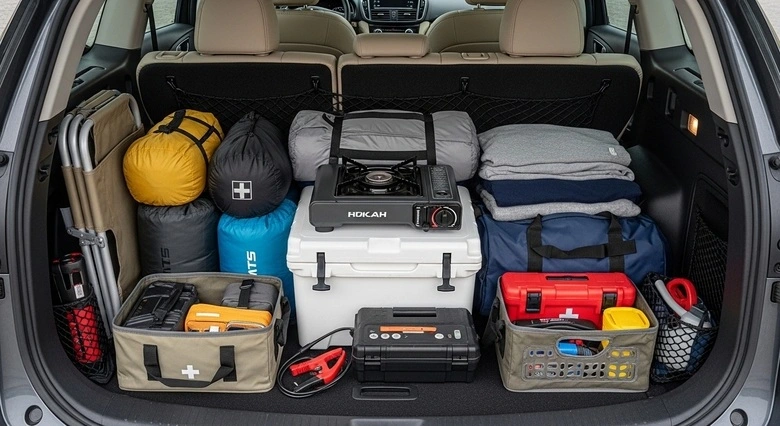
Step 3: Pack the car in layers. Items needed during the drive go in last so they’re easiest to reach, while stop-only or destination items go in first.
Step 4: Secure loose gear. Use bins, organizers, or straps so nothing shifts while driving. Stability improves both safety and comfort.
Step 5: Do a final visibility check. If anything blocks movement, sightlines, or seatbelts, it doesn’t belong in the cabin.
Keeping essentials reachable during the drive
How do you keep items accessible without clutter?
Limit the number of cabin items and give each a fixed spot. Fewer items with clear homes reduce searching.
Should every passenger manage their own gear?
Yes, within limits. Personal items should fit in one small bag to avoid spreading.
What should never ride loose?
Anything heavy or hard. Loose objects become hazards during sudden stops.
Resetting storage after the trip ends
When the road trip is over sometimes gear lingers in the car longer than planned. Bags stay packed, jackets linger in the back seat, and the temporary configuration gradually becomes permanent (or at least, temporary long-term). An expedient reset of storage shortly after arriving home prevents clutter from following you into normal driving. Unpack the car completely, return things to base camp, and dispose of what’s not a daily part of the car. A simple reset keeps the car in a “ready to roll” state and reduces friction the next time you hit the road.
Unpack your car within 24 hours of returning to keep clutter from settling in.
Questions drivers ask about road trip storage
Only everyday essentials like emergency kits. Everything else should be removed.
Yes, when secured properly. Trunks and cargo areas reduce risk compared to loose cabin storage.
Consistent resets matter. Treat the car like a shared space that needs clear rules.
Before every major trip. A fresh staging pass keeps each journey comfortable and safe.