How to Layer Motorcycle Gear for Any Season or Weather
Motorcycle riders learn quickly that the weather rarely sticks to a script. A morning that begins crisp and pleasant can shift into biting wind or heavy rain before the ride home. Comfort on the road depends less on luck and more on preparation. Riders exploring options for motorcycle gear in NZ often hear seasoned riders talk about layering, though the idea sounds simpler than it is.
Done properly, a layered setup keeps temperature steady, handles moisture, and preserves the protective qualities of proper riding apparel, even when the sky changes its mind halfway through a trip.
Why Smart Layering is Important for Riders
Riding exposes the body to moving air, fluctuating temperatures, and the occasional wall of rain that appears without warning. Inside a car, those changes feel mild; on a bike, they sharpen quickly, especially once speed builds.
Layering solves that problem with flexibility. Instead of relying on a single thick jacket, riders combine lighter pieces that cooperate. One layer traps warmth, another moves sweat away from skin, and another blocks wind and water.
The system works because each part handles a different job. When conditions shift, a rider simply removes or adds a piece. The result is steadier comfort, better concentration, and far less temptation to cut a ride short.
Choosing A Base Layer That Controls Moisture Well
A base layer sits closest to the skin, so small material choices matter more than many riders expect. Long rides generate body heat, and traffic can turn protective gear into a warm shell. Good base fabrics pull sweat outward before it cools against the body.
Merino wool does this brilliantly and stays comfortable for hours, while modern synthetics dry fast and remain light. Cotton struggles here. It absorbs moisture, holds it, and leaves riders chilled when temperatures dip or wind picks up. Start with a base that keeps skin dry and stable, and every other layer begins to perform better.
Adding Mid Layers That Provide Warmth Without Bulk
Once moisture is under control, insulation becomes the focus. Mid layers hold pockets of warm air close to the body, which helps maintain a steady temperature when the ride turns cold. Lightweight fleece jackets, thermal liners, and compact insulated tops are common choices.
The trick is restraint. Too much padding restricts movement and crowds the protective jacket above it. Riders usually benefit from thinner insulating pieces that can be removed within seconds at a fuel stop. A flexible mid layer keeps the system adaptable, which matters when a cool sunrise evolves into a mild afternoon.
Outer Motorcycle Gear Shields Against Weather And Impact
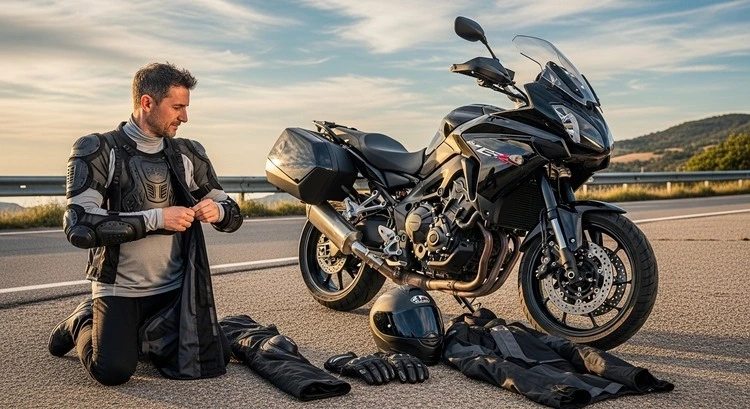
The outer layer carries the serious responsibilities. It defends against abrasion, cushions impact with armour, and blocks wind that would otherwise slice through softer clothing. Modern motorcycle jackets and trousers often include waterproof membranes, adjustable vents, and reinforced panels in high-risk areas.
Open the vents, and air circulates during warmer rides. Close them, and the shell becomes a barrier against rain and cold gusts. Because the protective layer sits on the outside, its fit must remain comfortable even with insulation underneath. Well-designed outer gear allows the entire system beneath it to function without restriction.
Final Thoughts
Cold weather usually calls for the full stack moisture control at the base insulation in the middle, and a sealed outer shell. Warmer months shift the balance. Many riders keep the base layer but remove insulation, relying instead on ventilated jackets that let air pass through while still offering protection.
Weather rarely holds steady for an entire day, particularly on longer trips, so the smartest setups remain modular. A compact thermal layer tucked into a pannier or backpack can rescue a chilly evening ride home.
Good layering does more than manage comfort. It supports focus. When riders are neither shivering nor overheating, their attention stays on traffic, road surfaces, and the rhythm of the ride. That clarity, more than any single garment, is what makes a well-planned gear system worthwhile for serious everyday riding.