Supporting Families Through the Aftermath of a Car Crash
Every 6 minutes, someone dies in a motor vehicle crash in the United States, according to the National Highway Traffic Safety Administration’s latest data. Behind each of these statistics lies a family suddenly thrust into an overwhelming maze of medical decisions, insurance negotiations, and legal complexities—all while grieving and trying to piece their lives back together. The financial stakes are equally staggering: the average settlement for serious car accident cases ranges from $20,000 to over $1 million, depending on injuries and circumstances.
What makes this crisis particularly challenging is that most families have no experience navigating the intersection of personal injury law, insurance regulations, and civil litigation. Seeking professional assistance for car crash claims can help families make informed decisions while managing trauma, medical treatments, and financial uncertainty, ensuring that early choices protect long-term financial security.
The legal landscape has evolved significantly in recent years, with new precedents around autonomous vehicle liability, rideshare accident claims, and digital evidence preservation. Families need more than just legal representation—they need advocates who understand both the technical complexities of modern accident cases and the emotional reality of family crisis. Here’s how the legal system actually works to protect families, and what you need to know about finding the right support during the most difficult time in your life.
What Is Car Accident Law and How Does It Protect Victims?
Car accident law operates on a foundation of negligence theory—the legal principle that holds drivers responsible for failing to exercise reasonable care on the road. This isn’t just about determining who ran the red light; it’s a comprehensive framework designed to restore families to their financial position before the accident occurred, to the extent possible.
The protection begins with strict liability standards in most states. When a driver causes an accident through negligence—whether it’s texting while driving, failing to yield, or driving under the influence—they become legally responsible for all resulting damages. This includes not just property damage, but medical expenses, lost wages, pain and suffering, and in tragic cases, wrongful death compensation for surviving family members.
Fault determination follows a systematic process that examines evidence like police reports, witness statements, traffic camera footage, and increasingly, data from vehicle computer systems. Modern cars record extensive telemetry data in the moments before impact, including speed, braking patterns, and steering inputs. This digital evidence has revolutionized how liability is established, providing objective data that can definitively prove what happened.
The legal system also recognizes comparative negligence in most jurisdictions, acknowledging that fault isn’t always 100% on one driver. If a family member was partially at fault—perhaps speeding when another driver ran a stop sign—their compensation is reduced proportionally. This nuanced approach ensures that families still receive substantial compensation even when circumstances are complex.
What makes car accident law particularly powerful for families is its no-recovery, no-fee structure. Most personal injury attorneys work on contingency, meaning families don’t pay legal fees unless they win their case. This removes the financial barrier that might otherwise prevent families from seeking justice when they’re already facing medical bills and lost income.
How Does the Car Accident Legal Process Unfold?
The legal process following a car accident operates in distinct phases. Understanding this timeline helps families make informed choices during a crisis.
Initial Steps After a Car Accident
The first few days following an accident are legally very crucial. Evidence preservation begins immediately, as skid marks fade and witnesses forget details. Experienced legal teams dispatch investigators to document the scene and interview witnesses while memories remain fresh. Medical documentation during this initial period becomes the foundation for future claims. Emergency room visits and diagnostic tests carry significant weight. Insurance notification requirements vary, but prompt reporting is required. However, providing recorded statements to opposing insurance companies is optional and often inadvisable early on.
Filing Claims and Lawsuits
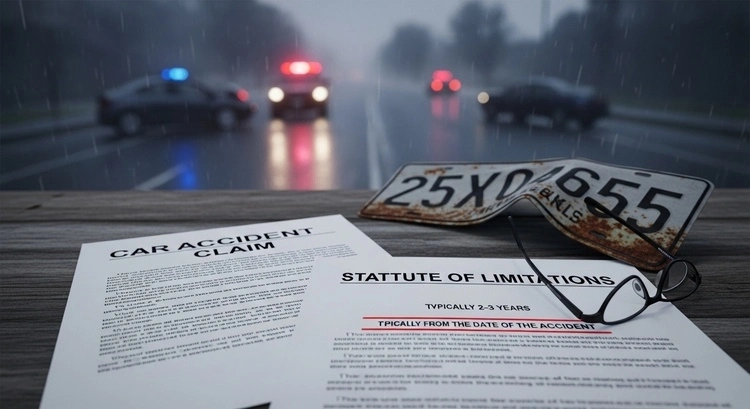
The claims process typically begins a month or two after the accident, once the full extent of injuries becomes clearer. Insurance claims are filed first, starting with the liable driver. Minimum liability limits are frequently inadequate for serious accidents. Lawsuit filing occurs when insurance coverage is insufficient or liability is heavily disputed. Each state has a specific statute of limitations, but waiting too long can severely weaken a case. The legal filing process involves detailed documentation of all damages, including past expenses and future medical costs.
Settlement Negotiations and Litigation
Most car accident cases settle before trial, but reaching those agreements involves immense complexity. Negotiation phases often span many months, involving multiple rounds of offers and expert evaluations. Mediation has become increasingly common as courts encourage alternative dispute resolution. A neutral mediator facilitates discussions between parties, helping identify creative solutions that might not emerge in litigation. When cases do proceed to trial, the process can take years. However, the mere threat of trial often motivates insurance companies to make reasonable settlement offers to avoid unpredictable verdicts.
What Qualifications and Specializations Do Car Accident Lawyers Have?
Modern car accident lawyers operate in a highly specialized field requiring both broad legal knowledge and deep technical expertise. Educational foundations begin with standard law degrees, but attorneys typically pursue additional training in personal injury law. Board certification is available in several states, representing the highest level of specialization recognition. Subspecializations have emerged as cases become more complex, with some lawyers focusing specifically on catastrophic injuries or commercial vehicle accidents. Furthermore, trial experience varies dramatically among practitioners. The most effective lawyers also maintain strong relationships with networks of expert professional witnesses.
Which Strategies Do Lawyers Use to Maximize Case Outcomes?
Effective representation requires a sophisticated blend of legal strategy, negotiation psychology, and thorough case preparation. Early development begins with a comprehensive investigation that goes beyond police reports. Skilled lawyers deploy private investigators to interview witnesses and reconstruct the scene. Medical documentation strategy involves working with physicians to ensure reports clearly articulate the connection between the accident and ongoing symptoms. Insurance negotiation tactics leverage detailed knowledge of adjuster decision making processes. Furthermore, trial preparation begins months before court dates, utilizing mock trials to test case themes and identify potential weaknesses before litigation.
What Do Research and Statistics Reveal About Car Accident Cases?
Recent data provides crucial insights into how car accident cases actually resolve and what factors most significantly impact family recovery outcomes. Settlement patterns show that legal representation makes a dramatic difference. Victims who hire lawyers recover significantly more compensation than those handling their own claims. Timing analysis reveals that cases settling within the first six months typically result in lower compensation. Injury severity correlation demonstrates exponential increases in settlement values for catastrophic harm. Furthermore, geographic variations in verdict amounts are substantial, reflecting differing jury pools and regional attitudes toward litigation.
What Are Common Challenges and Ethical Considerations Post-Accident?
The period immediately following a car accident presents numerous legal and ethical pitfalls that can significantly impact a family. Social media complications have become increasingly problematic, as insurance companies routinely monitor victims online. Medical treatment decisions also create potential conflicts between optimal care and legal strategy. Insurance communication errors frequently occur when families attempt to handle their own initial discussions with adjusters. Ethical responsibilities for lawyers are extensive, ensuring that they maintain credibility with courts. Conflict of interest issues may also arise when the same lawyer represents multiple injured family members simultaneously.
How Can Families Work Effectively With Their Car Accident Lawyer?
The relationship between lawyers and clients requires ongoing collaboration and clear communication to achieve optimal outcomes. Successful partnerships follow specific patterns that maximize both case value and client satisfaction. Communication expectations should be established early, with clear protocols for updates and document sharing. Documentation responsibilities require families to maintain organized records of medical treatment and lost wages. Understanding the fee structure prevents misunderstandings about legal costs. Decision making involves families in key strategic choices. Ultimately, managing realistic expectations helps families understand that legal proceedings rarely resolve as quickly as expected.