Car Shipping 101: Everything You Need to Know Before Booking a Carrier
The first question almost everyone asks is how much it costs to ship a car, and the honest answer is that it depends.
Distance, vehicle type, season, and transport method all push the number around.
A car shipping estimate for a sedan going coast-to-coast might land between $900 and $1,500, while the same vehicle moving 400 miles could run $450-$700.
Those ranges are wide on purpose because no two shipments are identical.
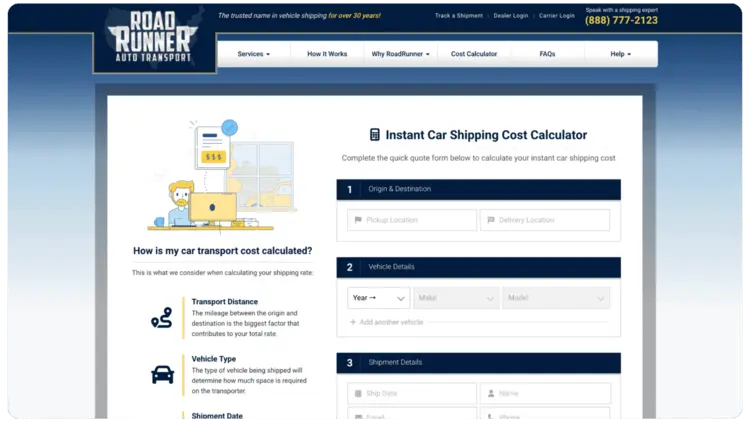
The quickest way to cut through the guesswork is a tool like the RoadRunner instant quote, which calculates a price based on your specific route, vehicle, and timing.
Understanding what shapes those numbers is the difference between getting a fair deal and overpaying by hundreds.
This covers the full picture.
How the Car Shipping Industry Works
The business runs on a broker-carrier model.
A broker connects you with a carrier, the company that owns the actual truck and hauls your vehicle.
Most of the names you’ll find online are brokers, and that’s not a bad thing.
Brokers tap into a wide network of carriers running routes across the country, which usually means more availability and competitive pricing.
When you request a car shipping quote, the broker posts your vehicle to a load board, essentially a marketplace where carriers bid on shipments.
Which carrier picks up your job depends on route, time of year, and what you’re willing to pay.
Popular corridors like Florida to New York get matched fast.
Less-traveled routes, say Montana to Louisiana, take longer because fewer trucks run that lane consistently.
The whole process from booking to delivery typically takes 7 to 21 days, depending on distance.
Cross-country hauls lean toward the longer end.
Regional moves within 500 miles can sometimes wrap up in under a week.
Open Transport vs. Enclosed Shipping
Around 90% of vehicles move on open carriers, the double-decker car haulers you see on the highway carrying eight to ten vehicles at a time.
For a daily driver like a Honda Accord or Toyota Camry, open transport is the standard choice.
Your vehicle is exposed to road debris and weather, but actual damage is rare.
Enclosed transport costs roughly 40-60% more than open shipping.
It’s worth the premium for classic cars, luxury vehicles like a Porsche 911 Turbo, exotics, or anything with sentimental value.
The trailer is fully covered, and the carrier handles fewer vehicles per load, which means more careful handling overall.
When you’re comparing car shipping estimates, make sure you’re comparing the same transport type.
An enclosed quote next to an open quote will always look inflated because they’re different services entirely.
How Much Does It Cost to Ship a Car: Real Numbers
Pricing in car shipping isn’t fixed the way a UPS ground rate is.
It moves with supply and demand on carrier networks.
That said, here are realistic ranges based on current market conditions for open transport on a standard sedan:
- Under 500 miles: $400-$700. Short-haul shipments cost more per mile because the carrier still has the same fixed costs for loading, inspecting, and delivering.
- 500-1,000 miles: $600-$1,000. This is the mid-range sweet spot where per-mile rates start dropping.
- 1,000-2,000 miles: $800-$1,300. Cross-regional moves, like Texas to the Carolinas, typically fall here.
- 2,000+ miles: $1,000-$1,600. Full coast-to-coast runs, like Los Angeles to Boston, sit at the top of the range.
Larger vehicles push these numbers up.
Shipping a Ford F-250 or Chevrolet Suburban costs $200-$400 more than a midsize sedan on the same route because they take up more deck space and add weight to the load.
The most reliable way to see where your specific shipment falls is to get a car shipping quote based on your actual details: origin, destination, vehicle make and model, and preferred dates.
That’s where online quoting tools earn their value, since they eliminate the back-and-forth of calling three brokers and waiting for callbacks.
What Pushes a Car Shipping Estimate Up or Down
Even within those ranges, the final price can shift by a few hundred dollars depending on several factors.
Seasonality is the big one. January through March is peak season for snowbird routes heading to Florida and Arizona. Summer gets busy with cross-country relocations, families moving before the school year starts. Shoulder months like October and April often have the best rates because carrier capacity frees up.
Route popularity matters almost as much as distance. A shipment from Miami to New Jersey costs less per mile than one from rural Wyoming to a small town in Vermont. High-demand lanes already have trucks running them daily, so carriers don’t have to detour. Remote or rural pickup and delivery locations add cost every time.
Vehicle condition is another variable people overlook. Non-running vehicles require a winch to load, which adds $100-$200 or more. If your car doesn’t start, doesn’t steer, or doesn’t brake, mention that upfront. It directly affects the car shipping estimate you’ll receive.
And then there’s flexibility. Offering a three-to-five-day pickup window instead of demanding a specific date makes your shipment more attractive to carriers on the load board. That flexibility alone can save $50-$200.
Door-to-Door vs. Terminal Shipping
Door-to-door is the most popular option and what most car shipping quotes include by default.
The carrier picks up your vehicle as close to your address as the truck can safely get and drops it off the same way at your destination.
On residential streets, that usually means the nearest main road or parking lot.
A full-size car hauler isn’t pulling into a cul-de-sac.
Terminal shipping means you drop your car at a designated lot and retrieve it at another lot near your destination.
It’s cheaper, sometimes by $100-$150, but less convenient.
The terminals aren’t always in ideal locations, and your car might sit for a few days waiting for a carrier headed in the right direction.
For most people, the savings don’t justify the hassle.
Door-to-door is worth it.
Why Car Shipping Quotes Vary So Much Between Companies
You’ll notice a frustrating pattern when shopping around: three different brokers can give you three very different numbers for the same vehicle on the same route.
Some of that comes down to broker margins, what each company adds on top of the carrier’s rate.
But the bigger factor is how aggressively a broker prices the load board posting.
A lower quote might attract you initially, but if the price is too low, no carrier will pick it up.
Your shipment sits on the board, days pass, and eventually the broker calls to say the rate needs to go up.
This is the classic bait-and-switch in car shipping, and it’s more common than it should be.
A realistic car shipping estimate, one that actually gets your vehicle picked up on time, should fall within the middle range of the quotes you collect.
The cheapest option almost never works out the way you hope.
Getting an accurate baseline matters.
Tools that calculate quotes based on real-time carrier data give you a more grounded starting point than a generic price chart because they factor in current market conditions and route-specific demand.
Insurance and Damage Claims
Every licensed carrier is required to carry cargo insurance.
It’s a federal requirement.
Coverage amounts vary, but most policies fall in the $250,000-$750,000 range per truck load.
Before your vehicle is loaded, the driver does a condition report, a walk-around inspection documenting existing scratches, dents, and dings.
You’ll sign off on it.
At delivery, do the same inspection.
Compare the vehicle against the original report before signing anything.
If there’s new damage, note it on the Bill of Lading before the driver leaves.
Once you sign off, saying everything looks good, filing a claim becomes significantly harder.
Some brokers offer supplemental insurance or gap coverage for an extra fee.
For standard vehicles, the carrier’s existing policy is usually sufficient.
For high-value cars, the added coverage can provide peace of mind, especially on enclosed shipments where you’re already investing more in protection.
Red Flags to Watch For
The car shipping space has its share of questionable operators.
A few things that should make you pause:
- Lowball estimates: If one company’s car shipping quote is $300 cheaper than everyone else, that’s not a deal. It’s a number designed to get your deposit, not a number that’ll hold through delivery.
- Large upfront deposits: Reputable brokers charge a small booking fee or collect payment at pickup. Anyone asking for half the total before a carrier is even assigned is a risk.
- No USDOT or MC number: Every legitimate carrier and broker has a Federal Motor Carrier Safety Administration registration. Check it on the FMCSA website. Takes two minutes.
- Pressure to book immediately: Seasonal rate fluctuations are real, but high-pressure sales tactics are a red flag. A good broker gives you time to compare.
Preparing Your Vehicle for Transport
Keep the gas tank at about a quarter full, enough to load and unload, but not adding unnecessary weight.
Remove personal belongings from the interior.
Carriers aren’t liable for loose items, and some won’t transport a vehicle with a loaded trunk or back seat.
Disable any aftermarket alarm systems.
Nothing derails a smooth pickup faster than an alarm going off on the truck at 2 AM somewhere in Nevada.
If your car has a removable antenna or roof rack, take those off to prevent damage during transit.
Take photos of your vehicle from all angles, close-ups of existing damage included, before the driver arrives.
Five minutes of documentation gives you solid evidence if you ever need to file a claim.
Putting It All Together
Car shipping doesn’t need to be stressful.
Know the realistic cost range for your route, understand what factors push the price around, and give yourself enough lead time to avoid rush premiums.
Get quotes from at least two or three companies, verify their FMCSA credentials, and read the contract before you commit to anything.
The people who have the smoothest experience are the ones who came in with a realistic car shipping estimate already in mind.
They knew what to expect, they could spot an outlier quote immediately, and they didn’t get pressured into a bad deal.
That preparation is worth more than any single tip in this article.