SIGNS THAT YOUR TRANSMISSION IS FAILING
Transmission issues do not usually occur without warning. In the majority of cases, your car will give you a warning.
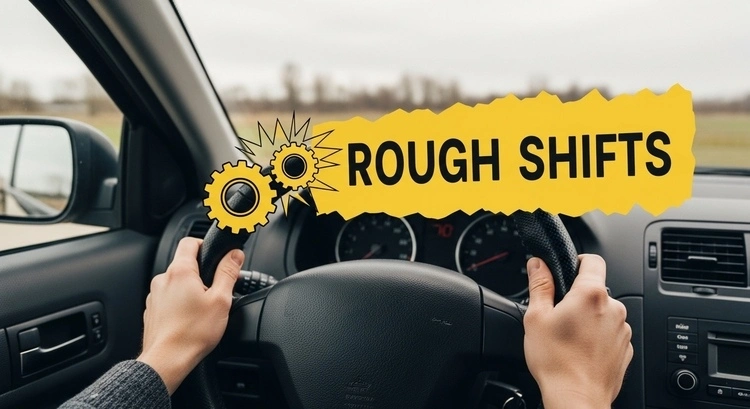
Delayed or rough shifting
This is one of the most frequent symptoms of transmission problems. You might experience:
- A delay when shifting between drive and reverse
- Difficulty changing gears when going up or downhill.
With auto shift, this can manifest as:
- Sudden jerks
- Hard impacts
- Gear changes that don’t go as smoothly.
This can indicate:
- Worn-out internal parts
- Low transmission fluid
- An electronic problem in the transmission.
An inspection should be done by an automatic gear specialist. They can uncover the exact cause of the problem.
Unusual noises
A healthy transmission should perform quietly. However, a mechanical problem is beginning to develop if it has a:
- Buzz
- Hum
- Whine
- Grinding sound.
These sounds can be more pronounced during:
- Acceleration
- Deceleration
- Shifting gears.
What causes such sounds? Common causes are:
- Worn bearings
- Damaged gears
- Contaminated transmission fluid.
Do not ignore unusual sounds. These problems can quickly escalate into complete transmission failure.
Transmission fluid leaks
The transmission fluid is used for smooth gear operation. It helps with lubrication and cooling. A leak in the transmission could be indicated by the presence of fluid under the vehicle. It could be red or dark brown. It comes with a burnt smell.
Low fluid levels create friction and heat in the transmission system. This leads to early transmission wear and tear. Any leak should never be ignored. No matter how small.
Burning smells while driving
Is your car giving off a burning odor? It could mean that low transmission fluid. Maybe the fluid has become ineffective? This means:
- Parts will not be lubricated properly
- The temperature will increase.
Transmissions can overheat in a matter of minutes, causing damage to:
- Seals
- Clutches
- Gears.
Transmission overheating is particularly dangerous for drivers who:
- Frequently sit in traffic
- Load the vehicle with heavy cargo
- Are often on the road for long periods.
Slipping gears
Transmission slipping is when your car:
- Suddenly shifts between gears
- Has trouble staying in the gear you selected.
You may notice sudden increases in engine RPM. But without a corresponding increase in speed.
This problem frequently causes:
- Poor acceleration
- Diminished vehicle control
- Higher fuel consumption.
The most common sources of slipping gears include:
- Worn clutch packs
- Low fluid pressure
- Damaged transmission bands.
Warning lights on the dashboard
Modern vehicles rely heavily on electronic monitoring systems. At times, you will notice the check engine or transmission warning light. The vehicle may already be sensing unusual transmission activity.
Drivers frequently ignore warning lights. Many may feel that the vehicle is still drivable. But this could cost them a lot more money to repair.
Acting immediately can help detect minor issues early. They can be resolved before they impact the entire transmission system.
Difficulty moving the vehicle
If a transmission is failing, it can make it difficult for the car to drive in high-performance situations. The vehicle may:
- Stall
- Lose power during operation
- Not be able to shift into gear.
Sometimes, transmission failure is coupled with electrical or starter problems. In such cases, you may also need to call for battery roadside assistance.
Final words
Transmission issues start small. But they are noticeable if you pay attention to your car. It is important to take immediate action.