4 Truck Blind Spots That Can Cause Serious Road Accidents
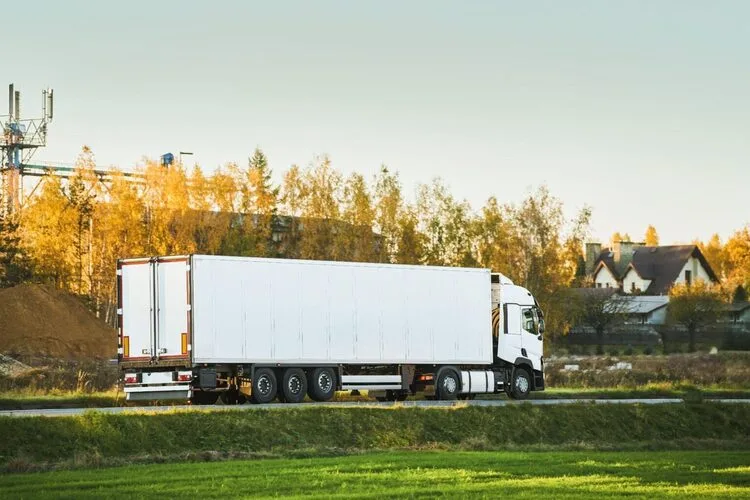
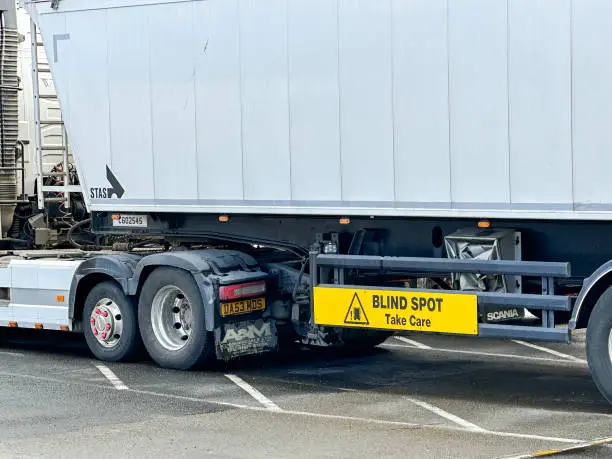
The four truck blind spots that can cause serious road accidents are directly in front of the truck, directly behind it, along the left side, and along the right side. These areas are dangerous because a truck driver may not see a car, motorcycle, cyclist, or person there, even with mirrors.
Large trucks need more space to turn, stop, and change lanes. That means drivers around them have to be extra careful, too. Knowing the common blind spots in trucks can help you make safer choices on the road.
Many crashes happen because someone stays too close to a truck or assumes the driver can see them. That assumption can turn risky fast. The better you understand these blind spots, the easier it is to avoid them.
The 4 Truck Blind Spots Drivers Should Watch
NHTSA’s 2023 large-truck data shows 5,472 people died in crashes involving large trucks. That number dropped from 2022, but it still shows how much damage one missed vehicle can cause. Truck blind spots matter because a car can vanish from the driver’s view before a lane change, turn, or stop.
Federal law recognizes this risk. Under 49 C.F.R. § 393.80, “Every bus, truck, and truck tractor shall be equipped with two rear-vision mirrors.” The rule also says mirrors must show the highway behind and along both sides. Mirrors help, but they do not erase blind spots.
1. The Front Blind Spot
The front no-zone sits directly ahead of the cab. A truck driver sits high, so the area right in front of the bumper can disappear.
This spot gets risky when you cut in too soon after passing. FMCSA warns that trucks need more room to stop than cars. Give the truck space before moving back over. Look for the front of the truck in your rearview mirror first.
2. The Rear Blind Spot
The rear blind spot stretches behind the trailer. If you tailgate, the driver may not know you are there.
This is also where rear-end crashes become worse. You cannot see the traffic ahead of the truck. You lose time to react. Stay back far enough to see the truck’s mirrors and the road around it.
3. The Left-Side Blind Spot
The left side has a smaller blind spot than the right, but it still matters. A car can sit beside the trailer and stay hidden.
Use the left lane to pass, not to hang around. Signal, move with care, pass at a steady pace, and return only when you can see enough space.
4. The Right-Side Blind Spot
The right-side blind spot is often the most dangerous. FMCSA tells drivers not to pass trucks on the right because that blind spot is much larger.
Right turns make this worse. A truck may swing left before turning right. Do not slide between the truck and the curb. That space can close fast.
Quick Safety Rules
- If you cannot see the truck driver’s face in the side mirror, assume the driver cannot see you.
- Do not cut in front of a truck.
- Leave extra room near turns, ramps, and merges.
- Pass on the left when safe and clear.
Key Takeaways
- The four main truck blind spots are in front, behind, on the left side, and on the right side.
- The right-side blind spot is often the largest and most dangerous, especially during wide turns.
- If you cannot see the truck driver in the side mirror, the driver likely cannot see you.
- Never cut closely in front of a truck because trucks need more space to stop.
- Avoid tailgating trucks because the driver may not see you, and you cannot see traffic ahead.
- Pass trucks on the left when safe, and do not stay beside the trailer.
- Federal mirror rules help drivers see more, but mirrors cannot remove every truck blind spot.