What Makes Motorcycle Accident Cases Uniquely Complex
A motorcycle accident is not simply a car accident involving a smaller vehicle. The injuries are more severe, the dynamics of the collision are different, and the legal environment that shapes these cases carries its own specific challenges. For anyone who has been injured while riding, the path from accident to fair compensation is genuinely more complicated than it would be for someone injured in a passenger vehicle collision.
Working with an Arizona motorcycle accident lawyer who has specific experience with these cases, not just general personal injury experience, makes a real difference in how these complexities are handled.
The Severity of Injuries Changes the Stakes
Motorcyclists have no structural protection around them. In a collision, the rider makes direct contact with the vehicle, the road surface, or both. The injuries that result in traumatic brain injuries, spinal cord damage, and severe fractures that need surgical treatment are frequently far more serious than those in typical car accident cases.
More grievous injuries sustained during a motorcycle accident mean the cost of medical treatment is higher, the recovery time is longer, and the rider’s ability to work and live as they did before the accident is less than it was before the accident. Calculating the full value of these losses requires expertise, medical professionals who can testify about long-term care needs, economists who can quantify lost earning capacity, and attorneys who know how to present these numbers persuasively.
Bias Against Motorcyclists
One of the most common issues in motorcycle accident cases is also one of the least discussed, which is bias. Motorcyclists have a reputation in some communities as reckless or risk-seeking riders. Jurors, adjusters, and even some judges have these misconceptions, and asking them to keep them separate from their legal views or duties is harder.
Insurers know about these biases, and they even use them for their own gain, arguing that the motorcyclist was riding aggressively or behaving in ways that contributed to the accident, even when the evidence does not support those conclusions. Attorneys who handle motorcycle cases regularly understand how to address this bias directly.
The Physics of a Motorcycle Collision
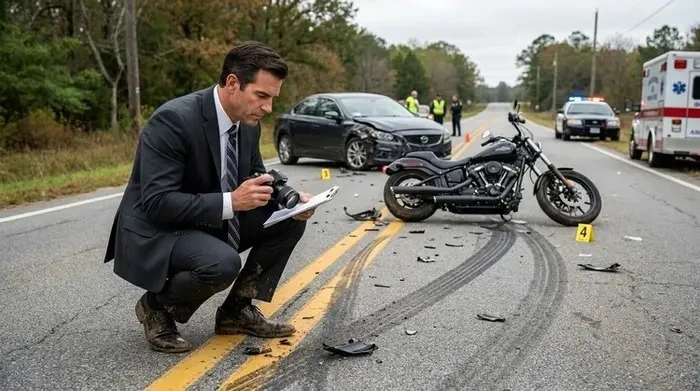
Reconstruction of a motorcycle accident is technically more complex than a typical car accident. Motorcycles behave differently at impact; the way the bike moves, falls, and separates from the rider follows different physical principles than a car-to-car collision. Understanding what the physical evidence actually shows requires experts who have specific experience with motorcycle accident mechanics.
The reconstruction can determine fault, establish what the defendant driver should have been able to see and react to, and counter arguments about how the crash occurred.
Insurance Coverage Complications
Motorcycle accident claims involve coverage issues that are uncommon in standard car accident cases. The defendant driver may have low policy limits relative to the severity of the injuries. The motorcyclist’s own underinsured motorist coverage, which varies significantly by policy and is not always understood by the rider at the time of purchase, becomes critical when the at-fault driver’s coverage is not enough.
Helmet and Protective Gear Issues
Arizona law requires helmets only for riders under 18. However, in a civil claim, whether an adult rider was wearing a helmet and what difference that choice made to their injuries can become an issue in comparative fault arguments. Insurers may argue that a rider who was not wearing a helmet contributed to the severity of their own head injuries. These arguments must be addressed directly with medical expert testimony.
What Riders Should Know
Motorcycle accident cases require more from the legal team that handles them: more technical knowledge, more expert involvement, and more experience with the specific dynamics these cases present. A general approach to personal injury law is not enough when the injuries are severe, the bias issues are real, and the coverage landscape is complicated. Riders who have been injured deserve representation that understands these cases from the inside, not just on paper.