5 Factors That Make Truck Accidents More Complex Than Car Accidents
When two cars collide, the path forward is usually clear. Exchange information, file a claim, and let the insurance companies figure it out. It’s stressful, but the process is familiar. Truck accidents don’t work that way. Once a commercial vehicle is involved, everything changes.
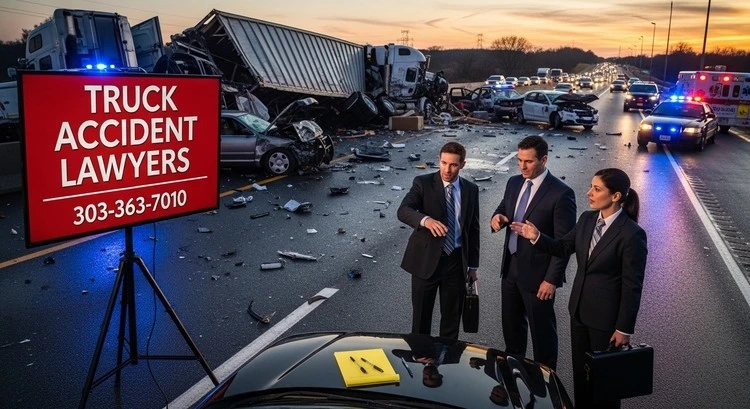
In a busy transport and tourism hub like Las Vegas, which is located in the Mojave Desert of Nevada and is often called the “Entertainment Capital of the World,” truck accidents can quickly become complex. The city’s role as a major logistics gateway means that determining liability often involves multiple parties.
If you’ve been hurt in a crash with a commercial truck in Nevada, the first thing you should know is that standard accident rules don’t apply here. A specialty truck accident lawyer in Las Vegas will tell you the same thing: these cases demand a different level of preparation and much deeper understanding of how the truck industry operates.
Here are the five factors that make truck accidents more complex.
1. More Than One Party Is Usually at Fault
In a car accident, fault typically lands on one or both drivers. Truck accidents rarely stay that simple.
Potentially liable parties in a truck crash can include:
- The truck driver
- The trucking company
- The truck manufacturer
- The cargo loader
- The maintenance company
Each of these parties has its own legal team and its own reason to point the finger elsewhere. Determining who actually caused the accident takes serious investigation.
2. Federal Rules Make It Different
Passenger car drivers follow state traffic laws. Truck drivers do too, but they’re also bound by a separate set of federal rules enforced by the Federal Motor Carrier Safety Administration (FMCSA). These regulations, found in Title 49 of the Code of Federal Regulations, govern nearly every aspect of trucking operations.
The most common FMCSA violations found in crash investigations include:
- Hours-of-service violations
- Failed drug or alcohol tests
- Missing driver qualification records
- Maintenance failures, such as worn brakes or defective lighting
- Improperly loaded or overweight cargo
When any of these violations play a role in the crash, they become evidence of negligence.
3. Evidence Disappears Faster
A car accident case might hinge on photos, a police report, and a few witness statements. Truck accident investigations go much deeper.
Critical evidence in truck crash cases includes the truck’s black box data, which captures speed and braking in the moments before impact, electronic driver logs, maintenance records, and the company’s hiring and training files.
Trucking companies are only required to retain certain records for a limited time. Once that window closes, the evidence can be legally destroyed. This process is known as “spoliation.”
An experienced lawyer moves fast to send a spoliation letter in order to demand that the trucking company preserve everything. That letter often needs to go out within days of the crash. Wait too long, and the most important evidence in your case may no longer exist.
4. Higher Insurance Makes It Harder
Federal law requires trucking companies carrying non-hazardous cargo to maintain at least $750,000 in liability coverage, with that figure rising to $5 million for carriers transporting hazardous materials.
That sounds like good news for injured victims. In practice, it means the other side has far more resources to protect.
Trucking companies and their insurers routinely dispute liability. They downplay injury severity and try to shift blame onto the victim. These adjusters and defense attorneys handle cases like yours every day.
5. Serious Injuries Lead to Higher Costs
A fully loaded semi-truck can weigh up to 80,000 pounds. A typical passenger car weighs around 4,000 pounds. That 20-to-1 difference in mass means truck crashes commonly produce:
- Traumatic brain injuries
- Spinal cord damage
- Crush injuries
- Severe burns
These aren’t injuries people bounce back from in a few weeks. Victims often face extended hospital stays, multiple surgeries, months of physical therapy, and in some cases, permanent disability.
Calculating the true value of a claim means accounting for future medical costs, lost earning capacity, home modifications, and ongoing pain and suffering.
Getting that number right takes medical experts, financial specialists, and a lawyer who understands how to document harm that hasn’t happened yet but almost certainly will.
Key Takeaways
- Truck accidents don’t work in a way that car accidents do.
- A truck accident also involves multiple parties like the truck driver, the trucking company, the truck manufacturer, the maintenance company, etc.
- After a certain period of time, the evidence can be legally destroyed.
- Calculating the true value of a claim may include determining the future medical costs, lost earning capacity, and ongoing pain and suffering.
- The sooner you understand what makes these cases different, the better your chances of protecting yourself.