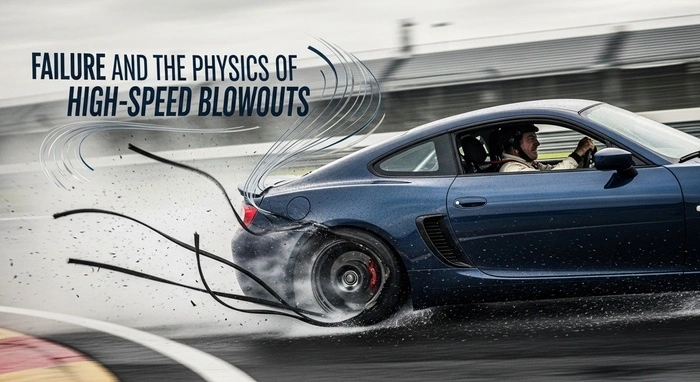
The Sudden Failure and the Physics of High-Speed Blowouts
Cruising at highway speeds feels routine until the moment the steering wheel jerks violently to one side. A sudden loud bang signals a loss of stability that catches even the most experienced drivers off guard. It is a terrifying transition from control to chaos for everyone.
Most motorists assume they can handle a flat, but a high-speed blowout is a different beast entirely. The vehicle stops responding to steering inputs as the shredding rubber flails against the wheel well. Panic often sets in as the car begins to drift toward the guardrail.
Determining why a seemingly healthy piece of equipment failed requires a deep look at its physical history. Experts often find that the root cause of a crash was a specific defective tire that should have never been on the road. This discovery is vital for the case.
Mechanics of Tread Separation
Modern tires are complex sandwiches of rubber, steel, and fabric bonded together through heat and pressure. When the manufacturing process is flawed, those layers do not fuse correctly. This creates weak points that are invisible to the naked eye during a routine inspection of the vehicle.
Centrifugal force pulls at the tread with incredible power as the vehicle moves faster down the road. If the bonding agents fail, the outer layer of rubber begins to peel away from the steel belts. This separation happens in a heartbeat at high speeds for any driver.
Once the tread detaches, the remaining casing is unable to hold the internal air pressure. The result is a sudden and total collapse of the tire structure. This mechanical breakdown leaves the driver with no way to maintain a straight path forward on the busy highway.
The Rollover Risk
Losing a tire at seventy miles per hour creates an immediate and dangerous imbalance in the vehicle’s center of gravity. The car dips toward the corner with the failure, causing the metal rim to dig into the soft asphalt. This creates a dangerous pivot point.
SUVs and high-profile trucks are particularly vulnerable to these dynamics because they sit much higher off the ground. The sudden jerk to one side can cause the entire chassis to tilt beyond the point of no return. Momentum does the rest of the work.
A rollover is one of the most lethal types of accidents because the roof structure is often pushed to its limit. Occupants are subjected to violent forces as the vehicle tumbles across the median. The physics of the crash are simply too much to overcome.
Shelf Life and Aging
Most consumers believe that a tire is fresh as long as it still has a deep tread and no visible wear. However, rubber is a biological product that begins to degrade the moment it is manufactured. Age is just as dangerous as high mileage for everyone.
Tires can sit in a climate-controlled warehouse for years before they are ever sold to a customer. During this time, the internal chemicals that keep the rubber flexible begin to evaporate. The result is a brittle casing that is prone to sudden failure.
Oxidation causes the internal structure to rot from the inside out, making the tire unsafe for highway use. Buyers should always check the date codes to ensure they are not driving on expired rubber. Older tires are ticking time bombs on any heavy vehicle.
Preserving the Evidence
After a crash occurs, the most important step for any victim is to secure the remnants of the failed tire. It is common for tow yards or insurance adjusters to discard the rubber before it can be inspected. This effectively destroys the legal case.
Forensic engineers need the actual debris to determine exactly where the separation began and why it happened. They look for signs of contamination or improper bonding that occurred at the factory. Without the physical evidence, a claim is almost impossible to prove in court.
Keeping the tire in a secure location prevents it from being altered or lost during the litigation process. It serves as the primary witness to the manufacturer negligence. Proper preservation is the foundation of any successful product liability claim for a family today.
Conclusion
Manufacturers have a strict legal duty to ensure that every piece of rubber they sell is safe for public use. They must test their designs to withstand the heat and pressure of modern highway driving. Anything less is a betrayal of the consumer trust.
Holding these companies accountable for their failures is the only way to prevent future tragedies on the road. When a defective product causes a rollover, the victims deserve a fair recovery. The law provides a path for those seeking justice and long-term safety.
Safe driving habits are important, but they cannot overcome the failure of a fundamental vehicle component. Understanding the risks of aging and defective equipment is essential for every driver. Staying informed is the best way to protect everyone on the long road ahead.