The Hidden Risks of Phantom Drivers: Who Is Liable in a No-Contact Crash?
A no-contact crash can leave drivers with more questions than answers. Another motorist may have triggered the wreck without ever making contact, turning a sudden roadway event into a difficult dispute over fault, evidence, and liability.
In many of these cases, the hardest part is not explaining what happened. It is proving that an unseen or unidentified driver set the chain of events in motion. When there is no impact between vehicles, insurers often look closely at witness accounts, physical evidence, and any available footage before accepting that a phantom driver caused the crash.
Why No-Contact Crashes Are Harder to Prove
A standard crash usually leaves behind a simple starting point. There is vehicle damage, a clear point of impact, and two drivers directly tied to the scene. A phantom driver case looks very different. The person who may have caused the wreck could be gone within seconds, leaving everyone else to explain a chain reaction without the most obvious piece of proof.
That gap creates an immediate credibility problem. If there is no contact between vehicles, an insurer may question whether another driver actually forced the maneuver or whether the crash stemmed from overcorrection, speed, distraction, or poor road conditions. The issue often comes down to whether the evidence supports one clear account of what happened.
Small details can carry unusual weight in these cases. Witness statements, dashcam footage, traffic cameras, skid marks, debris patterns, and the timing of a 911 call can all help show that another vehicle set the event in motion. When those details are missing or incomplete, the claim becomes much harder to sort out.
Who May Be Liable When the Other Driver Never Makes Contact
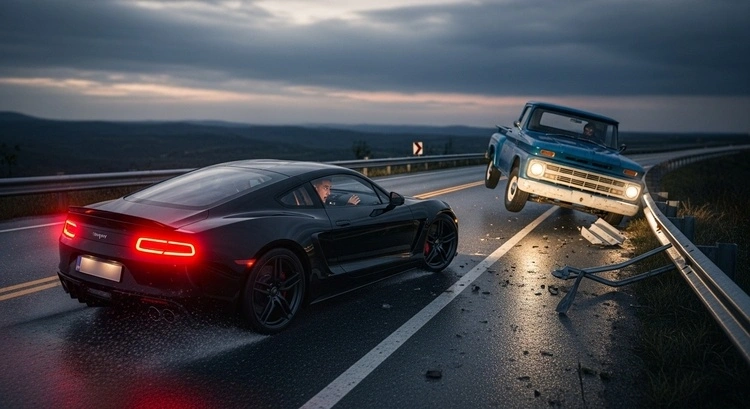
Liability in a no-contact crash often starts with the same basic question as any other accident: whose actions created the danger. A driver who swerves into another lane, cuts someone off, runs a vehicle onto the shoulder, or forces a sudden evasive move may still be the cause of the crash even without a direct collision.
The challenge is not the basic idea of fault. The challenge is proving it. If the other driver stays at the scene and can be identified, the claim may focus on witness accounts, vehicle positions, and the sequence of events that led to the wreck. If that driver disappears, the situation becomes much harder because the injured person may be left proving both what happened and who set it in motion.
That is why no-contact crashes often raise questions beyond one driver’s statement alone. The strength of the claim may depend on whether the available evidence supports a clear timeline and a believable explanation of how the phantom driver’s conduct caused the loss.
The Evidence That Can Make or Break a Phantom Driver Claim
In a no-contact crash, the evidence often matters more than the damage itself. Without a direct collision, there may be no clear physical link between one vehicle and another. That makes it harder to rely on the usual assumptions that follow a more obvious crash.
Video can be one of the strongest forms of support. Dashcam footage after a collision may help confirm that another driver swerved, merged aggressively, or forced a sudden evasive move. Even when the phantom vehicle is not captured perfectly, footage can still support the timing and movement behind the crash.
Witnesses can matter just as much. A neutral driver, passenger, or pedestrian who saw the event unfold may help confirm that another vehicle created the hazard. Their account can carry more weight when it matches the physical scene and the timeline already in the record.
The smaller details count as well. Road markings, debris, skid patterns, vehicle resting positions, and prompt reporting can all help build a clearer picture. In a case where the other driver is unknown, the claim often stands or falls on whether those separate pieces line up into one believable story.
Where Insurance Disputes Usually Begin
Insurance questions often become more complicated when the at-fault driver cannot be identified. In a typical two-car crash, the claim usually starts with known parties, known vehicles, and a more direct exchange of information. A phantom driver case removes that foundation almost immediately.
That missing driver often leads to tougher questions from the insurer. The company may ask for a clearer account of what happened, why the driver responded the way they did, whether anyone else saw the crash, and what evidence backs up the claim. Without contact between vehicles, the crash can seem harder to pin down, even when the damage is serious.
In some situations, attention may shift to uninsured motorist coverage, depending on the policy, the state, and whether the available facts are strong enough to support the claim when the other driver is unknown. Early photos, recorded observations, witness contact information, and any available footage can shape how the claim is viewed from the start. When the record is thin, the dispute often shifts from the crash itself to whether there is enough support to show that another driver caused it.
Why Place Still Matters in a Phantom Driver Case
Chicago adds its own layer to this kind of crash. Dense traffic, tight merges, multi-lane expressways, and fast-changing road conditions can turn a sudden evasive move into a serious wreck within seconds. In that environment, people often look to Chicago accident injury attorneys when they are trying to understand how a no-contact crash may be viewed in a large urban setting.
That context can feel different in nearby places such as Indiana or Wisconsin, where drivers may still face heavy traffic in certain areas but often encounter less compressed roadway patterns outside major city centers. In parts of Texas or Southern California, by contrast, longer highway stretches, higher travel speeds, and wider traffic corridors can shape these crashes in different ways. The core issue stays similar from region to region, but the driving conditions surrounding a phantom driver incident can vary quite a bit depending on where it happens.
Steps Drivers Can Take Right After a No-Contact Crash
The first moments after a no-contact crash can affect how clearly the event is understood later. Even when another vehicle never stops, the scene may still hold details that help explain what happened. Photos, video, witness names, and a clear timeline can all become important once questions about fault begin to surface.
It also helps to capture the basics while they are still fresh. The direction of travel, lane position, weather, traffic flow, and the other vehicle’s movements can all matter in a claim built around a phantom driver. The more specific the record is at the beginning, the easier it becomes to connect the crash to the event that caused it.
Why These Cases Often Turn on Clarity
A phantom driver claim can sound unusual until the facts are laid out in full. Once that happens, the real issue usually comes into focus: whether the evidence shows that another driver created the danger, even without direct contact. That question can shape everything that follows, from liability disputes to how the claim is evaluated.
The strongest claims tend to be the ones supported by a clear, consistent record. When witness accounts, physical evidence, timing, and any available footage point in the same direction, it becomes easier to understand how the crash happened. In a no-contact case, clarity is often what gives the facts their weight.
A No-Contact Crash Still Deserves a Close Look
The lack of impact does not make a crash any less real. Drivers can still face serious injuries, major vehicle damage, and lasting financial strain even when the vehicle that triggered the wreck never touches them. What changes is the burden of showing how the event unfolded.
That is what makes phantom driver cases so challenging. They often depend on details that can be lost quickly and questioned just as fast. When the facts are preserved early and presented clearly, a no-contact crash becomes easier to understand for everyone reviewing it.