What to Consider When Choosing Car Intercoolers
Upgrading for performance usually leads down the forced induction path sooner or later, and that’s where heat starts to complicate things. Compressing air raises its temperature, thinning it out and increasing the risk of detonation if left unchecked. Somewhere in that equation, car intercoolers step in to bring temperatures back under control, helping the engine breathe cooler, denser air.
Choosing the right setup, though, isn’t as simple as picking the biggest unit on the shelf. There’s a bit of balance involved, and getting it right makes all the difference between smooth gains and frustrating inefficiencies.
How Core Design Choices Influence Cooling Performance
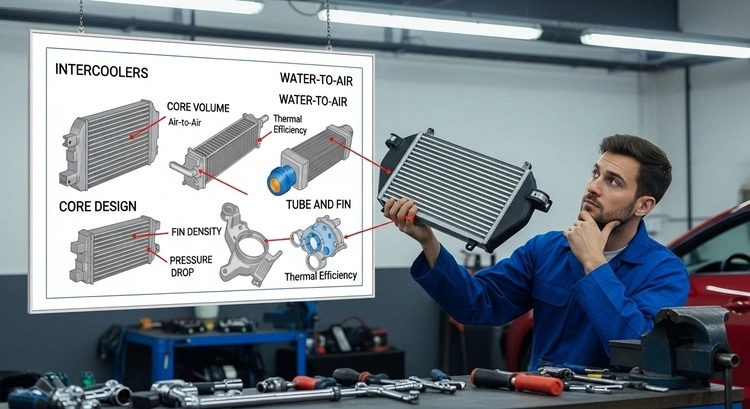
Start with the core itself, because that’s where most of the real work happens. Two common designs tend to dominate the conversation, and each has its own personality. Bar and plate units feel solid, almost overbuilt. They hold heat well and cope nicely under sustained boost, which suits aggressive driving or track use.
Tube and fin designs take a different approach. Lighter, a bit more forgiving in everyday conditions, and often kinder to airflow passing through to other cooling components. For many road setups, that balance feels more natural. The decision often comes down to how hard the vehicle is pushed and how often.
Why Size And Volume Require Careful Consideration
It’s tempting to assume that a larger unit automatically delivers better results. That logic holds up to a point, then starts to fall apart. Increasing surface area does improve heat dissipation, but there’s a trade-off hiding in the background.
A bulky core introduces more internal volume, which the turbocharger must pressurise before anything useful reaches the engine. That delay shows up as lag. Not dramatic, but noticeable. The sweet spot sits somewhere in between, where airflow remains efficient and cooling capacity still meets demand. Good designs tend to focus less on sheer size and more on how air moves through the core.
Strategic Placement and Airflow Management
Mounting position changes everything. A front-facing setup has a clear advantage simply because it meets fresh air head-on. At speed, that constant airflow works wonders for keeping temperatures stable.
Still, nothing comes without compromise. Sitting at the front can interfere with airflow to the radiator or other cooling systems if things get crowded. Top-mounted designs avoid some of that complexity and keep piping short, which sharpens response. The catch is that heat builds up when the car isn’t moving. Careful ducting can tip the scales either way, and it often does.
Matching Pipe Sizes To Maintain Smooth Airflow
Connections might seem like a small detail, but they quietly influence the entire system. When pipe diameters change too abruptly, airflow becomes unsettled. Turbulence creeps in, and efficiency slips.
Keeping inlet and outlet sizes consistent helps maintain velocity and direction. It sounds simple, and in practice, it usually is. End tank design also plays a role here. Smooth internal curves guide air more evenly across the core, making sure every section contributes rather than leaving pockets underused. It’s one of those details that doesn’t stand out until it’s done poorly.
Build Quality Matters More Than It First Appears
Performance figures tend to grab attention, but durability deserves equal weight. These components live in a harsh environment, exposed to vibration, debris, and constant thermal cycling.
Solid welds, well-designed mounting points, and sturdy external fins go a long way. A unit that performs brilliantly but cracks under stress isn’t much use. Reliability, in this context, feels less like a bonus and more like a baseline expectation.
Taken together, these considerations shape a setup that works consistently rather than occasionally. The goal is to have a system that holds up under real conditions, delivering steady performance without introducing new problems along the way.
Takeaways
Choosing the right intercooler comes down to balance. Focus on efficient cooling, stable airflow, and practical fitment rather than chasing size alone. A well-matched unit supports consistent performance, reduces stress on the engine, and holds up under real driving conditions without introducing lag or unnecessary complexity.